
If you or a loved one is facing drug conspiracy charges in North Carolina, the stakes are high. These charges can lead to severe penalties, even if no drugs were found or the alleged crime was never carried out. At Patrick Roberts Law, our North Carolina criminal defense firm is dedicated to protecting your rights and explaining the law in clear, accessible terms. Below, we provide an in-depth look at how drug conspiracy charges work in North Carolina, potential consequences, and how to build a strong defense.
What Are Drug Conspiracy Charges?
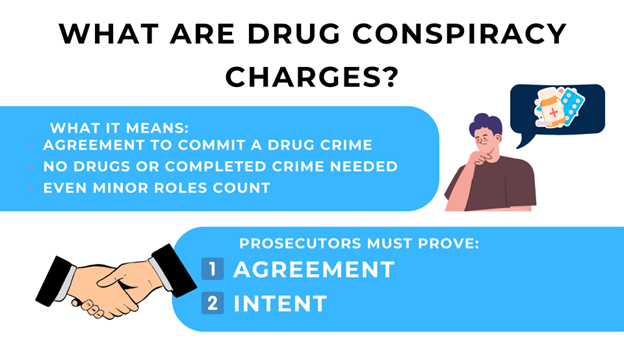
Drug conspiracy charges involve allegations that two or more people agreed to commit a drug-related crime, such as trafficking, manufacturing, or distribution. Under North Carolina law (NC General Statutes § 90-95) and federal law (21 U.S.C. § 846), you can be charged with conspiracy even if:
- The planned crime never occurred.
- You never physically possessed drugs.
- Your role in the alleged plan was minor.
Prosecutors must prove two key elements:
- An Agreement: Evidence of a mutual plan to violate drug laws, such as text messages, recorded calls, or witness testimony.
- Intent to Participate: You knowingly took steps to further the conspiracy, such as arranging meetings or providing resources.
How North Carolina Prosecutes Drug Conspiracy Cases
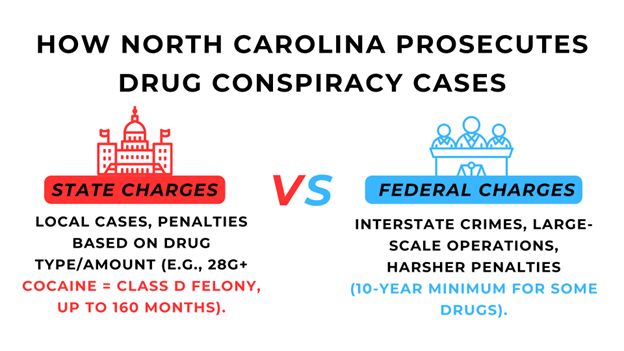
North Carolina treats drug crimes seriously, and conspiracy charges are no exception. While federal charges often target large-scale operations crossing state lines, state-level drug conspiracy charges typically involve local activities.
State vs. Federal Jurisdiction
- State Charges: Governed by NC General Statutes § 90-95. Penalties depend on the type and quantity of drugs involved.
- Federal Charges: Prosecuted under 21 U.S.C. § 846. These cases often involve interstate operations, large drug quantities, or repeat offenders. Federal penalties are notoriously harsh, with mandatory minimum sentences starting at 10 years for certain drug types.
Penalties for Drug Conspiracy Charges in North Carolina
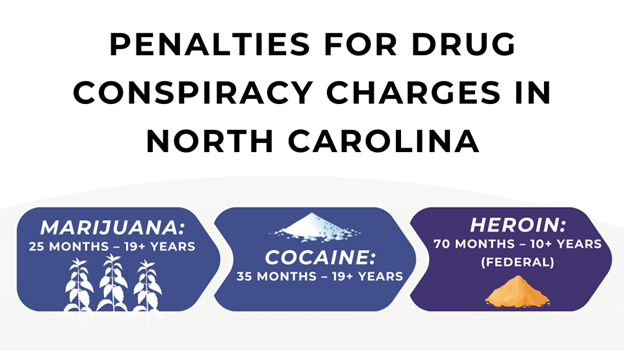
North Carolina uses a structured sentencing system that considers your prior record and the severity of the offense. Below are examples of penalties for common drug conspiracy charges:
- Marijuana Trafficking Conspiracy:
- 10–49 pounds: 25–39 months in prison.
- 50–1,999 pounds (35–51 months)
- Over 10,000 pounds: Up to 222 months (19+ years).
- Cocaine Trafficking Conspiracy:
- 28–199 grams: 35–51 months in prison.
- 400+ grams: Up to 222 months.
- Heroin Conspiracy:
- 4–13 grams: 70–93 months.
- Federal charges for 1 kg or more: Mandatory 10-year minimum sentence.
Aggravating factors that increase penalties include prior convictions, involvement of minors, or using firearms during the alleged conspiracy.
How Law Enforcement Builds Drug Conspiracy Cases
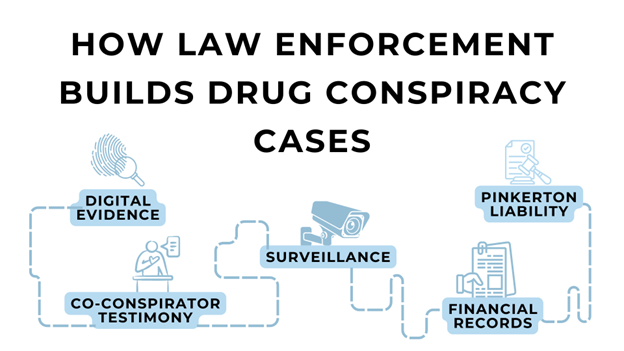
Prosecutors rely on a mix of evidence to prove drug conspiracy charges, including:
- Digital Communications: Texts, emails, or social media messages discussing drug transactions.
- Co-Conspirator Testimony: Others involved in the plan may cooperate with prosecutors to reduce their own sentences.
- Surveillance: Undercover operations, wiretaps, or police observations of meetings or handoffs.
- Financial Records: Large cash deposits, unexplained income, or purchases tied to drug activity.
Pinkerton Liability: Under federal law, you may be held responsible for crimes committed by others in the conspiracy, even if you had no direct involvement.
Defending Against Drug Conspiracy Charges in North Carolina
Every case is unique, but common defense strategies include:
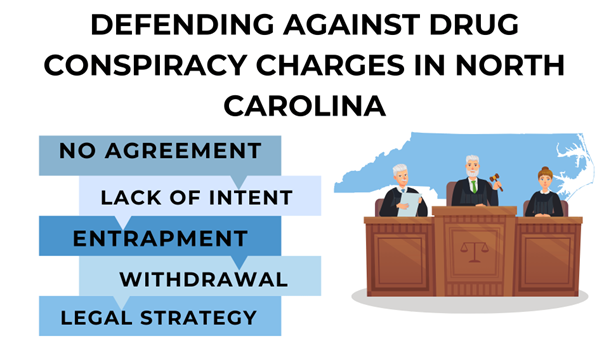
- Challenging the Alleged Agreement: Arguing there was no mutual plan to commit a crime. For example, casual conversations about drugs may not meet the legal threshold for conspiracy.
- Lack of Knowledge or Intent: Proving you were unaware of the illegal activity. If you lent a car to a friend without knowing they planned to use it for drug trafficking, this could be a valid defense.
- Entrapment: Demonstrating law enforcement pressured or coerced you into participating.
- Withdrawal from the Conspiracy: Showing you took clear steps to exit the plan, such as cutting off contact with co-conspirators and informing law enforcement.
Our attorneys analyze every detail of your case—from how evidence was obtained to the credibility of witnesses—to identify weaknesses in the prosecution’s argument.
Why Hiring a Local North Carolina Defense Attorney Is Critical
Drug conspiracy cases hinge on complex interpretations of intent, relationships, and communications. A skilled North Carolina defense lawyer can:
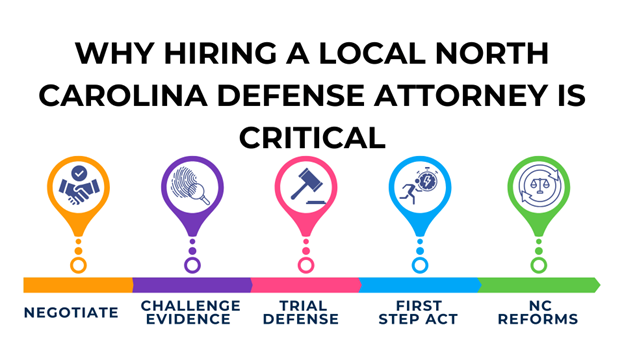
- Negotiate with Prosecutors: Pursue reduced charges, alternative sentencing (e.g., drug treatment programs), or case dismissal if rights were violated.
- Challenge Evidence: File motions to suppress illegally obtained evidence, such as wiretaps without proper warrants or statements made without Miranda warnings.
- Prepare for Trial: If your case goes to court, we craft a compelling narrative to highlight reasonable doubt or prove your lack of involvement.
Recent Legal Changes Impacting Drug Conspiracy Cases
- First Step Act (Federal): Reduced mandatory minimum sentences for certain nonviolent drug offenses, offering relief to some defendants in federal cases.
- North Carolina’s Sentencing Reforms: Recent state efforts to address prison overcrowding may create opportunities for plea deals or reduced sentences, especially for first-time offenders.
Frequently Asked Questions About Drug Conspiracy Charges
Q: Can I be charged if I was only present during a drug-related conversation?
A: Merely being present is not enough for a conviction. Prosecutors must prove you actively agreed to participate in the plan.
Q: What if I didn’t benefit financially from the conspiracy?
A: Financial gain is not required for a conviction. The focus is on your intent to further the conspiracy, not profit.
Q: Are probation or plea deals possible in NC drug conspiracy cases?
A: Yes, depending on the circumstances. Our attorneys work to negotiate alternatives to prison, especially for nonviolent offenders.
Act Now to Protect Your Future
Drug conspiracy charges in North Carolina can lead to decades in prison, steep fines, and a permanent criminal record that affects employment, housing, and family relationships. At Patrick Roberts Law, we combine local courtroom experience with a deep understanding of state and federal drug laws to fight for the best possible outcome.
If you’re facing charges in Raleigh, Charlotte, Durham, or elsewhere in North Carolina, contact us today for a free, confidential consultation. Let us help you navigate this complex process and protect your rights.
Former assistant district attorney
Contact Patrick Roberts
Facing criminal charges in North Carolina demands seasoned representation. Trust in the experience and dual perspective of Patrick Roberts. Reach out today for a confidential consultation.
-
Call Our Team
Calls answered 24/7






For more information on the selection criteria, go to www.martindale.com
*Each case is different and must be evaluated separately. Prior results achieved do not guarantee similar results can be achieved in future cases.