

An arraignment is a critical formal court appearance in the felony criminal process in North Carolina. Unlike in some states, in North Carolina’s two-tiered court system (N.C.G.S. § 7A-270, § 7A-271), arraignment typically does not occur immediately after arrest. Instead, felony cases begin in District Court with an initial appearance (N.C.G.S. § 15A-601), and if indicted, move to Superior Court where the formal arraignment takes place after discovery (N.C.G.S. § 15A-623, N.C.G.S. § 15A-941). The arraignment is where you are officially notified of the charges against you and informed of your legal rights.
Key Components of a Felony Arraignment

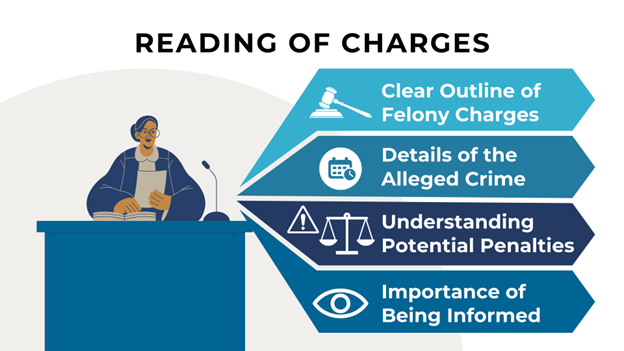
Reading of Charges
During the arraignment, the judge reads the criminal complaint or indictment aloud. This formal reading:
- Clearly outlines the felony charges you face.
- Provides details such as the date, time, and nature of the alleged crime.
- Ensures you know the specific allegations and the potential penalties involved.
This step is crucial because it sets the foundation for your case and ensures you are fully aware of what you are being accused of.
Explanation of Your Rights
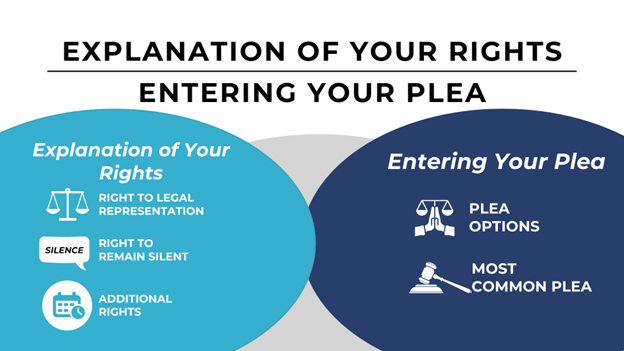
The judge takes the time to explain your constitutional rights during the hearing. In a felony arraignment, you are informed of several important rights, including:
- The Right to Legal Representation: You have the right to hire a private attorney. If you cannot afford one, the court will appoint a public defender.
- The Right to Remain Silent: You are advised that you do not need to answer questions or provide statements that might be used against you later.
- Additional Rights: These may include the right to a speedy trial and, if applicable, the right to a jury trial.
This explanation helps ensure that you make informed decisions about your case from the very beginning.
Entering Your Plea
One of the main functions of the arraignment is to have you enter a plea. The options typically include:
- Guilty
- Not Guilty
- No Contest
For felony cases, most defendants enter a “not guilty” plea. This plea does not determine your guilt but initiates the pretrial process and sets the stage for future hearings. By pleading not guilty, you are exercising your right to contest the charges and work with your attorney on building a defense.
Bail Determination and Release Conditions
During the arraignment, the judge also considers bail. The judge evaluates several factors, such as:
- The severity of the felony charge.
- Your prior criminal history.
- Whether you are considered a flight risk.
Based on this assessment, the judge will decide whether to:
- Release you on bail,
- Release you on your own recognizance (ROR), or
- Keep you in custody until your next court appearance.
In North Carolina, local practices and the specifics of your case will influence these decisions. It is essential to understand that bail is meant to secure your future court appearances and is not a reflection of your guilt.
Scheduling Future Proceedings
After you enter your plea and the judge addresses bail, the arraignment hearing concludes with the scheduling of future court dates. These may include:
- Pretrial Motion Hearings: Hearings where both sides discuss legal arguments and evidence.
- Preliminary Hearings: Proceedings to determine if there is enough evidence to continue to trial.
- Trial Dates: The eventual date when your case will be heard in full if you maintain your not guilty plea.
Keeping track of these scheduled dates is vital. Missing a court appearance can lead to additional charges and may result in a bench warrant for your arrest.

Important Considerations for North Carolina Residents
Although the basic steps of a felony arraignment are similar nationwide, North Carolina residents should be aware of a few local factors:
- Local Court Procedures: Procedures and practices may vary by county. Consulting with a local attorney can help ensure that you understand the nuances of the local court system.
- Legal Support: Private attorneys in North Carolina are well-versed in local procedures and can provide guidance tailored to your specific case.
What to Do If You Miss Your Arraignment
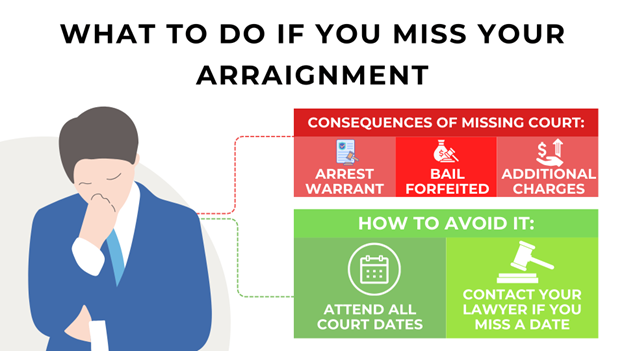
Failing to appear at your arraignment hearing can have serious consequences. If you miss your court date:
- The judge may issue a bench warrant for your arrest.
- Any bail posted could be forfeited.
- You may face additional charges, complicating your case further.
It is crucial to attend your arraignment and all subsequent court appearances to avoid these risks.
Conclusion
Understanding what happens at an arraignment hearing for a felony can help you navigate the initial stages of the criminal justice process with confidence. This hearing is your first opportunity to learn about the charges, assert your rights, enter your plea, and set the timeline for your case. By being well-informed—especially if you are based in North Carolina—you can work more effectively with your legal counsel and ensure that you are prepared for the next steps in your defense. If you or a loved one are facing an arraignment hearing for criminal charges, you deserve a legal advocate with the experience and dedication to secure the best possible outcome. Attorney Patrick Roberts of Patrick Roberts Law has successfully defended numerous clients facing the most serious criminal charges. Contact our firm today for a confidential consultation.

Former assistant district attorney
Contact Patrick Roberts
Facing criminal charges in North Carolina demands seasoned representation. Trust in the experience and dual perspective of Patrick Roberts. Reach out today for a confidential consultation.
-
Call Our Team
Calls answered 24/7









For more information on the selection criteria, go to www.martindale.com
*Each case is different and must be evaluated separately. Prior results achieved do not guarantee similar results can be achieved in future cases.