
A first-degree statutory rape charge in North Carolina represents one of the most serious criminal accusations a person can face. According to the NC Sentencing and Policy Advisory Commission’s FY 2024 report, North Carolina courts recorded 431 Class B1 felony convictions during the fiscal year the classification that includes first-degree statutory rape. For defendants in Apex and throughout Wake County, understanding the specific elements of this charge, the potential penalties, and the defense process is essential from the moment an investigation begins.
This charge carries mandatory active imprisonment, lengthy sentences measured in decades rather than years, and permanent consequences including sex offender registration. The prosecution will pursue these cases aggressively, and defendants need clarity about what they face and what options exist.
What Is First-Degree Statutory Rape Under North Carolina Law?
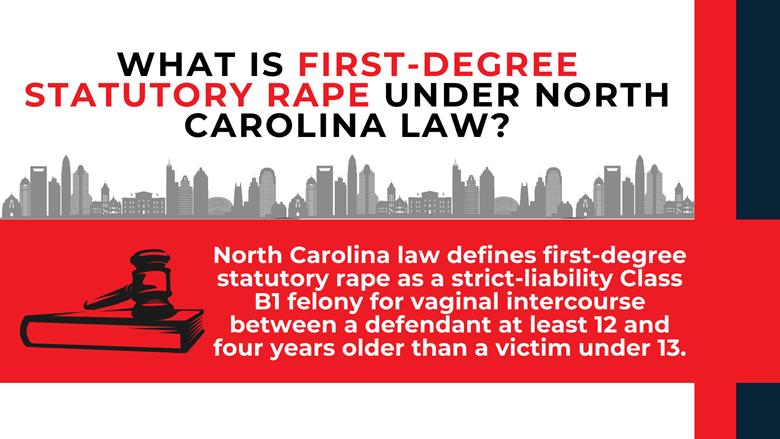
North Carolina’s criminal code defines first-degree statutory rape under N.C.G.S. § 14-27.24 as a specific offense within the state’s graduated scheme of age-based sex crimes. This statute targets sexual activity with very young victims and imposes severe penalties regardless of the circumstances surrounding the alleged conduct.
What Elements Must the Prosecution Prove for a Conviction?
The State must establish three elements beyond a reasonable doubt for a first-degree statutory rape conviction. First, the defendant must have been at least 12 years old at the time of the alleged offense. Second, the defendant must have been at least 4 years older than the victim. Third, the victim must have been under 13 years old when the alleged vaginal intercourse occurred.
The National Children’s Alliance’s 2023 statistics report documented that 3,127 children were reported for sexual abuse at North Carolina Children’s Advocacy Centers during a six-month period alone. These centers often conduct the forensic interviews that form the evidentiary foundation for statutory rape prosecutions.
How Does First-Degree Statutory Rape Differ From Other Statutory Rape Charges?
North Carolina maintains multiple statutory rape offenses with different elements and penalties. N.C.G.S. § 14-27.23 (statutory rape of a child by an adult) requires the defendant to be 18 years or older and carries a mandatory minimum sentence of 300 months (25 years). N.C.G.S. § 14-27.25 covers statutory rape of a person 15 or younger with different age differential requirements.
First-degree statutory rape under § 14-27.24 applies specifically when the defendant is at least 12 but potentially under 18, creating a Class B1 felony without the 300-month mandatory minimum that applies to adult defendants.
Can Mistake About the Victim’s Age Serve as a Defense?
North Carolina law treats statutory rape as a strict liability offense. As established in State v. Breathette, 202 N.C. App. 697, 690 S.E.2d 1 (N.C. App. 2010), mistake of age is not a defense to charges involving sexual conduct with minors. Even if the victim appeared older, misrepresented their age, or possessed identification suggesting they were above the age of consent, this does not provide a legal defense to the charge.
Consent is similarly irrelevant. Because the victim’s young age makes them legally incapable of consenting, the State does not need to prove force or lack of consent only that the sexual conduct occurred with a victim meeting the statutory age criteria.
What Penalties Does a First-Degree Statutory Rape Conviction Carry?
The sentencing consequences for first-degree statutory rape reflect North Carolina’s treatment of offenses against young children as among the most serious in the criminal code. Defendants facing these charges must understand that active prison time is mandatory and that sentences are measured in decades.
What Prison Sentences Apply to Class B1 Felony Convictions?
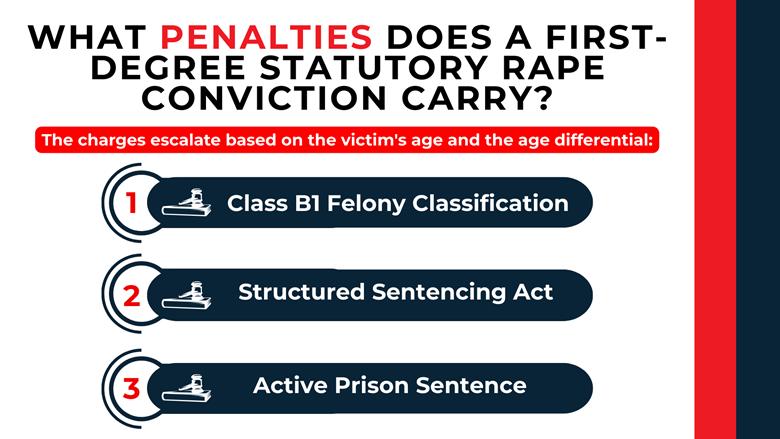
First-degree statutory rape carries a Class B1 felony classification, the second-highest felony class in North Carolina. According to the NC Sentencing and Policy Advisory Commission’s FY 2024 report, the average sentence for Class B1 felonies was 236 months minimum to 315 months maximum equivalent to approximately 19.7 to 26.25 years in prison.
For defendants with no prior criminal record (Prior Record Level I), the presumptive sentencing range spans 144 to 192 months (12-16 years). However, prior convictions dramatically increase these ranges, and aggravating factors can push sentences even higher.
How Does North Carolina’s Structured Sentencing System Work?
North Carolina uses a Structured Sentencing Act that calculates sentences based on offense class and the defendant’s prior record level. For Class B1-E felonies requiring sex offender registration, the law imposes an enhanced maximum sentence calculated as 120% of the minimum plus 60 additional months under N.C.G.S. § 15A-1340.17(f).
Courts consider specific factors when determining where within the range of a sentence. The following factors influence sentencing decisions:
- The defendant’s prior criminal record and prior record level calculation
- Whether aggravating factors exist (e.g., position of trust, multiple victims, particularly young victim)
- Whether mitigating factors apply (e.g., no prior record, mental health considerations, acceptance of responsibility)
- The defendant’s role in the offense and circumstances surrounding the conduct
- Impact statements from the victim and victim’s family
- Recommendations from probation officers in the presentence investigation report
What is the Likelihood of Receiving an Active Prison Sentence?
The NC Sentencing Commission data confirms that 100% of Class B1 through Class D felony convictions resulted in active imprisonment during FY 2024. There is no possibility of probation or intermediate punishment for a first-degree statutory rape conviction.
The same report shows that 62% of all person offense convictions received active punishment, 28% intermediate, and 10% community but for Class B1 felonies specifically, active imprisonment is mandatory without exception.
How Do Apex and Wake County Prosecute First-Degree Statutory Rape Cases?
Cases originating in Apex fall under the jurisdiction of the Wake County District Attorney’s Office, which prosecutes felony sex offenses in Wake County Superior Court in Raleigh. Understanding how these prosecutions proceed helps defendants prepare for what lies ahead.
What Role Do Children’s Advocacy Centers Play in These Cases?
Children’s Advocacy Centers conduct forensic interviews with alleged victims structured interviews designed to gather information while minimizing trauma and suggestion. The National Children’s Alliance reported that NC CACs served 5,242 children during the second half of 2023 alone.
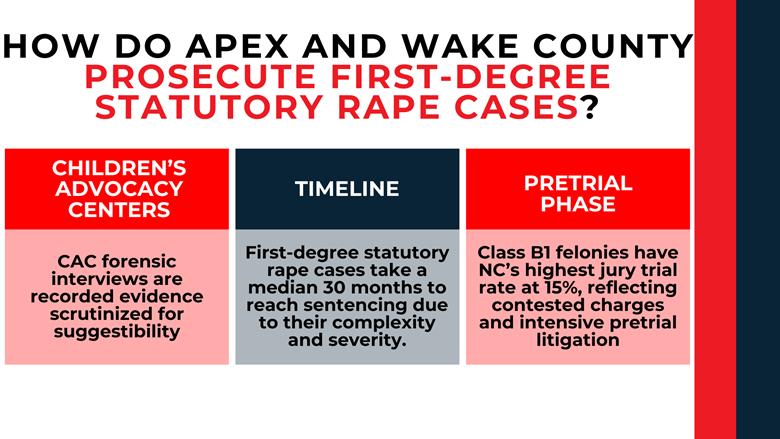
These interviews are typically recorded and become central pieces of evidence in prosecution cases. Defense attorneys scrutinize interview techniques for suggestibility issues, leading questions, or contamination that may have influenced the child’s statements.
How Long do These Cases Typically Take to Resolve?
First-degree statutory rape cases move slowly through the court system. According to NC Sentencing Commission data, the median time from charge to sentencing for Class B1 felonies is 30 months two and a half years. This compares to a 10-month median for all felony cases combined.
The extended timeline reflects the complexity of these cases, the severity of potential sentences, and the thoroughness of both prosecution preparation and defense investigation.
What Happens During the Pretrial Phase?
The same data reveals that 85% of Class B1 felonies resolve through guilty pleas while 15% proceed to jury trial. This represents the highest jury trial rate of any felony class in North Carolina, suggesting that many defendants contest these serious charges rather than accept the severe mandatory sentences.
During the pretrial phase, prosecutors gather evidence including forensic interview recordings, medical examination results, witness statements, and any physical or digital evidence. Defense attorneys conduct independent investigations, file pretrial motions, and negotiate with prosecutors when appropriate.
What Are the Pretrial and Bond Considerations for These Charges?
Defendants charged with first-degree statutory rape face significant restrictions before trial even begins. The pretrial phase presents unique challenges that differ substantially from other criminal charges.
Who Can Set Bond for Sex Offense Charges In North Carolina?
Under N.C.G.S. § 15A-533(b), magistrates cannot grant pretrial release for defendants charged with sex offenses including rape and sexual offenses. Only a district court or superior court judge has authority to set bond conditions for these charges.
This means defendants arrested on first-degree statutory rape charges must wait for a judicial hearing not a magistrate’s initial appearance before any possibility of release. The statute makes pretrial release discretionary rather than mandatory for sex offense defendants.
What Conditions Typically Accompany Pretrial Release?
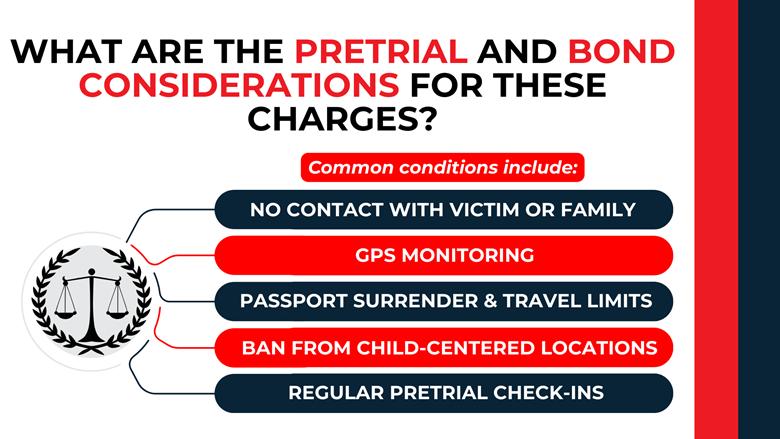
When judges do grant pretrial release in these cases, they typically impose strict conditions designed to protect the alleged victim and the community. Common conditions include:
- No contact with the alleged victim or victim’s family members
- GPS electronic monitoring at the defendant’s expense
- Surrender of passport and travel restrictions
- Prohibition from locations where children congregate
- Regular check-ins with pretrial services
Violations of these conditions result in immediate arrest and likely detention for the remainder of the case.
How Much Time do Defendants Typically Spend in Pretrial Detention?
The NC Sentencing Commission reports that defendants convicted of Class B1 felonies spent an average of 27 months in pretrial detention more than two years awaiting trial or plea resolution. The data also shows that 93% of person offense convictions received credit for time served, indicating the vast majority of defendants in these cases remained in custody pretrial.
This extended detention reflects both the difficulty of obtaining release on serious sex offense charges and the lengthy case processing times for Class B1 felonies.
What Defense Strategies Apply to First-Degree Statutory Rape Cases?
Despite the serious nature of these charges and the limitations on traditional defenses like consent and mistake of age, defendants retain important constitutional protections and defense attorneys have multiple avenues to challenge the State’s case.
What Constitutional Protections Apply to These Cases?
The Fourth Amendment provides significant protections in statutory rape investigations, particularly regarding digital evidence. Following Riley v. California, 573 U.S. 373 (2014), police generally cannot search cell phones or digital devices without a warrant, even incident to arrest. Defense attorneys examine whether investigators obtained proper warrants before accessing phones, computers, or cloud storage.
The Fifth Amendment protects against self-incrimination during custodial interrogation. Under N.C.G.S. § 15A-211, North Carolina requires mandatory recording of interrogations for Class B1 felonies. Failure to comply with recording requirements is admissible to support claims that a confession was involuntary.
How Can Defense Attorneys Challenge the State’s Evidence?
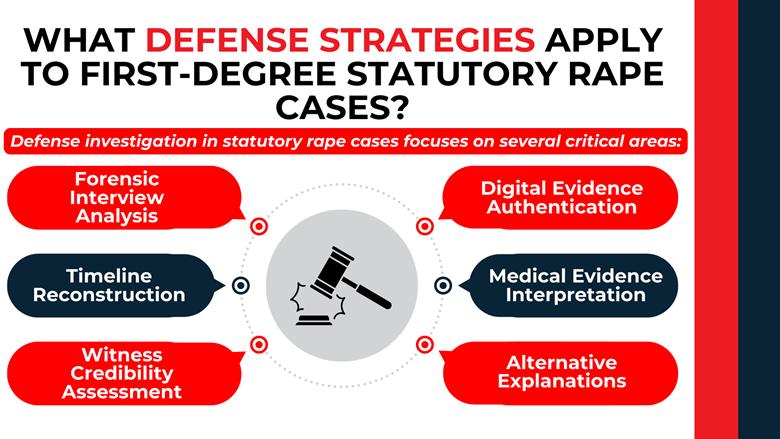
Defense investigation in statutory rape cases focuses on several critical areas:
- Forensic interview analysis for leading questions, suggestibility, or contamination
- Timeline reconstruction to identify inconsistencies or impossibilities in allegations
- Witness credibility assessment including relationships, biases, and motives
- Digital evidence authentication and chain of custody verification
- Medical evidence interpretation by qualified defense experts
- Alternative explanations for physical findings or behavioral changes
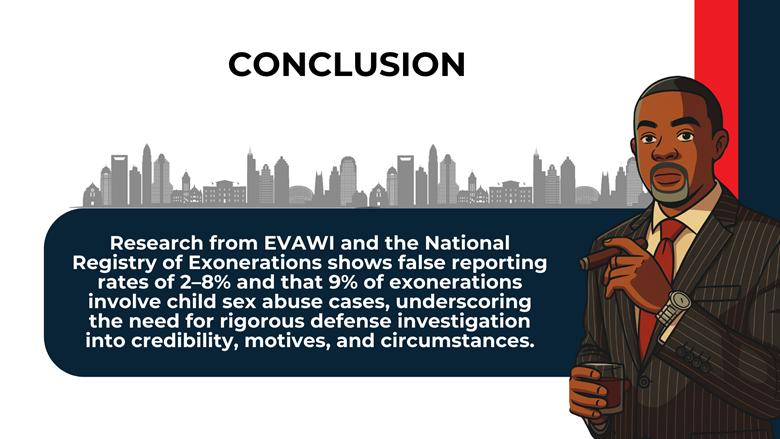
The National Registry of Exonerations reports that 9% of exonerations nationally involve child sex abuse cases, making thorough investigation essential.
What Role Does Expert Testimony Play in Defending These Charges?
North Carolina adopted the federal Daubert reliability standard in State v. McGrady, 368 N.C. 880, 787 S.E.2d 1 (N.C. 2016). Prosecution experts offering testimony about Child Sexual Abuse Accommodation Syndrome (CSAAS) face limitations under State v. Hall, 330 N.C. 808, 412 S.E.2d 883 (N.C. 1992) such testimony may explain seemingly inconsistent victim behavior but cannot be used substantively to prove abuse occurred.
Defense attorneys may retain experts on witness suggestibility, false memory formation, and forensic interview technique flaws. Under State v. Hammett, 361 N.C. 92, 637 S.E.2d 518 (N.C. 2006), experts cannot opine that abuse occurred based solely on a child’s statements without supporting physical evidence.
What Issues Arise With Child Witness Testimony?
North Carolina has no minimum age for witness competency children of any age may testify if they can express themselves and understand the duty to tell the truth. However, defense attorneys can request competency voir dire to challenge whether a particular child witness meets these standards.
The Hinnant two-prong test from State v. Hinnant, 351 N.C. 277, 523 S.E.2d 663 (N.C. 2000), governs admission of children’s hearsay statements under the medical diagnosis exception. Statements must be made with intent to obtain medical treatment, and must be reasonably pertinent to that purpose. Defense attorneys challenge statements made during forensic interviews that may not meet this standard.
Research cited by the End Violence Against Women International indicates a 2-8% false reporting rate for sexual assault defense investigation must carefully examine the circumstances surrounding each allegation.
What Happens After a Conviction for First-Degree Statutory Rape?
A conviction for first-degree statutory rape triggers consequences extending far beyond the prison sentence. Defendants must understand the lifetime obligations and restrictions that follow.
What are the Sex Offender Registration Requirements?
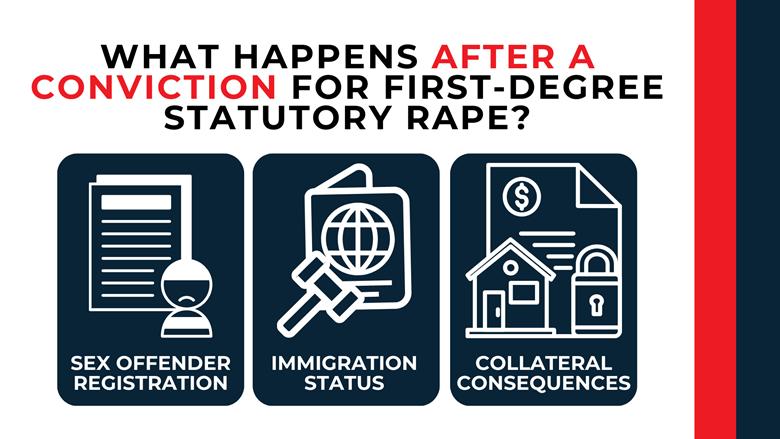
Under N.C.G.S. § 14-208 et seq., defendants convicted of first-degree statutory rape must register as sex offenders for 30 years under standard provisions, or lifetime if classified as an aggravated offender. The NC State Bureau of Investigation maintains records on approximately 25,000+ registered sex offenders statewide, with 839 registrants in Wake County alone.
Registration requires periodic verification of address, employment, and other information. Registrants face location restrictions prohibiting residence or presence near schools, daycare centers, and other places where children congregate. Under N.C.G.S. § 14-208.12A, defendants may petition for termination of registration after 10 years if not classified as a recidivist, sexually violent predator, or aggravated offender.
How do These Charges Affect Immigration Status?
For non-citizen defendants, first-degree statutory rape triggers devastating immigration consequences. Sexual abuse of a minor constitutes an aggravated felony under federal immigration law, resulting in mandatory deportation without possibility of relief.
Under Padilla v. Kentucky, 559 U.S. 356 (2010), defense counsel has a constitutional obligation to advise clients of immigration consequences before any guilty plea. Non-citizen defendants must consult with immigration counsel immediately upon arrest.
What Other Collateral Consequences Follow a Conviction?
Beyond registration and immigration consequences, a first-degree statutory rape conviction affects virtually every aspect of life:
- Permanent federal firearms prohibition under 18 U.S.C. § 922(g)
- Professional licensing bars for healthcare, education, law enforcement, and other fields
- Employment restrictions through background check failures
- Housing limitations as many landlords exclude registered sex offenders
- Child custody presumptions in family court proceedings
The NC Department of Adult Correction reports that 581 sex offenders were enrolled in GPS electronic monitoring during FY 2022-2023, with projections of 596 by end of FY 2023-24. Post-release supervision extends 60 months for sex offenses compared to 9-12 months for other felonies.
Frequently Asked Questions
Can charges be reduced through plea bargaining in first-degree statutory rape cases?
While the NC Sentencing Commission reports that 85% of Class B1 felonies get resolved by guilty plea, these cases have the highest jury trial rate (15%) of any felony class. This suggests many defendants contest charges rather than accept severe mandatory sentences. Plea negotiations depend on the specific evidence, the victim’s age, and prosecutorial discretion in each case.
What is the difference between first-degree statutory rape and statutory rape of a child by an adult?
First-degree statutory rape under N.C.G.S. § 14-27.24 applies when the defendant is at least 12 years old and at least 4 years older than a victim under 13. Statutory rape of a child by an adult under N.C.G.S. § 14-27.23 requires the defendant to be 18 or older and carries a mandatory minimum sentence of 300 months (25 years), substantially higher than the first-degree statute.
How do false accusations factor into statutory rape prosecutions?
Research compiled by the End Violence Against Women International indicates a 2-8% false reporting rate for sexual assault allegations. The National Registry of Exonerations documents that 9% of exonerations nationally involve child sex abuse cases. These statistics underscore the importance of thorough defense investigation into the circumstances, motivations, and credibility surrounding each allegation.
Can I petition to remove my name from the sex offender registry after a conviction?
Under N.C.G.S. § 14-208.12A, defendants may petition for termination of registration after completing 10 years on the registry, provided they are not classified as a recidivist, sexually violent predator, or aggravated offender. The petition process requires demonstrating rehabilitation and poses no ongoing risk to the community.
Conclusion
First-degree statutory rape charges in North Carolina carry consequences that reshape a defendant’s entire future—from mandatory prison sentences averaging nearly two decades to lifetime sex offender registration and permanent collateral effects on employment, housing, and family relationships.
The 30-month median time to case resolution and 27-month average pretrial detention mean these cases demand immediate attention and strategic defense planning from the earliest stages.
A Defense Rooted in Experience
The State must prove its case beyond a reasonable doubt, and defendants retain constitutional protections that demand a sophisticated defense. Early intervention allows for thorough investigation, expert consultation, and strategic decision-making before critical deadlines pass
Attorney Patrick Roberts is a 2011 graduate of the National Criminal Defense College (NCDC) Trial Practice Institute, where he completed a rigorous two-week intensive program focused on every aspect of defending those accused of criminal offenses. His extensive litigation background is complemented by high-level jurisdictional authority; he is admitted to practice before the United States Fourth Circuit Court of Appeals as well as all federal district courts in North Carolina—the Eastern, Middle, and Western Districts. This combination of intensive trial training and the ability to navigate both state and federal systems allows him to provide a comprehensive defense for clients facing high-stakes charges in Apex, Wake County, and throughout the state.
“Patrick is an experienced and knowledgeable criminal attorney. I highly recommend him if you’re seeking competent and professional representation in a state or federal criminal matter.”— Peer review via Martindale-Hubbell on October 24, 2018*
Disclaimer: The testimonials and peer reviews on this site are for informational purposes. They do not constitute a guarantee, warranty, or prediction regarding the outcome of your legal matter. Every case is different and must be evaluated on its own merits.
*Testimonials and peer endorsements found on this website are actual comments.
When the stakes involve decades of your life, you need a lawyer who has been tested in both state and federal arenas. If you are facing first-degree statutory rape charges in Apex or Wake County, do not wait for the system to move against you.
Contact Patrick Roberts Law today to discuss your defense options and begin protecting your rights.
Disclaimer: The information on this website is for general information purposes only. Nothing on this site should be taken as legal advice for any individual case or situation. Case results depend upon a variety of factors unique to each case. Prior results do not guarantee a similar outcome.
Former assistant district attorney
Contact Patrick Roberts
Facing criminal charges in North Carolina demands seasoned representation. Trust in the experience and dual perspective of Patrick Roberts. Reach out today for a confidential consultation.
-
Call Our Team
Calls answered 24/7






For more information on the selection criteria, go to www.martindale.com
*Each case is different and must be evaluated separately. Prior results achieved do not guarantee similar results can be achieved in future cases.