
Being accused of a sex offense involving a minor in North Carolina carries consequences that extend far beyond the courtroom. These charges can result in decades of incarceration, lifetime sex offender registration, and permanent damage to your reputation, relationships, and livelihood. Understanding exactly what you’re facing is the first step toward building a defense.
North Carolina treats statutory rape and statutory sexual offense as distinct but parallel crimes under Chapter 14, Article 7B of the General Statutes. While both involve sexual conduct with underage individuals, the law defines them differently based on the specific type of conduct alleged. The distinction matters because it affects how prosecutors charge cases, what evidence they must present, and how defense strategies are developed. Both categories carry severe penalties, and the specific charge depends on factors including the victim’s age, the defendant’s age, and the age gap between them.
What Defines Statutory Rape Under North Carolina Law?
What Type of Conduct Constitutes Statutory Rape?
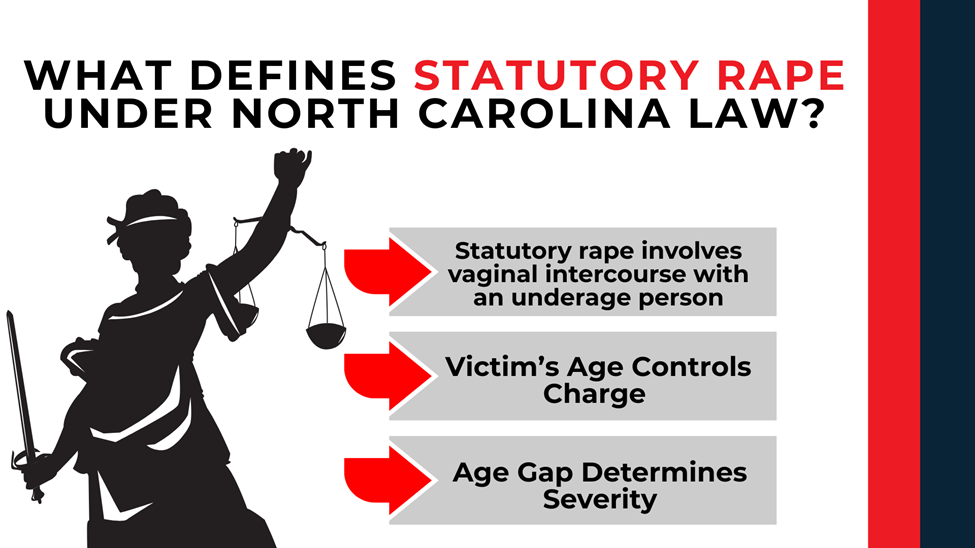
Under North Carolina law, statutory rape specifically involves vaginal intercourse with an underage person. The statutes use precise language requiring “vaginal intercourse” as the prohibited act. This means that other forms of sexual contact, even if equally serious in nature, fall under different statutory provisions. The specificity matters for both prosecution and defense purposes because the State must prove the exact type of conduct alleged.
How Does the Victim’s Age Affect the Charge Classification?
North Carolina’s statutory rape laws establish different offenses based on the victim’s age at the time of the alleged conduct. The statutes create the following framework based on the victim’s age:
- Under 13 years old (adult defendant): N.C. Gen. Stat. § 14-27.23 applies when the defendant is at least 18 years old and the victim is under 13. This is classified as “statutory rape of a child by an adult.”
- Under 13 years old (defendant at least 12 and 4+ years older): N.C. Gen. Stat. § 14-27.24 establishes first-degree statutory rape when the defendant is at least 12 years old and at least four years older than a victim under 13.
- 15 years old or younger: N.C. Gen. Stat. § 14-27.25 covers situations where the victim is 15 or younger and the defendant meets specific age differential requirements.
What Age Differential Requirements Apply to Statutory Rape?
The age gap between the defendant and the alleged victim significantly impacts the charge. For statutory rape of a person 15 or younger under N.C. Gen. Stat. § 14-27.25, the defendant must be at least 12 years old. When the defendant is at least six years older than the victim, the offense is a Class B1 felony. When the defendant is more than four but less than six years older, and no other provision provides greater punishment, the offense is a Class C felony. The “by an adult” statute under § 14-27.23 requires the defendant to be at least 18 while the victim is under 13.
What Defines Statutory Sexual Offense Under North Carolina Law?
What Type of Conduct Constitutes a Statutory Sexual Offense?
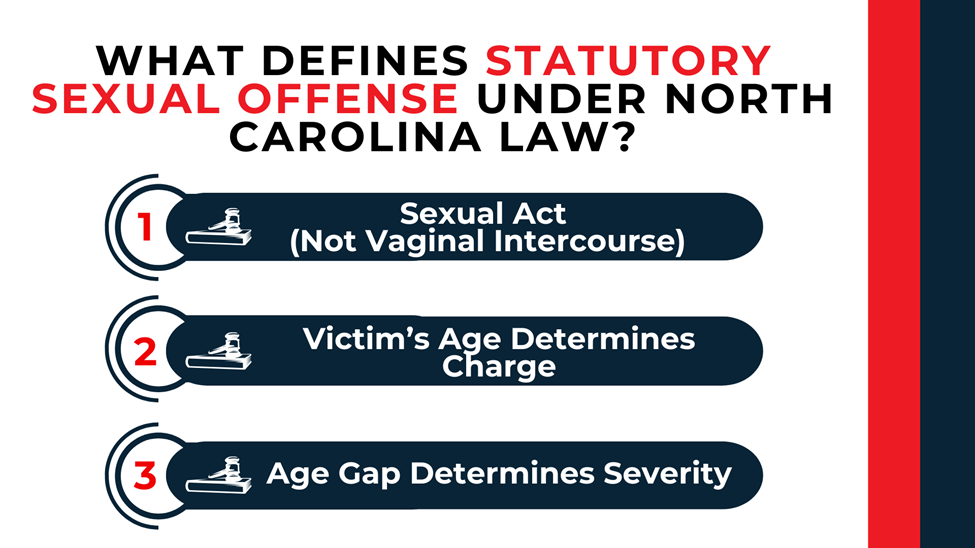
Statutory sexual offense covers sexual acts other than vaginal intercourse. The North Carolina statutes use the term “sexual act” to describe the prohibited conduct. This encompasses forms of sexual contact that do not meet the legal definition of vaginal intercourse but are nonetheless treated as serious criminal offenses when the victim is underage.
How Are Statutory Sexual Offense Charges Classified Based on Age?
The statutory sexual offense provisions mirror the structure of the statutory rape laws, creating parallel offenses based on victim age. The classifications break down as follows:
- Under 13 years old (adult defendant): N.C. Gen. Stat. § 14-27.28 applies when the defendant is at least 18 years old and engages in a sexual act with a victim under 13. This constitutes “statutory sexual offense with a child by an adult.”
- Under 13 years old (defendant at least 12 and 4+ years older): N.C. Gen. Stat. § 14-27.29 establishes first-degree statutory sexual offense when the defendant is at least 12 and at least four years older than a victim under 13.
- 15 years old or younger: N.C. Gen. Stat. § 14-27.30 addresses situations involving victims 15 or younger when the defendant meets the statutory age requirements.
What Age Differential Requirements Apply to Statutory Sexual Offenses?
The age differential requirements for statutory sexual offenses directly parallel those for statutory rape. Under N.C. Gen. Stat. § 14-27.30, the defendant must be at least 12 years old. A six-year or greater age gap results in a Class B1 felony, while an age gap of more than four but less than six years results in a Class C felony unless another provision provides greater punishment. The “by an adult” provision under § 14-27.28 requires the defendant to be at least 18 with a victim under 13.
How Do the Felony Classifications Compare Between These Charges?
Which Charges Carry Class B1 Felony Consequences?
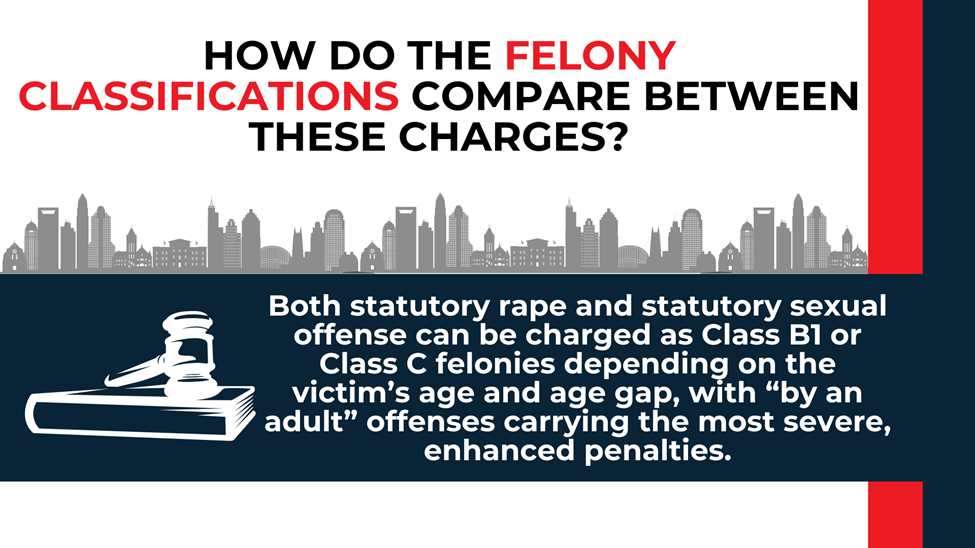
Both statutory rape and statutory sexual offense include offenses classified as Class B1 felonies, which represent some of the most serious non-capital charges in North Carolina’s criminal code. The following offenses carry Class B1 felony classification:
- Statutory rape of a child by an adult under N.C. Gen. Stat. § 14-27.23
- First-degree statutory rape under N.C. Gen. Stat. § 14-27.24
- Statutory rape of a person 15 or younger when the defendant is six or more years older under N.C. Gen. Stat. § 14-27.25(a)
- Statutory sexual offense with a child by an adult under N.C. Gen. Stat. § 14-27.28
- First-degree statutory sexual offense under N.C. Gen. Stat. § 14-27.29
- Statutory sexual offense with a person 15 or younger when the defendant is six or more years older under N.C. Gen. Stat. § 14-27.30(a)
When Does a Charge Become a Class C Felony Instead?
Class C felony classifications apply in more limited circumstances. Under both N.C. Gen. Stat. § 14-27.25(b) for statutory rape and N.C. Gen. Stat. § 14-27.30(b) for statutory sexual offense, a Class C felony applies when the victim is 15 or younger, the defendant is at least 12, and the age gap is more than four but less than six years. This classification only applies when no other provision of law provides greater punishment for the conduct.
What Makes the “By an Adult” Charges Different From Other Classifications?
The “by an adult” provisions under N.C. Gen. Stat. § 14-27.23 and § 14-27.28 carry enhanced consequences beyond the Class B1 felony classification. These statutes mandate that defendants receive active punishment of not less than 300 months. Following the termination of active punishment, defendants convicted under these provisions must enroll in satellite-based monitoring. Additionally, these statutes allow courts to impose sentences up to and including life imprisonment without parole when the court finds the nature of the offense and harm inflicted involve brutality, duration, severity, or scope beyond what is normally present in such crimes.
What Role Does the Age Differential Play in Both Charge Types?
How Does the Four-Year Age Gap Affect Charges?
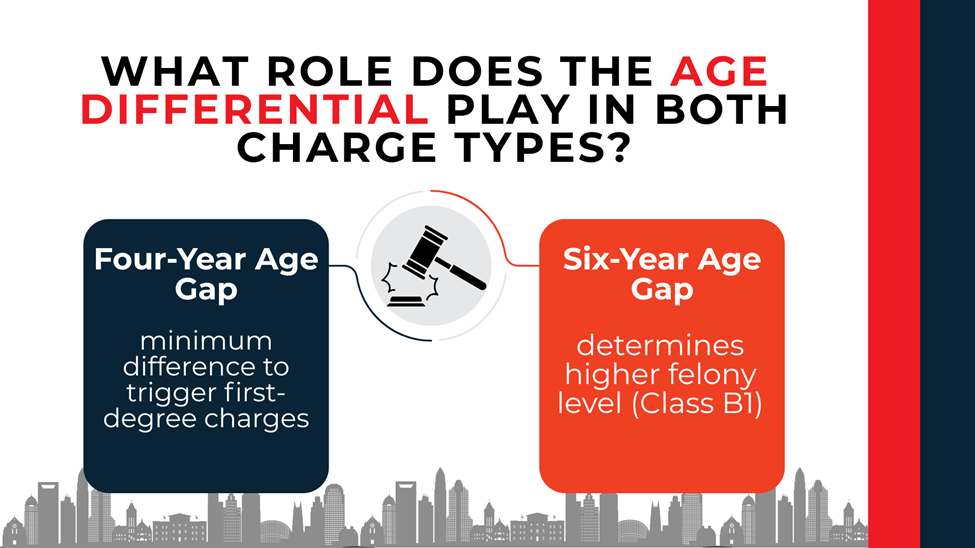
The four-year age differential serves as a threshold in several of these statutes. Under N.C. Gen. Stat. § 14-27.24 and § 14-27.29, first-degree statutory rape and first-degree statutory sexual offense require the defendant to be at least 12 years old and at least four years older than a victim under 13. This means that the four-year gap is the minimum differential that triggers criminal liability for defendants between ages 12 and 17 when the victim is under 13. The law recognizes that sexual conduct between individuals close in age may warrant different treatment than situations involving significant age disparities.
How Does the Six-Year Age Gap Elevate the Offense Level?
The six-year differential determines whether certain charges are Class B1 or Class C felonies. When the victim is 15 or younger and the defendant is at least six years older, both statutory rape under § 14-27.25(a) and statutory sexual offense under § 14-27.30(a) are Class B1 felonies. When the age gap is more than four but less than six years, and no other law provides greater punishment, the charges are Class C felonies under subsection (b) of each statute. This distinction can significantly impact sentencing exposure.
Why Does the Defendant’s Age Matter in These Cases?
North Carolina’s statutory scheme establishes minimum defendant ages that vary by offense. For the “by an adult” charges, the defendant must be at least 18 years old. For first-degree statutory rape and statutory sexual offense involving victims under 13, the defendant must be at least 12 and at least four years older than the victim. For offenses involving victims 15 or younger, the defendant must be at least 12. These age requirements mean that the defendant’s exact age at the time of the alleged offense is a critical factual determination that directly affects which charges can be sustained.
What Defense Strategies Apply to Both Types of Charges?
Can Consent Ever Be a Defense in Statutory Cases?
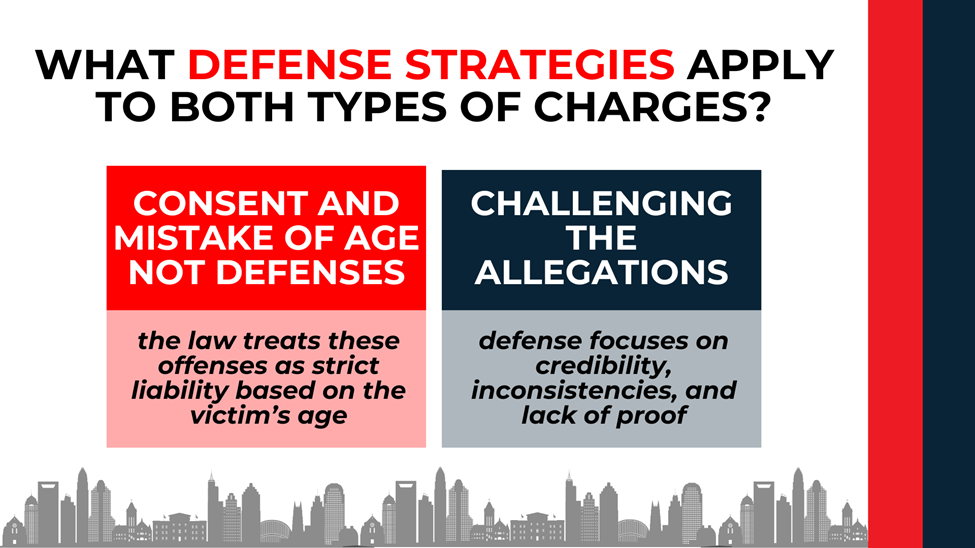
Consent is not a defense to statutory rape or statutory sexual offense charges in North Carolina. The entire premise of these statutes is that individuals below certain ages cannot legally consent to sexual conduct. Even if the alleged victim appeared willing, agreed to the conduct, or initiated contact, the defendant cannot argue consent as a defense. This is a fundamental aspect of these offenses that distinguishes them from other sex crimes where consent may be a contested issue.
What If the Defendant Reasonably Believed the Victim Was Older?
Mistake of age is generally not recognized as a defense to statutory sex offenses in North Carolina. The law imposes strict liability regarding the victim’s age, meaning the State does not need to prove the defendant knew the victim’s actual age. However, age-related evidence may still be relevant to overall defense strategy in certain circumstances. An experienced defense attorney can evaluate whether any aspects of the defendant’s reasonable belief might be relevant to the specific facts of a case or could affect prosecutorial discretion.
How Do False Allegation Defenses Apply to These Cases?
Challenging the reliability of allegations is often central to defending statutory sex offense cases. Because these cases frequently involve only two people and may lack physical evidence, the credibility and accuracy of the accusing witness’s statements become critical. Defense strategies may focus on inconsistencies in statements, problems with forensic interviews, issues with memory and suggestibility, potential motives to fabricate, and analysis of how the allegations emerged and developed over time. These defenses do not require proving the defendant’s innocence but rather demonstrating that the State cannot meet its burden of proving guilt beyond a reasonable doubt.
Why Does an Experienced Defense Attorney Matter for These Charges?
How Does Understanding Prosecution Strategy Help the Defense?
Statutory sex offense cases require an attorney who understands how prosecutors approach these matters. The State must prove specific elements for each charge, including the type of conduct, the victim’s age, the defendant’s age, and the age differential between them. Prosecutors make strategic decisions about which specific statutes to charge, whether to pursue multiple counts, and how to present evidence regarding the nature of the alleged conduct. A defense attorney who understands these prosecutorial decisions can identify weaknesses in the State’s case, challenge the sufficiency of evidence, and develop strategies tailored to the specific charges filed.
What Should You Look for in a Defense Attorney for Sex Offense Cases?
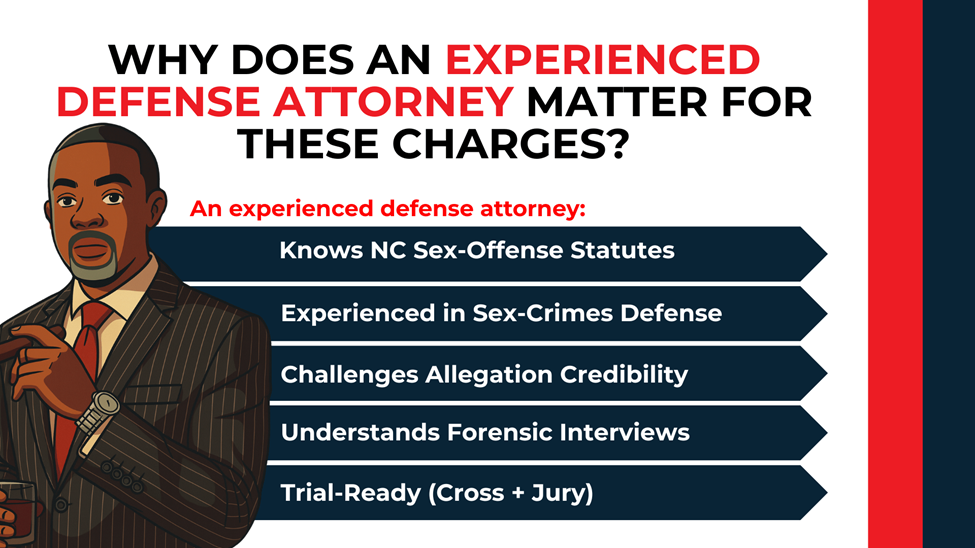
Defending against statutory rape or statutory sexual offense charges requires specific knowledge and skills. You need an attorney who understands North Carolina’s complex statutory framework for sex offenses, knows how to challenge the reliability of allegations, and can effectively present your defense at trial if necessary. The stakes are too high for general criminal defense representation. These cases demand an attorney with focused training and experience in sex crimes defense, familiarity with forensic interview protocols and their limitations, and the courtroom skills to effectively cross-examine witnesses and present your case to a jury.
Protect Your Future With Experienced Defense Representation
Facing statutory rape or statutory sexual offense charges demands a fearless attorney who understands exactly how prosecutors build these cases. Attorney Patrick Roberts brings two decades of criminal defense experience, having tried hundreds of bench and jury trials in state and federal courts in North Carolina. Because he spent years as a prosecutor handling sex-offense matters before becoming a defense attorney, he recognizes where weaknesses in the evidence exist and how charging decisions are made. This “insider” perspective allows him to deploy unique defense strategies that are designed to challenge the State’s narrative from day one.
His commitment to an effective defense includes extensive training through the National Association of Criminal Defense Lawyers (NACDL) sex-crimes defense seminars, where he maintains a lifetime membership. His certification through the National Child Abuse Defense and Resource Center provides focused preparation for defending against allegations involving children—as of December 2025, he is the only attorney in North Carolina listed on their website at falseallegation.org.
Mr. Roberts utilizes creative defense techniques developed through the National Criminal Defense College and Gerry Spence’s Trial Lawyers College, where he trained directly with legendary advocate Gerry Spence. These powerful trial skills prepare him to take your case to trial whenever your defense requires a respected and aggressive voice in the courtroom.
Peer Insight: The Professional Standard
“Mr. Roberts demonstrates a high level of expertise, competence and professionalism. He is well prepared for trial and represents all clients well. Mr. Roberts is dependable and he represents the legal profession well. I am confident in his ability to represent his clients.”* – Peer Review on October 30, 2018 via Martindale-Hubbell
Disclaimer: The testimonials and peer reviews on this site are for informational purposes. They do not constitute a guarantee, warranty, or prediction regarding the outcome of your legal matter. Every case is different and must be evaluated on its own merits.
*Testimonials and peer endorsements found on this website are actual comments.
If you or someone you care about is facing statutory rape or statutory sexual offense charges anywhere in North Carolina, contact Patrick Roberts Law to discuss your situation and explore your defense options.

Frequently Asked Questions
Can someone be charged with both statutory rape and statutory sexual offense?
Yes. If the alleged conduct includes both vaginal intercourse and other sexual acts, prosecutors can file both types of charges. Each type of conduct constitutes a separate offense under North Carolina law, and a defendant could potentially face multiple counts arising from the same incident or series of incidents.
Does the marriage exception apply to both types of charges?
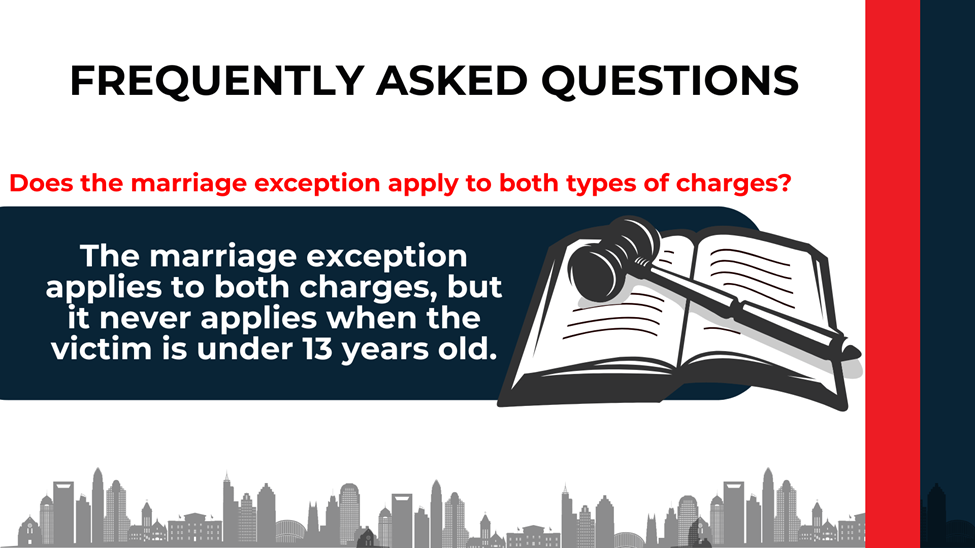
The statutory rape provisions under N.C. Gen. Stat. § 14-27.25 include an exception when the defendant is lawfully married to the person. Similarly, the statutory sexual offense provisions under N.C. Gen. Stat. § 14-27.30 contain this same exception. However, the statutes involving victims under age 13 do not contain marriage exceptions.
What is the statute of limitations for these offenses in North Carolina?
North Carolina has no statute of limitations for felonies. Both statutory rape and statutory sexual offense charges classified as felonies can be prosecuted at any time after the alleged offense occurred, regardless of how many years have passed.
Are these charges eligible for expungement?
Convictions for statutory rape and statutory sexual offense are generally not eligible for expungement under North Carolina law. These offenses are classified as serious felonies, and the expungement statutes contain exclusions for violent and sexual offenses.
Will a conviction require sex offender registration?
Yes. Convictions for statutory rape and statutory sexual offense require registration on the North Carolina Sex Offender Registry. The registration period and specific requirements depend on the offense classification and other factors determined at sentencing. The “by an adult” offenses under § 14-27.23 and § 14-27.28 also require enrollment in satellite-based monitoring following completion of the active sentence.
Disclaimer: The information on this website is for general information purposes only. Nothing on this site should be taken as legal advice for any individual case or situation. Case results depend upon a variety of factors unique to each case. Prior results do not guarantee a similar outcome.
Former assistant district attorney
Contact Patrick Roberts
Facing criminal charges in North Carolina demands seasoned representation. Trust in the experience and dual perspective of Patrick Roberts. Reach out today for a confidential consultation.
-
Call Our Team
Calls answered 24/7








For more information on the selection criteria, go to www.martindale.com
*Each case is different and must be evaluated separately. Prior results achieved do not guarantee similar results can be achieved in future cases.