North Carolina's Second Chance Act is a 2020 law (S.L. 2020-35) that makes it easier to clear an old criminal record. It automatically wipes many dismissed and not-guilty charges without you filing anything. And it lets people petition to erase older nonviolent convictions that used to stay on your record for life. Whether it reaches your record comes down to one question above all: are you dealing with a charge that was dropped, or a charge you were actually convicted of? The answer puts you on one of two very different tracks.
This article walks through both. It covers how automatic clearing works for dismissed charges, how the petition process works for old convictions, which convictions qualify as "nonviolent" and which are shut out, how long you have to wait, how many offenses you can clear, what can disqualify you, and how to start. One note before we go: this is North Carolina's state law, not the federal reentry program that shares the same name.
What is North Carolina's Second Chance Act?
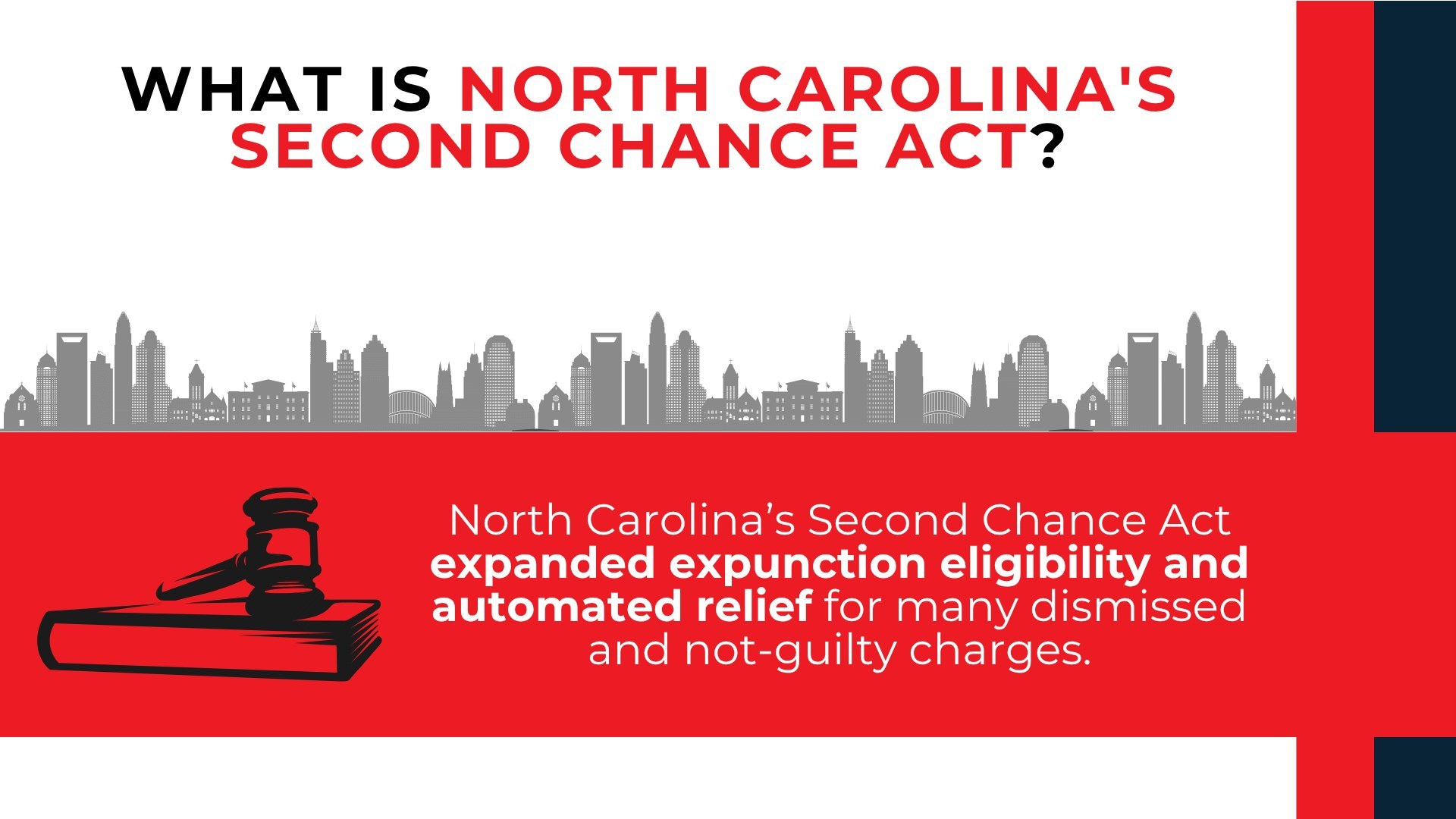
The Second Chance Act expanded who can clear a North Carolina criminal record. For the first time, it also made a lot of that clearing happen automatically. It did two main things. First, it set up automatic expunction (erasure of your record) for many dismissed and not-guilty charges. Second, it broadened the path to petition (formally ask a court) to expunge older nonviolent convictions under N.C. Gen. Stat. § 15A-145.5.
North Carolina has no general "sealing" law that hides a record from view. Every bit of record relief comes from specific permissions written into Chapter 15A, Article 5 of the state statutes. The Second Chance Act is the centerpiece of that system today, and its two tracks (dismissals versus convictions) work by completely different rules. Everything below follows that split.
By the numbers, the automatic side dwarfs everything else. In fiscal year 2024–25, North Carolina courts issued1,381,128 automatic expunctions of dismissed and not-guilty charges, compared with just3,599 petition-based expunctions of nonviolent convictions. If your charges were dropped, the law is doing a lot of the work for you. If you were convicted, the work is yours to start, but it's doable.
My charges were dismissed or I was found not guilty: is my record already cleared automatically?
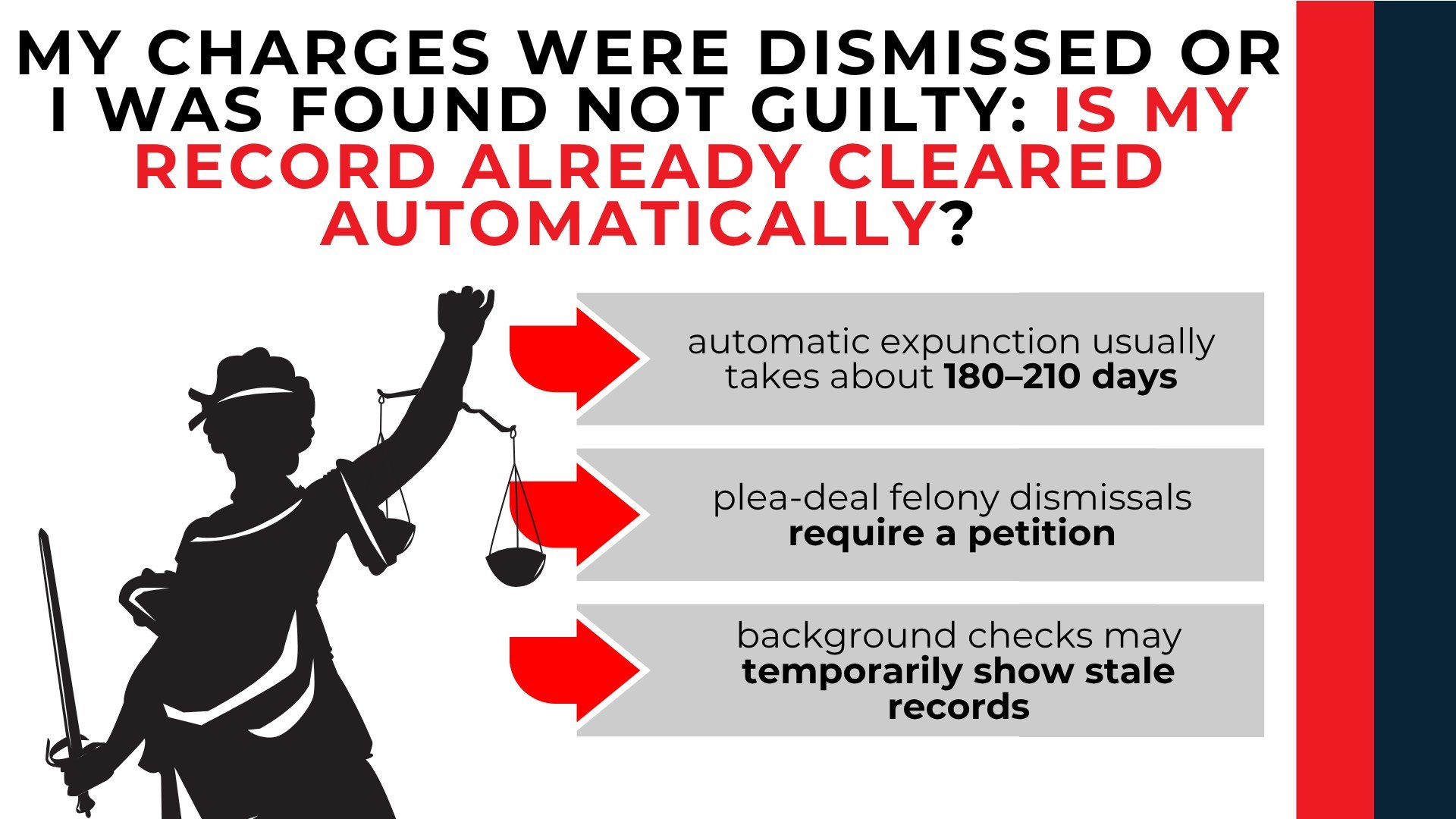
Probably, yes, with one important exception. Under § 15A-146(a4), as restructured by S.L. 2024-35, qualifying dismissals and not-guilty findings are now expunged automatically, roughly 180 to 210 days after the case is finally resolved. There's no petition, no fee, and nothing for you to file.
The exception catches people who assume they're covered. A felony charge that was dismissed as part of a plea agreement (meaning you pleaded to something else and this charge got dropped in the deal) is not cleared automatically. That one requires a petition. So if your felony went away because of a plea, don't assume it's gone.
There's also a practical wrinkle worth knowing. Automatic expunctions skip the clerk-notification steps that § 15A-150 requires for petition-based ones. In plain terms, the court clears the record, but the notice that tells outside agencies to update their copies doesn't always go out. That can leave a stale entry floating around on a background check even after your record is officially clean. If you're seeing something you thought was expunged, that gap is often why, and it's fixable.
Can the Second Chance Act actually clear a conviction, not just a dismissal?
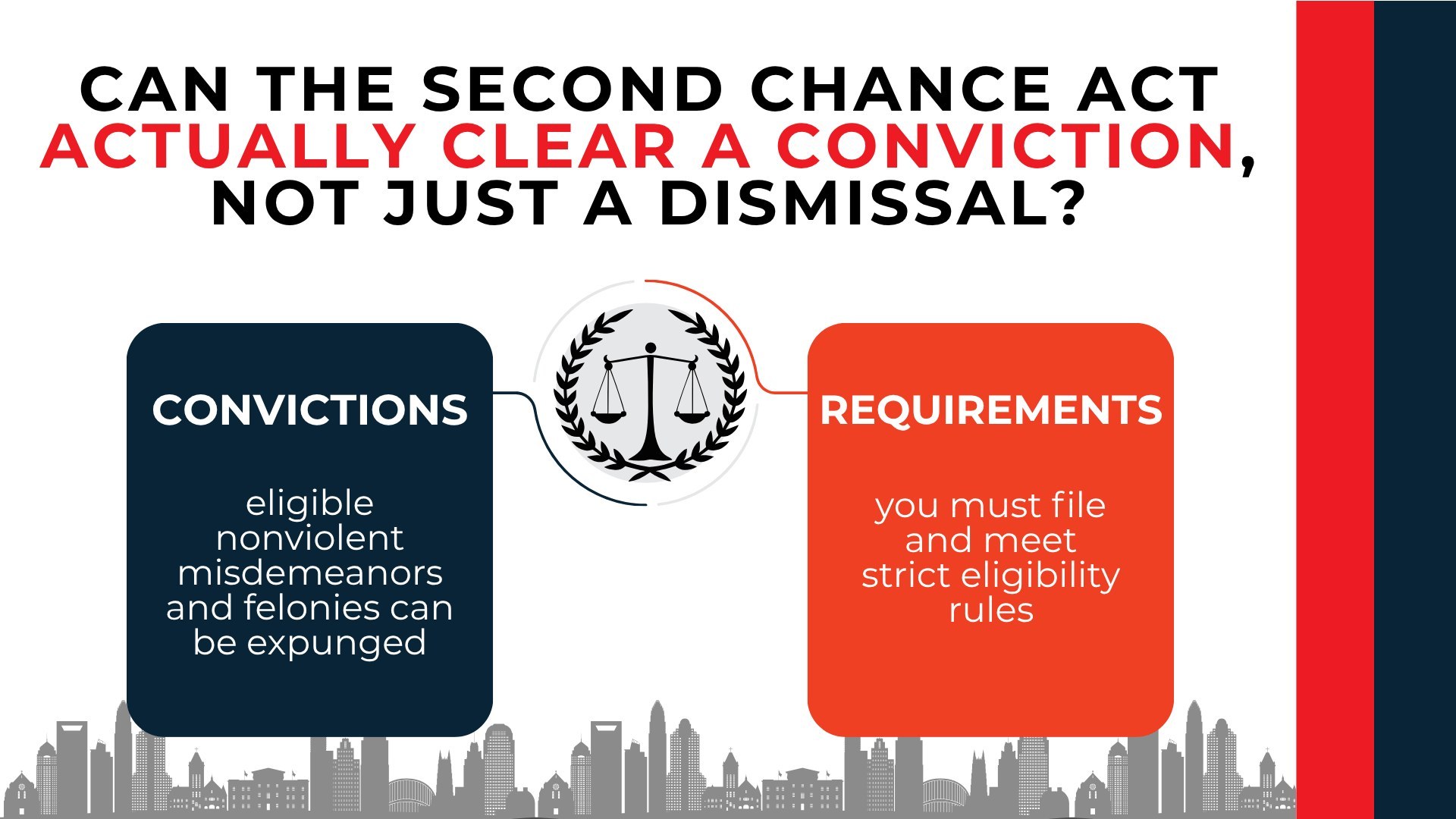
Yes. This is the part that changed the most. Under § 15A-145.5, you can petition a court to expunge nonviolent misdemeanor and nonviolent felony convictions. That's not just charges that were dropped, but ones you were found or pleaded guilty to.
Two things make this track different from the automatic one. First, nothing happens on its own; you have to file. Second, the court has discretion and the eligibility rules are strict. There's a definition of "nonviolent" you have to fit inside, waiting periods you have to clear, and disqualifiers that can stop you even when your charge itself qualifies. The next four sections are how you figure out whether you're actually eligible.
This is also the pathway most people never use. The relief exists; the bottleneck is getting through the door.
Which convictions count as "nonviolent," and which are shut out?
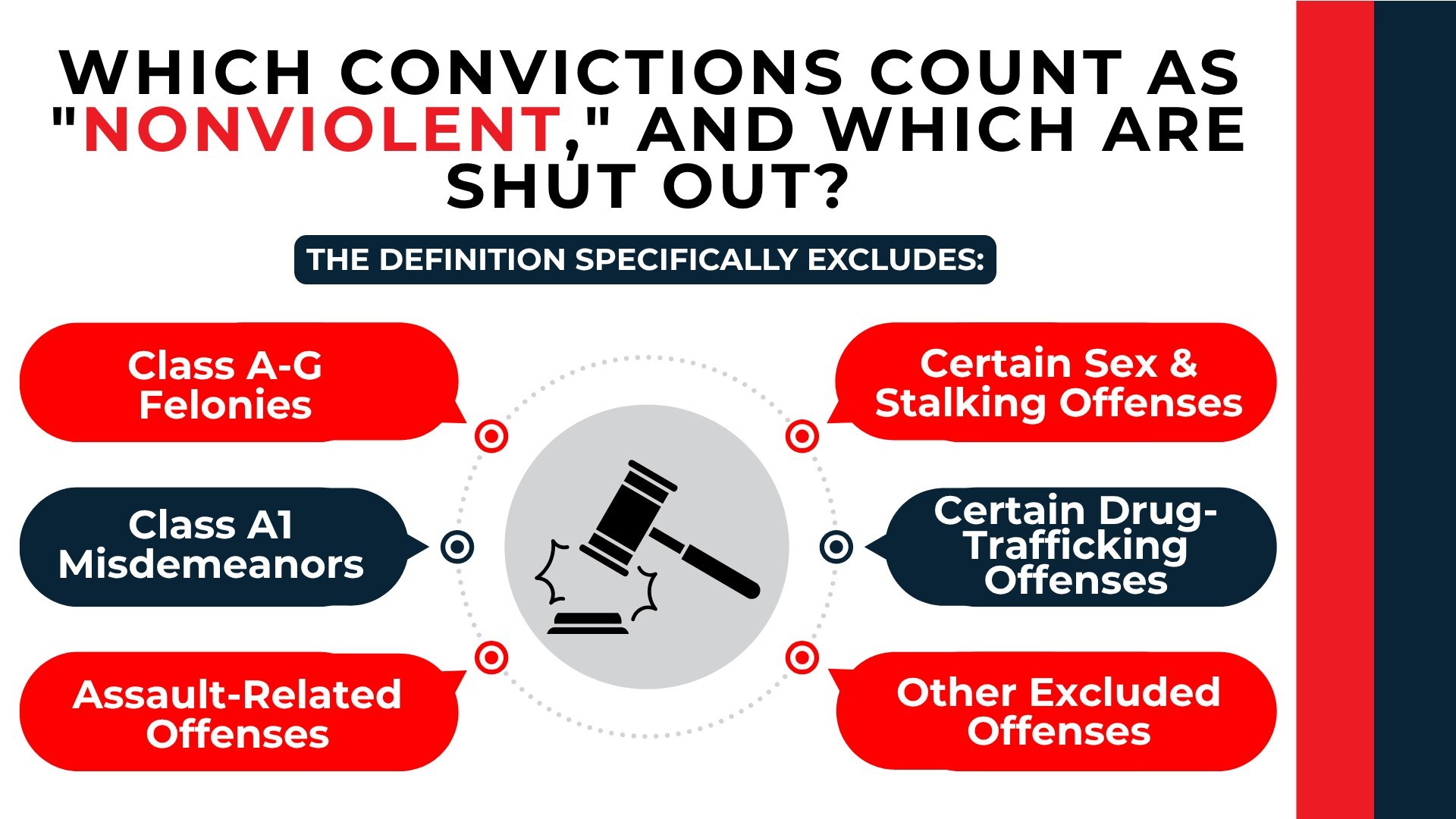
"Nonviolent" is the gatekeeper, and it's defined by exclusion in § 15A-145.5(a): a conviction qualifies only if it isn't on the excluded list. If your offense is on that list, this pathway is closed no matter how long ago it happened.
The definition specifically excludes:
• Class A through G felonies: the more serious felony classes
• Class A1 misdemeanors: the highest misdemeanor class
• Offenses with assault as an element: where causing or threatening physical harm is part of the charge itself
• Certain sex-related and stalking offenses
• Specific drug-trafficking felonies: including methamphetamine and heroin trafficking, and possession with intent to sell or deliver cocaine
• A handful of other exclusions: food contamination under G.S. 14-401.16, offenses under G.S. 14-54(a1), commercial-vehicle felonies, offenses under G.S. 14-12.12(b), 14-12.13, or 14-12.14, and any offense for which G.S. 14-3(c) was applied
If none of that describes your conviction, you're likely inside the "nonviolent" box and the waiting periods come next. If you're not sure how your old charge was classified (and a lot of people genuinely aren't), that's worth pinning down before anything else. Everything downstream depends on it.
How long do I have to wait before I can file?
The waiting period depends on what you're clearing. The clock runs from the later of two dates: your conviction, or the day you finished the whole sentence, including any probation or post-release supervision. Whichever comes last is where the count starts.
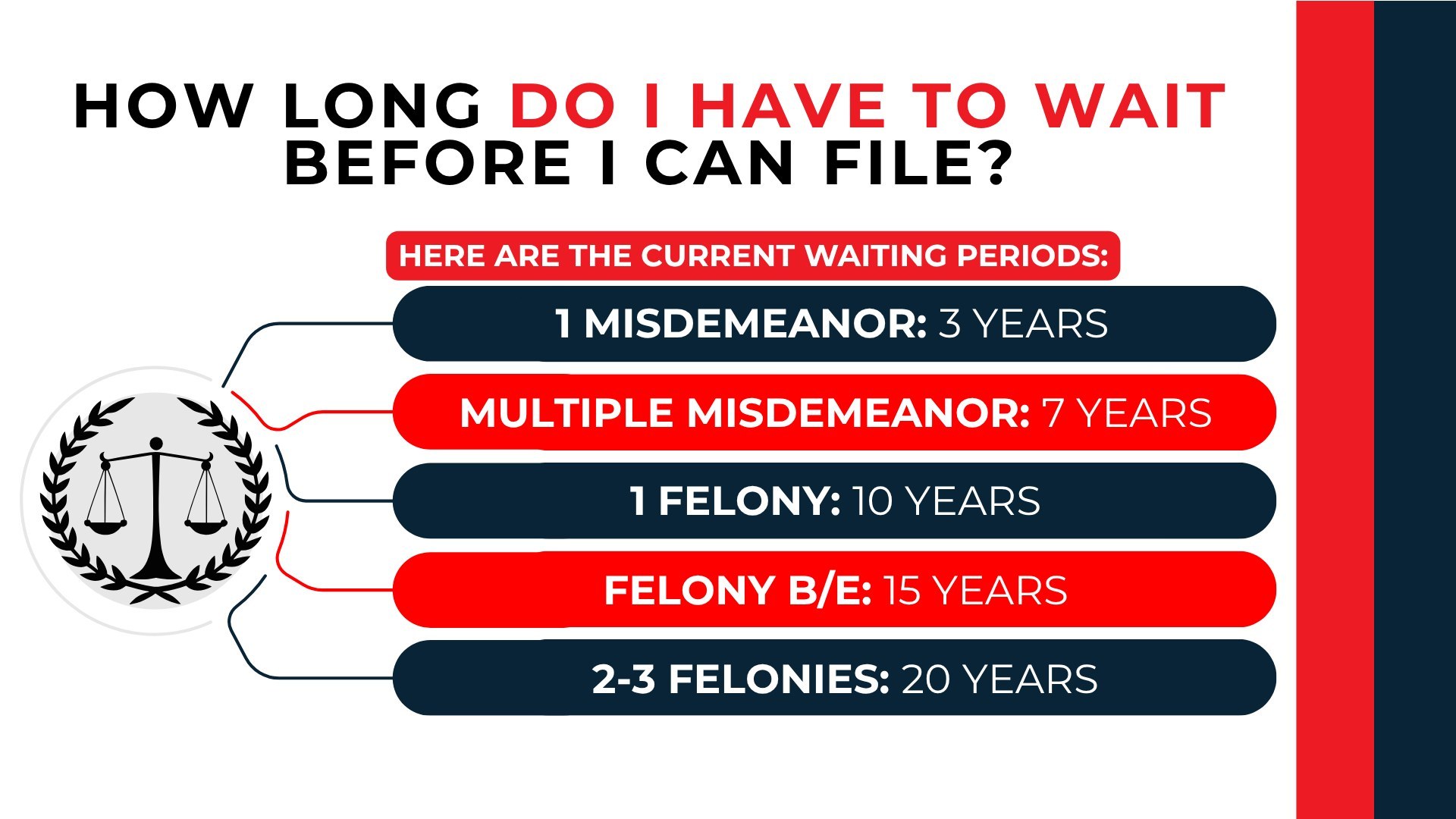
Here are the current waiting periods under § 15A-145.5:
• One nonviolent misdemeanor: 3 years. This dropped from 5 years under S.L. 2025-71, effective July 9, 2025.
• Multiple nonviolent misdemeanors: 7 years from your last conviction (or from finishing that sentence, whichever is later).
• One nonviolent felony: 10 years.
• One felony breaking or entering under G.S. 14-54(a): 15 years.
• Two or three nonviolent felonies: 20 years from the most recent conviction listed in your petition.
That the misdemeanor wait just got cut from five years to three is a good illustration of why these numbers are worth checking against the current statute rather than what you were told years ago. The legislature has been actively moving them.
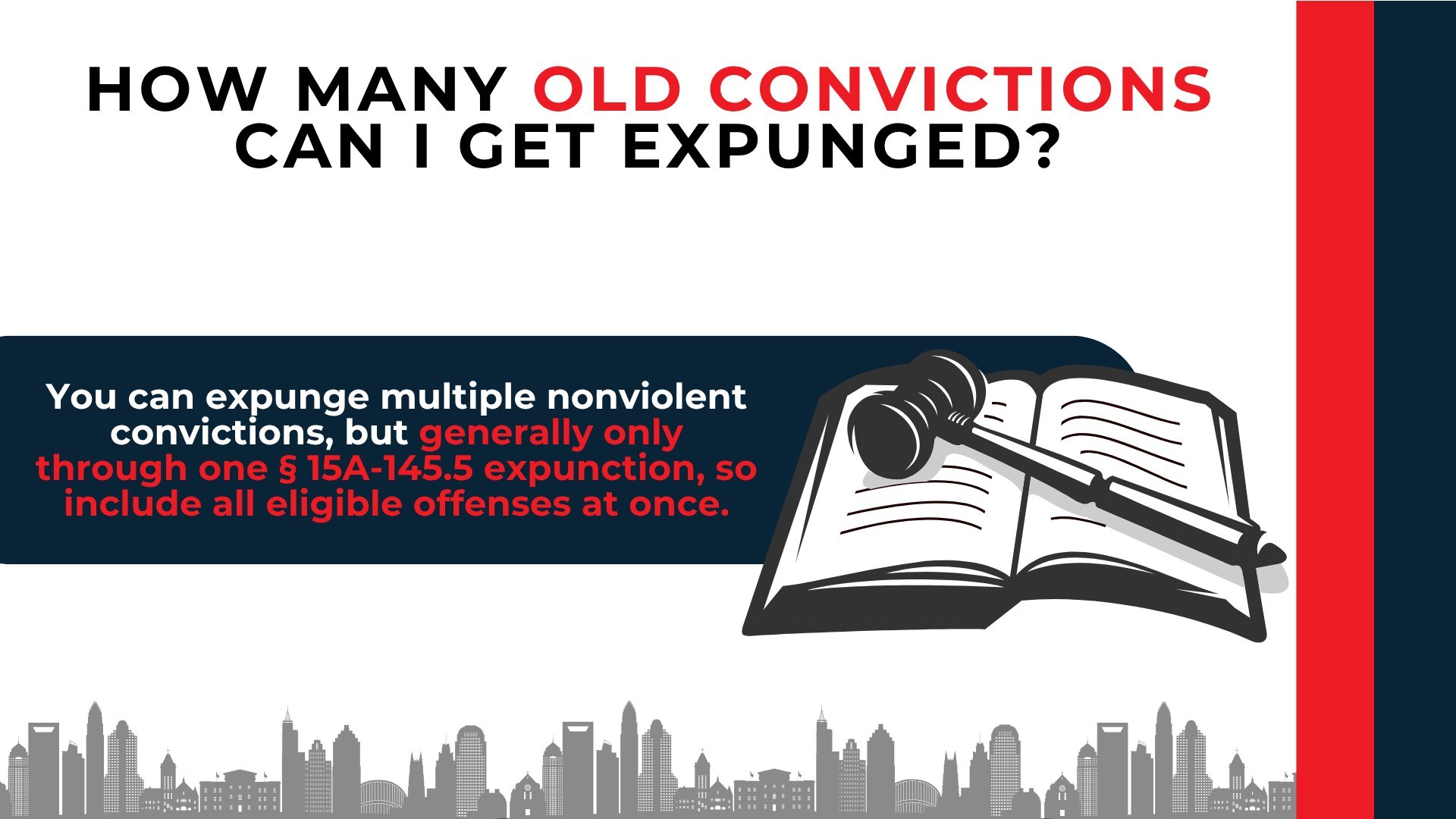
How many old convictions can I get expunged?
More than one, which is the other big shift the Second Chance Act made. The old rule was essentially one-and-done. Now the statute allows expunging multiple nonviolent offenses under the tiered timelines above. That's what the "multiple misdemeanors" and "two or three felonies" categories are for.
There's a catch that trips people up, though. A prior expunction under § 15A-145.5 generally bars you from getting another one, with only narrow multi-county exceptions. So the smart move is to clear everything eligible in a single, well-planned petition rather than burning your one shot on a single charge and getting locked out of the rest. If you have several things on your record, sequencing matters, and it's easy to get wrong on your own.
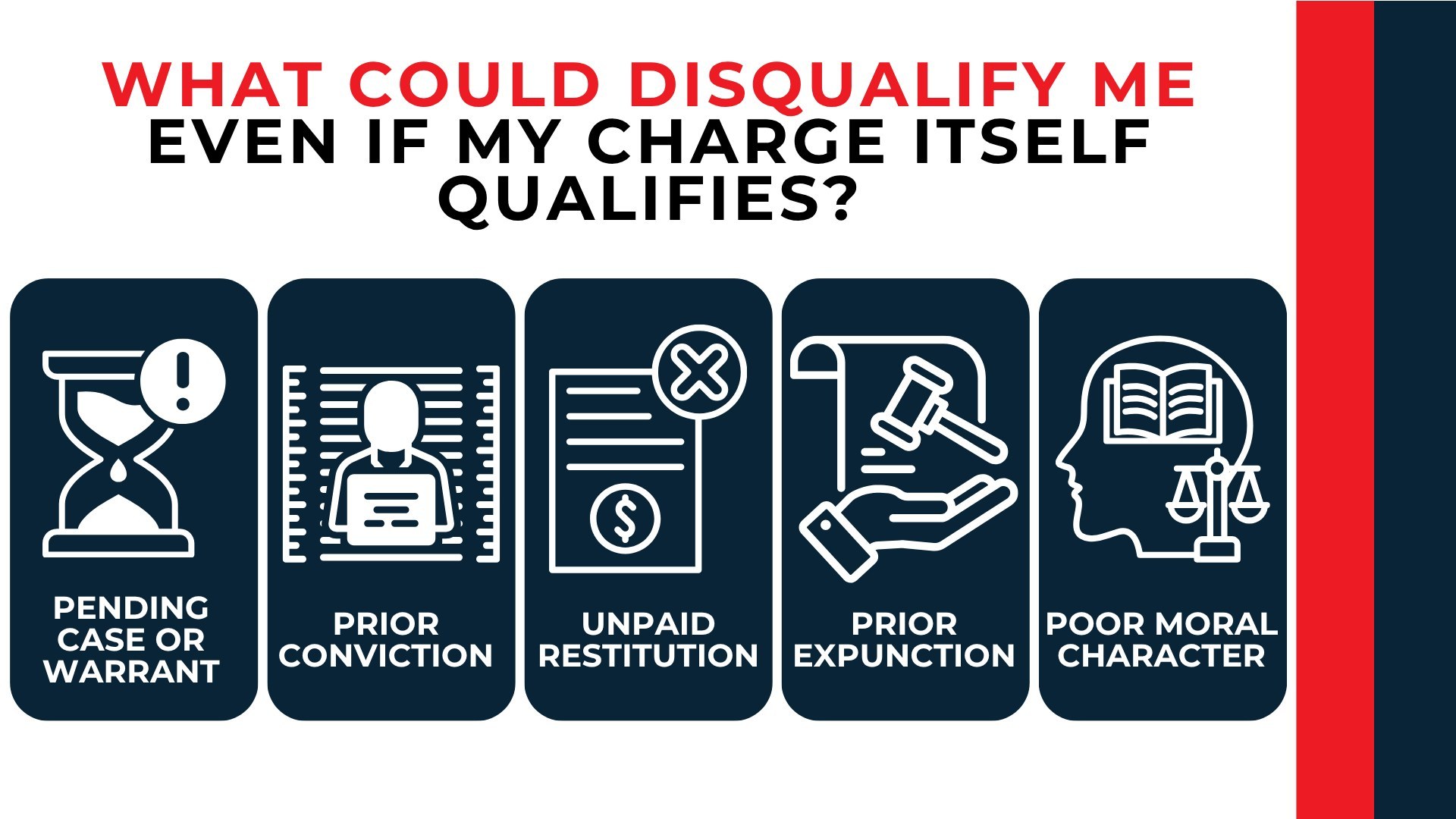
What could disqualify me even if my charge itself qualifies?
Plenty, and these are the traps that surface late, sometimes at the courthouse. Even a perfectly "nonviolent" conviction that's cleared its waiting period can be denied if you trip one of the disqualifiers in § 15A-145.5.
The disqualifiers to check before you file:
• A pending charge or an outstanding warrant: anything unresolved hanging over you
• A disqualifying prior conviction: certain other convictions on your record block relief
• Unpaid restitution: money still owed to a victim
• A prior § 15A-145.5 expunction: as covered above, with narrow exceptions
• Failure to show "good moral character" during the waiting period: the court has to be satisfied you've stayed on the right side of the line since the conviction
That last one isn't a formality. The judge has discretion here, and how your petition is presented affects whether they're persuaded. The rest are yes-or-no facts you can verify in advance, which is exactly why pulling your actual record before filing beats going on memory.
How do I start, and do I need a lawyer?
You start by filing a verified petition (a sworn request) on the correct Administrative Office of the Courts (AOC) form, in the county where the charge or conviction happened. The court generally decides it after a hearing. There's a $175 filing fee under §§ 15A-145(e) and 15A-145.5(g), waivable if you can't afford it. Most petitions also require record checks from both the AOC (to confirm you haven't used up a prior expunction) and the SBI (your full criminal history).
You're not legally required to have a lawyer. But look back at what this article covered: figuring out whether your conviction is truly "nonviolent," which class it was, when the clock actually started, whether a disqualifier is lurking, and how to clear everything in one petition without wasting your one shot. Those are the exact places do-it-yourself petitions fail: not on the paperwork, on the eligibility judgment underneath it. A denied or bungled petition can cost you the relief entirely.
Three steps to take now:
• Figure out which track you're on. Dismissed or not-guilty charges are likely clearing automatically (watch the felony-plea exception); actual convictions require a petition.
• Pull your real record from the SBI and AOC so you're working from facts, not memory, and check it against the disqualifiers above.
• Talk to a North Carolina criminal defense attorney before you file, especially if you have more than one offense or any uncertainty about how a charge was classified.
Navigating Record Expungement and Legal Relief in North Carolina
For individuals seeking to clear their criminal records under North Carolina’s Second Chance Act, engaging with counsel who understands both the procedural technicalities and the long-term impact of these petitions is critical. Attorney Patrick Roberts, brings over two decades of legal experience to this complex area of law. A former Assistant District Attorney who served in three North Carolina prosecutorial districts, Mr. Roberts possesses a dual-perspective expertise that informs his approach to navigating statutory requirements, waiting periods, and the nuances of nonviolent conviction eligibility. Admitted to practice before the U.S. Supreme Court and holding an AV Preeminent rating from Martindale-Hubbell, he has built a practice dedicated to zealous criminal defense and the strategic resolution of complex legal matters. Mr. Roberts’ extensive background—ranging from handling high-level felony litigation to assisting clients with registry matters and technical compliance—provides a foundation of insight for those looking to resolve past charges and secure their future through the expungement process.
• National Legal Recognition: Selected by the National Association of Distinguished Counsel to the "Nation’s Top 1 Percent" on six separate occasions between 2015 and 2026.
• Martindale-Hubbell Rating: Maintains the AV Preeminent peer-review rating and the Client Champion Platinum designation, both held consecutively from 2018 through 2026.
• Academic and Trial Training: Graduate of the National Criminal Defense College's Trial Practice Institute and Gerry Spence’s Trial Lawyers College
• Former Prosecutor Perspective: Served as an Assistant District Attorney across three North Carolina districts, providing direct insight into how the state processes dismissals, plea deals, and record-related procedural filings.
• Digital Evidence Expertise: Completed the "Defending Digital Sex Crimes Bootcamp" in 2026 and regularly collaborates with independent forensic analysts to audit government data, essential for managing complex records and technical eligibility requirements.
• Regulatory Experience: Appointed by the Governor to the North Carolina Juvenile Justice Planning Committee under the Governor's Crime Commission, demonstrating a high-level understanding of state legislative frameworks and system policy.
• Trial Experience: Over 75 completed jury trials across state and federal jurisdictions.
Client Review
...I was being questioned by authorities on a case involving a sex crime... I went into the Raleigh office, and after talking with Mr. Roberts I knew I was in the right place... The staff responded very quickly, kept me informed, and in the end, case dismissed. Do NOT wait until you are formally charged; if you think there's even a chance, go see this firm.
— Review by a verified client via Avvo
Peer Endorsement
I knew Patrick when he was an Assistant District Attorney, and was always impressed with his high ethical standards and his reasoned, experienced approach in handling cases. He is an exemplary attorney and I highly recommend him.
— Peer endorsement by a fellow North Carolina trial attorney via Avvo
Disclaimer: The client reviews and peer endorsements displayed are authentic testimonials and comments provided by clients and fellow attorneys. Every case is unique and must be evaluated individually; past client experiences and case results do not guarantee, promise, or predict similar outcomes in any future matter.
Case Results
Understanding the specific outcomes a lawyer has delivered helps you feel confident in your decision. Here are some case results by Attorney Patrick Roberts:
• Sexual Offense Allegation: Mr. Roberts challenged the validity of a Second Degree Sexual Offense charge by investigating the accuser’s background, including substance abuse history and potential biases. Following the presentation of this evidence, the prosecution dismissed the case.
○ Outcome: Dismissed
• Armed Robbery and Conspiracy Allegation: Representing an individual charged with robbery with a deadly weapon and conspiracy, Mr. Roberts successfully argued that the accused lacked motive and had been falsely implicated by a co-defendant. All felony charges were subsequently dropped.
○ Outcome: Dismissed
• First Degree Burglary and Larceny Allegation: Attorney Roberts utilized phone records to prove that an eyewitness misidentified the accused in a photo lineup regarding charges of First Degree Burglary and Felony Larceny. The prosecution accepted the findings and dismissed all counts.
○ Outcome: Dismissed
• Obtaining Property by False Pretenses Allegation: An individual facing eight counts of obtaining property by false pretenses was cleared of all charges after Attorney Roberts provided proof that the accused was misidentified due to sharing a name with the actual offender.
○ Outcome: Dismissed
Disclaimer: Case outcomes depend upon a variety of factors unique to each case. Prior results do not guarantee or predict a similar outcome in any future legal matter.
Understanding Your Eligibility Under the Second Chance Act
Navigating the expungement process under North Carolina’s Second Chance Act requires a precise understanding of statutory requirements, waiting periods, and eligibility criteria. Whether you are seeking to clear dismissed charges or petition for the expungement of a nonviolent conviction, professional legal guidance is essential to ensure your petition is prepared correctly and to avoid procedural errors that could jeopardize your eligibility for relief.
Patrick Roberts Law PLLC provides dedicated representation for clients seeking to clear their criminal records. Based in Wake County, our firm serves clients throughout Raleigh, Cary, Apex, Holly Springs, Garner, and Fuquay-Varina, while also managing complex expungement matters in every county across North Carolina. To determine your eligibility and discuss your path forward, please visit www.patrickroberts.law to schedule a consultation.
To maintain a high standard of service and thorough oversight for each client, we manage a restricted caseload.
Disclaimer: This article is general legal information, not legal advice. Reading it does not create an attorney-client relationship. North Carolina expunction law is almost entirely statutory and subject to legislative change, and how these rules apply depends on the specific facts of your case. For guidance on your situation, consult a licensed North Carolina attorney.