Once your record is expunged in North Carolina, the general public, employers, landlords, and schools can no longer see it. By law, most of them can't even ask you about it. A narrow group of government actors, mainly prosecutors and the courts, keeps limited access to a confidential file, but only for specific justice-system purposes, not for anyone to browse.
That's the short answer. The rest of this article walks through exactly who falls into each bucket: who is permanently locked out of your record, who still retains access and why, how a federal or immigration context changes the picture, why an expunged record sometimes still surfaces on a background check anyway, whether you can legally deny the expunged matter when asked, and what recourse you have if someone shares it who shouldn't have.
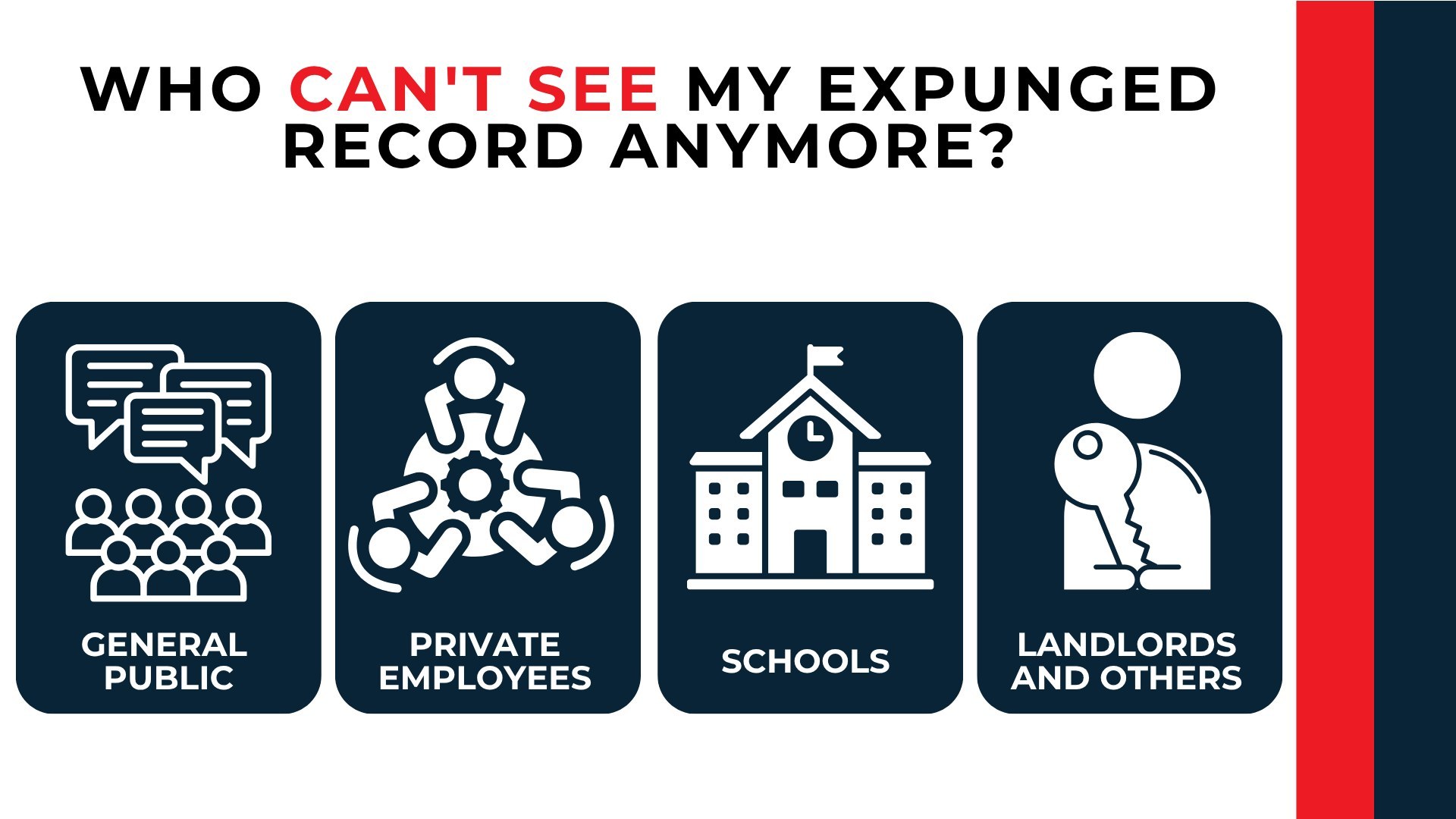
Who can't see my expunged record anymore?
After expunction, the people most likely to look you up (the general public, private employers, and educational institutions) can no longer see the expunged arrest, charge, or conviction. This is the largest and most important bucket, and it's where most of the reassurance lives.
North Carolina goes a step further than just blocking access. Under § 15A-153, employers and schools are prohibited from requiring you to disclose an expunged arrest, charge, or conviction. They can't lawfully make you volunteer it. That's the practical payoff of expungement. A background check run by a prospective employer or landlord should come back clean. And the application question asking whether you've been arrested or convicted no longer has to capture the expunged matter.
So for the ordinary situations that drive most of the anxiety here (a job application, an apartment, a professional program, a new relationship doing its own digging), the answer is that the expunged record is off-limits to them.
Then who can still see it?
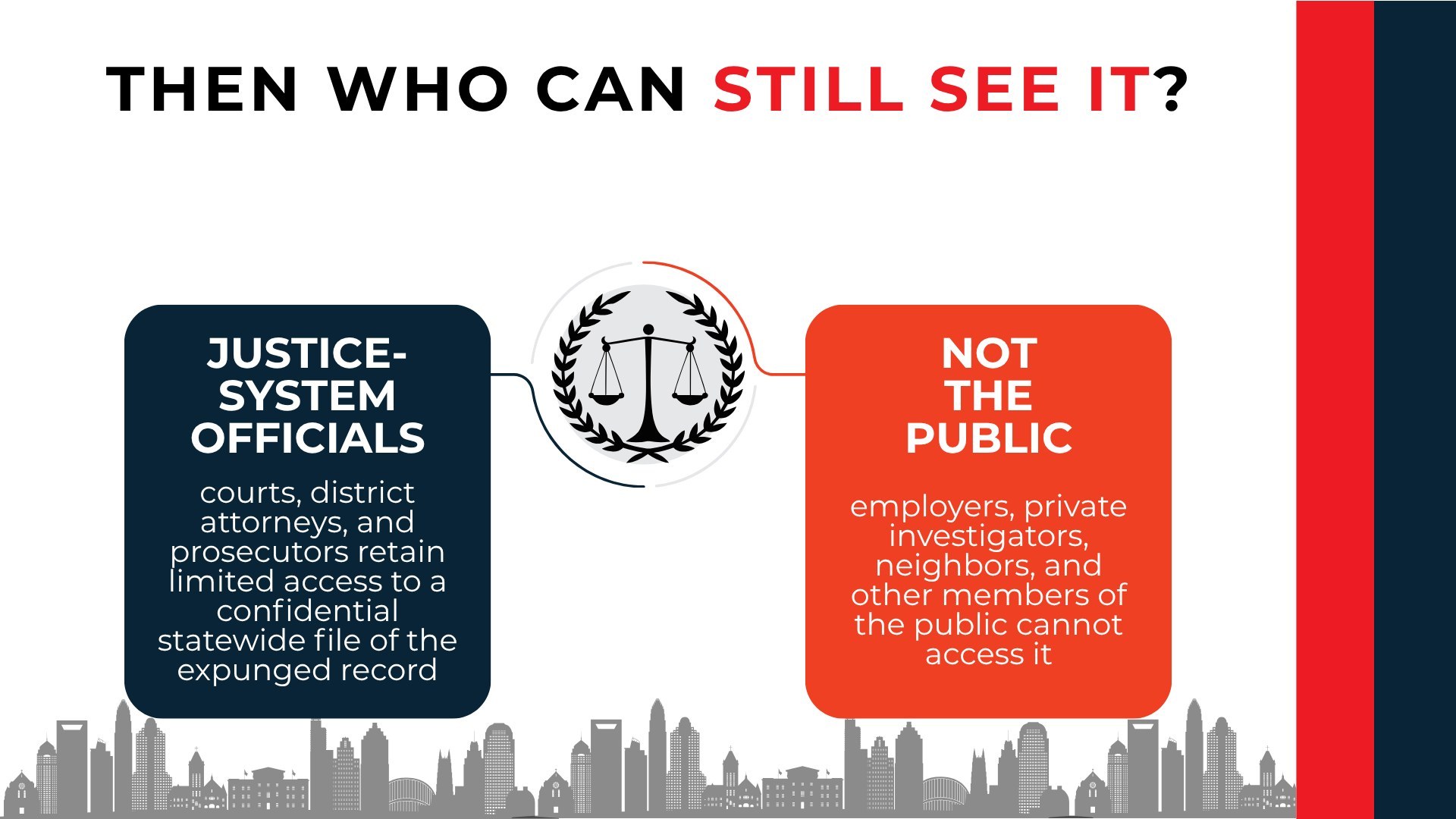
A confidential statewide file of the expunged record is retained. A defined set of justice-system officials (prosecutors, district attorneys, and the courts) keep limited access to it. This is the honest core of the question, and it's narrower than most people fear.
Two statutes govern this. Section 15A-151 directs that expunged records be kept in a confidential file rather than destroyed. Under § 15A-151.5, district attorneys and prosecutors are granted defined access to that file. The key word is defined: this is not open access, and it is not access for anyone outside the justice system. A prosecutor can reach the file for the specific statutory purposes described in the next section. A curious neighbor, a private investigator, or a hiring manager cannot.
Think of it this way: the courts keep a sealed copy so the justice system can do its job in a future case. But that copy is walled off from the world you actually live and work in.
If I'm ever charged again, can my expunged record be used against me?
For everyday life, no. Inside a future criminal prosecution, an expunged conviction can resurface in specific, listed ways, but only there, and only for the purposes the statute names.
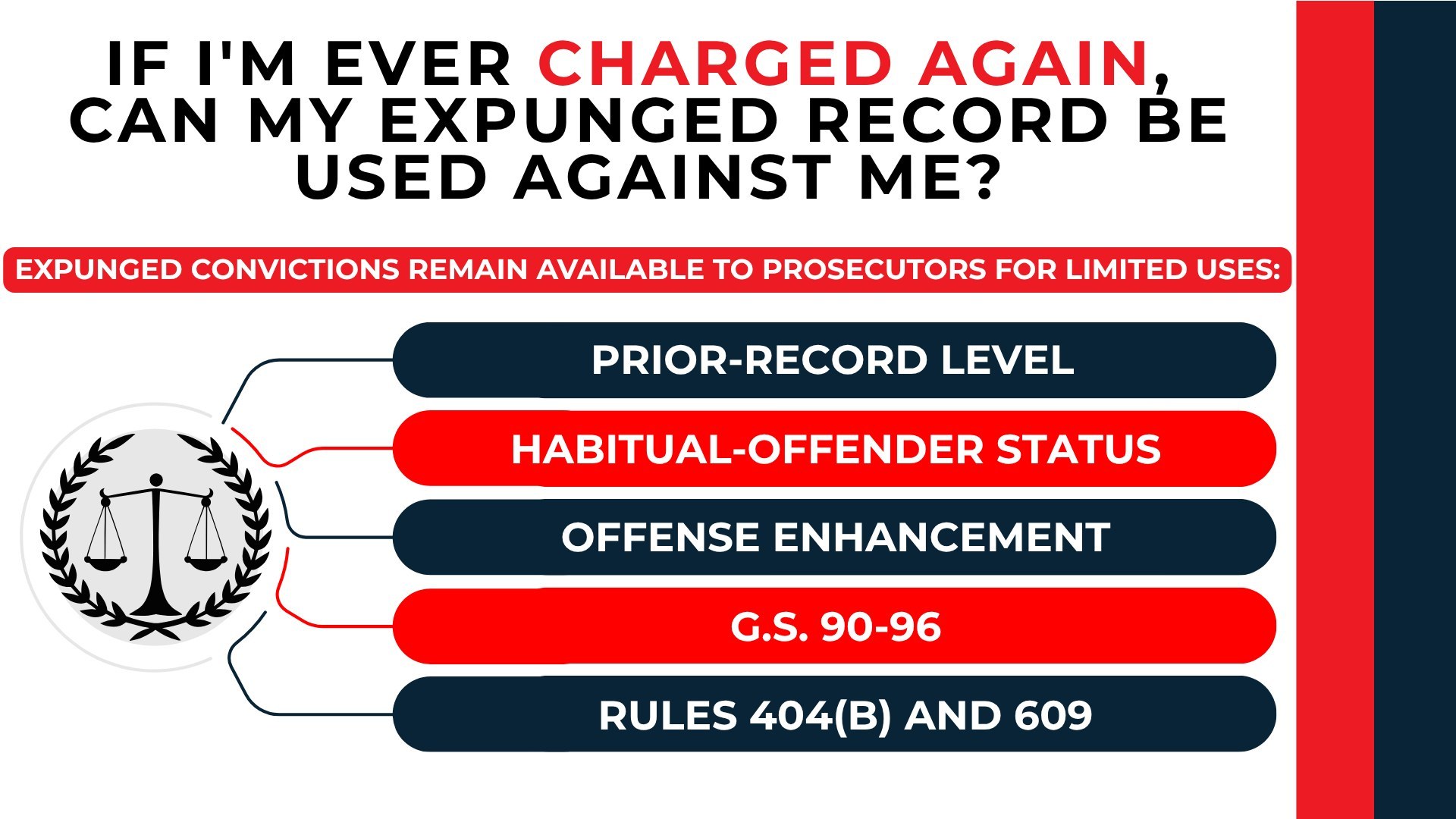
This is where the difference between an expunged dismissal and an expunged conviction matters. Under § 15A-151, expunged convictions remain available to district attorneys in the confidential file for a defined list of uses:
• Prior-record-level calculation: how your criminal history is scored if you're convicted of a new offense.
• Habitual-offender indictment: charging you as a repeat offender based on qualifying prior convictions.
• Offense-level enhancement: increasing the severity level of a new charge because of your history.
• G.S. 90-96 eligibility: determining eligibility under that statute.
• Rule 404(b) and Rule 609 purposes: using prior conduct or convictions as evidence in a later case, in the limited ways those evidence rules allow.
The takeaway: an expunged conviction is invisible to your employer and landlord. But it is not invisible to a prosecutor building a case against you down the road. If you have a conviction expunged and later face a new charge, that history can come back into play in the courtroom.
Does a North Carolina expungement erase it at the federal level too?
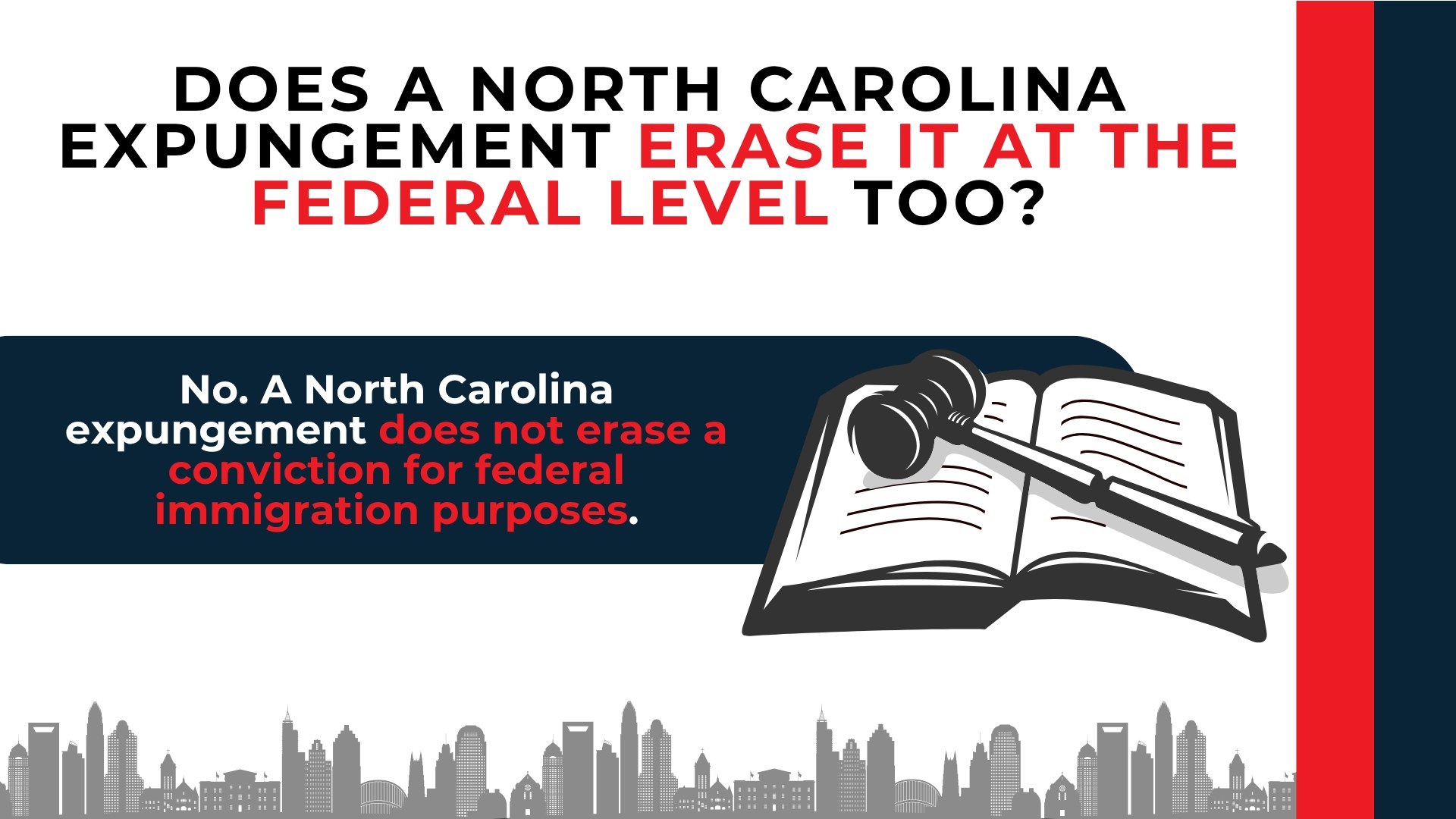
No. A North Carolina expunction does not undo federal immigration consequences, because federal law uses its own definition of "conviction," one your state expunction doesn't reach.
This is a category of access many people never think to ask about. State expungement is governed by state statute; federal immigration authorities apply federal standards. Under those federal definitions, a matter you've cleared in North Carolina can still count as a conviction for immigration purposes.
If you are not a U.S. citizen, this is not a detail to gloss over. An expunction that fully protects you in the employment and housing context may do nothing for you in an immigration proceeding. This is precisely the kind of situation where you want a lawyer looking at your specific record before you rely on the expunction. A general reassurance here would be irresponsible.
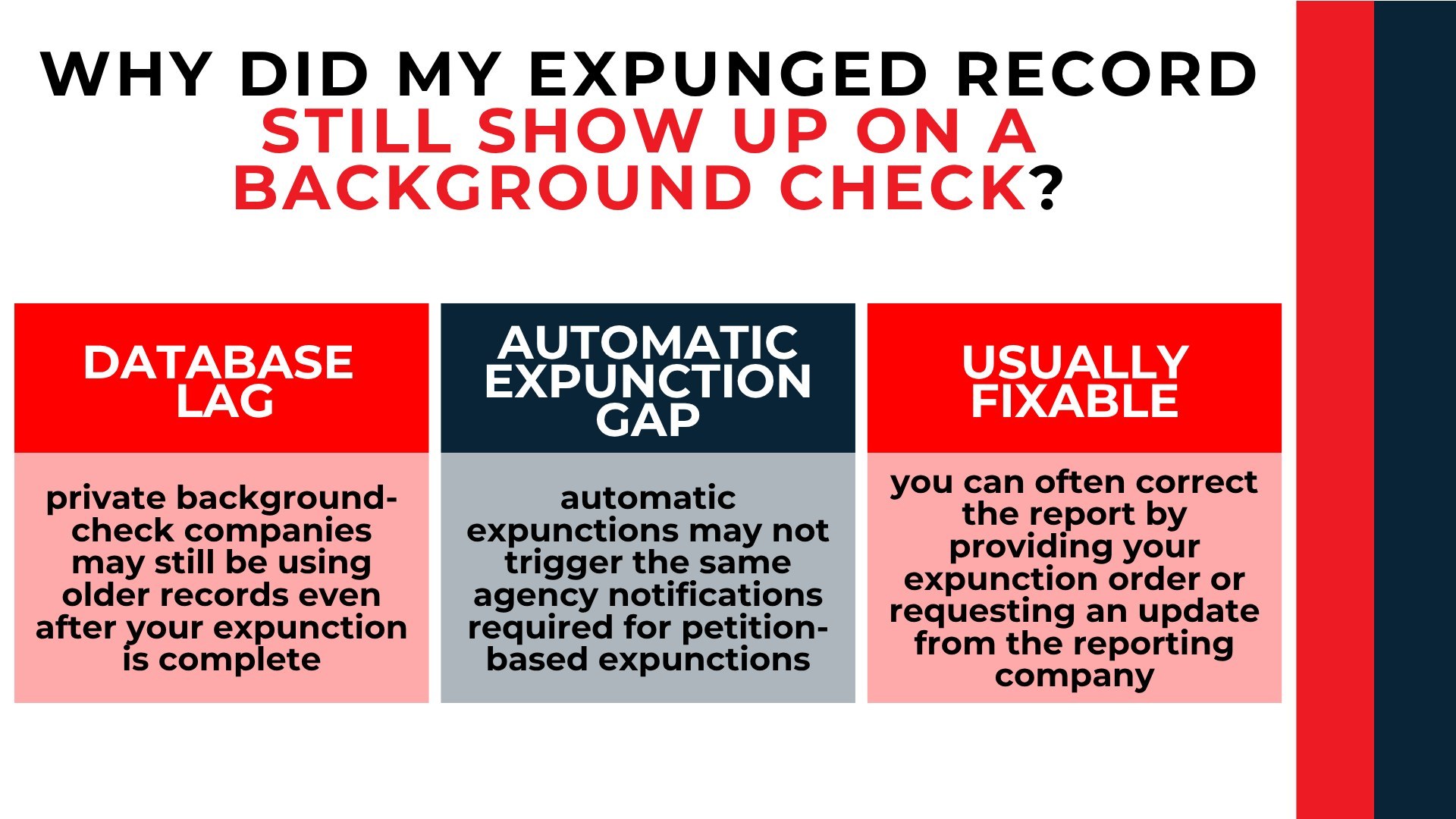
Why did my expunged record still show up on a background check?
Usually because of a lag between the court order and the private databases, not because the expungement failed. This is one of the most common reasons people go looking for this answer after they've already gotten relief. And the fix is generally administrative, not legal.
Here's how it works. When an expunction is granted through the normal petition process, § 15A-150 requires the clerk of court to send the order out to the agencies that hold the record: the Administrative Office of the Courts, the sheriff or arresting agency, the DMV where relevant, the State Bureau of Investigation, and, through the SBI, the FBI. That notification is what pushes the "this is expunged" signal through the system.
The gap appears with automatic expunctions. Those bypass the § 15A-150 clerk-notification duties, which can leave downstream agency records out of sync. And automatic expunctions are not a small side channel. They are by far the largest category of record clearing in the state, with 1,381,128 processed automatically in fiscal year 2024–25 alone. Private background-check companies buy and store data from these sources. When they're working from an older copy, an expunged record can still appear on their report even though it's legally gone.
If that happens to you, it typically means a specific database is out of date, not that your expunction is invalid. It's fixable, often by supplying the expunction order to the reporting company or pushing to have the record corrected at the source.
Can I legally say "no" if someone asks whether I've been arrested or convicted?
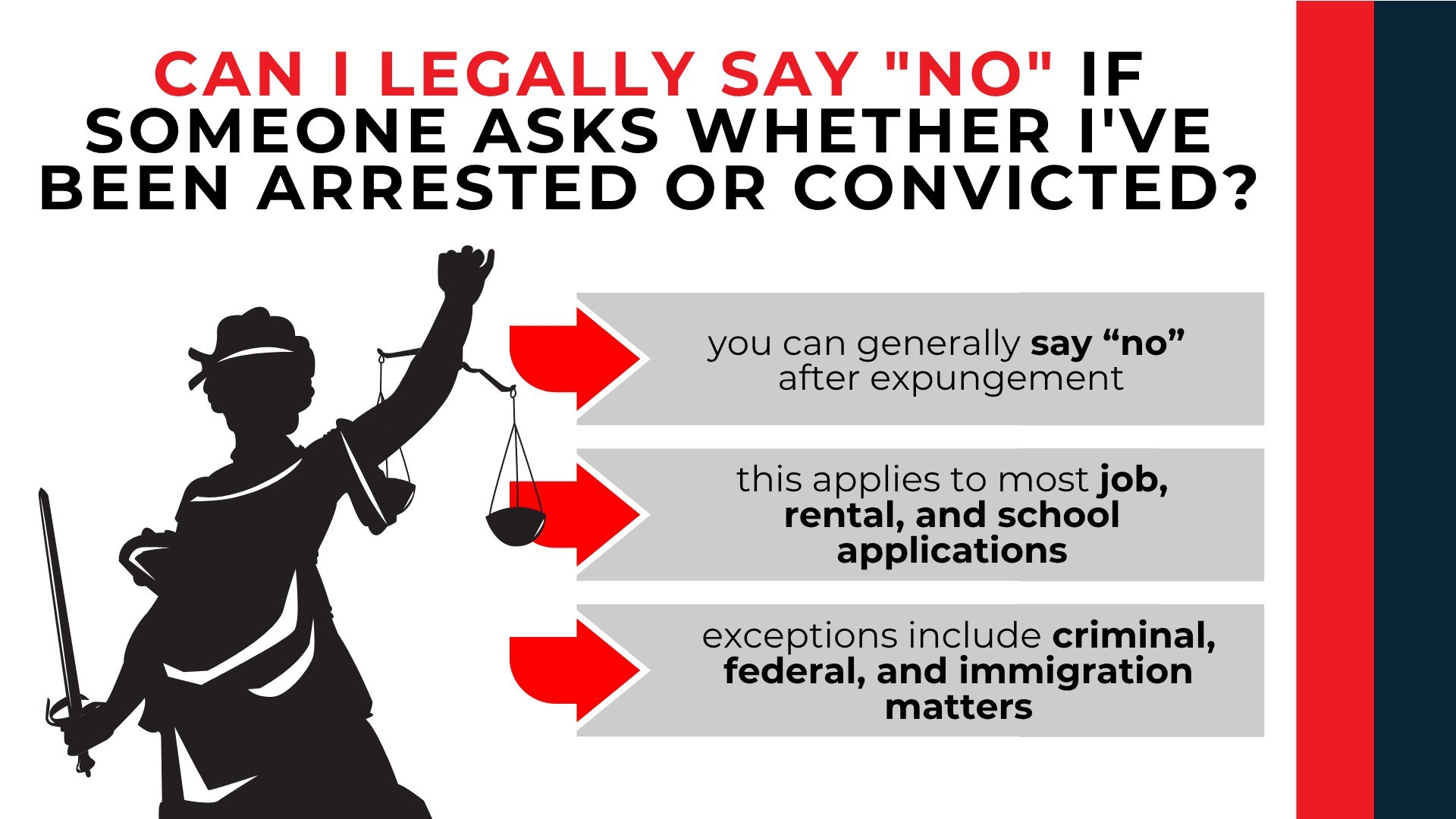
In most contexts, yes: once a matter is expunged, you may lawfully deny that it ever happened. Section 15A-153 restores your pre-offense legal status, and that includes the right to answer as though the expunged arrest, charge, or conviction never occurred.
For the standard job application, rental application, or school form, you can answer "no" to a question about the expunged matter without lying in the eyes of the law. That's the entire point of the relief.
The honest edges are the ones already covered above. One is the justice-system uses that a prosecutor retains in a future case. The other is the federal and immigration context, where state expunction doesn't control. Outside of those specific situations, the expunged matter is yours to leave off. For most people, that's exactly the freedom they were hoping expungement would give them.
What can I do if someone shares my expunged record when they shouldn't have?
You may have a civil claim against them. North Carolina imposes civil liability for the unlawful disclosure of expunged criminal-history information under § 15A-152. That means if someone releases or shares your expunged record in violation of the law, you can potentially sue them for it.
This won't cover the routine database-lag situation described earlier, which is a correction problem rather than a wrongful-disclosure one. But it does give you real leverage where an entity that knew or should have known a record was expunged went ahead and disclosed it anyway. If you believe that's happened, keep a copy of the report or communication showing the disclosure. It's the evidence a lawyer will want to see first.
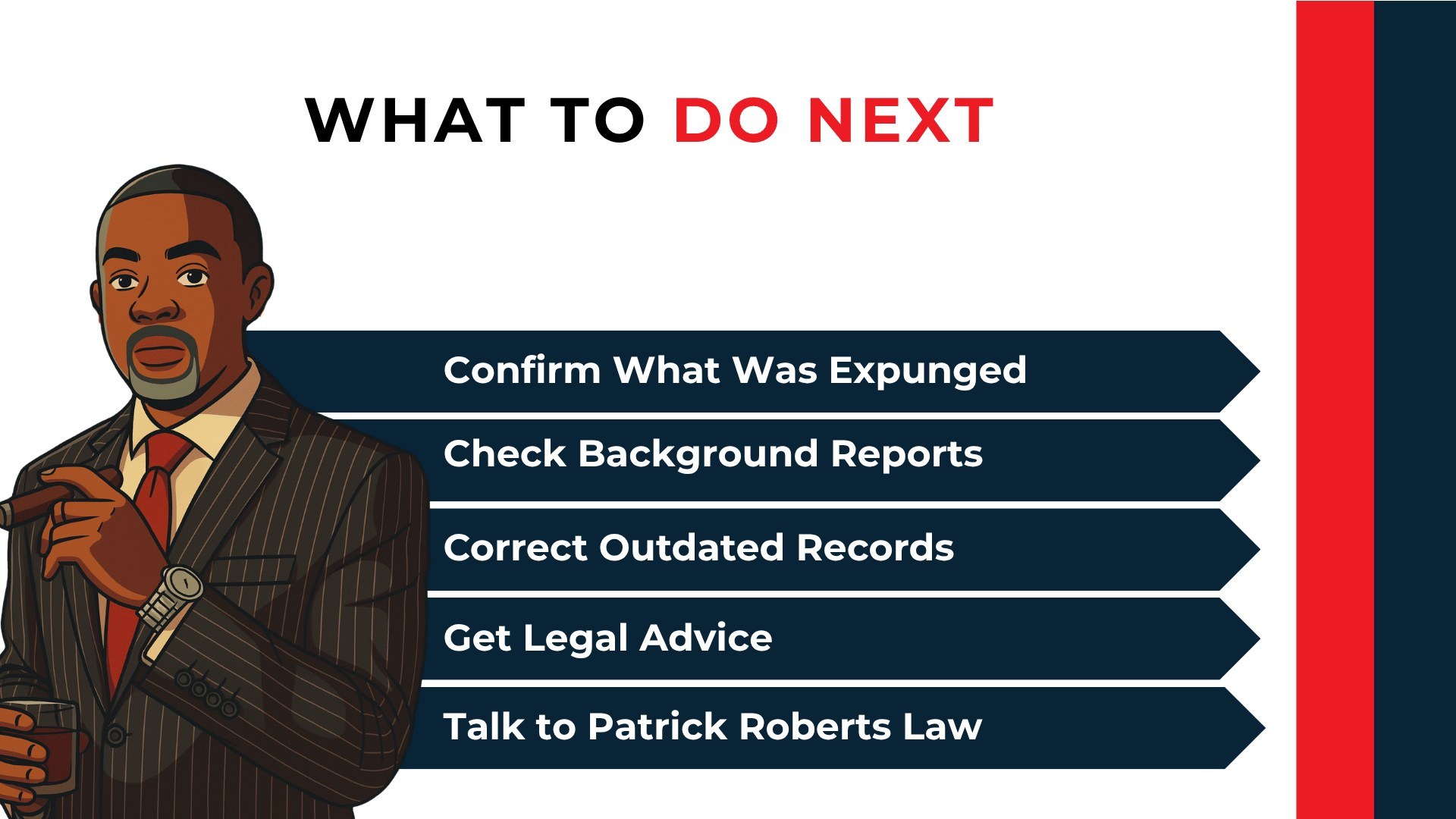
What to do next
If you've had a record expunged and something about it is still nagging at you, three steps are worth taking now:
• Pin down what type of relief you have: an expunged dismissal and an expunged conviction don't carry the same exposure in a future case. Knowing which you have tells you what a prosecutor could still reach.
• If a record surfaced on a background check, get the report in hand and identify which database it came from, so it can be corrected at the source.
• If you're a non-citizen, or if a specific application or proceeding has real stakes, talk to a North Carolina criminal defense attorney before you rely on the expunction. The federal and immigration exceptions are exactly where general reassurance breaks down.
Strategic Legal Counsel for North Carolina Criminal Record Relief
Navigating the limitations of an expungement requires a precise understanding of how state and federal criminal records interact with the justice system. Attorney Patrick Roberts leverages over 24 years of legal experience, including a significant role as an Assistant District Attorney, to provide clients with the necessary expertise regarding record management and criminal defense. His background allows him to anticipate how courts, law enforcement, and background check agencies interpret criminal history, ensuring clients receive informed counsel on the long-term visibility and impact of their records. Mr. Roberts holds an AV Preeminent rating from Martindale-Hubbell and maintains a practice focused on complex criminal litigation, including sex offender registry compliance and removal matters, providing a diligent approach to navigating the legal consequences of one’s criminal past.
• Martindale-Hubbell AV Preeminent Rating: Maintains this peer-nominated credential based on national vetting processes consistently from 2018 through 2026.
• National Association of Distinguished Counsel (NADC): Repeatedly selected for inclusion in the "Nation's Top 1 Percent" (2015–2018, 2025–2026).
• Duke University School of Law: Earned a Juris Doctor (J.D.) degree (1997–2000), providing a foundational background in legal doctrine and procedural practice.
• Former Prosecutor Perspective: Served as an Assistant District Attorney (2003–2007) in New Hanover, Johnston, and Wake counties, providing technical insight into how prosecutors access and interpret criminal record data.
• Sex Offender Registry Removal: Regularly petitions courts for the legal removal of individuals from the North Carolina Sex Offender Registry, demonstrating practical knowledge of registry compliance and record clearing.
• Federal Sentencing Guidelines Publication: Authored "The Numbers Count: Fraud and the Federal Sentencing Guidelines" (2014), a white paper analyzing how criminal history points and offense levels affect sentencing outcomes.
• Trial Experience:Over 75 completed jury trials across state and federal jurisdictions.
Client Review
I highly recommend Patrick Roberts not only because he is a brilliant attorney that won dismissal* of all charges against me, but also because he is a genuinely nice man with a kind demeanor and very easy to talk with. From the first phone call and meeting I had with Mr. Roberts I immediately felt at ease with him, and knew that I had someone in my corner that would fight hard for me.
— Review by a verified client via Avvo
Peer Endorsement
I knew Patrick when he was an Assistant District Attorney, and was always impressed with his high ethical standards and his reasoned, experienced approach in handling cases. He is an exemplary attorney and I highly recommend him.
— Peer endorsement by a fellow North Carolina trial attorney via Avvo
*Disclaimer: The client reviews and peer endorsements displayed are authentic testimonials and comments provided by clients and fellow attorneys. Every case is unique and must be evaluated individually; past client experiences and case results do not guarantee, promise, or predict similar outcomes in any future matter.
Case Results
You deserve to see the tangible results an attorney has achieved before deciding who represents you. Here are some cases he has resolved:
• Felony Sex Offense Defense: After facing multiple felony statutory sex offense charges, Attorney Patrick Roberts negotiated a plea deal reducing the offense to a single misdemeanor sexual battery charge. Following the completion of a ten-year registration period, the attorney successfully petitioned for the client's removal from the registry.
○ Outcome: Plea negotiated to misdemeanor sexual battery and subsequent registry removal in 2026.
• Probation Violation Defense: The client faced charges for alleged probation violations while living out-of-state. Mr. Roberts presented evidence to the court demonstrating that these violations resulted from administrative miscommunication, resulting in the dismissal of the violation charges and the termination of probation.
○ Outcome: Probation violation dismissed and probation terminated.
• First-Degree Murder Defense (N.C.G.S. § 14-17): Facing a potential sentence of life without parole, the client was accused of being the driver in a drive-by shooting. Despite the State's presentation of video footage and multiple witnesses, Attorney Patrick Roberts skillfully discredited the prosecution's witnesses by highlighting inconsistencies in their testimonies, securing an acquittal* at trial.
○ Outcome: Not Guilty verdict.
*Disclaimer: Case outcomes depend upon a variety of factors unique to each case. Prior results do not guarantee or predict a similar outcome in any future legal matter.
Click here for more case results
Protecting Your Future Through Expungement
Navigating the complexities of expungement requires precise legal counsel to ensure your record is handled correctly and your privacy is effectively protected. Whether you are addressing concerns regarding public access to your record or navigating specific legal exceptions, securing experienced representation is a critical step in moving forward. Patrick Roberts Law PLLC offers comprehensive guidance for individuals seeking to clear their records, ensuring you understand the limitations and potential outcomes of the expungement process under North Carolina law.
Based in Wake County, we provide dedicated legal support to clients throughout Raleigh, Cary, Apex, Holly Springs, Garner, and Fuquay-Varina, while also managing complex legal matters in every county across North Carolina. If you are ready to take the necessary steps toward a fresh start, please contact us at www.patrickroberts.law to schedule a consultation regarding your case.
To maintain the quality of its defense and provide each client with individualized attention, the firm limits the number of cases it accepts at any given time.
Disclaimer: This article is general legal information, not legal advice. Reading it does not create an attorney-client relationship. North Carolina expunction law is almost entirely statutory and subject to legislative change, and how these rules apply depends on the specific facts of your case. For guidance on your situation, consult a licensed North Carolina attorney.