Blog / Sex Defense

Blog

All Sex Defense Criminal Defense Criminal Defense Lawyer Felony Charges Lawyer Drug Charges Sex Defense Lawyer Murder Charges Rape Case Statutory Rape Charges Drug Crimes & Violations Drug Trafficking Violent Crime Domestic Violence Child Exploitation Charges Indecent Liberties North Carolina Criminal Law Sexual Assault North Carolina Law Fentanyl Crimes indecent liberties with a minor Sex Crimes Sex Crimes Defense Sex Offender Registry Sexual exploitantion of minors Meth Trafficking Age of Consent Aggravated Sexual Assault Artificial Intelligence Child Enticement Charges child grooming Child Rape Constitutional Rights & Warrants Criminal Defense & Travel Law Criminal Justice Criminal Law Cybercrime Defense Data Privacy Digital Evidence Entrapment defense False Accusations Family Law Federal Offenses Indecent Exposure Legal Defense Strategies Legal Resources Legal Updates Possession with intent to sell Sex Crimes & Registry Sex Crimes Defense Strategies Sex Offender Registration Requirements Sex Offender Registry Compliance Sex Offense Defense Sexting Laws solicitation of a child by computer Solicitation of a Minor Charge State vs. Federal Laws Statute of Limitations Statutory Sex Offense
image

Age of Consent in North Carolina: What the Law Actually Says

The age of consent in North Carolina is 16 years old. But that single number doesn't tell you what you actually need to know — because North Carolina does not treat all situations the same. The charges you could face, and how severe those charges are, depend on the specific ages of both people involved and the age gap between them. This page breaks down the specific statutes and the age brackets that trigger different felony classes under North Carolina law. If any part of this applies to your situation or someone you care about, the specifics matter more than most people realize. Attorney Patrick Roberts in Raleigh, North Carolina has defended clients against sex crime charges across the state for over two decades. more What Charges Could You Face Based on the Ages Involved? North Carolina categorizes sexual activity with minors under a tiered system of statutes. These are strict liability offenses, meaning the prosecution does not have to prove force or a lack of consent. Instead, the state only needs to prove that the act occurred and that the ages of both parties fall within the specific statutory brackets. The severity of the charge increases based on two primary factors: the age of the minor and the age gap between the minor and the defendant. What Happens When the Minor is Under 13? North Carolina applies its most severe penalties when a child is under the age of 13. Statutory Rape of a Child by an Adult: Under N.C.G.S. § 14-27.23, if the defendant is 18 or older and the child is under 13, the charge is a Class B1 felony. This carries a mandatory minimum sentence of 300 months (25 years). First-Degree Statutory Rape: Under N.C.G.S. § 14-27.24, if the defendant is at least 12 years old and at least 4 years older than a victim under 13, the charge is also a Class B1 felony. What are the Brackets When the Minor is 15 or Younger? For victims aged 15 or younger, N.C.G.S. § 14-27.25 creates two distinct tiers based on the age differential: Large Age Gap (6+ Years): If the defendant is at least 12 years old and 6 or more years older than the victim, it is a Class B1 felony. Small Age Gap (4–6 Years): If the victim is 15 and the defendant is more than 4 but less than 6 years older, it is a Class C felony. How Does the Law Define Indecent Liberties With Children? When a minor is under 16 and the conduct involves sexual touching or indecent behavior, N.C.G.S. § 14-202.1 applies. This charge is a Class F felony and requires the defendant to be 16 or older and at least 5 years older than the child. North Carolina courts interpret "indecent liberties" broadly. In State v. Every, 157 N.C. App. 200 (2003), the Court of Appeals held that physical contact is not strictly required. Exposing a child to sexual activity or engaging in sexually explicit conversations can constitute a violation if the purpose was sexual arousal or gratification. Why is Precision in Age Calculation Critical? In these cases, exact dates of birth are the determining factor for which statute applies and the subsequent felony classification. Because the difference between a Class B1 felony (25-year minimum) and a lower-class felony often rests on a single year of age difference, charging errors based on miscalculations are a significant concern. Statutory Age Brackets Summary Victim Age Defendant Age/Gap Statute Felony Class Under 13 18+ years old § 14-27.23 Class B1 Under 13 12+ (4+ yrs older) § 14-27.24 Class B1 Under 16 12+ (6+ yrs older) § 14-27.25 Class B1 15 Years Old 4 to 6 yrs older § 14-27.25 Class C Under 16 16+ (5+ yrs older) § 14-202.1 Class F What Should You Do If You're Facing an Accusation? If you are trying to understand how North Carolina's age-of-consent laws apply to a specific situation, the statutes above should make one thing clear. The difference between "not chargeable" and "Class B1 felony" can come down to a matter of months in the age gap between two people. These statutes are strict liability — the state does not have to prove intent, and the lines are drawn by the ages alone. That precision is exactly why early involvement of an experienced defense attorney matters. The median time from charging to sentencing for a Class B1 felony in North Carolina is 30 months. Defendants in this category spend an average of 27 months in pretrial detention. Under N.C.G.S. § 15A-533(b), sex offense charges require a district or superior court judge — not a magistrate — to authorize pretrial release. The window to shape how a case is investigated and charged is narrow, and it begins closing immediately. Decades of Experience in North Carolina Sex Crimes Defense Attorney Patrick Roberts has defended clients against sex crime charges across North Carolina for over 24 years. He is a graduate of Duke University School of Law ( Top 9 best criminal law program) and Johns Hopkins University ( Top 7 rank in National Universities) who completed Gerry Spence's Trial Lawyers College, the National Criminal Defense College Trial Practice Institute, and the 2025 NCDC Cross-Examination Intensive. He is a former Assistant District Attorney in Wake, Johnston, and New Hanover counties — experience that gives him direct insight into how prosecutors build and evaluate these cases. He is the co-author of a legal book on defending internet sex crimes and is the only North Carolina lawyer listed on the National Child Abuse Defense & Resource Center as of 2026. Mr. Roberts holds an AV Preeminent peer rating from Martindale-Hubbell, a 10/10 "Superb" rating on Avvo, and has been recognized as a Client Champion Platinum by Martindale-Hubbell for over five consecutive years. He is admitted to practice before the U.S. Supreme Court, the Fourth Circuit Court of Appeals, and all federal district courts in North Carolina, and is a lifetime member of the National Association of Criminal Defense Lawyers. Case Review Charge: Statutory Rape Description In this North Carolina case, Attorney Patrick Roberts represented a client accused of having sexual relations with a minor. The state's evidence was primarily based on the accuser identifying the client during a police interview. Strategy Mr. Roberts’ defense strategy involved a critical analysis of the accuser's statements and the identification of specific trial issues that could undermine the prosecution’s case. By highlighting these credibility concerns and procedural weaknesses to the Assistant District Attorney, the defense demonstrated the risks of pursuing the original charges in court. Outcome As a result of these negotiations, the prosecution dismissed the statutory rape charge. The client entered a plea to a misdemeanor and received a sentence of probation, which successfully prevented the requirement for sex offender registration. Disclaimer: Each case is different and must be evaluated separately. Prior results achieved do not guarantee similar results can be achieved in future cases. Client Review "We hired Patrick to defend our son against very serious felony charges that we knew to be false. It was the scariest thing to put our trust in someone to help us, especially living out of state, but we were so fortunate that we found Patrick. He showed a tremendous attention to detail, hired experts to examine and refute the evidence, and used brilliant strategies to poke holes in the case. After four long years, and many highs and lows, Patrick did what he promised: he took care of our son. Felony charges were reduced to a misdemeanor with no jail time. We will always be grateful to Patrick and his firm for giving our son his life back." — Verified client review on Avvo.com Peer Endorsement "Patrick is an extremely talented lawyer who has the highest ethical standards. He works extremely hard for his clients and is a very skilled adversary in court." — Martindale-Hubbell verified Peer Endorsement Disclaimer: The testimonials are actual comments. Every case is different and depends on its own unique facts and legal circumstances. These results are illustrative of the matters the firm handles but do not guarantee, warrant, or predict a similar outcome in your legal matter. If you or someone you care about is facing accusations involving North Carolina's age-of-consent laws, contact Patrick Roberts Law in Raleigh for a confidential consultation. The earlier an experienced defense attorney is involved, the more options remain available. By accepting only a select number of cases, the firm ensures the caliber of defense that complex criminal litigation demands. Disclaimer: The information on this website is for general informational purposes only and does not constitute legal advice for any individual case or situation. Contacting us via this website, email, or contact form does not create an attorney-client relationship. Each case is different and must be evaluated separately; prior results do not guarantee a similar outcome.

image

Voyeurism Charges in North Carolina: What You Need to Know

Voyeurism charges in North Carolina fall under N.C.G.S. § 14-202, the state's "secret peeping" statute. Depending on the specific conduct alleged, a charge can range from a Class 1 misdemeanor to a Class H felony. Certain convictions can also result in court-ordered sex offender registration. This page covers what the statute actually criminalizes, how North Carolina classifies and penalizes each tier of the offense, when sex offender registration becomes a possibility, and what defenses may be available. more What Counts as Voyeurism Under North Carolina Law? North Carolina does not use the word "voyeurism" in its criminal code. The charge appears on court documents as "secretly peeping into room occupied by another person" under N.C.G.S. § 14-202. If you search your name in court records or read your charging paperwork, that is the language you will see. The statute covers a broad range of conduct built around a few key terms. "Secretly" means the person being observed did not know they were being watched or recorded. If the person was aware of the observation, the secret peeping statute does not apply — though other statutes like harassment or stalking could. "Room" is defined broadly. It includes bedrooms, bathrooms, restrooms, showers, dressing rooms, dressing stalls, cubicles, and any similar area designed to provide privacy. The statute also reaches situations outside of a traditional room. It covers any circumstances in which a reasonable person would believe they could disrobe in privacy or that a private area of their body would not be visible to the public. This applies whether the person is in a public or private place. "Photographic image" covers any photograph, video, digital image, live transmission, or motion picture of any individual person. "Private area" means the naked or genitals, pubic area, buttocks, or female breast covered by undergarments. These definitions matter because the specific facts of what allegedly happened determine whether a charge is filed as a misdemeanor or a felony. The gap between those two outcomes is significant. Is Voyeurism a Misdemeanor or a Felony in North Carolina? It can be either. N.C.G.S. § 14-202 creates a tiered system of offenses that escalates based on what the person allegedly did and whether recording technology was involved. Basic secret peeping — looking secretly into a room occupied by another person — is a Class 1 misdemeanor under subsection (a). No camera or sexual motive needs to be proven. A first offense at this level carries the lowest penalties in the statute. Upskirting or similar secret viewing — secretly peeping underneath or through another person's clothing using a mirror or device without consent — is also a Class 1 misdemeanor under subsection (a1). Peeping while possessing a camera — secretly peeping into a room while in possession of any device capable of creating a photographic image, with the intent to create an image — is a Class A1 misdemeanor under subsection (c). The state does not have to prove a photo was actually taken. Possession of the device plus intent is enough. Recording for sexual gratification — using any device to create a photographic image of another person while secretly peeping, for the purpose of arousing or gratifying the sexual desire of any person — is a Class I felony under subsection (d). This is where the statute crosses from misdemeanor to felony territory. It is also the point at which sex offender registration enters the conversation. Capturing images of private areas without consent — knowingly creating a photographic image of a private area of an individual without their consent, under circumstances where they had a reasonable expectation of privacy — is a Class I felony under subsection (e1). Installing a secret recording device — secretly or surreptitiously using or installing a device in a room that can create a photographic image, with the intent to capture someone's image without consent and for the purpose of sexual arousal or gratification — is a Class I felony under subsection (f). Possessing secretly obtained images — knowingly possessing a photographic image that the person knows or has reason to believe was obtained through secret peeping — is a Class I felony under subsection (g). Disseminating secretly obtained images — distributing or allowing the distribution of images the person knows or should have known were obtained through secret peeping, without the consent of the person depicted — is a Class H felony under subsection (h). This is the most severely classified offense in the statute. The statute also includes a repeat-offense rule under subsection (i): a second or subsequent felony conviction is punished as though it were one class higher. A second misdemeanor conviction at the Class 1 level becomes a Class A1 misdemeanor. A second Class A1 misdemeanor becomes a Class I felony. What Are the Penalties for a Voyeurism Conviction in North Carolina? North Carolina uses a Structured Sentencing system under N.C.G.S. § 15A-1340.10 that calculates punishment based on two variables: the offense classification and your prior record level. The specific sentence range for any given conviction depends on where those two variables meet on the state's sentencing grid. For the misdemeanor tiers of secret peeping, penalties increase with the classification — a Class A1 misdemeanor (peeping with a camera in possession, or a second basic peeping offense) carries a higher sentencing range than a Class 1 misdemeanor. For the felony tiers, the ranges are much higher. Class I felonies (recording for sexual gratification, capturing private images without consent, installing a device, or possessing secretly obtained images) carry sentences that depend on prior record level and can include active imprisonment. A Class H felony conviction for disseminating secretly obtained images carries a higher sentencing range still. North Carolina sentencing data provides context for how courts handle person offenses — the category that includes sex-related crimes. In fiscal year 2024, 62% of person offense convictions resulted in active imprisonment, the highest rate of any crime type. Person offenses also carried the longest average active sentences compared to property, drug, and other categories, with an average minimum of 69 months and average maximum of 100 months. Eight percent of person offense sentences fell in the aggravated range — also the highest of any crime type. If a voyeurism conviction results in probation rather than active time, the statute includes specific conditions. For a first conviction, the judge may require a psychological evaluation and following any recommended treatment. For a second or subsequent conviction, that evaluation and treatment are mandatory. Will I Have to Register as a Sex Offender for a Voyeurism Charge? Sex offender registration is not automatic for every voyeurism conviction in North Carolina, but it is a real possibility — and for many people facing these charges, it is the consequence that concerns them most. Under N.C.G.S. § 14-202(l), registration becomes a question the court must address whenever you are convicted of any felony-level secret peeping offense — subsections (d), (e1), (f), (g), or (h) — or are convicted of a second or subsequent misdemeanor-level offense under subsections (a), (a1), or (c). When that trigger is met, the sentencing court is required to consider two things. First, whether you are a danger to the community. Second, whether requiring registration would further the purposes of North Carolina's Sex Offender Registry as stated in N.C.G.S. § 14-208.5 — which are to assist law enforcement in protecting communities and to facilitate the exchange of relevant information about convicted offenders. If the court finds both, it enters an order requiring registration. The standard registration period in North Carolina is 30 years. You may petition to end the registration requirement after 10 years, provided you are not classified as a recidivist, sexually violent predator, or aggravated offender under the registry statutes. What makes this determination so serious is the weight of what follows. North Carolina currently has approximately 25,000 or more registered sex offenders. Registrants face ongoing obligations including verification requirements, location restrictions, and GPS electronic monitoring in some cases — with 581 sex offenders enrolled in GPS monitoring as of fiscal year 2022–2023. Whether registration is ordered depends heavily on the facts presented to the sentencing judge. That makes both the quality of the defense and the preparation for sentencing critical. How Can You Defend Against a Voyeurism Charge? Every voyeurism case turns on its specific facts, but the structure of N.C.G.S. § 14-202 creates several categories of defense that a criminal defense attorney will evaluate. The "secretly" element. The statute requires that the peeping was done without the knowledge or consent of the person being observed. If the person knew they were being watched or recorded — or consented to it — the secret peeping statute does not apply. Evidence of the other person's knowledge or consent directly eliminates a required element of the offense. The "room" element and reasonable expectation of privacy. The prosecution must prove that the observation occurred in a room as defined by the statute or under circumstances where the individual had a reasonable expectation of privacy. If the alleged conduct occurred in a setting where no reasonable expectation of privacy existed, that element fails. Intent and purpose. The felony tiers of the statute require proof of specific intent — either intent to create a photographic image (subsection c), purpose of sexual arousal or gratification (subsections d and f), or knowing possession or dissemination (subsections g and h). The state must prove the specific mental state required for the charged offense. For the Class A1 misdemeanor under subsection (c), for example, the prosecution must prove not just that you had a camera-capable device, but that you intended to use it to create an image. Fourth Amendment suppression. If evidence was obtained through an unlawful search — a device examined without a proper warrant, a search that exceeded the warrant's scope, or cloud data accessed without separate authorization — a motion to suppress can remove that evidence from the case entirely. In voyeurism prosecutions, where the state's case frequently depends on digital evidence, successful suppression may seriously weaken the prosecution's ability to proceed. Fifth Amendment suppression. Statements obtained during custodial interrogation without proper Miranda warnings, or through coercive circumstances, may be suppressed. If a required recording of the interrogation was not made, that failure is itself admissible evidence about whether any resulting statement was voluntary. Chain of custody and forensic methodology. Digital evidence must be collected, preserved, and analyzed under proper forensic procedures. Challenging whether material was automatically downloaded, cached by software without the user's knowledge, or accessed by someone other than you can undermine the state's proof of knowing possession or intentional creation. No defense strategy can be evaluated in the abstract. What matters is how the facts of a particular case interact with the elements the prosecution is required to prove. Why Does Your Choice of Attorney Matter in a Voyeurism Case? Voyeurism cases involve sensitive factual circumstances and high-stakes sentencing decisions. The difference between a misdemeanor and a felony — or between registration and no registration — often comes down to how the defense is prepared and presented. Attorney Patrick Roberts has defended clients facing sex offense charges from the firm's offices in Raleigh, Durham, Chapel Hill, and Cary for more than two decades. He is a graduate of Duke University School of Law (Top 7 in best law schools and Top 9 in their criminal law program) and finished his bachelor’s degree from Johns Hopkins University, top 7 in National Universities. He is a graduate of Gerry Spence's Trial Lawyers College and the National Criminal Defense College Trial Practice Institute, and completed the 2025 NCDC Cross-Examination Intensive — advanced training in high-stakes witness examination. He has been rated AV Preeminent by Martindale-Hubbell for over five consecutive years, holds a 10/10 "Superb" AVVO rating maintained for more than 15 years, and has been recognized as a Client Champion Platinum by Martindale-Hubbell for over five consecutive years. Before founding Patrick Roberts Law PLLC, Mr. Roberts served as an Assistant District Attorney in Wake, Johnston, and New Hanover counties — experience that gives him a firsthand understanding of how prosecutors build, evaluate, and prioritize sex offense cases. He is admitted to practice before the U.S. Supreme Court, the Fourth Circuit Court of Appeals, and all federal district courts in North Carolina. He is a lifetime member of the National Association of Criminal Defense Lawyers and the only North Carolina attorney listed on the National Child Abuse Defense & Resource Center as of 2026. He has co-authored two legal books, including one on defending internet sex crimes. Attorney Patrick Roberts has successfully* resolved serious sex offense allegations, including: 2025 — Closed allegation of sexual assault by a child under 13 claiming molestation by stepfather. Result: No charges filed 2025 — Closed allegation of sexual assault by a 15-year-old teenager claiming sexual touching. Result: No charges filed 2026 — Closed allegation of rape after client met a woman at a bar who claimed he raped her. Result: No charges filed Disclaimer: Each case is different and must be evaluated separately. Prior results achieved do not guarantee similar results can be achieved in future cases. Click here to see more case results. Client Review What clients consistently describe is the experience of working with someone who is prepared, direct, and present when it counts: "I was lost, frustrated, and scared after my arrest. I was falsely accused of first degree rape. After speaking with Patrick I was put at ease. He asked questions, was engaged, and very straight to the point. I was blown away and hired him. He worked long hours and weekends on my case, while running his practice. If I ever need anyone again in the area he would be the only person I would go with." — Verified client review on Avvo.com Peer Endorsement His peers in the legal profession share that assessment: "Mr. Roberts demonstrates a high level of expertise, competence and professionalism. He is well prepared for trial and represents all clients well. Mr. Roberts is dependable and he represents the legal profession well. I am confident in his ability to represent his clients." — Martindale-Hubbell verified Peer Review Disclaimer: The testimonials are actual comments. Every case is different and depends on its own unique facts and legal circumstances. These results are illustrative of the matters the firm handles but do not guarantee, warrant, or predict a similar outcome in your legal matter. If you are facing voyeurism or secret peeping charges in North Carolina, contact Patrick Roberts Law PLLC to discuss your case. The law firm is currently accepting a limited number of new consultations to ensure each potential matter receives a thorough, high-level evaluation. Disclaimer: The information on this website is for general informational purposes only and does not constitute legal advice for any individual case or situation. Contacting us via this website, email, or contact form does not create an attorney-client relationship. Each case is different and must be evaluated separately; prior results do not guarantee a similar outcome.

Person using calculator at desk with bold headline about cost of a sex crimes lawyer in North Carolina

How Much Does a Sex Crimes Lawyer Cost in North Carolina?

Researching the costs associated with a sex crimes defense in North Carolina is a necessary step in navigating a high-stakes legal matter. Because these cases are among the most resource intensive areas of criminal law, the cost of representation is a direct reflection of the analytical precision and exhaustive investigation required. While fees are a primary consideration, a more critical factor is the valuation of the advocacy being provided. This article outlines the professional standards that drive the cost of a defense and examines how the long-term consequences of a conviction compare to the requirements of a sophisticated legal strategy. more What Factors Determine the Cost of a Sex Crimes Defense Attorney? There is no single price for sex crime defense. Fees vary based on the complexity of the case, the severity of the charges, and the work required to mount an effective defense. Several factors consistently drive cost. Charge severity. North Carolina's sex offense framework ranges from Class A1 misdemeanors (sexual battery under N.C.G.S. § 14-27.33) to Class B1 felonies (first-degree forcible rape under N.C.G.S. § 14-27.21, statutory rape of a child by an adult under N.C.G.S. § 14-27.23). The more serious the charge, the more preparation, investigation, and court time the defense requires. According to the NC Sentencing Commission, the median time from charge to sentencing for Class B1 felonies is 30 months — significantly longer than the 10-month median for all felonies. Cases that stretch over years require sustained legal work. Investigation and expert witnesses. Sex crime defense frequently requires independent investigation: forensic analysis of digital devices, expert witnesses on memory suggestibility or forensic interview technique, and sometimes private investigators to locate witnesses or develop alibi evidence. Under State v. McGrady, 368 N.C. 880, 787 S.E.2d 1 (2016), North Carolina applies the Daubert reliability standard to expert testimony — meaning both prosecution and defense experts must meet rigorous evidentiary thresholds. Retaining qualified defense experts is a significant component of case cost. Pretrial motions and hearings. Effective defense in sex crime cases involves extensive pretrial work. Suppression motions challenging evidence obtained in violation of Riley v. California, 573 U.S. 373 (2014), Daubert motions to exclude unreliable expert testimony, Rule 412 motions for in camera hearings on complainant bias or motive evidence under State v. Goins, 244 N.C. App. 499, 781 S.E.2d 45 (2015), and confrontation challenges under Crawford v. Washington, 541 U.S. 36 (2004) — each requires legal research, briefing, and court argument. This pretrial work is often what creates the leverage for dismissal or charge reduction. Trial preparation and trial itself. Only 15% of Class B1 felony convictions in FY 2024 went to jury trial, but that number is the highest trial rate of any felony class. Sex crime cases that go to trial require jury selection strategy — NC permits extensive attorney-led voir dire under N.C.G.S. § 15A-1214 — witness preparation, cross-examination, opening and closing arguments, and often multi-day courtroom presence. Trial-level representation is the most resource-intensive phase of any criminal case. Why is Experienced Representation Worth the Investment? Convictions for serious sex offenses carry severe legal and personal consequences, including substantial prison terms. In North Carolina, sex offender registration under N.C.G.S. § 14-208 et seq. is mandatory for virtually all convictions, with a standard registration period of 30 years and lifetime registration for aggravated offenses. Beyond the mandatory public listing, registrants face restrictive GPS monitoring and permanent residency limitations. With approximately 25,000 individuals currently listed on the NC SBI registry, the ongoing restrictions on housing, career trajectory, and private life are both predictable and permanent. For non-citizens, the Supreme Court ruling in Padilla v. Kentucky, 559 U.S. 356 (2010), mandates that defense counsel provide specific advice regarding immigration consequences prior to any plea. Under federal law, most sex offense convictions are classified as aggravated felonies, triggering mandatory deportation. Furthermore, data from the North Carolina Sentencing Commission indicates that defendants facing Class B1 felonies often spend an average of 27 months in pretrial detention. Given these permanent legal and personal stakes, securing a defense grounded in elite analytical rigor is a structural necessity. What Should You Look for When Evaluating a Sex Crimes Defense Attorney? Cost is one factor — but it should not be the only factor. The following considerations help distinguish attorneys who are equipped for these cases. Former prosecution experience. An attorney who has prosecuted sex crimes understands the State's approach — how cases are built, which evidence prosecutors prioritize, and where the weaknesses in their method tend to appear. Advanced trial training. Sex crime cases that go to trial are won or lost on cross-examination and witness credibility. Attorney Roberts completed training at Gerry Spence's Trial Lawyers College — a three-week intensive covering every phase of trial — the NCDC Trial Practice Institute, and the 2025 NCDC Cross-Examination Intensive. These programs develop the specific skills that matter in high-stakes courtroom proceedings. Peer recognition and sustained track record. Attorney Roberts maintains a 10/10 "Superb" Avvo rating held for over 15 years and is the only North Carolina lawyer listed on the National Child Abuse Defense & Resource Center (as of 2026). He is admitted to practice before the U.S. Supreme Court, the Fourth Circuit Court of Appeals, and all Federal District Courts in North Carolina. Published authority and professional leadership. Mr. Roberts is the co-author of two legal books, has been featured in Super Lawyers Magazine and on the cover of Attorney-at-Law Magazine, and has been quoted by national media outlets including USA Today and Fox News. He is a lifetime member of the National Association of Criminal Defense Lawyers, a Former Commissioner of the North Carolina State Ethics Commission, and has served on the North Carolina Juvenile Justice Planning Committee. Academic Precision & Trial Advocacy Attorney Patrick Roberts applies the rigorous standards of a Duke University School of Law education (Class of 2000) to the defense of the accused. Ranked tied for #6 in the nation alongside Harvard Law ( U.S. News & World Report, 2025–2026), Duke Law serves as a global pillar for criminal law scholarship and intellectual precision. A graduate of both The Johns Hopkins University and Duke Law, Patrick Roberts brings nearly two decades of high-level litigation experience to the defense of the accused. His practice is built on the principle that a robust constitutional defense is an essential safeguard against the weight of government prosecution. Having served as an Assistant District Attorney in Wake, Johnston, and New Hanover counties, he understands the mechanics of the state and utilizes that insight to direct hundreds of bench and jury trials in both state and federal courts. Verified Professional Standing The quality of this advocacy is reflected in sustained peer and client recognition. Patrick Roberts holds the AV Preeminent Peer Rating from Martindale-Hubbell—the highest possible mark for legal ability and ethical standards—maintained for over five consecutive years. Additionally, he has earned the Client Champion Platinum recognition for consistent excellence in client service. What Do Clients and Peers Say About Attorney Patrick Roberts? "Patrick and his team double check their own knowledge of the law so that their courtroom presentation is well organized and flawless. Someone from the office always calls the morning of a court appearance to verify your attendance as well as tell you who will be present from their office. Patrick is VERY upfront and honest." — Review originally posted by a verified client on Avvo.com. "Patrick is an excellent lawyer and I trust him to handle my important legal matters." — Martindale-Hubbell Peer Review Disclaimer: The testimonials and peer reviews on this site are for informational purposes. They do not constitute a guarantee, warranty, or prediction regarding the outcome of your legal matter. Every case is different and must be evaluated on its own merits. Testimonials and peer endorsements found on this website are actual comments. How Do You Take the Next Step? While the cost of a sex crimes defense in North Carolina varies based on the complexity of the allegations, the cost of an inadequate defense is predictable and severe. At Patrick Roberts Law, we provide the elite analytical rigor of a Top 6 national law program (Duke Law, '00) to every matter we accept. We strictly limit our active caseload to ensure that every client receives the exhaustive research and deep-tier strategic focus required in North Carolina criminal litigation. This focused model allows Patrick Roberts to ensure all your constitutional rights are defended. Request a Confidential Initial Evaluation We provide private evaluations to review the specific facts of your case, analyze the statutory charges, and provide a strategic roadmap for your defense. Contact Patrick Roberts Law to secure the dedicated professional direction your future requires. Disclaimer: The information on this website is for general informational purposes only. Nothing herein should be taken as legal advice for any individual case or situation. Contacting us via this website, email, or contact form does not create an attorney-client relationship. Case results depend on a variety of factors unique to each case; prior results do not guarantee a similar outcome.

Courtroom scene with judge and defendant, headline about first offense sex crime charges in North Carolina

What Happens on a First Offense Sex Crime Charge in NC?

If you or someone in your family is facing a first offense sex crime charge in North Carolina, you may assume that having no prior criminal record will provide meaningful protection. In some areas of criminal law, that assumption holds. In sex crime cases, it largely does not. North Carolina treats sex offenses with a severity that applies regardless of whether the defendant has ever been in trouble before — and the consequences of even a first conviction extend well beyond the sentence itself. This article explains what a first-time defendant actually faces under North Carolina law and where the legal opportunities for defense exist. more Does Having No Criminal Record Help in a Sex Crime Case? It helps at sentencing — but less than most people expect. North Carolina's Structured Sentencing Act under N.C.G.S. § 15A-1340.10 et seq. calculates punishment based on two variables: the offense class and the defendant's prior record level. A defendant with no criminal history starts at Prior Record Level I, which produces the lowest sentencing range within each offense class. But for serious sex offenses, even the lowest range carries significant consequences. The NC Sentencing Commission reported that 100% of Class B1 through D felony sex offense convictions in FY 2024 received active imprisonment — meaning every defendant in those categories went to prison, regardless of prior record. For person offenses generally, 62% received active imprisonment, 28% intermediate punishment, and only 10% community punishment. Under N.C.G.S. § 15A-1340.17(f), defendants convicted of Class B1 through E sex offenses face an enhanced maximum sentence. Post-release supervision for sex offenses is also longer than for other felony classes. A first offense does not exempt a defendant from any of these enhanced provisions. What Sex Crime Charges Can a First-Time Defendant Face? The charge depends on the alleged conduct, not the defendant's criminal history. North Carolina's sex offense statutes apply identically to first-time and repeat offenders. Forcible offenses. First-degree forcible rape under N.C.G.S. § 14-27.21 is a Class B1 felony. Second-degree forcible rape under N.C.G.S. § 14-27.22 is a Class C felony. The State must prove force and lack of consent as separate elements. In State v. Alston, 310 N.C. 399, 312 S.E.2d 470 (1984), the NC Supreme Court held that force must be specific to the charged sexual act. Age-based offenses. Statutory rape charges under N.C.G.S. §§ 14-27.23 through 14-27.25 range from Class C to Class B1 felony depending on the ages involved. These are strict liability offenses — State v. Breathette, 202 N.C. App. 697, 690 S.E.2d 1 (2010), holds that mistake of age is not a defense. Indecent liberties with children under N.C.G.S. § 14-202.1 is a Class F felony. Sexual battery. N.C.G.S. § 14-27.33 defines sexual battery as a Class A1 misdemeanor — the least severe sex offense classification. Even this charge triggers mandatory sex offender registration. Internet solicitation. N.C.G.S. § 14-202.3 criminalizes solicitation of a child by computer — a Class H felony that escalates to Class G if either party appears at a meeting location. In State v. Keller, 265 N.C. App. 526, 828 S.E.2d 578 (2019), the Court of Appeals held that continued engagement after learning a "child's" age demonstrated predisposition, defeating an entrapment defense. What Are the Collateral Consequences of a First Sex Crime Conviction? The collateral consequences are where first-time defendants face the most significant and unexpected impact. Sex offender registration under N.C.G.S. § 14-208 et seq. is mandatory for virtually all sex offense convictions. The standard registration period is 30 years. Lifetime registration applies to aggravated offenders and sexually violent predators. There are currently approximately 25,000 registered sex offenders in North Carolina, and registrants face residential restrictions under N.C.G.S. § 14-208.18, GPS monitoring in many cases, and public listing on the state registry. Immigration consequences. For non-citizen defendants, Padilla v. Kentucky, 559 U.S. 356 (2010), requires defense counsel to advise of deportation risks before any plea. Sexual abuse of a minor is classified as an aggravated felony triggering mandatory removal. Federal firearms prohibition, professional licensing bars, housing restrictions, and employment limitations persist long after a sentence is served. A first offense sex crime conviction creates a permanent record that affects every dimension of a person's life. What Defense Strategies Are Available to a First-Time Defendant? The same defense tools available to any defendant apply with full force to first-time offenders — and in some cases, the absence of a criminal record strengthens the defense narrative. Consent. State v. Yelverton, 274 N.C. App. 348, 851 S.E.2d 434 (2020), affirmed consent as a complete defense to forcible offenses. Defense counsel investigates every communication and witness account to demonstrate consensual contact. Constitutional challenges. Digital evidence obtained without a proper warrant is subject to suppression under Riley v. California, 573 U.S. 373 (2014). Statements obtained in violation of Miranda protections are challengeable. North Carolina's mandatory recording requirement under N.C.G.S. § 15A-211 for serious sex offenses means unrecorded interrogations can be attacked as involuntary. Expert testimony challenges. Under State v. Hall, 330 N.C. 808, 412 S.E.2d 883 (1992), prosecution expert testimony about victim behavior cannot be used to prove that abuse occurred. State v. Hammett, 361 N.C. 92, 637 S.E.2d 518 (2006), requires a physical evidence basis for any expert opinion that abuse occurred. Defense counsel files Daubert motions under State v. McGrady, 368 N.C. 880, 787 S.E.2d 1 (2016), and retains defense experts on suggestibility and false memory. Credibility and corroboration. North Carolina does not require corroboration to convict on victim testimony alone — but the absence of corroboration is a powerful argument for reasonable doubt when presented to a jury. What Do Clients and Peers Say About Attorney Patrick Roberts? "From the first meeting until present, Mr. Roberts has been transparent and thorough about every possible outcome." — Review originally posted by a verified client on Avvo.com. "Very talented and intuitive criminal lawyer." — Martindale-Hubbell Peer Review Disclaimer: The testimonials and peer reviews on this site are for informational purposes. They do not constitute a guarantee, warranty, or prediction regarding the outcome of your legal matter. Every case is different and must be evaluated on its own merits. Testimonials and peer endorsements found on this website are actual comments. Case Review Case Filed: Investigation into Alleged Indecent Liberties with a Child Attorney: Patrick Roberts Case Description: A client was under investigation for serious allegations involving child molestation and the suspected inappropriate photographing of a minor. Facing potential sex crime charges, the client required a strategic defense to navigate the complexities of both the legal system and the Department of Social Services (DSS). As an experienced sex crimes defense attorney, Patrick Roberts conducted an exhaustive independent investigation to challenge the state's claims. By focusing on evidentiary inconsistencies and due process, the defense aimed to prevent the filing of formal criminal charges for sexual offenses and mitigate the devastating impact of such accusations on the client's reputation. Outcome: Dismissal. Furthermore, the State declined to file charges, ensuring the client faced no criminal prosecution. *Disclaimer: Each case is different and must be evaluated separately. Prior results achieved do not guarantee similar results can be achieved in future cases What Should a First-Time Defendant Consider? A first offense sex crime charge in North Carolina is prosecuted with the same statutory framework and the same potential consequences as any other sex crime case. The system does not provide automatic leniency for a clean record. What it does provide is constitutional protections, evidentiary standards, and procedural requirements that the State must satisfy — and experienced defense counsel ensures those standards are enforced. Experienced Criminal Defense Attorney in NC Attorney Patrick Roberts is a graduate of the Duke University School of Law (#6 National Rank; #7 Criminal Law Specialty) and provides a defense methodology rooted in the rigorous training of a B.A. in Engineering from The Johns Hopkins University (#7 National University). He served as an Assistant District Attorney, where he managed the prosecution of sex crimes, drug trafficking, and violent felonies. His trial advocacy is supported by the Gerry Spence Trial Lawyers College, the NCDC Trial Practice Institute, and the 2025 NCDC Cross-Examination Intensive. Admitted to the Supreme Court of the United States and the U.S. Court of Appeals for the Fourth Circuit, Mr. Roberts is a Lifetime Member of the NACDL and a Former Commissioner of the North Carolina State Ethics Commission. A co-author of two legal books, he has earned the AV Preeminent® Peer Rating and the Martindale-Hubbell Platinum Client Champion recognition for over five consecutive years, with a 10/10 Avvo rating maintained for over 15 years. His work has been featured in Super Lawyers Magazine and on the cover of Attorney-at-Law Magazine, and he has been quoted by national media outlets including USA Today and Fox News. Contact Patrick Roberts Law and request an initial case evaluation. To ensure the exhaustive research and strategic precision required for a sophisticated defense, the firm accepts a limited number of cases each month. This selective approach allows Patrick Roberts to personally direct the deep-tier analysis and courtroom advocacy required to protect your constitutional rights. Disclaimer: The information on this website is for general informational purposes only. Nothing herein should be taken as legal advice for any individual case or situation. Contacting us via this website, email, or contact form does not create an attorney-client relationship. Case results depend on a variety of factors unique to each case; prior results do not guarantee a similar outcome.

Gavel and blurred defendant scene with headline about what to do after sex crime accusation in North Carolina

What to Do If You're Accused of a Sex Crime in North Carolina

The first 48 hours after a sex crime accusation are often the most consequential of the entire case. What you say, who you talk to, and whether you have legal counsel guiding those decisions can determine whether the investigation leads to charges, whether evidence is preserved or lost, and whether your constitutional rights are protected or waived before you fully understand what is happening. If you are wondering what to do if accused of a sex crime in North Carolina, this article walks through the legal framework you are dealing with and the steps that matter most. more Should You Talk to the Police If Accused of a Sex Crime? No — not without an attorney present. This is the single most important step, and it is the one most people get wrong. The Fifth Amendment and N.C. Const. art. I, § 23 protect against compelled self-incrimination, but these protections only activate when you invoke them. Miranda warnings are required before custodial interrogation, and under N.C.G.S. § 15A-211, North Carolina mandates recording of custodial interrogations for Class A, B1, B2 felonies and Class C sex offenses. Failure to record is admissible evidence supporting a claim that any resulting statement was involuntary. But here is what catches people off guard: you do not have to be formally arrested to make a damaging statement. Detectives often conduct interviews in non-custodial settings — at your home, at the station under the guise of "just a conversation" — where Miranda does not technically apply. In State v. Jackson, 308 N.C. 549 (1983), the NC Supreme Court held that police deception during interrogation does not automatically render a confession involuntary, meaning investigators can and do use misleading tactics during questioning. North Carolina is also a one-party consent state under N.C.G.S. § 15A-287. That means pretext phone calls — where the complainant calls the accused while law enforcement records the conversation — are perfectly legal. If you receive a call from the accuser after an allegation has been made, assume it is being recorded. Do not discuss the allegations with anyone except your attorney. What Constitutional Protections Apply During a Sex Crime Investigation? Understanding your rights during the investigation phase is critical because this is where evidence is gathered, preserved, or destroyed — and where constitutional violations by law enforcement can provide the basis for suppression motions that weaken or eliminate the State's case. Following Riley v. California, 573 U.S. 373 (2014), police cannot search your cell phone or digital devices without a warrant, even if you are under arrest. This is significant in sex crime cases because digital evidence — texts, photographs, social media messages — is often central to the prosecution's theory. Under N.C.G.S. § 15A-248, search warrants must be executed within 48 hours of issuance. Consent to search your home does not extend to digital devices found inside. For juvenile defendants or young adults, J.D.B. v. North Carolina, 564 U.S. 261 (2011) — a case from our state — established that a child's age is relevant to the Miranda custody analysis. If you are under 18, law enforcement must consider your age when determining whether you were effectively "in custody" during questioning. What Charges Could You Face? North Carolina's sex offense framework is graduated and complex. The specific charge depends on the nature of the alleged conduct, the age of the parties, and the relationship between them. Forcible offenses include first-degree forcible rape under N.C.G.S. § 14-27.21 (Class B1 felony) and second-degree forcible rape under N.C.G.S. § 14-27.22 (Class C felony). The State must prove both force AND lack of consent as separate elements. State v. Alston, 310 N.C. 399, 312 S.E.2d 470 (1984), held that force must be specific to the charged act — general fear from a prior relationship is insufficient. Age-based offenses are strict liability. Statutory rape charges under N.C.G.S. §§ 14-27.23 through 14-27.25 carry classifications from Class C to Class B1 felony depending on victim age and age differential. Indecent liberties under N.C.G.S. § 14-202.1 is a Class F felony. Mistake of age is not a defense — State v. Breathette, 202 N.C. App. 697, 690 S.E.2d 1 (2010). North Carolina reported 2,944 rapes in 2024 according to the NC SBI, and the NC Sentencing Commission reported 431 Class B1 felony convictions in FY 2024 — the most serious sex offense classification. These cases carry severe consequences including mandatory sex offender registration under N.C.G.S. § 14-208 et seq. for a minimum of 30 years. What Should You Do After an Accusation? Beyond exercising your right to remain silent, the practical steps in the first days after an accusation are: Preserve evidence. Do not delete text messages, social media conversations, photographs, or any digital communication with the accuser. This evidence may prove consensual contact, establish a motive to fabricate, or contradict the complainant's account. Your attorney needs access to everything. Do not contact the accuser. Any communication — direct, through friends, or through social media — can be characterized as witness intimidation or obstruction. Even an attempt to "clear things up" can be used against you. Document your whereabouts. If you have receipts, GPS data, surveillance footage access, or witnesses who can establish where you were at the time of the alleged offense, preserve that information immediately. Time-stamped evidence degrades quickly. Hire defense counsel before the first interview. If police have contacted you requesting an interview, you have the right to have an attorney present. An experienced defense attorney can advise you on what to say, what not to say, and whether to participate at all. Recent Case Result: In 2026, Attorney Roberts closed an allegation of rape after a client met a woman at a bar who claimed he raped her. Result: No charges filed. Disclaimer: Each case is different and must be evaluated separately. Prior results achieved do not guarantee similar results can be achieved in future cases. What Do Clients and Peers Say About Attorney Patrick Roberts? "I recently hired A. Patrick Roberts as my lawyer. He not only provided clear and practical legal advice but also employed smart strategies that were beyond my expectations. His attention to detail and dedication to my defense made all the difference." — Review originally posted by a verified client on Avvo.com. "I have known Patrick Roberts my entire legal career. He is a great representation of how a lawyer should be an advocate for justice and truth. He has great relationships with attorneys and judges alike across countless cities and counties." — Martindale-Hubbell Peer Review Disclaimer: The testimonials and peer reviews on this site are for informational purposes. They do not constitute a guarantee, warranty, or prediction regarding the outcome of your legal matter. Every case is different and must be evaluated on its own merits. Testimonials and peer endorsements found on this website are actual comments. Case Review Case Filed: First Degree Statutory Sex Offense Attorney: Patrick Roberts Case Description: The client faced a high-stakes felony investigation involving allegations of a First Degree Statutory Sex Offense brought by a minor. Given the severity of these sex crime charges, the defense required a comprehensive approach to challenge the prosecution's narrative. Patrick Roberts, acting as a criminal defense lawyer for sex crimes, coordinated an extensive defense team that included a polygraph examiner, a child psychologist, a forensic expert, and a private investigator. This multi-disciplinary strategy allowed the defense to conduct a deep analysis of the allegations and provide the Assistant District Attorney with a compelling, evidence-based argument for why the case should not proceed to trial. Outcome: Charges Dismissed As a criminal defense attorney for sexual offenses, Mr. Roberts utilized a comprehensive defense team, including a polygraph examiner, a child psychologist, a forensic specialist, and a private investigator. By presenting evidence-based arguments and a detailed factual analysis, he demonstrated to the Assistant District Attorney that a dismissal was the appropriate course of action. This result ensured the client did not face a criminal trial, demonstrating the importance of a thorough defense in sex crime cases. *Disclaimer: Each case is different and must be evaluated separately. Prior results achieved do not guarantee similar results can be achieved in future cases Why Early Legal Representation Changes the Outcome The decisions made in the early stages of a sex crime investigation — whether to give a statement, how to handle digital evidence, whether to consent to a search — shape the trajectory of the case. Having defense counsel involved from the beginning preserves options that may not be available later. Attorney Patrick Roberts is a graduate of the Duke University School of Law (#6 National Rank; #7 Criminal Law Specialty). He provides a defense methodology rooted in the analytical precision of a B.A. in Engineering from The Johns Hopkins University (#7 National University). This evidence-based approach is informed by his tenure as an Assistant District Attorney in Wake, Johnston, and New Hanover counties. Having managed the prosecution of sex crimes, drug trafficking, and violent felonies, he possesses a technical understanding of the State’s evidentiary and charging priorities. Trial Advocacy and National Recognition Since transitioning to defense in 2007, Patrick has directed hundreds of bench and jury trials in both state and federal courts. His trial advocacy is supported by extensive training at the Gerry Spence Trial Lawyers College, the NCDC Trial Practice Institute, the 2025 NCDC Cross-Examination Intensive, and the NACDL White Collar Crimes College. Attorney Patrick Roberts is currently the only North Carolina lawyer listed on the National Child Abuse Defense & Resource Center (as of 2026). He is a Lifetime Member of the National Association of Criminal Defense Lawyers (NACDL) and has served as a Former Commissioner of the North Carolina State Ethics Commission and as a member of the North Carolina Juvenile Justice Planning Committee. Federally Admitted and Peer-Verified Attorney Patrick Roberts leads a practice defined by broad jurisdictional authority, with admissions to the Supreme Court of the United States, the Fourth Circuit Court of Appeals, and all U.S. Federal District Courts in North Carolina. His professional standing is reflected in the AV Preeminent® Peer Rating and the Martindale-Hubbell Platinum Client Champion recognition, both maintained for over five consecutive years. Additionally, he has held a 10/10 "Superb" Avvo rating for more than 15 years. As a co-author of two legal books, his work has been featured in Super Lawyers Magazine and on the cover of Attorney-at-Law Magazine. His legal analysis has been cited by national media outlets, including USA Today and Fox News, for his experience in high-stakes litigation. Contact Patrick Roberts Law to Request a Case Evaluation Contact Attorney Patrick Roberts for a case evaluation. The firm manages a limited number of cases to ensure each matter receives focused attention. This approach allows for a thorough discovery process and a precise application of North Carolina statutes to the specific facts of your defense. Disclaimer: The information on this website is for general informational purposes only. Nothing herein should be taken as legal advice for any individual case or situation. Contacting us via this website, email, or contact form does not create an attorney-client relationship. Case results depend on a variety of factors unique to each case; prior results do not guarantee a similar outcome.

Courtroom scene with witness raising hand and headline about fighting statutory rape charges in North Carolina

How to Fight Statutory Rape Charges in North Carolina

Statutory rape charges in North Carolina carry some of the most severe penalties in the state's criminal code — and they are among the most difficult to defend because the law eliminates what many defendants assume is their strongest argument. Consent is not a defense. Mistake of age is not a defense. The statutory framework is built on strict liability principles that focus almost entirely on the ages of the parties involved. But that does not mean these charges are indefensible. North Carolina law still requires the prosecution to prove every element of the offense beyond a reasonable doubt, and experienced defense counsel can challenge those elements at every stage. If you are researching how to fight statutory rape charges, this article explains the legal framework and the defense strategies that apply. more What Does the Prosecution Have to Prove? North Carolina's statutory rape laws are organized in a graduated scheme where the charge classification depends on the victim's age, the defendant's age, and the age differential between them. N.C.G.S. § 14-27.23 — statutory rape of a child by an adult — applies when the defendant is 18 or older and the victim is under 13. This is a Class B1 felony. N.C.G.S. § 14-27.24 — first-degree statutory rape — applies when the defendant is at least 12 and at least four years older than a victim under 13. Also a Class B1 felony. N.C.G.S. § 14-27.25 — statutory rape of a person 15 or younger — classifies as either Class B1 or Class C felony depending on the age gap. When the defendant is at least 12 and six or more years older, it is Class B1. When the victim is 15 and the defendant is more than four but less than six years older, it is Class C. Each of these statutes requires the State to prove the specific ages and age differentials with precision. Defense counsel verifies exact birth dates through documentary evidence because charging errors in age differential calculations occur — and they can be case-dispositive. The NC Sentencing Commission reported 431 Class B1 felony convictions in FY 2024. These cases carry severe consequences: 100% of Class B1 through D sex offense convictions received active imprisonment, and enhanced sentencing provisions under N.C.G.S. § 15A-1340.17(f) apply to Class B1 through E sex offenses. Why Can't Consent or Mistake of Age Be Used as a Defense? Statutory rape is a strict liability offense in North Carolina. State v. Breathette, 202 N.C. App. 697, 690 S.E.2d 1 (2010), explicitly held that mistake of age is not a defense — even to the related charge of indecent liberties under N.C.G.S. § 14-202.1. The same principle applies to all statutory rape charges. The defendant's subjective belief about the alleged victim's age is legally irrelevant, regardless of the victim's appearance, statements, or presentation of identification. Consent is also not a defense because the law treats persons below the age of consent — 16 in North Carolina — as legally incapable of consenting to sexual activity. Whether the encounter was "consensual" in the everyday sense has no legal significance in a statutory rape prosecution. This reality is precisely why experienced defense counsel is critical. When the most intuitive defenses are foreclosed by statute, the attorney's work shifts to the remaining elements, the quality of the evidence, the reliability of the investigation, and the constitutional protections that still apply. What Defense Strategies Are Effective in Statutory Rape Cases? Age verification and differential challenges. The prosecution must prove exact ages and the precise age gap. Defense counsel obtains and cross-references birth certificates, hospital records, and identification documents. Where the age differential falls near a statutory threshold — the difference between four and six years, for example — the defense may challenge whether the correct charge was filed. Challenging the investigation. Under Riley v. California, 573 U.S. 373 (2014), digital device searches require a warrant. In statutory rape cases, text messages and social media conversations are often key evidence. Defense counsel challenges warrant particularity, scope, and execution timing under N.C.G.S. § 15A-248. Any evidence obtained in violation of these protections is subject to suppression. Interrogation challenges. North Carolina's mandatory recording requirement under N.C.G.S. § 15A-211 applies to interrogations for serious sex offenses. Failure to record is admissible as evidence of involuntariness. For juvenile defendants, J.D.B. v. North Carolina, 564 U.S. 261 (2011), requires that the defendant's age be considered in the Miranda custody analysis. Confrontation and hearsay challenges. Under Crawford v. Washington, 541 U.S. 36 (2004), testimonial statements require the declarant's availability for cross-examination. Forensic interview recordings of alleged victims are often testimonial. State v. Locklear, 363 N.C. 438, 681 S.E.2d 293 (2009), found a Confrontation Clause violation where substitute testimony was used. For child hearsay admitted under the medical diagnosis exception (N.C.G.S. § 8C-1, Rule 803(4)), State v. Hinnant, 351 N.C. 277, 523 S.E.2d 663 (2000), requires the statement to have been made for the purpose of obtaining medical treatment. Expert testimony. State v. Hall, 330 N.C. 808, 412 S.E.2d 883 (1992), permits prosecution expert testimony about victim behavior patterns but not to prove that abuse occurred. Defense counsel files Daubert motions under State v. McGrady, 368 N.C. 880, 787 S.E.2d 1 (2016), and retains defense experts on suggestibility, false memory, and forensic interview technique flaws. What Do Clients and Peers Say About Attorney Patrick Roberts? "He always took the time to explain to us what was going on which I appreciated. Patrick is able to see many different angles for a case and determine the best argument." — Review originally posted by a verified client on Avvo.com. "Awesome attorney. Great litigator." — Martindale-Hubbell Peer Review Disclaimer: The testimonials and peer reviews on this site are for informational purposes. They do not constitute a guarantee, warranty, or prediction regarding the outcome of your legal matter. Every case is different and must be evaluated on its own merits. Testimonials and peer endorsements found on this website are actual comments. Case Review Lead Attorney: Patrick Roberts Primary Charge: Statutory Rape Result: Charge Dismissed; Negotiated Plea to Misdemeanor Assault on a Female; No Sex Offender Registration Case Summary The client was accused of statutory rape after being discovered with a fifteen-year-old girl following an episode of heavy consumption of alcohol. The case was initiated when the girl’s sister discovered them together, and the State’s file included numerous eyewitnesses whose testimony supported the girl's accusations. Legal Challenge and Defense The presence of multiple eyewitnesses and the sensitive nature of the allegations created a high-risk environment for the client. A conviction for statutory rape would have carried mandatory prison time and lifelong registration as a sex offender. Attorney Patrick Roberts focused the defense on the technical requirements of the statute. While the State’s witnesses provided testimony regarding the circumstances of the encounter, Roberts focused the litigation on the specific legal element of penetration. By effectively contesting the evidence regarding this element, the defense demonstrated that the State could not meet its evidentiary burden for the felony charge. The Outcome As a result of this focused contest of the evidence, the prosecution agreed to a significant reduction in the case: The Statutory Rape charge was dismissed.* The client was permitted to plead to a misdemeanor charge of Assault on a Female. The client avoided the requirement to register as a sex offender, effectively preserving his professional future and personal liberty. *Disclaimer: Each case is different and must be evaluated separately. Prior results achieved do not guarantee similar results can be achieved in future cases What Is the Value of Getting Defense Counsel Involved Early? Having defense counsel involved early preserves options that may not be available later — from challenging the investigation in real time to identifying weaknesses in the State's theory before the case is locked in. Advanced Scholarship in Criminal Law Attorney Patrick Roberts provides a defense built on the foundations of a Duke University School of Law education, an institution currently ranked #7 in the nation for Criminal Law ( U.S. News & World Report, 2025–2026). This ranking, combined with Duke’s overall Top 6 national standing (tied with Harvard Law), positions the firm’s advocacy within the highest tier of the American legal profession. As a graduate of both The Johns Hopkins University and Duke Law, Patrick Roberts operates within the academic lineage of the Duke Center for Criminal Justice and Professional Responsibility. This background ensures that every statutory rape defense is managed with a sophisticated understanding of Constitutional law, specifically the Fourth, Fifth, and Sixth Amendment protections that often serve as the technical turning point in high-stakes criminal litigation. To provide a comprehensive defense in both state and federal jurisdictions, Patrick Roberts is admitted to practice before the nation’s highest judicial bodies: The Supreme Court of the United States The U.S. Court of Appeals for the Fourth Circuit All Federal District Courts in North Carolina ( EDNC, MDNC, WDNC) Prosecutorial Insight & Trial Advocacy Since 2007, Patrick Roberts has directed hundreds of bench and jury trials in both state and federal courts. Before transitioning to defense, he served as an Assistant District Attorney in Wake, Johnston, and New Hanover counties. Having managed the prosecution of the same categories of offenses he now defends, he possesses a technical understanding of the State’s charging priorities and evidentiary thresholds. To maintain the exacting standards required for complex sex offense litigation, Patrick Roberts has completed advanced training at the nation’s most recognized trial institutes: The NCDC Trial Practice Institute (2011) and the 2025 NCDC Cross-Examination Intensive Training Gerry Spence’s Trial Lawyers College. These programs are specifically designed to sharpen cross-examination and witness credibility analysis essential to challenging the State’s narrative in statutory allegations. Secure a Strategic Evaluation of Your Case The resolution of a high-stakes statutory allegation depends on the analytical depth applied to the State’s evidence and the constitutional precision of the defense motions. Because every case involves unique evidentiary challenges and permanent legal consequences, securing a defense grounded in high-level academic and trial standards is a necessary step in navigating the North Carolina justice system. To ensure that every client benefits from the analytical precision and dedicated oversight their defense requires, Patrick Roberts Law maintains a limited case volume. By prioritizing quality over high-volume intake, the firm preserves the capacity to conduct the deep-tier legal research and constitutional analysis essential to a sophisticated criminal defense. Contact our office to schedule a confidential evaluation of your case and to discuss your available legal options. Disclaimer: The information on this website is for general informational purposes only. Nothing herein should be taken as legal advice for any individual case or situation. Contacting us via this website, email, or contact form does not create an attorney-client relationship. Case results depend on a variety of factors unique to each case; prior results do not guarantee a similar outcome.

Courtroom scene with a judge’s gavel and scales of justice representing the legal process after a sex crime allegation in North Carolina, featuring Patrick Roberts Law branding and criminal defense theme.

What Happens After a Sex Crime Allegation in North Carolina?

When you or a loved one is accused of a sex crime in North Carolina, the weight of the allegations can make it feel like an uphill battle from day one. An allegation can quickly escalate into a life-altering arrest, especially as new laws continue to shift the legal landscape. While an accusation is not a conviction, navigating the legal process can be an exhausting ordeal for the accused. In fact, many cases never result in charges, but early mistakes make prosecution easier. Let’s break down North Carolina’s criminal justice process for sex offenses, including recent reforms that every defendant and their family must understand to protect their future. more I. The Investigation: What Do Detectives Do First? In North Carolina, the window between an initial report and a formal arrest is a critical period for the defense. Because sex crime allegations are highly sensitive cases, they are rarely handled by standard patrol officers. Instead, these investigations are typically led by specialized units—such as a Special Victims Unit (SVU) or a Criminal Investigation Division (CID) or their regional equivalents—who are specially trained in interviewing techniques and the forensic recovery of evidence, including the extraction of digital evidence from phones and social media. In many cases, local agencies may even partner with the North Carolina State Bureau of Investigation (SBI) to utilize their advanced laboratory resources. During this high-stakes phase, the accused often faces the immense pressure of a focused investigation and an inevitable rush to judgment. Securing legal counsel is not just a priority, it is a strategic necessity. Will You Be Notified Before an Arrest Warrant is Issued? Not necessarily. In fact, many individuals first learn of an allegation when detectives show up at their home or workplace for a "voluntary" interview. Under N.C. Gen. Stat. § 15A-401, law enforcement has broad authority to investigate, often using "knock and talk" tactics to bypass the need for an initial warrant. A common mistake made by those accused of sex crimes is agreeing to these types of interviews without an attorney. Detectives are trained in interrogation techniques designed to elicit statements that—while they may seem innocent to you—can be considered as “admissions” or disclosures of fact that can be used to connect the dots for the accuser’s story. How Does North Carolina Process "Rape Kits" and Forensic Evidence? Since the passage of the Survivor Act, North Carolina has mandated the rapid processing of all sexual assault forensic exams (rape kits). Under current 2026 protocols: Mandatory Testing: All kits must be submitted to the State Crime Lab within a strict statutory timeframe. DNA Databases: DNA collected is immediately run against the CODIS database. Digital Forensics: Perhaps more critical in 2026 is the role of digital evidence. Under N.C. Gen. Stat. § 15A-242, police will seek search warrants for: Cell Phone Extraction: Text messages, deleted photos, and GPS or ping data. Social Media Records: Private messages on platforms like Instagram, Snapchat, or Facebook. Cloud Data: To search for images or communications that might corroborate the accuser's timeline. Should You Talk to Detectives? Unless you have a licensed attorney present, the answer is no. Under the Fifth Amendment, you have the right against self-incrimination, which applies during the investigation phase even if you have not been arrested. In North Carolina, any statements made to detectives—even those intended to explain your side or "clear your name"—are recorded and can be used as evidence against you. Sex crime allegations often rely heavily on witness statements and credibility; providing a statement without legal counsel can inadvertently create inconsistencies or provide the state with necessary corroboration for an arrest. Are You Required to Give Police My Cell Phone? Unless the officers have a Search Warrant signed by a judge, the answer is no. Under the Fourth Amendment, you have the right against unreasonable searches and seizures. In North Carolina, providing consent to search your phone often allows investigators to download your entire digital history—including unrelated private conversations, media, and information—which can all be used against you later. Do You Have to Give a DNA Sample? Unless the officers have a Search Warrant or a Nontestimonial Identification Order signed by a judge, the answer is no. Under the Fourth Amendment, you have the right against unreasonable searches and seizures of your person. In North Carolina, providing consent to a DNA swab allows investigators to process your genetic profile for any forensic purpose—including comparison against unrelated cold cases or inclusion in permanent databases—which can all be used against you later. II. The Arrest When Does a "Chat" Turn Into an Arrest? It is common for individuals to wonder at what exact moment they are under arrest. In North Carolina, the law distinguishes between being detained and being arrested. Detainment is a temporary investigative stop based on "reasonable suspicion" that a person may be involved in criminal activity; it is limited in scope and the individual is generally not free to leave, but they are also not yet charged with a crime. In contrast, an arrest occurs when law enforcement has "probable cause" to believe a specific crime was committed, resulting in the individual being taken into custody for an extended period, processed (booked), and officially charged within the judicial system. In North Carolina, a detention is legally required to be brief and "no longer than is necessary to effectuate the purpose of the stop." You can leave detention the moment the officer's reasonable suspicion has been dispelled or the investigation is complete, provided they haven't found enough evidence (probable cause) to transition to an arrest. A detention becomes an arrest when an officer has Probable Cause —a reasonable belief based on objective facts that you have committed a crime. This is the point where the encounter moves into the criminal justice system. Physical Custody: While handcuffs alone do not always equal an arrest (sometimes they are used for "officer safety" during a detention), being placed in a patrol car and transported for booking signifies a formal arrest. In North Carolina, detentions must be brief and limited to the original purpose of the stop. If an officer extends the stop without new suspicion, it may become an illegal seizure. Can You Be Arrested Without Evidence? No. Under the Fourth Amendment, police cannot legally arrest you without probable cause. However, the legal definition of "evidence" is broader than many realize. In North Carolina, a sworn statement from a single accuser is considered direct testimonial evidence. If a magistrate or judge finds this statement credible, it can be enough to establish probable cause for an arrest warrant—even if there is no physical evidence like DNA, video footage, or fingerprints. Do Police Have to Charge You Right Away? Not necessarily. In North Carolina, there is no legal requirement for police to file charges immediately following a sex crime allegation. The timeline for an arrest depends on whether law enforcement believes they have already established probable cause or if they require further investigation to support the accuser’s statement. In North Carolina, an arrest occurs when law enforcement’s investigation transitions from gathering information to taking custody. For a sex crime allegation, this typically happens in one of two ways: either after a long-term investigation results in a warrant, or immediately if probable cause exists during an encounter. Why Early Legal Help is Critical in 2026 One major recent shift in North Carolina criminal procedure has fundamentally changed the aftermath of a sex offense arrest. Under these updated rules, it is now significantly more difficult for defendants to post bond immediately for serious felonies. With the implementation of Iryna’s Law (2025/2026), North Carolina now has stricter "rebuttable presumptions" against release for certain violent and sex-related charges. Critical Note: If you are arrested without a lawyer already on standby, you may face a mandatory 48-hour hold before a judge can even consider your bond. Having a lawyer "pre-retained" means they can be in court for your very first appearance to argue against this detention. Can You Get Out of Jail After a Sex Crime Charge? (Understanding "Iryna’s Law") As of December 1, 2025, North Carolina fully implemented Iryna’s Law (HB 307). This legislation significantly altered the pretrial release process for anyone charged with a "sexually violent offense" (which includes most felony sex crimes under N.C. Gen. Stat. § 14-27.21 through § 14-27.30). Magistrate Authority Removed: Previously, a magistrate could set a bond 24/7. Under Iryna’s Law, for certain violent or sexual offenses, a magistrate cannot set the conditions of release. The 48-72 Hour Hold: The defendant must be held in custody until they can be brought before a District or Superior Court Judge. This often results in a mandatory 2-to-3-day jail stay before a bond is even discussed. The Rebuttable Presumption: The new law creates a presumption that certain defendants pose a danger to the community. Your attorney must now actively "rebut" this presumption to convince a judge that you are safe to be released on bond. What Are "Pretrial Release" Conditions in North Carolina? Even when a judge does grant bond, it is rarely a simple financial transaction. In North Carolina, pretrial release for serious offenses frequently carries additional restrictive conditions that can be as significant as the bond itself: Electronic House Arrest (EHA): Requiring you to stay within your residence unless at work or court. Satellite-Based Monitoring (SBM): An active GPS ankle monitor that tracks your location in real-time. No-Contact Orders: Strict prohibitions against contacting the accuser, their family, or appearing near specific locations (like schools or parks). Legal Support During Investigations Even in "voluntary" or "friendly" interviews, individuals retain the right to terminate the conversation and consult with an attorney at any time. Seeking legal advice during the investigative phase can help ensure your rights are protected before an arrest occurs. If you are navigating a sex crime investigation in North Carolina, Patrick Roberts Law provides experienced legal guidance for these complex scenarios. With a history of handling thousands of cases, Attorney Patrick Roberts can assist in managing communications with law enforcement. You can reach the firm at 919-746-7206 for a professional evaluation of your situation. III. How Does the Charging Process and Grand Jury Indictment Work in North Carolina? In North Carolina, all felony sex crimes must be processed through the Grand Jury to proceed to Superior Court. However, a procedural tool is available to prosecutors that frequently catches defendants and their families off guard: the short-form indictment. What is a "Short-Form Indictment" in North Carolina? Typically, an indictment is expected to be a detailed document outlining exactly what the State alleges happened. However, under N.C. Gen. Stat. § 15-144.1 (for Rape) and § 15-144.2 (for Sex Offenses), the State is permitted to use a "shorthand" or short-form version—a streamlined version of the charges that lacks specific details, often leaving the accused to guess at the exact timing or nature of the alleged acts. A short-form indictment in NC only needs to name: The person accused. The date of the offense (frequently listed as an 'on or about' date). The county where it occurred. The phrase 'with force and arms' (a historical relic of common law that remains a standard part of North Carolina indictments). Why this matters for your defense: This means you could be arrested and indicted without the charging document ever mentioning the specific act you are accused of. This lack of detail makes it very difficult to prepare an alibi or a consent-based defense without legal intervention. When the State uses this approach, it is up to the defense to proactively demand the specific facts that the law would typically require. How Do You Fight a Vague Indictment? (The Motion for a Bill of Particulars) When the State utilizes the short-form indictment, the defense can file a Motion for a Bill of Particulars under N.C. Gen. Stat. § 15A-925. This motion asks the court to order the District Attorney to provide specific factual details, such as the exact date and time of day, the specific location, and the nature of the alleged sexual act. Without this, the defendant can be caught by surprise when the prosecution presents a specific version of events for the first time at trial. At this stage, if there is insufficient evidence or probable cause, many cases are dismissed and do not continue to be charged. This is why an experienced lawyer is essential from the moment you are accused of a sex crime. Classifying the Crime: Rape vs. Sexual Offense Under North Carolina law, there is a clear legal distinction between 'Rape' and 'Sexual Offense.' While people often use these terms interchangeably in everyday conversation, in the courtroom, they are separate offenses with distinct elements that the State must prove beyond a reasonable doubt. Understanding which specific statute you are charged under is an important step in building a defense. The Difference Between Rape and a "Sexual Offense" in NC The distinction is based entirely on the physical nature of the alleged act: Forcible Rape (§ 14-27.21 & § 14-27.22): Under NC law, "Rape" specifically and exclusively refers to vaginal intercourse. Forcible Sexual Offense (§ 14-27.26 & § 14-27.27): This category covers all other non-consensual sexual acts, including oral sex (fellatio/cunnilingus), anal intercourse, or penetration by an object. The Difference Between First-Degree and Second-Degree Sex Crimes? In North Carolina, the distinction between First-Degree and Second-Degree charges often comes down to the presence of specific "aggravating factors." Second-Degree (a Class C felony) generally involves a sexual act committed by force and against the will of the victim. The jump to First-Degree (a Class B1 felony) represents a massive leap in prison time and sentencing. To elevate a charge to First-Degree, the State must prove at least one of the following aggravating factors: Use of a Weapon: The defendant used, threatened to use, or displayed a dangerous or deadly weapon (or an object that the victim reasonably believed was a weapon). Infliction of Serious Injury: The defendant inflicted serious bodily injury upon the victim or another person during the commission of the crime. Multiple Participants: The defendant was aided and abetted by one or more other persons, commonly referred to as "acting in concert." How Does 2026 Law Define "Against the Will" and Consent? North Carolina recently updated its definition of consent. Under N.C. Gen. Stat. § 14-27.20, "against the will of the other person" now includes: Revoked Consent: If a person initially consents but later withdraws it "in a manner that would cause a reasonable person to believe consent is revoked," any continued sexual act is legally considered "against the will." Incapacity: If the victim is "physically helpless" (such as being asleep or unconscious) or "mentally incapacitated," consent cannot legally exist. It is important to note that if a person is unconscious—even if that state was self-induced through voluntary drinking—they are considered physically helpless, and any sexual act would be considered non-consensual under the law. IV. What is the Discovery Phase and How Is Evidence Exchanged in North Carolina? Once indicted, your case moves into the Discovery Phase. In North Carolina, the State is required under Article 48 of Chapter 15A to provide the defense with the evidence they intend to use. What Evidence is Included in "Discovery"? In a 2026 sex crime case, discovery is often massive and digital. It includes: SANE Reports: The medical findings from the sexual assault nurse examiner. Body-Worn Camera (BWC) Footage: Videos of the initial police response and any statements made by the accuser. Expert Witness Reports: DNA analysts, toxicologists, and "victim behavior" experts. The "Brady" Material: Any evidence in the State's possession that might actually help the defendant (exculpatory evidence). Strategic Defense: How Do You Fight a Sex Crime Allegation? In North Carolina, the outcome of a sex offense trial often hinges on how effectively the defense navigates the North Carolina Rules of Evidence. These rules govern everything from the cross-examination of witnesses to the introduction of outside facts, often deciding what the jury is—and isn't—allowed to hear. Under N.C.G.S. § 15A-903, a defendant is entitled to discovery, which includes the right to review the evidence gathered by the State’s specialized units. This allows a defense attorney to assess the strength of the prosecution’s case and identify potential legal challenges. Does the "Rape Shield Law" Prevent Me from Using Vital Evidence? One significant challenge for the defense is N.C. Gen. Stat. § 8C-1, Rule 412, commonly known as the Rape Shield Law. While this rule is designed to protect complainants from questioning regarding their past sexual history, it can create a substantial barrier for the accused when that history is relevant to proving consent or identifying a motive for false accusation. Generally, the sexual history of the complainant is inadmissible. However, there are four specific legal exceptions under Rule 412 where the defense can “bypass” the shield by introducing the following evidence: Prior Acts Between the Parties: Evidence of past consensual sexual behavior between the defendant and the complainant to help establish consent in the current case. Alternate Source of Physical Evidence: Evidence proving that someone other than the defendant was the source of semen, pregnancy, disease, or physical injury. Prior False Allegations: Evidence that the complainant has made prior false allegations of sexual assault in the past. Constitutional Right to Confrontation: A "catch-all" exception used when excluding the evidence would violate the defendant’s constitutional rights—typically to show a specific motive to fabricate, such as a pending custody battle or social pressure. The "In-Camera" Hearing: Before any of this evidence can be mentioned in front of a jury, the judge must hold a private, transcribed hearing. In this "mini-trial," the defense must prove that the evidence is both legally relevant and that its importance to the case outweighs the risk of unfair prejudice. If the judge denies the motion at this stage, the jury will never hear those facts. What Role Does "Consent" Play in North Carolina Law? In many cases, the physical act is not in dispute—the central issue is whether it was consensual. In 2026, North Carolina juries are given very specific instructions on how to evaluate consent. The Lack of Resistance: Under North Carolina law, a victim is not required to physically resist to show a lack of consent. The State only needs to prove the act was "against the will" of the complainant through force, fear, or coercion. The "Alcohol" Factor: This is the most common complicating factor in modern cases. If the State can prove the complainant was "physically helpless" (unconscious) or "mentally incapacitated" (to the point of being unable to understand the act), any "consent" they gave is legally void. The "Reasonable Belief" Defense: A critical strategy in these cases involves the defendant's "reasonable belief." If the defendant honestly and reasonably believed the other person was consenting based on their specific actions and words, it can negate the criminal intent required for a conviction. V. Trial vs. Plea Bargain: Which Path is Right? In North Carolina, sex offense cases generally resolve in one of two ways: a jury trial or a negotiated plea arrangement. This choice represents the most significant decision in a case, and it must be based on an objective analysis of the evidence and the potential sentencing outcomes. What Are the Risks of Going to Trial for a Sex Offense? In North Carolina, the risks of going to trial for a sex offense involve severe legal, personal, and financial consequences. Because sex crimes carry some of the most stringent sentencing and post-release requirements in the state, a "guilty" verdict at trial often results in mandatory minimum punishments that exceed those offered in plea negotiations. North Carolina’s Structured Sentencing North Carolina uses a rigid grid system where your Prior Record Level (points from past convictions) and the Offense Class dictate your sentence. Class B1 Felonies (e.g., First-Degree Rape): These carry a mandatory active prison sentence. Even for an individual with a completely clean record (Level I), the minimum sentence is generally 240 to 300 months (20 to 25 years). In North Carolina, there is no parole; you serve the time the judge gives you. Class C Felonies (e.g., Second-Degree Rape): While still very serious, a Class C felony offers a wider range of sentencing. For a Level I offender, the minimum sentence typically falls between 44 to 58 months (roughly 4 to 5 years). Moving a case from a B1 to a C can mean the difference of two decades of your life. The Jury Factor Jury selection is a critical phase of the trial. Through strategic questioning, a defense attorney identifies and 'strips away' potential jurors whose personal biases may prevent them from fully committing to the presumption of innocence or the State’s high burden of proof. Why Are Plea Deals Often Difficult in Sex Offense Cases? In North Carolina, plea deals in sex offense cases are often more complex and difficult to negotiate than in other criminal matters. This difficulty is largely due to statutory sentencing requirements, the presence of mandatory minimums, and strict internal policies maintained by many District Attorney (DA) offices. In many criminal cases, a plea deal might result in probation. Even a favorable plea offer often includes: Mandatory Active Prison Time: Unlike other felonies, many sex offenses fall into sentencing blocks that prohibit probation. Sex Offender Registry: Most plea arrangements still require registration, which often lasts for a lifetime. Extended Post-Release Supervision: While standard felonies require one year of supervision after prison, sex offenses carry a mandatory five-year period of strict monitoring. Expert Witnesses: The Role of Specialized Testimony When the State presents "scientific" evidence, the defense must often counter with its own experts. In 2026, North Carolina sex offense trials frequently hinge on the specialized testimony of professionals who can challenge the State's narrative: Forensic Psychologists: Used to explain the science of memory fallibility, the impact of suggestibility during police interviews, and why an allegation may be psychologically inconsistent. Toxicologists: Critical for analyzing actual levels of impairment to challenge the State’s claim that a complainant was "physically helpless" or "mentally incapacitated" due to alcohol or drugs. DNA and Forensic Specialists: Essential for challenging "touch DNA" or "secondary transfer" theories, explaining how genetic material can end up at a scene through non-sexual contact. VI. What Are the Requirements for Post-Release Supervision and the Sex Offender Registry? In North Carolina, the punishment for a sex offense does not end upon release from prison. Because these charges carry unique collateral consequences, the State has established a rigorous system of tracking and surveillance  with durations ranging from 30 years to life depending on the nature of the conviction and the individual’s prior record. Extended Post-Release Supervision (PRS) Under the Structured Sentencing Act, most felony defendants serve 9 to 12 months of supervision after their prison term. However, sex offenses are a major exception: The 5-Year Mandate: Under N.C. Gen. Stat. § 15A-1368.2, individuals convicted of a "reportable" sex offense are subject to a mandatory five years of Post-Release Supervision. Compliance and Tolling: During this period, you are monitored by the Post-Release Supervision and Parole Commission. Any violation—such as failing a drug screen, missing a check-in, or entering a restricted "child zone"—can lead to a revocation, sending you back to prison to serve the remainder of your maximum sentence. The North Carolina Sex Offender Registry The North Carolina Sex Offender and Public Protection Registration Program (Article 27A) classifies registrants into two primary tiers based on the nature of the offense and prior history: 30-Year Registration: Most first-time offenders fall into this category under § 14-208.7. This requires registering with the local Sheriff and verifying residential information every six months. Lifetime Registration: This is mandatory for "Recidivists" (those with prior reportable convictions), "Aggravated Offenders," and those designated by a court as "Sexually Violent Predators." These individuals must verify their status every 90 days. Petitions for Removal Removal from the Registry is never automatic, but there is a legal pathway for certain individuals. Under N.C. Gen. Stat. § 14-208.12A, a person on the 30-year track may petition the Superior Court for removal after 10 years of successful, compliant registration. Eligibility: The petitioner must have a clean record for those 10 years and have strictly adhered to all registration requirements. The Judicial Hearing: Removal is at the discretion of a Superior Court Judge. During this proceeding, the District Attorney may present evidence opposing the petition, and the original victim has a legal right to appear and be heard. The court will ultimately weigh your rehabilitation to determine if you are no longer a threat to public safety. Satellite-Based Monitoring (SBM): GPS for Life? One of the most intrusive aspects of North Carolina law is Satellite-Based Monitoring (SBM). This is a real-time GPS ankle monitor that tracks your location 24/7 and transmits that data to the Division of Community Supervision and Reentry. Who is Subject to SBM in 2026? Significant revisions to SBM laws (effective late 2023 and updated in 2025) have re-expanded the program. A judge must order SBM if they find a defendant "requires the highest possible level of supervision" based on specific criteria: Lifetime SBM: Now a mandatory consideration for Recidivists (two or more reportable convictions), Aggravated Offenders, and Sexually Violent Predators. Term of Years SBM: For offenses involving the abuse of a minor, a judge can now order monitoring for a specific term of up to 50 years. The "Reasonable Search" Defense In the landmark case Grady v. North Carolina, the U.S. Supreme Court ruled that SBM constitutes a "search" under the Fourth Amendment. Because the government is physically intruding on your body to gather information, your attorney can argue that the monitoring is an unreasonable search if the State cannot prove you pose a high enough risk to justify the intrusion. What Happens if You Violate SBM Rules? Violating SBM protocols is not a mere administrative error; it is a serious criminal offense: Tampering or Removal: Knowingly damaging or removing the device is a Class E Felony. Failure to Enroll: Failing to show up for your initial hook-up is a Class F Felony. The Penalty: A single lapse—like letting the battery die or missing a check-in—can result in years of new prison time, often exceeding the sentence of the original underlying offense. Where Can You Live and Work? In addition to registry requirements and GPS monitoring, North Carolina law imposes strict "Premises Restrictions" under N.C. Gen. Stat. § 14-208.18. These rules create "exclusion zones" that can make finding housing or employment exceptionally difficult. The 1,000-Foot Rule: Registered offenders are generally prohibited from knowingly being on the premises of—or within 1,000 feet of—any property intended for the use, care, or supervision of minors. This includes schools, childcare centers, public parks, and even certain libraries or recreation centers. Residency Restrictions: While the law primarily restricts presence, it effectively limits residency as well. If a home is within the 1,000-foot buffer of a school or daycare, a registrant may be legally barred from living there. Professional Licensing and Employment: A "reportable conviction" triggers an automatic review or revocation of many state-issued professional licenses. This includes teaching, nursing, and social work, but can also extend to trades regulated by state boards. Furthermore, many private employers use the Registry as a permanent bar to employment. The Statute of Limitations in 2026 In North Carolina, the passage of time does not provide the same legal finality for sex offenses as it does for other crimes. Whether a case can still be initiated depends on the specific classification of the offense and the age of the accuser at the time of the incident. Is There a Statute of Limitations for Sex Crimes in NC? For most felonies in North Carolina, there is technically no statute of limitations. However, recent 2025 and 2026 legislative sessions have focused heavily on expanding the windows for both criminal prosecution and civil litigation: Adult Victims: While the State can theoretically bring felony charges years later, the "freshness" of evidence often dictates the timeline. Under N.C. Gen. Stat. § 15-1, North Carolina remains one of the few states where the clock never runs out on a felony, meaning a decades-old allegation can still trigger an arrest today. Minor Victims & The SAFE Child Act: Following the North Carolina Supreme Court's 2025 decision in McKinney v. Goins, the state has reaffirmed the "revival" of claims. This landmark ruling upheld the legislature’s power to reopen windows for lawsuits that were previously barred by time. Civil Litigation Windows: For civil lawsuits, victims of childhood abuse now have until age 28 to file a claim. This window is pushed even further if the abuser was criminally convicted; in those cases, a new two-year window opens from the date of conviction, regardless of the victim's current age. What Actions Should Be Taken Following a Sex Crime Allegation? If you become a subject of a sex crime investigation, the actions you take in the first 48 hours can directly impact the outcome of your case. Remember this checklist to protect yourself at the onset of an investigation. 1. Invoke the Right to Remain Silent Statements to law enforcement may be recorded and used in the investigation. You may wish to state clearly that you are invoking your right to remain silent and that you want to speak with an attorney. After you invoke this right, officers should stop questioning you until counsel is present. 2. Avoid Contacting the Alleged Complainant Direct or indirect communication with the person making the allegation can create misunderstandings or be interpreted as relevant to the investigation. Some jurisdictions have statutes that address contact with witnesses or complainants; data suggests contacting the alleged complainant may expose you to additional legal risks. Ask your attorney about appropriate boundaries. 3. Preserve Electronic Records; Do Not Delete Evidence Avoid deleting social media accounts, messages, call logs, or browsing history. In many jurisdictions, deleting potentially relevant data can be treated unfavorably by investigators or courts. Work with your attorney to arrange for a forensically sound preservation or backup of electronic communications that may be relevant to your defense. 4. Consult an Attorney Experienced in Sexual Offense Defense Prosecutors and investigative units may have specialized expertise in cases alleging sexual offenses. It can be helpful to consult or engage a criminal defense lawyer with experience in such matters to review the facts, advise you on rights and options, and coordinate preservation of evidence. The Prosecutorial Insight of Attorney Patrick Roberts As a former prosecutor in three North Carolina counties (Wake, Johnston, and New Hanover), Attorney Patrick Roberts understands how the State builds its case during the investigative phase. This prosecutorial perspective allows him to anticipate law enforcement tactics and identify weaknesses in evidence before an arrest is even made. With over 20 years of experience specifically focused on complex felonies and sex crime defense, he utilizes this systemic knowledge to advocate for his clients' interests and seek the most favorable legal resolutions* possible. *Disclaimer: Each case is different and must be evaluated separately. Prior results achieved do not guarantee similar results can be achieved in future cases. This extensive experience is critical to effectively navigate the forensic complexities of modern DNA evidence, the shifting SBI protocols, and the high-stakes cross-examination required to dismantle a fabrication. When your freedom is on the line, there is no substitute for a lawyer who possesses extensive experience in this specific legal field How Can a Defendant Protect Their Legal Rights During a Sex Crime Investigation? A sex crime allegation in North Carolina is more than just a legal hurdle, it is a battle for your reputation, your freedom, and your identity. Under 2026 state protocols, which include expedited processing and expanded digital surveillance, individuals must navigate a precise procedural timeline within the North Carolina court system. From the moment an SVU detective knocks on your door to the final resolution in a Superior Courtroom, every decision you make carries decades of weight. By understanding the mechanics of Short-Form Indictments, the nuances of Rule 412 evidence, and the reality of the Sex Offender Registry, you can begin to take control of a situation that feels uncontrollable. Attorney Patrick Roberts has received the following professional recognitions and training to effectively defend sex crimes allegations and charges: AV Preeminent Peer Rated (2026): Ranked at the highest level of professional excellence for legal knowledge and ethical standards by Martindale-Hubbell for over five consecutive years. " I have always found Patrick to be well prepared and effective. He is intelligent, proactive, and thinks outside the box. He has a lot of experience in many different areas and this enables him to be particularly effective for his clients. "- Verified Peer Review from Martindale-Hubbell on Oct. 19, 2018* AVVO "Superb" Rating (10/10): Maintained this top-tier rating for more than 15 years. "Throughout the process, he remained a constant calm and reassuring presence. His guidance and dedication made a difficult experience much more manageable."- Client Comment on Avvo (02/3/26)* *Disclaimer: The testimonials and peer reviews on this site are for informational purposes. They do not constitute a guarantee, warranty, or prediction regarding the outcome of your legal matter. Every case is different and must be evaluated on its own merits. *Testimonials and peer endorsements found on this website are actual comments. Gerry Spence Trial Lawyer College: An intensive program teaching comprehensive trial advocacy — including jury advocacy, storytelling, witness preparation, ethics, and courtroom presence. NCDC Trial Practice Institute: A two-week course on comprehensive criminal defense. 2025 NCDC Cross-Examination Intensive: Advanced training in witness questioning for high-stakes cases. Documented Case Outcomes Case Review: In a previous case,*Attorney Patrick Roberts represented a client during a pre-file investigation involving allegations of sexual misconduct with a minor. During the investigative phase, Mr. Roberts presented comprehensive documentation regarding the client’s mental health history to the prosecution. This information provided a necessary framework for the State to evaluate the intent and circumstances surrounding the allegations. Upon review of the evidence, the State declined to initiate formal charges, and the investigation was concluded. *Disclaimer: Each case is different and must be evaluated separately. Prior results achieved do not guarantee similar results can be achieved in future cases. The following summary represents Attorney Roberts’ recently closed cases* involving sex offense allegations: 2025: Closed allegation of sexual assault involving a child under 13; case involved allegations from a stepdaughter. Result: No charges filed* 2025: Closed allegation of sexual assault involving a 15-year-old complainant regarding allegations of sexual touching. Result: No charges filed* 2026: Closed allegation of rape stemming from an encounter at a bar. Result: No charges filed* *Disclaimer: Each case is different and must be evaluated separately. Prior results achieved do not guarantee similar results can be achieved in future cases. Reach Out to a Trusted North Carolina Defense Advocate If you or a family member are facing these allegations, do not face the state's specialized prosecution units without legal counsel. Attorney Patrick Roberts has the technical knowledge and extensive local courtroom experience to navigate North Carolina’s complex sex crime statutes. Contact Patrick Roberts Law at 919-746-7206 for a confidential case evaluation. Disclaimer: The testimonials and peer reviews on this site are for informational purposes. They do not constitute a guarantee, warranty, or prediction regarding the outcome of your legal matter. Every case is different and must be evaluated on its own merits.

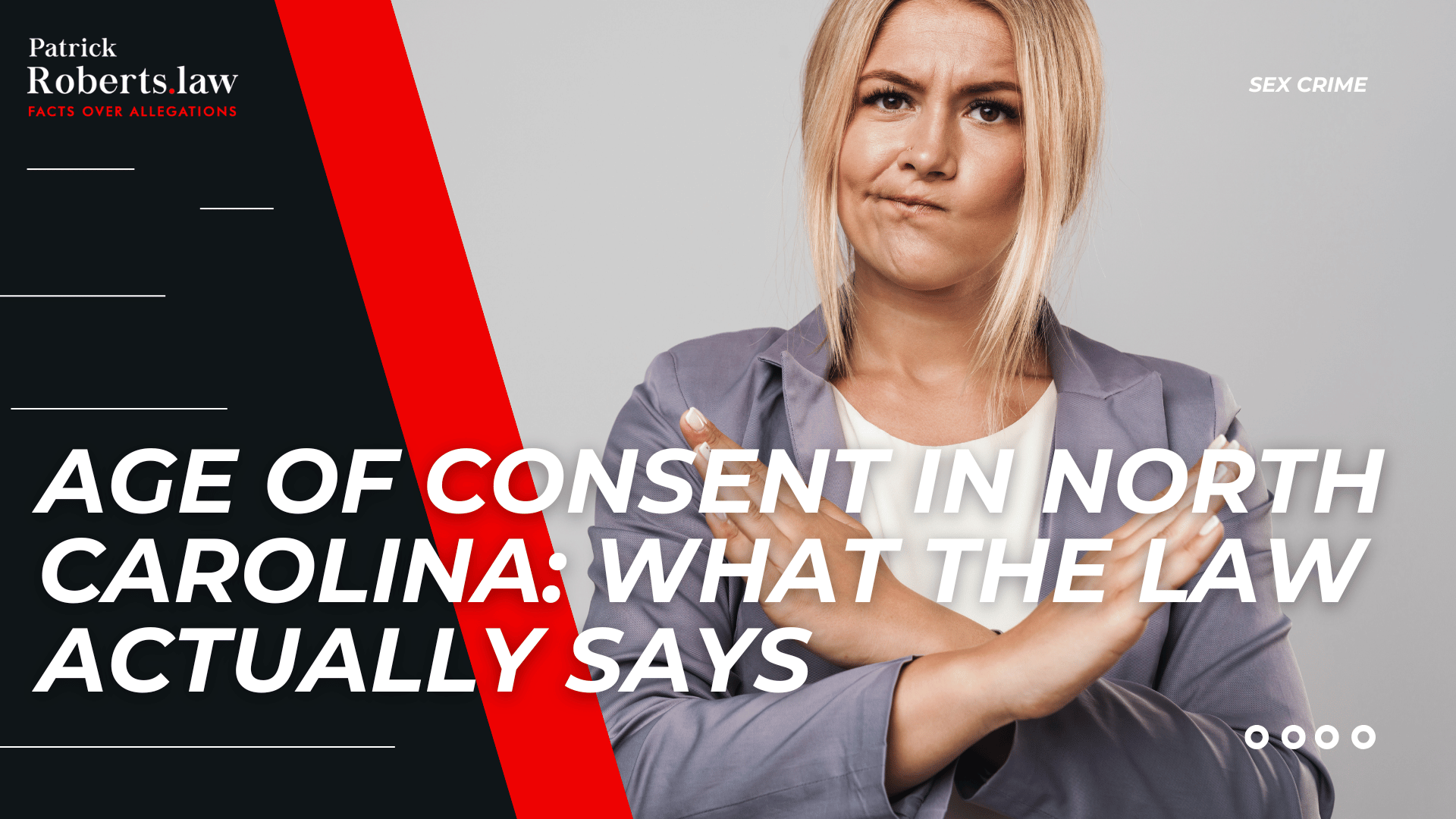
Smartphone with security lock icon held in hand alongside police lights and handcuffs, representing legal issues around police searching phones in a sex crime investigation, branded by Patrick Roberts Law.

Can Police Search Your Phone in a Sex Crime Investigation?

In North Carolina, the investigation of sex crimes—ranging from sexual battery to the exploitation of a minor—increasingly relies on digital evidence. Because modern smartphones contain highly personal data, including location history, private communications, and biometric data, they are protected by stringent constitutional standards. Understanding your rights regarding a mobile device search is critical. This guide examines the legal requirements for warrants, the validity of consent, and the specialized forensic methods used by North Carolina law enforcement to extract data from cellular devices. more Does the Fourth Amendment Protect Your Phone During a Sex Crime Arrest? The Fourth Amendment to the U.S. Constitution and Article I, Section 20 of the North Carolina Constitution protect individuals against unreasonable searches and seizures. For decades, police were permitted to search items found on a person during an arrest—such as a wallet or a cigarette pack—without a warrant. This is known as the "search incident to arrest" exception. However, the legal landscape changed with the landmark U.S. Supreme Court case Riley v. California (2014). The Court unanimously ruled that smartphones are fundamentally different from physical containers. Because a phone can store millions of pages of text, thousands of photos, and detailed medical or financial records, it is entitled to the same level of protection as a private home. The Current Standard in North Carolina: General Rule: Police generally cannot search the digital contents of a phone seized during an arrest without a search warrant. Seizure vs. Search: While officers may physically seize your phone to prevent you from deleting evidence, they cannot scroll through it, read messages, or view photos until a judge signs a warrant. The "Digital Diary" Exception: North Carolina courts recognize that the immense storage capacity of modern devices makes a warrantless search a significant intrusion into a person’s private life. However, seizure is not a license to scroll. In North Carolina, once the phone is in police custody, the "emergency" of losing data is considered over because they can simply put it in a "Faraday bag" (which blocks signals) and wait for a warrant. Can Police Search a Phone Without a Warrant? While a warrant is the standard requirement, there are specific legal exceptions that allow North Carolina law enforcement to bypass this step. The Role of Consent The most common way police access a phone is through consent. If an individual voluntarily agrees to let an officer search their device, a warrant is no longer necessary. In many sex crime investigations, officers may use high-pressure tactics to encourage "cooperation," suggesting that refusing a search makes the person look guilty. Is Consent Valid if Coerced? Under North Carolina law, consent must be voluntary and informed. If an officer uses threats, physical force, or a false "show of authority" (claiming they already have a warrant when they do not), any evidence found may be suppressed. Courts look at the "totality of the circumstances" to determine if the consent was a product of free will. Can You Withdraw Consent? Yes. If you initially give police permission to search your phone, you have the legal right to withdraw that consent at any time. Once you clearly state that you no longer permit the search, the officers must stop immediately unless they have already obtained a warrant or another exception applies. Exigent Circumstances (Emergencies) Police may perform a warrantless search if they have an objectively reasonable belief that an immediate search is required to: Prevent the Imminent Destruction of Evidence: For example, if police believe a suspect is remotely wiping the device’s data via a linked computer. Protect a Victim from Immediate Harm: If a phone contains the location of a person currently in danger. Prevent the Escape of a Suspect: If digital data is the only way to track a fleeing individual in a high-stakes felony case. What Are the Requirements for a North Carolina Search Warrant? To legally search a mobile device in North Carolina, law enforcement must follow the procedures outlined in N.C.G.S. § 15A-242. A search warrant is not a "blank check" to browse through all personal data; it must meet specific criteria to be valid. Establishing Probable Cause A warrant cannot be issued based on a hunch. An officer must submit a written affidavit to a neutral magistrate or judge detailing probable cause. This means the officer must provide specific facts suggesting that a crime was committed and that evidence of that crime is currently located on the phone. In a sex crime investigation, probable cause might be established through: Statements from a victim or witness alleging digital communication. Initial "plain view" observations of incriminating images. Records from a service provider (like Verizon or AT&T) showing frequent contact between the suspect and a victim. The Particularity Requirement Under the Fourth Amendment, a warrant must particularly describe the place to be searched and the items to be seized. In the digital context, a general warrant that says "search all files on the phone" is often considered unconstitutionally broad. A valid North Carolina warrant should specify: The Types of Data: (e.g., SMS messages, WhatsApp chats, Apple Photos). The Date Range: (e.g., only messages sent between June 1 and June 15). The Relevant Parties: (e.g., communications involving a specific username or phone number). If a warrant is "overbroad," meaning it allows police to rummage through data unrelated to the investigation, a defense attorney may be able to challenge the warrant’s validity in court. Forensic Imaging and Search Protocols Investigators often create a forensic image (a bit‑for‑bit copy) of a device. Proper warrants authorize imaging and specify how examiners will search the image (using particular search terms or filters). Overbroad warrants that permit unrestricted searches across an entire device can be challenged. How Deleted Files Are Recovered Data recovery techniques and success rates vary depending on the hardware, operating system or firmware, backup and caching methods, and any encryption used by the device. Simple deletion: Removing a file in many operating systems and apps often deletes a pointer to the data; the underlying data can remain until overwritten. Thumbnails and caches: Thumbnails, caches, and temporary files may persist after deletion. Backups and cloud copies: Phones may back up automatically to iCloud, Google Drive, or other services. Copies can persist after local deletion. Legal Risks of Deleting Data After an Investigation Begins Intentionally destroying evidence can lead to criminal charges (obstruction) or adverse inference rulings. Evidence that deletion occurred can support probable cause for obtaining a warrant because it suggests relevant evidence may still exist and be recoverable. Avoid deleting or destroying data if you are under investigation or reasonably expect an investigation. Deletion can increase legal exposure. Preserve devices and accounts and inform your attorney about relevant devices so counsel can advise on preservation steps and potential defenses. Social Media Extraction: How Do Investigators Obtain Social Media Evidence? Direct Access vs. Provider Production Account‑holder disclosure: Police may request that you log in and allow them to view content. Consenting to that is voluntary and can be declined. Warrants or court orders to providers: Investigators commonly obtain content and metadata from social media companies using search warrants, subpoenas, or preservation requests. Different legal standards apply depending on the data sought (subscriber information, IP logs, or message content). What Law Enforcement Commonly Seeks Private messages and chats. Posts, comments, and deleted material retained by the provider. Photo and video content, with timestamps and location data. Account creation and login metadata (IP addresses, device IDs). Contact lists and follower/following relationships. Privacy Limits and Provider Notice Providers often notify account holders when law enforcement requests content unless a nondisclosure order is in place, though notification policies vary, and content in end-to-end encrypted messaging apps or locally encrypted backups may be harder to obtain without the user’s cooperation or specialized technical access; rather than attempting to evade detection by creating or deleting accounts, treat preservation of all account login details as important, share them only with your lawyer so they can advise on retention and legal options, and remember that anything posted publicly can be collected and used as evidence. Forensic Timelines: How Do Examiners Reconstruct Events From Digital Evidence? Digital forensic analysis aims to reconstruct chronology and context. Understanding the process helps assess the strengths and limitations of that evidence. Goals of Forensic Reconstruction Chronology: When messages were sent/received, photos taken, or locations visited. Interaction patterns: Who communicated with whom, frequency of contact, and timing relative to alleged incidents. Context: Metadata and app artifacts that provide context (read receipts, delivery statuses, geotags). Common Artifacts and Evidentiary Value Timestamps: Message timestamps, file creation/modification times, and server logs used to build timelines. Location data: GPS coordinates, Wi‑Fi association logs, and cell‑tower records can place a device near a location. System logs: Operating system logs, application caches, and notification records show app activity. Metadata: EXIF data in photos, message metadata, and file hashes help establish origin and integrity. Typical Forensic Workflow Imaging: Create a forensic image of the device to preserve the original. Extraction: Use specialized tools to extract files, databases, logs, and caches. Analysis: Parse, correlate, and build timelines. Analysts search for inconsistencies, deleted or overwritten entries, and artifacts from uninstalled apps. Reporting: Compile findings into a forensic report describing methods used, items found, and timelines reconstructed. Challenges and Reliability Concerns Timestamps can be affected by device settings or time zones; analysis should consider system time, server times, and corroborating metadata. Recovered fragments may be partial or corrupted and require careful interpretation. Chain of custody and proper forensic procedures are critical to admissibility and credibility in court. What Should You Do If Police Ask to Search Your Phone in North Carolina? Understanding how consent affects your legal interests is important when responding to police requests to search a digital device. Making an informed decision helps preserve your rights. Rights and Immediate Responses Do not physically resist a lawful seizure. Resisting can create separate criminal liability or physical risk. Politely decline consent to search. You can say: “I do not consent to a search of my phone. I want to speak with an attorney.” Ask whether you are free to leave. If you are not free to leave, your “consent” may later be treated as involuntary. If arrested, clearly invoke your right to remain silent and ask for a lawyer. If You Choose to Consent If you choose to consent after consulting counsel, limit consent to specific items (e.g., only recent call logs) or date ranges and request a written record of what you consented to. Remember that consent once given may be difficult to retract for data already accessed. If Presented With a Warrant Request to see the warrant and note the officer’s name and badge number. Read the warrant if possible. Attorneys can later challenge overbroad warrants or unlawful execution. Do not obstruct a lawful search; preserve the legal right to challenge the warrant in court. Frequently Asked Questions: Q: Can police compel me to unlock my phone with my passcode in North Carolina? The answer depends on whether providing the passcode is “testimonial.” Courts have reached different conclusions about compelled passcodes versus compelled biometric unlocks. In many jurisdictions: biometric unlocking has sometimes been treated as non‑testimonial and therefore compellable, while forced disclosure of a memorized passcode may be protected by the Fifth Amendment because it reveals knowledge in the mind of the suspect. These standards are evolving. If asked to provide a passcode, invoke your right to counsel and consult an attorney before complying. Q: If I delete messages, can the police still retrieve them? Often, but not always. Deleted items frequently remain recoverable on the device, in backups, or on provider servers. Deleting material after you know about an investigation can have serious legal consequences. Preserve data and consult counsel. Q: Can evidence from my social media be used against me? Yes. Public posts are accessible to investigators. Private messages can often be obtained via warrants or provider cooperation. Deleting or attempting to hide social media evidence can worsen your legal position. Q: What if police access my phone without a warrant or consent? Searches that violate the Fourth Amendment or state constitutional provisions can be challenged in court. Whether a search is lawful depends on facts: whether a warrant existed, consent was voluntary, exigent circumstances applied, or another exception justified the search. Evidence discovered through an unlawful search may be suppressed if the court finds the search improper. How Defense Lawyers Challenge Phone Evidence Motions to suppress: Argue that police lacked probable cause, consent was involuntary, exigent circumstances did not exist, or the warrant was overbroad or improperly executed. Chain of custody and forensic methodology: Challenge whether proper procedures were used to image devices, preserve evidence, or authenticate files. Reliability and interpretation: Retain experts to analyze metadata, timelines, and whether artifacts reliably support prosecution theories. Fifth Amendment protections: Argue compelled disclosure of passcodes was unlawful testimonial compulsion. Discovery and cross‑examination: Use discovery to obtain forensic reports, warrants, and examiner notes; then highlight gaps or errors at hearings and trial. Strategic Oversight in Digital Forensic Investigations When facing allegations involving digital evidence, the quality of your legal representation is the most critical factor in your defense. Attorney Patrick Roberts provides the technical and legal proficiency required to ensure that your constitutional rights are upheld throughout the investigative process. Attorney Patrick Roberts partners with several forensic teams led by law-enforcement veterans who bring decades of experience. By using experts fluent in the state’s exact protocols, he can provide independent analysis of device data. Those specialists look for weaknesses in the prosecution’s chain of custody and develop alternative explanations for digital artifacts law enforcement may have missed. Professional Background and Trial Training Attorney Patrick Roberts is a graduate of Duke University School of Law, an institution tied for #6 nationally with Harvard Law School for the 2025–2026 academic year. Duke’s curriculum is distinguished by its criminal law program, which maintains a top-10 national ranking (#8) as of 2025. The university’s commitment to legal ethics and the protection of constitutional rights is currently exemplified by the Duke Center for Criminal Justice and Professional Responsibility, which focuses on the integrity of the criminal legal system. Mr. Roberts earned his Juris Doctor at Duke in 2000, following his undergraduate education in Engineering at Johns Hopkins University, a top-10 national university. His professional training also includes graduation from the NCDC Trial Practice Institute, a two-week intensive program covering the technical defense of individuals in criminal proceedings. In 2013, he was named to the “Top 100 Trial Lawyers” and “Top 40 Under 40” by the National Trial Lawyers. He is also a Client Champion Platinum recipient by Martindale-Hubbell. His background includes intensive programs at the Gerry Spence Trial Lawyers College and the NCDC Trial Practice Institute. Today, he maintains an AV Preeminent Peer Rating for ethics and ability—a standard he has held for over five consecutive years—and a perfect 10/10 AVVO Rating. Attorney Patrick Roberts served as a commissioner of the North Carolina State Ethics Commission, having been appointed by Governor Pat McCrory in 2016. Defense Against Digital Intrusion As an experienced sex crimes lawyer, Attorney Patrick Roberts understands that digital evidence is often the cornerstone of the prosecution's case. He meticulously reviews search warrants for signs of overbreadth or lack of particularity. If law enforcement exceeded their legal authority or relied on a defective warrant, he aggressively pursues motions to suppress the evidence, aiming to have it excluded from the trial. Forensic Coordination and Evidence Review A thorough defense requires a technical audit of the state's evidence. Attorney Patrick Roberts coordinates with independent digital forensic experts to re-examine extraction methods and chain of custody. His 2025 NCDC Cross-Examination Intensive training is utilized when questioning state forensic analysts about the reliability of their data and the context of recovered metadata. Strategic Insight From a Former Prosecutor As a former prosecutor, Attorney Patrick Roberts possesses an informed perspective on the methods and strategies used by the state in digital investigations. By combining this background with different forensic teams led by individuals who previously helped prosecute these matters or by law enforcement officers with decades of experience, he is able to provide a comprehensive analysis of the prosecution’s case. This experience allows him to identify procedural weaknesses and technical gaps in evidence that might otherwise go unnoticed, ensuring a rigorous and data-driven defense for his clients. Representative Case Experience Attorney Patrick Roberts utilizes over 20 years of experience within the North Carolina legal system to manage high-stakes investigations. Recent representative case experience includes several matters concluded between 2025 and 2026 where investigations resulted in no charges being filed. These cases involved allegations of sexual assault involving a minor, indecent liberties involving a teenager, and a rape allegation following an encounter at a public venue. Disclaimer: While these outcomes illustrate the firm's experience, every case is unique and requires an individual evaluation. Prior results do not guarantee similar outcomes in future matters, as results often depend on a detailed review of witness statements and digital evidence specific to each situation. Reviews “Patrick Roberts is a fierce advocate on behalf of his clients… He also has an excellent command of many of the technical issues that are implicated in cases involving technology, forensic science and the like.” - Peer review posted on Avvo* "What truly set Mr. Roberts apart was how integral he became in helping us navigate the North Carolina legal system while ensuring every rule, requirement, and regulation was followed precisely. Managing a case from out of state is no small task, but he made sure we were informed, prepared, and supported at every turn.” - Client review posted on Avvo* *Testimonials and peer endorsements found on this website are actual comments. Disclaimer: The testimonials and peer reviews on this site are for informational purposes. They do not constitute a guarantee, warranty, or prediction regarding the outcome of your legal matter. Every case is different and must be evaluated on its own merits. Protecting Your Constitutional Rights If you’re under investigation and the police want to search your digital devices, how you respond can shape the investigation’s outcome. It’s essential to consult a North Carolina sex crimes lawyer near you for advice tailored to your case and to protect your constitutional rights. Attorney Patrick Roberts serves the Raleigh, Cary, Durham, and Chapel Hill areas. To schedule a free consultation, call 919-746-7206 or contact us through our online form. The firm limits the number of cases it accepts at any given time to uphold its commitment to rigorous and attentive legal representation. Disclaimer: The information on this website is for general information purposes only and is not legal advice. Case results depend on a variety of factors unique to each case, and prior results do not guarantee a similar outcome. Consult a licensed North Carolina attorney for advice specific to your situation.

Lady Justice statue with scales; bold headline: “First-Degree Statutory Rape Charges in Cary, NC

First-Degree Statutory Rape Charges in Cary, NC

A first-degree statutory rape charge in North Carolina carries consequences that extend far beyond the courtroom. For residents of Cary and the Research Triangle area—where nearly 70% of adults hold college degrees and many work in careers requiring security clearances or professional licenses—an accusation alone can dismantle decades of professional achievement before a trial ever begins. Under N.C. Gen. Stat. § 14-27.24, first-degree statutory rape is classified as a Class B1 felony, one of the most serious charges in North Carolina's criminal code. The statute applies when a person engages in vaginal intercourse with a child under age 13, and the defendant is at least 12 years old and at least four years older than the alleged victim. Unlike many criminal charges, this offense carries no requirement that prosecutors prove force, threat, or lack of consent—the age of the alleged victim alone establishes the criminal nature of the conduct. If you or someone you love faces this accusation in Wake County, understanding the legal framework—and securing experienced defense counsel immediately—may be the most important decision you make. more What Is First-Degree Statutory Rape Under North Carolina Law? North Carolina's statutory rape laws create a tiered system of offenses based on the ages of both the defendant and the alleged victim. Patrick Roberts' years prosecuting sex-offense cases in North Carolina provide him with direct insight into how the state constructs these prosecutions—knowledge that now serves his defense clients in Cary and throughout Wake County. What Are the Specific Elements Prosecutors Must Prove? To secure a conviction for first-degree statutory rape, the Wake County District Attorney's office must prove each element beyond a reasonable doubt. The statutory elements include: The defendant engaged in vaginal intercourse with another person The alleged victim was a child under the age of 13 years at the time of the alleged conduct The defendant was at least 12 years old at the time The defendant was at least four years older than the alleged victim The statute contains no consent element. North Carolina law conclusively presumes that a child under 13 cannot consent to sexual activity, making the alleged victim's apparent willingness legally irrelevant to the charge. How Does This Charge Differ from Other Statutory Rape Offenses? North Carolina law creates a more serious offense under N.C. Gen. Stat. § 14-27.23 when the defendant is at least 18 years old and the alleged victim is under 13. This charge—statutory rape of a child by an adult—carries a substantial mandatory minimum prison term and the possibility of life imprisonment without parole in cases involving egregious aggravation. Critically, first-degree statutory rape under § 14-27.24 is explicitly designated as a lesser included offense of statutory rape of a child by an adult. This means prosecutors may initially charge the more serious offense, or a jury may convict on the lesser charge even when the greater offense was charged. Understanding this relationship is essential when building a defense strategy in Wake County courts. A separate statute, N.C. Gen. Stat. § 14-27.25, addresses situations involving alleged victims who are 15 years old or younger. The felony classification under that statute depends on the age gap between defendant and alleged victim, with different consequences for those more than four but less than six years older versus those six or more years older. What Role Does the Age Difference Play in These Cases? The four-year age gap requirement distinguishes first-degree statutory rape from other sexual offenses involving minors. North Carolina's statutory scheme creates different felony classifications based on age differentials, making the precise ages of both parties critical to determining which charges apply. Cary Police Department's Special Victims Unit investigators and Wake County prosecutors pay careful attention to establishing exact birth dates for both the defendant and alleged victim, as even small differences can affect which statute applies and what consequences are possible. What Consequences Follow a First-Degree Statutory Rape Conviction? A conviction under § 14-27.24 triggers severe criminal consequences along with collateral effects that touch nearly every aspect of life. The specialized sex-crimes defense training Patrick Roberts has completed through the National Association of Criminal Defense Lawyers equips him to help clients understand the full scope of what they face—and fight against it at every stage. How Does North Carolina Classify This Offense? Class B1 represents the second-most-serious felony classification in North Carolina's structured sentencing system. Convictions at this level result in substantial terms of imprisonment, with the specific sentence depending on the defendant's prior record level and other factors considered by the court. For professionals living in Cary—software engineers at SAS Institute, financial analysts at MetLife, defense contractors at Lockheed Martin—the prospect of significant incarceration represents only the beginning of the devastation a conviction brings. What Happens to Parental Rights After a Conviction? North Carolina law includes a provision that directly addresses parental rights following a statutory rape conviction. Under § 14-27.24(c), a person convicted under this section has no rights to custody of or rights of inheritance from any child born as a result of the commission of the rape. The convicted person also loses any rights related to the child under North Carolina's adoption statutes (Chapter 48) or juvenile code (Subchapter 1 of Chapter 7B). This statutory consequence operates automatically upon conviction, requiring no separate court proceeding to terminate parental rights. What Collateral Consequences Extend Beyond the Courtroom? The consequences extending beyond incarceration often prove equally devastating for Cary residents and their families. Collateral consequences of a first-degree statutory rape conviction typically include: Mandatory sex offender registration, which creates public records accessible to employers, neighbors, and anyone conducting a background check Immediate revocation of security clearances, ending careers at defense contractors like Lockheed Martin and government-adjacent employers throughout the Research Triangle Loss of professional licenses in fields including medicine, law, education, finance, and real estate Deportation for non-citizens, regardless of how long they have lived in the United States—a significant concern given that 22% of Cary's population is foreign-born Housing and employment restrictions that persist for life, even after completion of any sentence The median household income in Cary exceeds $129,000—financial stability that can vanish when a conviction makes continued employment impossible. How Do Cary Police and Wake County Prosecutors Handle These Cases? Understanding how these cases develop from initial allegation through arrest and prosecution helps defendants and their families prepare for what lies ahead. Having previously served as a prosecutor handling these exact cases, Patrick Roberts brings firsthand knowledge of the tactics, timelines, and decision-making processes that shape investigations. What Is the Role of Cary Police Department's Special Victims Unit? Cary Police Department maintains a dedicated Special Victims Unit within its Investigations Division. SVU detectives receive specialized training in handling sexual assault allegations, child exploitation cases, and domestic violence matters. When an allegation surfaces—whether through a report from a parent, school official, medical provider, or the alleged victim—SVU investigators typically take the lead. These investigations often involve forensic interviews conducted at specialized child advocacy centers, medical examinations, and digital evidence collection from phones and computers. The thoroughness of CPD's approach means that by the time charges are filed, prosecutors often believe they have assembled substantial evidence. How Does the Wake County District Attorney's Office Approach These Prosecutions? All criminal cases arising from Cary are prosecuted by the Wake County District Attorney's office in North Carolina's 10th Judicial District. The DA's office includes prosecutors who focus specifically on sex-crime cases and coordinate closely with Cary PD throughout investigations. Wake County prosecutors generally approach statutory rape allegations involving young children with particular aggressiveness. The combination of the alleged victim's age and the severity of the charge creates cases where prosecutors rarely offer significant plea concessions without substantial defensive pressure. What Should You Expect During the Investigation Process? Investigations may unfold over weeks or months before an arrest occurs. Some defendants learn they are under investigation when police request an interview; others first learn of the accusation at the moment of arrest. If you become aware that you are under investigation—or if you have been arrested—anything you say to investigators can be used against you. The decision to speak with police without defense counsel present is almost always a mistake, regardless of how confident you feel in your innocence. What Defense Strategies Apply to First-Degree Statutory Rape Cases? Building an effective defense requires careful analysis of the evidence, the circumstances of the allegation, and the credibility of witnesses. Attorney Patrick Roberts' training through the National Child Abuse Defense and Resource Center—As of December 2025, he is the only North Carolina attorney listed on their falseallegation.org registry—provides him with specialized techniques for challenging unreliable accusations and exposing weaknesses in the state's case. Can False Allegations Form the Basis of a Defense? North Carolina's statutory rape law is a strict liability offense with respect to the alleged victim's age—meaning a defendant's reasonable belief that the alleged victim was older generally does not constitute a defense. However, cases where the defendant genuinely believed no sexual contact occurred, or where the allegation itself is fabricated, present different defensive considerations. False allegations do occur, arising from misunderstandings, coaching by adults involved in custody disputes, pressure from authority figures during suggestive interviews, or other circumstances that contaminate a child's account. Effective defense requires thorough investigation into how the allegation emerged and developed. How Can Forensic Interview Analysis Challenge the State's Case? Forensic interviews of alleged child victims are typically video-recorded and become central evidence in statutory rape prosecutions. These interviews should follow established protocols designed to minimize suggestions and allow children to describe events in their own words. When interviewers deviate from proper protocols—using leading questions, repeating questions until they receive desired answers, or introducing information the child had not mentioned—the reliability of the resulting statements comes into question. Defense strategies that may be applicable in Wake County statutory rape cases include: Challenging the reliability of forensic interviews through expert testimony on memory, suggestibility, and proper interview protocols Investigating the source and development of the allegation to identify potential contamination or coaching Examining physical evidence—or the absence of expected physical evidence—through independent forensic analysis Identifying inconsistencies in the alleged victim's statements across multiple interviews or disclosures What Constitutional Protections Apply to Your Case? Every defendant retains fundamental constitutional protections including the right to remain silent, the right to counsel, the right to confront and cross-examine witnesses, and the requirement that prosecutors prove every element beyond a reasonable doubt. In Wake County Superior Court, these rights provide the framework for mounting a vigorous defense—but only if you exercise them. Why Does Your Choice of Defense Attorney Matter? Statutory rape cases involving young children present unique challenges that require specific knowledge and skills. Not every criminal defense attorney has the training or experience to handle these matters effectively. What Should You Look for in a Defense Attorney for These Charges? Effective defense of statutory rape charges requires an attorney who understands the scientific literature on children's memory and suggestibility, recognizes proper and improper forensic interview techniques, and can present complex information to a jury compellingly. The advanced cross-examination techniques Attorney Patrick Roberts developed through his training at the National Criminal Defense College prove essential when challenging the state's witnesses. NCDC's intensive program focuses on practical courtroom skills that directly translate to more effective advocacy in Wake County courtrooms. With two decades of criminal defense experience, Attorney Patrick Roberts brings a level of seasoned judgment that only comes from having tried hundreds of bench and jury trials in both state and federal courts across North Carolina. This extensive trial record provides a foundation for the unique defense strategies and creative defense techniques he employs to protect his clients' futures. How Does Prosecutorial Experience Strengthen Your Defense? Patrick brings an effective "insider" perspective to every case, having spent years building criminal files as a former prosecutor. This background provides a powerful advantage: he understands the "prosecutor's playbook" and can anticipate how the State will evaluate evidence and weigh charging decisions. This dual-sided insight allows him to identify vulnerabilities in the prosecution's case—such as gaps in witness credibility or forensic protocol—giving his clients a fearless and strategic edge from the very start. How Can Patrick Roberts Help If You're Facing These Charges in Cary? Facing a first-degree statutory rape accusation is terrifying. Your freedom, your family, your career, and your reputation all hang in the balance. In Cary—where professional success defines so many lives—the stakes could not be higher. What Makes Attorney Patrick Roberts' Background Relevant to Your Case? Attorney Patrick Roberts combines prosecutorial experience in sex-crime cases with intensive defense training from the nation's leading organizations. As a lifetime member of the National Association of Criminal Defense Lawyers, he maintains current knowledge through ongoing seminar participation. His training at Gerry Spence's Trial Lawyers College—where he learned directly from one of America's most accomplished trial attorneys—shapes how he connects with juries and humanizes clients facing devastating accusations. This combination of experience and training serves clients throughout Cary, Wake County, and the greater Research Triangle area. Mr. Roberts’ commitment to excellence is reflected in his admission to practice before the U.S. Supreme Court, the Fourth Circuit Court of Appeals, and all federal district courts in North Carolina. This prestigious level of standing signifies a lawyer who is respected at the highest level of the American judiciary. Whether fighting for a dismissal in Raleigh or arguing a complex appeal, Patrick Roberts provides a fearless and powerful defense tailored to secure the most favorable outcome available.* *Disclaimer: Each case is different and must be evaluated separately. Prior results achieved do not guarantee similar results can be achieved in future cases. The Standard of Excellence Recognized by Peers This commitment to the highest levels of the American judiciary is not just reflected in Attorney Roberts’ bar admissions, it is felt in the courtrooms where he practices daily. It is one thing to hold prestigious credentials; it is another to earn the unwavering trust of fellow attorneys and judges who witness his advocacy firsthand. In the legal community, a lawyer is best measured by the respect of their adversaries and the confidence of their colleagues. What Peers and Colleagues are Saying* "A Skilled Adversary in Court" "Patrick is an extremely talented lawyer who has the highest ethical standards. He works extremely hard for his clients and is a very skilled adversary in court." — Peer Review by a fellow attorney on October 29, 2018 via Martindale-Hubbell "My #1 Referral for Criminal Matters" "Patrick Roberts is my top recommendation for clients facing state or federal criminal issues. His expertise in the field, experience in the courtroom, and professionalism are unrivaled. If I were ever facing charges, I would want Patrick to go to bat for me." — Rated by a counsel on October 29, 2018 via Martindale-Hubbell *Testimonials and peer endorsements found on this website are actual comments. DISCLAIMER: The testimonials and peer reviews on this site are for informational purposes. They do not constitute a guarantee, warranty, or prediction regarding the outcome of your legal matter. Every case is different and must be evaluated on its own merits. How Do You Take the First Step Toward Building Your Defense? If you or someone you love has been accused of first-degree statutory rape, the time to act is now. Early intervention by experienced defense counsel can influence how investigations unfold, preserve evidence that might otherwise be lost, and begin building the strongest possible defense. Contact Patrick Roberts Law to schedule a confidential consultation about your case. Frequently Asked Questions What is the difference between first-degree statutory rape and statutory rape of a child by an adult? Both offenses involve an alleged victim under age 13, but statutory rape of a child by an adult under § 14-27.23 requires the defendant to be at least 18 years old and carries more severe mandatory consequences. First-degree statutory rape under § 14-27.24 applies when the defendant is at least 12 and at least four years older than the alleged victim, regardless of whether the defendant has reached adulthood. The first-degree charge is a lesser included offense of the adult charge. Does it matter if I believed the person was older? North Carolina treats statutory rape as a strict liability offense regarding the alleged victim's age. A defendant's belief about the alleged victim's age—even if that belief seemed reasonable—generally does not provide a defense to the charge. This is one reason why these cases require experienced defense counsel who can identify other viable defense strategies. Where will my case be prosecuted if I'm arrested in Cary? Criminal cases arising in Cary are prosecuted through the Wake County court system. Initial appearances occur in Wake County District Court, while felony trials take place in Wake County Superior Court at the Justice Center in Raleigh. Having defense counsel familiar with Wake County procedures, prosecutors, and judges provides advantages throughout the process. Will I have to register as a sex offender if convicted? Yes. A conviction for first-degree statutory rape triggers mandatory sex offender registration in North Carolina. This registration creates public records that affect housing options, employment opportunities, and many other aspects of daily life for years or decades following conviction. How quickly should I contact a defense attorney? Immediately. If you learn you are under investigation—or have been arrested—contact experienced defense counsel before speaking with police or anyone else about the allegations. Early involvement allows your attorney to protect your rights during the investigation phase and begin building your defense while evidence is still available. Disclaimer: The information on this website is for general information purposes only. Nothing on this site should be taken as legal advice for any individual case or situation. Case results depend upon a variety of factors unique to each case. Prior results do not guarantee a similar outcome.

Cover slide asks what first-degree statutory sexual offense is in Cary, NC, over courtroom scene with gavel.

What Is First-Degree Statutory Sexual Offense in Cary, NC?

Being accused of first-degree statutory sexual offense in North Carolina places everything you've built at risk—your freedom, your career, your family, and your reputation in the community. In Cary and throughout the Research Triangle, where professionals often hold positions requiring security clearances, professional licenses, or public trust, these accusations carry consequences that extend far beyond the courtroom. The charge itself is among the most serious in North Carolina's criminal code, classified as a Class B1 felony with mandatory minimum sentencing requirements that can result in decades in prison. North Carolina law treats sexual offenses involving children with maximum severity, and prosecutors in Wake County pursue these cases aggressively. Understanding exactly what the State must prove—and where the evidence may fall short—requires an attorney who has handled these cases from both sides. Patrick Roberts' years as a prosecutor handling sex-offense cases gives him direct insight into how the State builds its case, what evidence it prioritizes, and where strategic weaknesses may exist. more What Is First-Degree Statutory Sexual Offense Under North Carolina Law? First-degree statutory sexual offense is defined under N.C. Gen. Stat. § 14-27.29 and represents one of the most serious sexual offense charges in the state. The statute establishes specific elements that Wake County prosecutors must prove beyond a reasonable doubt to secure a conviction. What Are the Specific Elements Prosecutors Must Prove? Under the statute, the prosecution must establish each of the following elements: The defendant engaged in a "sexual act" with the victim The victim was a child under the age of 13 years The defendant was at least 12 years old at the time The defendant was at least four years older than the victim Each element must be proven independently, and the failure to establish any single element should result in acquittal. Having prosecuted these cases, Patrick Roberts understands how district attorneys construct their evidence to address each element—and he knows how to identify gaps in that construction. What Qualifies as a "Sexual Act" Under the Statute? North Carolina law distinguishes between "sexual act" and "vaginal intercourse" when defining sexual offenses. A sexual act includes cunnilingus, fellatio, analingus, anal intercourse, or the penetration by any object into the genital or anal opening of another person's body. This distinction matters because statutory sexual offense charges apply to sexual acts, while statutory rape charges apply to vaginal intercourse. The Wake County District Attorney's office carefully evaluates alleged conduct to determine which charges apply. How Does This Charge Differ From Statutory Rape? The key distinction lies in the type of sexual conduct alleged. Statutory rape under North Carolina law involves vaginal intercourse, while statutory sexual offense involves other sexual acts as defined above. Both carry Class B1 felony classifications when the victim is under 13 and the age-gap requirements are met, but they are separate offenses. Prosecutors may charge both offenses if the alleged conduct includes both types of sexual contact. What Makes This a Class B1 Felony and What Does That Mean? A Class B1 felony represents the second-most-serious felony classification in North Carolina's structured sentencing system. For Cary residents—many of whom have built careers at companies like SAS Institute, Epic Games, or defense contractors requiring security clearances—a conviction at this level means more than prison time. How Severe Are the Potential Penalties for a Class B1 Felony? North Carolina's structured sentencing guidelines determine the presumptive range based on the defendant's prior record level. However, the consequences of a Class B1 felony conviction extend well beyond the sentence itself, particularly for professionals in the Research Triangle's competitive employment market. What Additional Consequences Come With a Conviction? The collateral consequences of a first-degree statutory sexual offense conviction are severe and lasting. They include: Mandatory sex offender registration, often for life Loss of professional licenses in fields including healthcare, education, law, and finance Revocation of security clearances, ending careers at defense contractors like Lockheed Martin Immigration consequences including deportation for non-citizens (affecting Cary's substantial immigrant population in the tech sector) Permanent barriers to housing, employment, and educational opportunities Loss of civil rights including voting and firearm ownership Strategic Defense Against Complex Charges For cases involving sensitive allegations, the stakes extend far beyond the courtroom. Attorney Patrick Roberts' specialized training through the National Association of Criminal Defense Lawyers (NACDL)—where he is a lifetime member and has attended recent sex-crimes defense seminars—includes a deep understanding of how legal and collateral consequences interact. By utilizing creative defense techniques, his defense strategy accounts for these complexities from the outset. The intensive trial advocacy training he completed at Gerry Spence's Trial Lawyers College—methods focused on connecting with juries and presenting compelling narratives—ensures that trial preparation is both thorough and effective. How Does Sentencing Work Under North Carolina's Structured System? North Carolina uses a structured sentencing grid that considers both the offense class and the defendant's prior record level. For Class B1 felonies, the presumptive sentences are substantial even for defendants with no prior criminal history. The system provides ranges rather than fixed sentences, and factors including the circumstances of the offense and the defendant's background influence where within the range the court sentences. How Do Related Statutory Sexual Offense Charges Compare? North Carolina's statutory scheme includes several related offenses that may apply depending on the specific facts. Understanding how these charges relate helps defendants and their families grasp what they're facing—and helps defense counsel anticipate how the Wake County District Attorney may approach charging decisions. What Is Statutory Sexual Offense with a Child by an Adult? N.C. Gen. Stat. § 14-27.28 creates a separate offense when the defendant is at least 18 years old and engages in a sexual act with a victim under 13. This offense is also a Class B1 felony but carries a mandatory minimum active sentence of 300 months—25 years—regardless of prior record. The statute also permits sentences up to life imprisonment without parole in cases involving egregious aggravation. First-degree statutory sexual offense under § 14-27.29 is specifically identified as a lesser included offense of this charge. When Does the Six-Year Age Gap Provision Apply? N.C. Gen. Stat. § 14-27.30 addresses statutory sexual offenses with victims who are 15 years old or younger. When the defendant is at least six years older than the victim, it's a Class B1 felony. When the age gap is more than four years but less than six years, the offense is classified as a Class C felony—still serious, but with different sentencing implications. This distinction can significantly impact case outcomes. Can Prosecutors Charge Multiple Offenses From the Same Conduct? Prosecutors have discretion in charging decisions, and Wake County's District Attorney's office may charge multiple related offenses arising from the same alleged conduct. Patrick Roberts' NCADRC training—he is the only North Carolina attorney listed on falseallegation.org's registry of NCADRC-trained defenders—provides specialized insight into how charging decisions in child-victim cases are made and how to challenge prosecutorial overreach. How Do Cary Police and Wake County Authorities Investigate These Cases? Investigations into first-degree statutory sexual offense allegations in Cary involve specialized law enforcement units with training specific to these sensitive cases. Understanding how these investigations unfold is essential to mounting an effective defense. What Role Does Cary PD's Special Victims Unit Play? Cary Police Department maintains a dedicated Special Victims Unit within its Investigations Division. SVU detectives handle sexual assault investigations, child exploitation cases, and domestic violence matters. These detectives receive specialized training in interviewing techniques, evidence collection, and working with child victims. When an allegation arises in Cary, SVU typically leads the investigation before the case is referred to the Wake County District Attorney for prosecution. How Does Digital Evidence Factor Into These Investigations? In Cary's tech-driven community, digital evidence frequently plays a central role in these investigations. Cary Police Department operates the only dedicated Cyber Intelligence Unit among the Triangle's four major police departments—a specialized team that Raleigh, Durham, and Chapel Hill lack. This unit focuses on identifying online offenders and investigating cases involving digital evidence, including communications, images, and device forensics. Work computers, personal devices, and cloud storage are commonly examined. What Multi-Agency Task Forces May Be Involved? Serious allegations may involve coordination between multiple agencies. CPD's Special Victims Unit works with the North Carolina State Bureau of Investigation's Cyber Crimes Unit, federal agencies, and task forces including Operation Southern Impact and the Internet Crimes Against Children task force. Patrick Roberts' prosecutorial background means he understands how these multi-agency investigations operate—knowledge that proves valuable when challenging evidence collection procedures or identifying constitutional issues. What Defense Strategies Apply to First-Degree Statutory Sexual Offense Cases? Defending against first-degree statutory sexual offense charges requires a strategic approach tailored to the specific facts and evidence in each case. No two cases are identical, and effective defense begins with thorough investigation and analysis. Can the Reliability of the Accusation Be Challenged? Many of these cases rest heavily on the statements of the alleged victim, sometimes obtained through forensic interviews. Defense strategies may focus on: Analyzing forensic interview techniques for suggestibility or leading questions Examining the circumstances under which the allegation emerged Investigating potential motives for false accusations (custody disputes, family conflict, coaching) Challenging the reliability of child witness testimony based on developmental factors Identifying inconsistencies between statements made at different times As the only North Carolina attorney listed on falseallegation.org's registry of NCADRC-trained defenders, Patrick Roberts brings specialized training in identifying and challenging unreliable allegations involving children. What Constitutional Issues May Affect the Case? Constitutional protections apply with full force in these cases. The advanced cross-examination training Patrick Roberts received as a graduate of the National Criminal Defense College proves essential when challenging: Fourth Amendment issues related to searches of homes, devices, or digital accounts Fifth Amendment concerns about statements made during investigation Sixth Amendment confrontation rights when the State relies on hearsay Due process violations in investigation or prosecution Defending Your Future Against Serious Allegations When facing sensitive legal charges, the consequences reach far beyond the courtroom. Attorney Patrick Roberts provides a defense built on high-level training and a deep understanding of how these cases affect your life. How Attorney Patrick Roberts Protects You: Extensive Training: As a lifetime member of the National Association of Criminal Defense Lawyers (NACDL), Patrick has completed advanced seminars on sex-crimes defense. This allows him to navigate the most complex legal and personal challenges of your case. Persuasive Advocacy: Patrick is a graduate of Gerry Spence’s Trial Lawyers College. He uses proven methods to tell your story in a way that truly resonates with a jury, ensuring your voice is heard. A Proactive Strategy: Rather than using a standard approach, Patrick develops a custom defense from day one. He focuses on both winning at trial and minimizing the long-term impact on your reputation. Why Does Your Choice of Defense Attorney Matter in These Cases? The attorney you choose to defend against first-degree statutory sexual offense charges will shape every aspect of your case—from initial investigation through potential trial. What Should You Look for in a Defense Attorney? These cases demand an attorney with specific experience and training. The National Association of Criminal Defense Lawyers—where Attorney Patrick Roberts holds lifetime membership—recognizes the specialized knowledge required for sex-offense defense. Look for an attorney who has handled these cases extensively, understands the science behind forensic interviews and memory, and maintains current training in this evolving area of law. Highly Recommended by His Peers Mr. Robert’s work has earned him the trust of the legal community. A fellow attorney shared the following via Martindale-Hubbell on October 29, 2018: "Patrick Roberts is my #1 referral for my own clients facing criminal issues (State and Federal) and for people that call my office requesting consultation on criminal matters. Patrick's expertise in the field, experience in the courtroom and professionalism are the reasons he is my top recommendation. He is trustworthy, reliable and highly esteemed by his peers, employees and friends. If I were ever facing charges of a criminal nature, I would want Patrick to go to bat for me." How Does Trial Experience Impact Case Outcomes? While many cases resolve through negotiation, the willingness and ability to take a case to trial strengthens every aspect of defense—including negotiation leverage. Attorney Patrick Roberts' training at Gerry Spence's Trial Lawyers College—where he was trained directly by one of America's most successful trial lawyers—shapes his approach to jury selection, witness examination, and courtroom presentation. Combined with his experience trying cases in Wake County courts, this preparation serves clients whether their case goes to trial or resolves beforehand. Frequently Asked Questions What is the difference between statutory sexual offense and statutory rape in NC? The primary distinction is the type of sexual conduct involved. Statutory rape involves vaginal intercourse, while statutory sexual offense involves other sexual acts including oral sex and anal intercourse. Both are Class B1 felonies when the victim is under 13 and the age requirements are met, but they are charged as separate offenses under different statutes. Can I be required to register as a sex offender if convicted? Yes. A conviction for first-degree statutory sexual offense requires sex offender registration. The duration and terms of registration depend on the specific offense and other factors, but registration requirements are substantial and may be lifelong. Where will my case be heard if I'm arrested in Cary? Although Cary Police Department handles the investigation, all criminal prosecutions proceed through Wake County courts. Your case will be heard at the Wake County Justice Center in Raleigh, with the Wake County District Attorney's office handling prosecution. How long do these cases typically take in Wake County? Felony cases, particularly serious sex offense charges, often take many months to resolve. The timeline depends on factors including the complexity of evidence, the court's calendar, and whether the case proceeds to trial. Having defense counsel familiar with Wake County procedures helps navigate this process efficiently. What should I do if I'm being investigated but haven't been charged? Contact an experienced defense attorney immediately. The investigation phase presents both risks and opportunities. An attorney can protect your rights during any police contact, preserve evidence that may help your defense, and potentially influence whether charges are filed at all. Protect Your Future With Experienced Defense Counsel If you're facing first-degree statutory sexual offense charges in Cary or anywhere in Wake County, the stakes couldn't be higher. Your career, your freedom, and your future depend on the defense you mount today. Mr. Patrick Roberts brings a combination of experience that few defense attorneys can match: years prosecuting sex-offense cases that taught him exactly how the State builds these cases, combined with specialized training through NCADRC that makes him the only North Carolina attorney listed on falseallegation.org's registry as of December 2025. This dual perspective—understanding both how prosecutors think and how to effectively challenge their cases—serves clients facing the most serious charges. Contact Patrick Roberts Law today to discuss your case and understand your options. Disclaimer: The information on this website is for general information purposes only. Nothing on this site should be taken as legal advice for any individual case or situation. Case results depend upon a variety of factors unique to each case. Prior results do not guarantee a similar outcome.

Man texting on phone with bold headline about sexting with a minor charges in Cary, North Carolina.

Sexting With a Minor Charges in Cary, North Carolina

When Cary police or federal agents show up asking about text messages, images on your phone, or online conversations with someone who turned out to be younger than you thought, you're facing some of the most serious charges North Carolina law imposes. What many people think of as "sexting"—exchanging explicit images or messages electronically—triggers sexual exploitation statutes when a minor is involved, carrying felony classifications that can follow you for the rest of your life. For professionals working in the Research Triangle—the software engineers at SAS Institute, the defense contractors at Lockheed Martin, the financial services employees at MetLife—these accusations threaten more than freedom. They threaten the security clearances, professional licenses, and career trajectories that Cary families have spent decades building. In a community where nearly 70% of adults hold bachelor's degrees and median household incomes exceed $129,000, the stakes extend far beyond the courtroom. North Carolina doesn't use the word "sexting" in its criminal code. Instead, prosecutors charge these cases under a tiered system of sexual exploitation statutes that can mean anything from a Class 1 misdemeanor to a Class C felony—depending on exactly what you're accused of doing. more What Criminal Charges Can Result From Sexting Involving a Minor in North Carolina? The term "sexting" covers a range of conduct that North Carolina law treats very differently depending on the specific allegations. Understanding which statute applies to your situation is the first step toward building an effective defense. What Is the Difference Between Sending Sexual Content TO a Minor Versus Content Depicting a Minor? This distinction drives everything in these cases. Under N.C. Gen. Stat. § 14-190.15, an adult who sends sexual material to a minor—meaning content that is "harmful to minors" but depicts adults—faces a Class 1 misdemeanor for disseminating harmful material. This is serious, but it's fundamentally different from charges involving images of minors themselves. When the images or videos depict an actual minor engaged in sexual activity, North Carolina's sexual exploitation statutes apply. These are felonies, and the Wake County District Attorney's office prosecutes them aggressively. Having previously served as a prosecutor handling sex offense cases, Attorney Patrick Roberts understands exactly how the State approaches these charges—and where the evidence may be more vulnerable than it first appears. How Does North Carolina Classify the Different Degrees of Sexual Exploitation? North Carolina uses a three-tiered system for sexual exploitation charges, with severity based on the defendant's alleged conduct. The framework breaks down as follows: Third Degree Sexual Exploitation (N.C. Gen. Stat. § 14-190.17A): Possession of material depicting a minor engaged in sexual activity. This is a Class H felony—the lowest classification among exploitation charges, but still a felony with significant consequences. Second Degree Sexual Exploitation (N.C. Gen. Stat. § 14-190.17): Distributing, receiving, selling, purchasing, exchanging, or soliciting material depicting a minor engaged in sexual activity. This is a Class E felony, reflecting the legislature's view that distribution causes greater harm than possession alone. First Degree Sexual Exploitation (N.C. Gen. Stat. § 14-190.16): Producing, inducing, or facilitating the creation of material depicting a minor engaged in sexual activity. This is a Class C felony—one of the most serious non-homicide charges in North Carolina's criminal code. Wake County prosecutors have specialized attorneys who handle sex crime cases, and they understand how to present these tiered charges to maximize pressure on defendants. What Makes First Degree Sexual Exploitation Different From Second or Third Degree? First degree charges under § 14-190.16 target the creation of exploitative material. If prosecutors allege you used, employed, induced, coerced, or encouraged a minor to engage in sexual activity for the purpose of producing visual material, you're facing Class C felony charges. The statute also covers transporting a minor for this purpose or financing such transportation. The distinction matters enormously for sentencing. A Class C felony carries substantially greater prison exposure than the Class E or Class H felonies associated with second and third degree charges. When Cary residents contact defense counsel, understanding which tier of charges applies—and whether the prosecution's classification is legally supportable—becomes the foundation for every strategic decision that follows. How Do Cary Police Investigate Sexting Cases Involving Minors? Investigations involving sexual exploitation and digital evidence follow patterns that Cary defendants need to understand. The Cary Police Department brings specialized resources to these cases that most departments in the Triangle cannot match. What Role Does Cary's Cyber Intelligence Unit Play in These Investigations? The Cary Police Department operates the only dedicated cyber intelligence unit among the Triangle's four major police departments. While Raleigh, Durham, and Chapel Hill lack equivalent specialized capabilities, CPD's cyber unit focuses specifically on identifying and investigating online offenders, with particular emphasis on child exploitation cases. This means sexting investigations originating in Cary often involve detectives with specific training in digital forensics, online behavior analysis, and the technical aspects of tracing electronic communications. For defendants, this cuts both ways—while investigations may be more thorough, specialized units are also more likely to make technical errors that create defense opportunities for attorneys trained to identify them. Graduate training from the National Criminal Defense College gives Attorney Patrick Roberts the advanced cross-examination techniques necessary to challenge the methodologies these specialized units employ. When Do Federal Agencies Get Involved in Sexting Investigations? Cary PD's Special Victims Unit regularly coordinates with federal agencies and task forces. The Internet Crimes Against Children (ICAC) task force, the SBI Cyber Crimes Unit, and federal agencies all participate in investigations that cross jurisdictional lines—which electronic communications frequently do. If images crossed state lines electronically, if the investigation originated from a federal tip, or if prosecutors believe federal charges carry strategic advantages, your case may involve both state and federal exposure. Multi-agency investigations like Operation Southern Impact bring resources that local departments alone couldn't muster. How Does Digital Evidence From Work Devices Affect These Cases? In Cary's tech-driven environment, many investigations involve employer-provided devices, corporate networks, or cloud storage accounts subject to company policies. IT departments sometimes discover suspected contraband and report it directly to law enforcement. For employees at companies like SAS Institute, Epic Games, or defense contractors throughout Research Triangle Park, this creates immediate complications beyond criminal exposure. The company learns of the investigation simultaneously with law enforcement, employment consequences begin before charges are even filed, and security clearance review processes start immediately. Why Doesn't "I Didn't Know Their Age" Work as a Defense? One of the most common questions defendants ask—and one of the most important statutory provisions to understand—involves mistake of age. What Does the Law Say About Mistake of Age in Exploitation Cases? The North Carolina statutes are unambiguous. For first degree sexual exploitation under § 14-190.16, the law states explicitly: "Mistake of age is not a defense to a prosecution under this section." The same language appears in § 14-190.17 for second degree charges and § 14-190.17A for third degree charges. This means that even if you genuinely believed you were communicating with an adult, even if someone lied about their age, and even if their appearance suggested they were over 18, the prosecution does not have to prove you knew the person's actual age. This is a strict liability element that catches many defendants off guard. Patrick Roberts' lifetime membership in the National Association of Criminal Defense Lawyers includes completion of specialized sex-crimes defense seminars that address exactly these statutory frameworks and the defense strategies that remain available despite them. How Can Prosecutors Prove the Person in Images Was a Minor? Under each exploitation statute, the law permits an inference that makes prosecution easier. The trier of fact—judge or jury—"may infer that a participant in sexual activity whom material through its title, text, visual representations, or otherwise represents or depicts as a minor is a minor." Wake County prosecutors use this inference provision to proceed with charges even when definitive proof of age is difficult. If the material itself suggests the subject is a minor—through context, labeling, or visual appearance—that can be sufficient for the jury to find the minor element proven. What Defense Strategies Apply to Sexting Charges in North Carolina? While mistake of age isn't a defense, these cases are far from indefensible. Effective defense strategies focus on elements prosecutors must still prove and constitutional protections that apply to digital evidence collection. How Can Lack of Knowledge About Content Be Challenged? Every exploitation statute requires proof that the defendant acted "knowing the character or content of the material." This knowledge element distinguishes criminal conduct from innocent behavior. If material was downloaded automatically, stored in cached files without your awareness, or placed on your device by malware or another person, the knowledge element may be absent. Digital forensics can sometimes reveal whether files were actively accessed versus passively stored, whether they were viewed deliberately or appeared through automated processes, and whether device usage patterns support or undermine the prosecution's theory. Attorney Patrick Roberts' prosecutorial background provides insight into how the State attempts to establish knowledge—and where gaps in that proof often exist. As the only attorney in North Carolina listed on the NCADRC website at falseallegation.org as of December 2025, his training focuses specifically on cases where accusations may not match reality. What Constitutional Issues Arise in Digital Evidence Collection? Search and seizure protections under the Fourth Amendment apply fully to electronic devices. Questions about warrant validity, scope limitations, and whether evidence was obtained through unconstitutional means arise frequently in sexting prosecutions. Effective defense investigation examines how law enforcement learned of the suspected activity, whether proper authorization was obtained before accessing devices or accounts, and whether the scope of searches exceeded constitutional bounds. When Does Forensic Analysis of Devices Reveal Defense Opportunities? Independent forensic examination of devices often reveals information the prosecution's analysis missed or failed to consider. Defense-focused forensic analysis may address: Timestamp discrepancies that undermine the prosecution's timeline Evidence of device access by persons other than the defendant File metadata inconsistent with the State's theory of intentional possession or distribution Network evidence suggesting unauthorized access or hacking Deleted file recovery that provides exculpatory context For Cary defendants working in technology sectors, sophisticated understanding of digital systems can actually support defense strategies when properly analyzed by qualified forensic professionals. What Are the Long-Term Consequences of a Sexting Conviction in Cary? Even beyond imprisonment, sexual exploitation convictions carry consequences that reshape every aspect of life in a community like Cary. How Does Sex Offender Registration Affect Cary Residents? Sexual exploitation convictions trigger sex offender registration requirements in North Carolina. Registration affects where you can live, where you can work, and how you interact with your own community. In Cary's family-oriented neighborhoods—where strong public schools draw families and community events bring residents together—registration creates barriers that extend indefinitely. Attorney Patrick Roberts' training at Gerry Spence's Trial Lawyers College, where he was trained directly by one of America's most accomplished trial attorneys, emphasizes humanizing clients before juries and presenting the full picture of who they are beyond the charges they face. What Happens to Security Clearances and Professional Licenses? The professional consequences for Research Triangle employees can be career-ending. Security clearances: Defense industry employees at Lockheed Martin and throughout RTP face immediate security clearance review upon accusation—often resulting in suspension or revocation before trial. Professional licenses: Financial services professionals at MetLife, healthcare workers, attorneys, and other licensed professionals face disciplinary proceedings that operate independently of criminal court outcomes. Employment: Even positions that don't require clearances or licenses may be lost. Most employer background check policies treat sexual exploitation convictions as automatic disqualifiers. What Immigration Consequences Do Non-Citizens Face? Cary's substantial immigrant population—approximately 22% of residents are foreign-born, many working in the tech sector on employment visas—faces additional exposure. Sexual exploitation convictions are deportable offenses that can result in removal from the United States regardless of how long you've lived here, your family ties, or your employment status. For non-citizens, the intersection of criminal defense and immigration law requires attorneys who understand both systems and how decisions in one affect outcomes in the other. Why Does Experience on Both Sides Matter When Defending Sexting Charges? Defending sexual exploitation charges requires more than general criminal defense experience. These cases demand specific knowledge of how prosecutors build these cases, where evidence vulnerabilities exist, and how to present effective defense strategies in Wake County courts. How Does Prosecutorial Background Help Build a Defense Strategy? Attorney Patrick Roberts' years prosecuting sex offense cases in North Carolina provides perspective few defense attorneys can offer. Having sat at the prosecution table, he understands the evidence standards that must be met, the investigation techniques that produce—and sometimes fail to produce—reliable evidence, and the strategic decisions prosecutors make when presenting these cases. This experience translates directly to defense work. Understanding how the Wake County District Attorney's office approaches sexual exploitation cases helps anticipate prosecution tactics and identify weaknesses in the State's evidence from day one. What Training Prepares an Attorney for Sex Offense Defense? Beyond prosecutorial experience, effective sex crimes defense requires ongoing training. Attorney Patrick Roberts has invested extensively in this training through multiple pathways. Mr. Roberts’ lifetime NACDL membership includes completion of specialized sex-crimes defense seminars covering current defense strategies and evolving legal standards. His NCADRC training—which makes him the only attorney in North Carolina listed on falseallegation.org's registry—focuses specifically on defending against allegations involving children, including forensic interview analysis and challenging unreliable accusations. Advanced trial skills training at the National Criminal Defense College provides the cross-examination techniques essential for challenging investigators and expert witnesses. And training at Gerry Spence's Trial Lawyers College shapes his approach to jury selection, witness examination, and connecting with juries at a human level. Frequently Asked Questions Can I be charged if the minor initiated the sexting conversation? Yes. North Carolina's sexual exploitation statutes do not include an exception for who initiated contact. If you possessed, distributed, or produced material depicting a minor engaged in sexual activity, the charges apply regardless of how the interaction began. However, the circumstances surrounding the interaction can be relevant to defense strategy and may affect how prosecutors approach the case. What if I deleted the images before police seized my device? Deletion does not necessarily prevent prosecution. Digital forensics can often recover deleted files, and the act of deletion itself may be characterized as consciousness of guilt or obstruction. If you're aware of an investigation, speak with defense counsel before taking any action regarding electronic devices. How are sexting cases prosecuted when they cross state lines? Electronic transmissions that cross state lines can trigger federal jurisdiction in addition to state charges. Federal prosecutors may pursue these cases under separate statutes with different sentencing frameworks. Multi-agency task forces that operate in the Cary area regularly coordinate state and federal prosecution decisions. Will I have to register as a sex offender if convicted? Convictions for sexual exploitation of a minor under N.C. Gen. Stat. § 14-190.16, § 14-190.17, or § 14-190.17A trigger sex offender registration requirements. Registration duration and restrictions depend on the specific offense and classification. How long do these cases typically take in Wake County courts? Sexual exploitation cases prosecuted in Wake County Superior Court vary significantly in duration depending on the complexity of digital evidence, whether federal agencies are involved, and whether the case proceeds to trial. Cases involving extensive forensic analysis may take considerably longer than the typical felony timeline. Protecting Your Future When Everything Is at Stake Experienced Defense Representation in Cary and Wake County When you're facing sexual exploitation charges in Cary or anywhere in Wake County, you need defense counsel who understands these cases from every angle—someone who has prosecuted them, studied them through intensive training programs, and defended them in local courts. Attorney Patrick Roberts brings a combination that few attorneys can match: prosecutorial experience handling sex offense cases, lifetime NACDL membership with specialized sex-crimes defense training, and the distinction of being the only attorney in North Carolina (as of December 2025) listed on the NCADRC registry at falseallegation.org. His advanced training through the National Criminal Defense College and Gerry Spence's Trial Lawyers College provides the trial skills these serious cases demand. Professional Standing & 2026 Credentials Mr. Roberts’ effective and fearless advocacy is further distinguished by his admission to practice at the highest levels of the American judiciary: Admitted to Practice Before the U.S. Supreme Court: This prestigious credential signifies a level of legal standing recognized at the highest possible level of the American judiciary. Federal Court Advocacy: He is admitted to practice before the Fourth Circuit Court of Appeals and in all federal district courts in North Carolina, ensuring that whether your case is in state or federal court, you have a respected voice in your corner. Professional Endorsement & 2026 Credentials* “ Patrick is an extremely talented lawyer who has the highest ethical standards. He works extremely hard for his clients and is a very skilled adversary in court.”* - Verified Peer Review via Martindale-Hubbell (October 29, 2018) AV Preeminent® Peer Rated (2026): Highest level of professional excellence for more than 5 straight years. Client Champion Platinum (2026): Recognized for elite client service for more than 5 straight years. 10/10 “Superb” AVVO Rating: Maintained for over 15 years. Disclaimer: The awards and ratings mentioned above are based on third-party evaluations and peer/client reviews. They do not guarantee a similar outcome in your case. Each legal matter is unique and must be evaluated on its own merits. *Testimonials and peer endorsements found on this website are actual comments. If you're under investigation or facing charges related to sexting allegations involving a minor in Cary, Wake County, or the surrounding areas, contact Patrick Roberts Law to discuss your situation and understand your options. Disclaimer: The information on this website is for general information purposes only. Nothing on this site should be taken as legal advice for any individual case or situation. Case results depend upon a variety of factors unique to each case. Prior results do not guarantee a similar outcome. Frequently Asked Questions How much does a bail bondsman charge in North Carolina? Under N.C. Gen. Stat. § 58-71-95, a bail bondsman cannot accept anything of value from a principal except the premium, which cannot exceed fifteen percent of the face amount of the bond. The bondsman may also accept collateral security or other indemnity, which must be reasonable in relation to the bond amount and must be returned within 15 days after final termination of liability on the bond. Can bond conditions be changed after they are set? Yes. North Carolina law allows judicial officials to modify pretrial release orders at various stages of the proceedings. A magistrate or clerk may modify orders before the first appearance, and judges may modify conditions thereafter. For good cause shown, any judge may revoke an order of pretrial release entirely and set new conditions. What is the difference between a secured and unsecured bond? An unsecured bond requires the defendant to sign a promise to pay a specified amount if they fail to appear, but no money or property is required upfront. A secured bond requires actual financial backing before release, either through a cash deposit of the full amount, a mortgage on property, or a surety such as a bail bondsman. Does posting bond mean the charges are dropped? No. Posting bond only secures release from custody while the case is pending. The defendant remains obligated to appear at all court dates, and the criminal charges proceed through the court system. The bond remains in effect until judgment is entered or the obligation is otherwise terminated under the statute. What happens to collateral if the defendant appears at all court dates? Under N.C. Gen. Stat. § 58-71-95, collateral security provided to a bondsman must be returned within 15 days after final termination of liability on the bond. The collateral must be returned in the same condition as it was received. Knowing and willful failure to return collateral valued at more than $1,500 is a Class I felony. What is Iryna's Law and how does it affect bond decisions? Iryna's Law (Session Law 2025-93), effective December 1, 2025, created new restrictions on pretrial release for defendants charged with violent offenses. The law establishes a rebuttable presumption against release for violent offenses, requires secured bonds or electronic monitoring for defendants who are released, mandates criminal history review for all defendants, and requires written findings of fact explaining release conditions in certain cases. Defendants with three or more prior convictions for Class 1 misdemeanors or higher offenses within the previous ten years must also post a secured bond regardless of the current charge. Disclaimer: The information on this website is for general information purposes only. Nothing on this site should be taken as legal advice for any individual case or situation. Case results depend upon a variety of factors unique to each case. Prior results do not guarantee a similar outcome.

Courtroom scene with judge and attorneys; title highlights third-degree sexual exploitation charges in NC

Third-Degree Sexual Exploitation of a Minor in North Carolina

A third-degree sexual exploitation of a minor charge in North Carolina carries serious criminal penalties and life-altering consequences. For Cary residents—many of whom hold professional positions in Research Triangle Park's technology sector or maintain security clearances for defense contractors—an arrest on these charges threatens far more than freedom. Careers built over decades, professional licenses, and family stability all hang in the balance. Understanding exactly what the State must prove, how the Cary Police Department investigates these allegations, and what defense options exist is essential for anyone facing this charge. This article explains North Carolina's third-degree sexual exploitation statute, the investigation and prosecution process in Wake County, and the defense strategies that may apply to your situation. What Is Third-Degree Sexual Exploitation of a Minor Under North Carolina Law? Third-degree sexual exploitation of a minor is defined under N.C. Gen. Stat. § 14-190.17A. Unlike first- and second-degree charges—which involve producing, distributing, or profiting from child sexual abuse material—third-degree charges focus specifically on possession. This distinction is critical because it affects both the severity of potential penalties and the defense strategies that apply. What Does "Possession" Mean in These Cases? Under North Carolina law, possession can be actual or constructive. Actual possession means the material is physically present on a device you control. Constructive possession means you have the ability to access and control material even if it's stored elsewhere—such as in cloud storage or on a shared network. Cary Police Department's Cyber Intelligence Unit—the only dedicated cyber investigation unit among the Triangle's four major police departments—focuses significant resources on identifying individuals who possess this material. Unlike Raleigh, Durham, or Chapel Hill, Cary maintains specialized investigators trained specifically in digital forensics and online offender identification. This means cases originating in Cary often involve sophisticated technical analysis from the outset. What Types of Material Does This Statute Cover? The statute covers two categories of prohibited material: Visual representations depicting a minor engaged in sexual activity Material that has been created, adapted, or modified to appear that an identifiable minor is engaging in sexual activity (including digitally altered images) Child sex dolls designed to represent minors Any digital files, physical photographs, or other media containing qualifying depictions Cached files, deleted files that remain recoverable, and cloud-stored material The law specifically provides that the trier of fact—judge or jury—may infer that a depicted person is a minor based on the material's title, text, visual representations, or other context. How Does Third-Degree Differ from First- and Second-Degree Charges? The degree of the charge depends primarily on the defendant's conduct beyond mere possession. First-degree sexual exploitation under N.C. Gen. Stat. § 14-190.16 involves producing material, using minors in live performances, or creating material for sale or financial gain—these are Class C or D felonies depending on specific circumstances. Second-degree under N.C. Gen. Stat. § 14-190.17 covers distribution, receiving, selling, or exchanging material—a Class E felony. Third-degree charges apply when the State alleges only knowing possession without evidence of production, distribution, or financial motive. This makes it a Class H felony—the least severe of the three classifications, but still carrying significant criminal penalties and mandatory sex offender registration. What Must Prosecutors Prove to Secure a Conviction? Wake County prosecutors handling third-degree sexual exploitation cases must prove specific elements beyond a reasonable doubt. The District Attorney's office coordinates closely with Cary Police investigators to build these cases, and understanding what they must establish is the foundation of any defense strategy. What Does "Knowing the Character or Content" Require? The prosecution must prove the defendant knew the character or content of the material. This means more than simply possessing a device where material exists—the State must establish that the defendant was aware of what the material depicted. Patrick Roberts prosecuted exploitation cases earlier in his career. That experience provides direct insight into how the State builds its case around the knowledge element—and where weaknesses in that proof may exist. The required elements include: Possession of qualifying material (visual depictions of minors in sexual activity) or a child sex doll Knowledge of the character or content of what was possessed The material depicts—or appears to depict—a minor engaged in sexual activity Can Mistake About the Person's Age Be a Defense? No. The statute explicitly states that mistake of age is not a defense to prosecution. This means a defendant cannot avoid conviction by claiming they believed the depicted individuals were adults. This strict liability provision applies to all three degrees of sexual exploitation charges in North Carolina. How Do Prosecutors Establish That Depicted Individuals Are Minors? North Carolina law allows prosecutors to establish age through circumstantial evidence. The statute provides that jurors may infer a depicted person is a minor based on the material's title, text, visual representations, or other identifying information. Prosecutors do not necessarily need to identify the specific victim or prove an exact age—the inference provision allows conviction based on how the material presents the depicted individual. How Do Cary Police Investigate Sexual Exploitation Allegations? Sexual exploitation investigations in Cary involve specialized units and multi-agency coordination that distinguish them from typical criminal investigations. Understanding this process helps defendants recognize where defense opportunities may exist. What Role Does Cary's Cyber Intelligence Unit Play? Cary Police Department operates the only dedicated cyber intelligence unit among the Triangle's four major police departments. This team focuses specifically on identifying and investigating online offenders, with particular expertise in child sexual abuse material cases. While Raleigh, Durham, and Chapel Hill handle similar investigations through general detective units, Cary's specialized approach means these cases receive focused technical attention from investigators trained specifically in digital forensics. The Cyber Intelligence Unit conducts proactive identification of potential offenders—not just reactive investigation of reported crimes. This may involve monitoring file-sharing networks, following up on tips from the National Center for Missing & Exploited Children, or coordinating with federal databases that track known illegal content. Which Agencies Coordinate on These Investigations? Third-degree exploitation cases in Cary frequently involve multiple agencies working together: Cary Police Department's Special Victims Unit and Cyber Intelligence Unit North Carolina State Bureau of Investigation (SBI) Cyber Crimes Unit Federal agencies including the FBI and Department of Homeland Security Internet Crimes Against Children (ICAC) task force National Center for Missing & Exploited Children (NCMEC) This multi-agency approach means significant resources are directed at these investigations. Task force operations like Operation Southern Impact and the Invictus Project bring federal investigative capabilities to local cases. How Do These Investigations Typically Begin? In Cary's high-tech environment, these investigations often begin through digital trails rather than traditional tips or complaints. Common starting points include automated detection by internet service providers, employer IT departments discovering suspicious files on work devices, file-sharing network monitoring by law enforcement, and tips submitted to the NCMEC CyberTipline. Many defendants first learn they're under investigation when law enforcement arrives with a search warrant to seize devices. By that point, the investigation may have been ongoing for months. If Cary Police or federal agents have contacted you about a sexual exploitation investigation—or seized your devices—speaking with a defense attorney immediately can make a significant difference in how your case proceeds. What Are the Consequences of a Conviction in Wake County? A third-degree sexual exploitation conviction extends far beyond the criminal sentence. For Cary residents—particularly those in professional careers—the collateral consequences often prove more devastating than the court-imposed penalties. What Does Sex Offender Registration Require? Conviction for third-degree sexual exploitation of a minor requires registration as a sex offender in North Carolina. This registration is public, meaning employers, neighbors, and anyone conducting a background check will discover the conviction. Registration requirements include providing current address, employment information, and vehicle details to law enforcement, with strict compliance obligations that continue for years. How Could a Conviction Affect Your Career in the Research Triangle? For professionals working in the Research Triangle, these charges threaten careers in ways few other offenses can match. In a community where 68.4% of adults hold bachelor's degrees and the median household income exceeds $129,000, the stakes are exceptionally high. Collateral consequences include: Immediate termination from most professional positions Revocation of security clearances required for defense contractors like Lockheed Martin Loss of professional licenses in healthcare, education, finance, and law Ineligibility for positions at major employers including SAS Institute, Epic Games, and MetLife Permanent barriers to employment in any field involving children or vulnerable populations Housing restrictions limiting where registrants may live For employees working under security clearances—common among Cary residents employed by defense contractors and government agencies—an arrest alone may trigger clearance suspension, effectively ending the career before trial. What Immigration Consequences Apply to Non-Citizens? For Cary's substantial immigrant population—approximately 22% of residents are foreign-born, many working in the technology sector on employment visas—a conviction triggers severe immigration consequences. Sexual exploitation of a minor is considered an aggravated felony under federal immigration law, making deportation virtually certain for non-citizens convicted of this offense. Even lawful permanent residents face removal proceedings. What Defense Strategies Apply to Third-Degree Charges? Third-degree sexual exploitation charges require defense strategies tailored to digital evidence and the specific elements of this offense. Through the National Association of Criminal Defense Lawyers' specialized sex-crimes defense training, Patrick Roberts has studied current approaches to challenging digital evidence and forensic analysis methods. How Can the "Knowledge" Element Be Challenged? The prosecution must prove the defendant knew the character or content of the material—mere presence on a device is not enough. Defense strategies challenging knowledge may include demonstrating that others had access to the device, that malware or remote access could have placed files without the owner's knowledge, or that automatic downloads or cached files accumulated without active user involvement. In Cary's technology-centered community, work computers and employer-provided devices frequently appear in these cases. Multiple users may have accessed a shared device, and IT administrators often have remote access capabilities that complicate proving who placed material on a system. As the only North Carolina attorney listed on the National Child Abuse Defense and Resource Center's website (falseallegation.org), Patrick Roberts brings advanced training in evaluating and challenging these allegations—including close analysis of digital forensics evidence. What Digital Forensics Issues Might Affect Your Case? Digital evidence requires careful forensic analysis, and forensic conclusions are not always as definitive as prosecutors may suggest. Potential issues include incomplete forensic examination, failure to exclude alternative explanations for how files arrived on a device, improper handling of digital evidence affecting chain of custody, and reliance on metadata that may have been altered or corrupted. Defense analysis may reveal that files were never actually accessed or viewed, that timestamps indicate activity inconsistent with the defendant's known whereabouts, or that the forensic examiner failed to investigate exculpatory possibilities. Are There Constitutional Challenges to How Evidence Was Obtained? The Fourth Amendment protects against unreasonable searches and seizures—including searches of digital devices. If law enforcement obtained a search warrant based on insufficient probable cause, exceeded the scope of a valid warrant, or seized devices without proper legal authority, the resulting evidence may be subject to suppression. Constitutional challenges require careful analysis of how the investigation unfolded, what information supported the warrant application, and whether officers followed proper procedures during the search and seizure process. Third-degree sexual exploitation charges involve complex digital evidence that requires careful analysis. Patrick Roberts can evaluate the specific circumstances of your case and identify potential defense strategies. Why Does Experienced Legal Representation Matter for These Charges? Sexual exploitation cases involve technical evidence, specialized investigation methods, and consequences that extend far beyond typical criminal matters. The right defense attorney brings both legal knowledge and practical experience with how these cases unfold in Wake County courts. What Should You Look for in a Defense Attorney for These Charges? Defending third-degree exploitation charges requires understanding digital forensics, familiarity with how Wake County prosecutors build these cases, and the trial skills to challenge evidence effectively. As a graduate of the National Criminal Defense College—with current participation in their cross-examination training program—Attorney Patrick Roberts brings intensive trial preparation skills to every case. An attorney's background matters in these cases. Understanding how prosecutors think, what evidence they prioritize, and how they present technical material to juries provides strategic advantages that general criminal defense experience cannot match. How Does Early Legal Involvement Affect Case Outcomes? Early involvement by defense counsel can influence how a case develops before charges are even filed. During the investigation stage, an experienced attorney may be able to present mitigating information to prosecutors, challenge the legal sufficiency of the State's evidence, or identify constitutional issues that affect what evidence can be used. Once charges are filed, early preparation allows time for independent forensic analysis, thorough investigation of the circumstances, and development of a comprehensive defense strategy rather than reactive responses to prosecution moves. Frequently Asked Questions Is third-degree sexual exploitation of a minor a felony in North Carolina? Yes. Third-degree sexual exploitation of a minor is classified as a Class H felony under N.C. Gen. Stat. § 14-190.17A. While this is the least severe of the three exploitation classifications, it remains a felony conviction with mandatory sex offender registration and significant collateral consequences for employment, housing, and professional licensing. Can I be charged if someone else used my computer or device? The prosecution must prove you knowingly possessed the material—not simply that it existed on a device you owned. If others had access to your computer, if the device was compromised by malware, or if files accumulated through automatic processes without your knowledge, these facts may form the basis of a defense. Forensic analysis can often determine when files were accessed and how they arrived on a device. Will I have to register as a sex offender if convicted in Wake County? Yes. A conviction for third-degree sexual exploitation of a minor requires sex offender registration in North Carolina. This registration is public information, includes residence and employment details, and carries strict compliance requirements. The registration follows you regardless of where you move within the United States. How long do these investigations take before charges are filed? Sexual exploitation investigations often proceed for months before the target becomes aware. Cary Police Department's Cyber Intelligence Unit may conduct digital surveillance, coordinate with federal agencies, and build substantial evidence before executing a search warrant. Many defendants first learn of an investigation when officers arrive to seize devices—by which point significant investigative work has already occurred. Can these charges be reduced or dismissed? Every case depends on its specific facts and evidence. Some cases present opportunities for dismissal based on constitutional violations, insufficient evidence of knowledge, or other legal deficiencies. Others may be resolved through negotiation with Wake County prosecutors. No ethical attorney can guarantee any particular outcome, but experienced defense counsel can identify the strongest arguments available in your situation. What happens to my devices after they're seized by Cary Police? Seized devices undergo forensic examination by law enforcement analysts, often including specialists from the SBI Cyber Crimes Unit or federal agencies. This process involves creating forensic copies of all data, searching for prohibited material, and analyzing metadata to determine when files were accessed. The examination can take weeks or months, and devices may be held as evidence throughout the prosecution. An independent forensic analysis by defense experts can challenge or verify law enforcement conclusions. Take Action to Protect Your Future Facing third-degree sexual exploitation charges in Wake County places your freedom, career, and reputation at risk. These cases require defense counsel who understands both the technical evidence involved and how Wake County prosecutors approach these matters. Attorney Patrick Roberts trained directly with legendary trial attorney Gerry Spence at the Trial Lawyers College, where he learned that effective defense requires understanding the human being behind every case—not just the legal elements of the charge. Combined with his prosecutorial background and ongoing specialized training, this approach ensures every client receives a thorough, prepared, and committed defense. If you're facing third-degree sexual exploitation charges in Wake County, Patrick Roberts offers confidential consultations to discuss your situation and explain your options. Early involvement by experienced defense counsel can significantly affect how your case proceeds. Disclaimer: The information on this website is for general information purposes only. Nothing on this site should be taken as legal advice for any individual case or situation. Case results depend upon a variety of factors unique to each case. Prior results do not guarantee a similar outcome.

Contact Us

Fill out this form below and we'll contact you shortly
*Required Fields