Blog / Criminal Defense Lawyer

Blog

All Criminal Defense Lawyer Criminal Defense Sex Defense Felony Charges Lawyer Drug Charges Sex Defense Lawyer Murder Charges Rape Case Statutory Rape Charges Drug Crimes & Violations Drug Trafficking Violent Crime Domestic Violence Child Exploitation Charges Indecent Liberties North Carolina Criminal Law Sexual Assault North Carolina Law Fentanyl Crimes indecent liberties with a minor Sex Crimes Sex Crimes Defense Sex Offender Registry Sexual exploitantion of minors Meth Trafficking Age of Consent Aggravated Sexual Assault Artificial Intelligence Child Enticement Charges child grooming Child Rape Constitutional Rights & Warrants Criminal Defense & Travel Law Criminal Justice Criminal Law Cybercrime Defense Data Privacy Digital Evidence Entrapment defense False Accusations Family Law Federal Offenses Indecent Exposure Legal Defense Strategies Legal Resources Legal Updates Possession with intent to sell Sex Crimes & Registry Sex Crimes Defense Strategies Sex Offender Registration Requirements Sex Offender Registry Compliance Sex Offense Defense Sexting Laws solicitation of a child by computer Solicitation of a Minor Charge State vs. Federal Laws Statute of Limitations Statutory Sex Offense
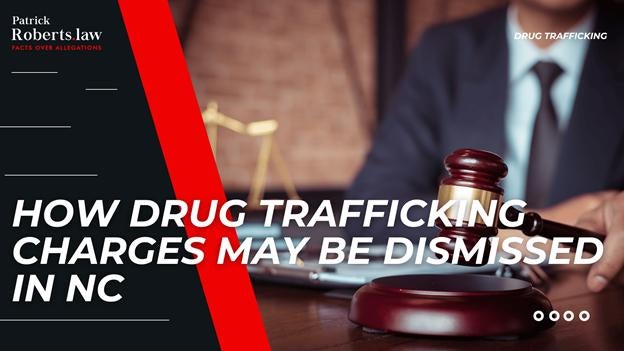
Courtroom scene with two men seated at a defense table, bold headline over black and red diagonal design.

What Is the Statute of Limitations on Drug Trafficking in North Carolina?

If you're facing drug trafficking charges or worried about past conduct coming back to haunt you, understanding North Carolina's statute of limitations is crucial. The answer may surprise you: North Carolina has no statute of limitations for drug trafficking charges. This means prosecutors can charge you with drug trafficking years or even decades after the alleged offense occurred. more Why Doesn't North Carolina Have a Time Limit for Drug Trafficking Charges? Under North Carolina law, drug trafficking is classified as a felony offense pursuant to N.C. Gen. Stat. § 90-95(h). Unlike many other states, North Carolina does not impose any statute of limitations on felony prosecutions. While N.C. Gen. Stat. § 15-1 establishes a two-year limitation period for most misdemeanors, this restriction does not apply to felonies. This legal framework means that law enforcement can investigate and prosecutors can file drug trafficking charges regardless of how much time has passed since the alleged criminal activity. Whether the trafficking allegedly occurred last year or twenty years ago, you can still face prosecution. What Constitutes Drug Trafficking Under North Carolina Law? Drug trafficking charges under N.C. Gen. Stat. § 90-95(h) are based on the weight or quantity of controlled substances involved, not necessarily the intent to distribute. The statute establishes specific thresholds for various substances: Marijuana: Possession of more than 10 pounds Cocaine: 28 grams or more Methamphetamine: 28 grams or more Heroin/Opiates: 4 grams or more MDMA/Ecstasy: 100 tablets or 28 grams LSD: 100 dosage units or more These weight-based thresholds mean that simple possession of these amounts automatically elevates the charge to trafficking, regardless of whether you intended to sell or distribute the substances. Can Old Drug Trafficking Cases Really Be Prosecuted Years Later? Yes, prosecutors regularly bring charges for drug trafficking offenses that occurred years or even decades in the past. North Carolina courts have consistently upheld convictions in cases where significant time has elapsed between the alleged crime and prosecution. The absence of a statute of limitations means that if new evidence emerges—such as a witness coming forward, DNA evidence being discovered, or co-defendants deciding to cooperate—prosecutors can move forward with charges at any time. This creates ongoing legal vulnerability for anyone who may have been involved in drug-related activities in the past. What Constitutional Protections Apply When Charges Are Filed Years Later? While North Carolina law doesn't impose a statute of limitations for drug trafficking, constitutional protections still apply. The Due Process Clause provides some protection against unreasonable delays in prosecution. To establish a due process violation based on pre-charge delay, you must demonstrate: The delay caused actual prejudice to your defense (such as lost evidence or unavailable witnesses) The prosecution deliberately delayed filing charges to gain a tactical advantage Additionally, the Sixth Amendment's guarantee of a speedy trial applies once charges are filed, though this is separate from statute of limitations issues. How Does This Compare to Drug Possession Charges? The distinction between trafficking and simple possession is critical for limitation periods. Simple possession of small amounts of controlled substances may be charged as a misdemeanor under N.C. Gen. Stat. § 90-95(d), depending on the substance and quantity involved. These misdemeanor possession charges are subject to the two-year statute of limitations under N.C. Gen. Stat. § 15-1. However, once the quantity reaches trafficking levels as defined in N.C. Gen. Stat. § 90-95(h), the charge becomes a felony with no limitation period. This weight-based distinction can have profound implications for potential defendants. What Should You Do If You're Concerned About Past Drug-Related Activities? If you have concerns about potential drug trafficking charges from past conduct, taking proactive steps is essential: Document preservation: Maintain any records that could support your defense Witness information: Keep track of potential witnesses who could testify on your behalf Legal consultation: Speak with an experienced criminal defense attorney to understand your risks and options The absence of a statute of limitations means that waiting and hoping charges won't be filed is not a sound strategy. Understanding your legal position and preparing accordingly is crucial. Can Federal Drug Trafficking Charges Be Filed Instead? Federal prosecutors may also pursue drug trafficking charges, which carry their own statute of limitations—typically five years for most federal drug offenses. However, federal charges involve different elements and jurisdictional requirements. The existence of federal limitations doesn't prevent North Carolina from pursuing state charges at any time. What Defenses Remain Available in Older Drug Trafficking Cases? Even without a statute of limitations defense, several legal challenges may apply to older drug trafficking cases: Evidentiary issues: Physical evidence may be lost or degraded Witness availability: Key witnesses may be deceased or unable to testify Memory problems: Witness recollections fade over time Chain of custody: Proving proper evidence handling becomes more difficult Constitutional violations: Fourth Amendment search and seizure issues don't disappear with time These challenges often become more pronounced as cases age, potentially creating reasonable doubt despite the absence of a limitations period. How Can an Experienced Criminal Defense Attorney Help? Facing drug trafficking charges—whether recent or from years past—requires skilled legal representation. An experienced criminal defense attorney can: Evaluate the strength of the prosecution's evidence Identify constitutional violations in the investigation Challenge the weight and testing of alleged controlled substances Negotiate with prosecutors for reduced charges when appropriate Develop defense strategies specific to older cases North Carolina's lack of a statute of limitations for drug trafficking makes early legal consultation essential. Whether you're under investigation, have been charged, or are concerned about past conduct, understanding your rights and options is critical. Attorney Patrick Roberts has extensive experience defending clients against drug trafficking charges throughout North Carolina.* With a thorough understanding of N.C. Gen. Stat. § 90-95 and the complexities of drug prosecutions, Patrick Roberts Law provides the aggressive defense you need. Don't wait for charges to be filed—contact Patrick Roberts Law today to discuss your situation and protect your rights. Early intervention can make a significant difference in the outcome of your case. *Each case is different and must be evaluated separately. Prior results achieved do not guarantee similar results can be achieved in future cases.


Lawyer-themed banner showing a gloved hand holding a vial of fentanyl with overlay text asking how many grams qualify as trafficking in North Carolina.

How Many Grams of Fentanyl Is Considered Trafficking in North Carolina?

If you're facing drug charges in North Carolina involving fentanyl, you need to understand when possession becomes trafficking. Under North Carolina law, having just 4 grams or more of fentanyl can lead to trafficking charges—a serious felony with severe penalties. more What Amount of Fentanyl Is Considered Trafficking in North Carolina? According to N.C. Gen. Stat. § 90-95(h)(4), anyone who sells, manufactures, delivers, transports, or possesses 4 grams or more of fentanyl faces trafficking charges. This threshold is surprisingly low compared to other drugs. The low amount reflects how dangerous fentanyl is and shows how seriously North Carolina treats this powerful opioid. The law creates three levels of charges based on how much fentanyl is involved: 4 to 14 grams: Class F felony 14 to 28 grams: Class E felony 28 grams or more: Class C felony These weight limits include pure fentanyl and any mixture containing it. This means if fentanyl is mixed with other substances, the total weight of everything counts toward the trafficking amount. How Does North Carolina Define Fentanyl Trafficking? North Carolina's trafficking law, found in N.C. Gen. Stat. § 90-95(h)(4), places fentanyl in the same category as other opioids like heroin. The law defines trafficking broadly to cover many activities beyond just having the drug: Manufacturing Selling Delivering Transporting Possessing with intent to manufacture, sell, or deliver The law specifically names "heroin, fentanyl, or carfentanil, or any salt, compound, derivative, or preparation thereof, or any mixture containing any of these substances" as drugs subject to the harshest penalties. This broad definition ensures that all forms of fentanyl—whether pharmaceutical or street versions—fall under the trafficking law. What Are the Penalties for Fentanyl Trafficking in North Carolina? While exact sentences depend on factors like criminal history, N.C. Gen. Stat. § 90-95(h)(4) makes clear that fentanyl trafficking is always a felony. The law requires much higher fines for fentanyl trafficking than for other opioids: Class F felony (4-14 grams): Mandatory fine required Class E felony (14-28 grams): Higher mandatory fine required Class C felony (28+ grams): Highest mandatory fine required These severe penalties show how the legislature views fentanyl's deadly nature. The law singles out fentanyl, heroin, and carfentanil for the highest financial penalties among all opioid trafficking crimes. Can You Be Charged with Trafficking for Possessing Fentanyl? Yes, simply having 4 grams or more of fentanyl counts as trafficking under N.C. Gen. Stat. § 90-95(h)(4). Unlike simple possession charges, the state doesn't need to prove you planned to sell or distribute the drug. The law assumes that having this much indicates trafficking activity. This creates serious risks for people who might have fentanyl for personal use. The law doesn't distinguish between having drugs for yourself and having them to sell when the amount is 4 grams or more. Once you cross that 4-gram line, the charge automatically jumps from simple possession to trafficking. What Defenses Exist for Fentanyl Trafficking Charges? Several defenses might apply to fentanyl trafficking charges, depending on your specific situation: Challenging the Weight: Since trafficking charges depend on having 4 grams or more, the exact weight matters greatly. If police weighed the drugs incorrectly or included packaging materials, this might bring the amount below the trafficking threshold. Questioning Possession: The state must prove you knowingly had the fentanyl. If police found the drugs in a shared space or someone else's car, proving you possessed them becomes harder. Under N.C. Gen. Stat. § 90-95(a)(3), prosecutors must show you knew about the drugs and could control them. Substantial Assistance: N.C. Gen. Stat. § 90-95(h)(5) allows judges to reduce penalties when defendants provide "substantial assistance in the identification, arrest, or conviction of any accomplices, accessories, co-conspirators, or principals." The judge must note this cooperation in the court record. Alternative Sentencing: Under N.C. Gen. Stat. § 90-95(h)(5a), judges can impose lighter sentences if you meet specific requirements, including: Taking responsibility for your actions Having no prior felony drug convictions under N.C. Gen. Stat. § 90-95 Not using violence or weapons Completing approved drug treatment Being charged only for possession-based trafficking How Does Conspiracy to Traffic Fentanyl Work? N.C. Gen. Stat. § 90-95(i) states that conspiracy to traffic fentanyl carries the same penalties as actually trafficking it. This means if you agree with others to traffic fentanyl, you can face trafficking charges even if you never touch or see any drugs. Conspiracy charges often come from: Text messages or recorded conversations about drug deals Being present when drugs are sold Providing rides or money for drug purchases Storing or hiding drugs for someone else The conspiracy law greatly expands what police can charge as trafficking, since they don't need to prove you actually had or sold any drugs. What Should You Do If You're Under Investigation? If you think you're being investigated for fentanyl trafficking, you need to act quickly to protect yourself: Stay silent: Don't talk to police without a lawyer present Save evidence: Keep any documents, texts, or other items that might help your defense Don't discuss your case: Only talk about the charges with your attorney Write everything down: Record all details about any police encounters while they're fresh in your memory Because trafficking laws are complex and penalties are severe, getting an experienced lawyer early in the process is crucial. When Should You Contact a Criminal Defense Attorney? Since having just 4 grams of fentanyl triggers trafficking charges in North Carolina, you need legal help immediately if you're facing any fentanyl charges. The difference between simple possession and trafficking can mean the difference between a misdemeanor and a serious felony. Trafficking charges carry mandatory penalties that limit what judges can do to help. Attorney Patrick Roberts has handled many drug trafficking cases throughout North Carolina.* With deep knowledge of N.C. Gen. Stat. § 90-95 and how courts apply it across the state, Patrick Roberts Law fights to protect clients' rights and explore every possible defense. Don't wait to get help—the sooner you have a lawyer, the more options you may have for your defense. Contact Patrick Roberts Law today to discuss your case and learn about your rights under North Carolina law. *Disclaimer: Each case is different and must be evaluated separately. Prior results achieved do not guarantee similar results can be achieved in future cases.

Hands exchanging white and yellow pills with bold text: "Death by Distribution Charges in North Carolina"

Death by Distribution Charges in North Carolina

North Carolina's opioid crisis has led to aggressive prosecution of drug-related deaths through "death by distribution" charges. If you're facing these serious allegations or worried about potential charges, understanding the law is crucial. This article explains North Carolina's death by distribution statute, what prosecutors must prove, and why immediate legal representation matters. more What Is Death by Distribution in North Carolina? Death by distribution refers to criminal charges filed when someone dies after using drugs provided by another person. Under N.C. Gen. Stat. § 14-18.4, the law creates several distinct offenses based on how the drugs were provided and the defendant's state of mind. The North Carolina General Assembly first enacted this law in 2019 to address the devastating impact of the opioid epidemic. In 2023, lawmakers significantly expanded the statute, making it easier for prosecutors to file charges and increasing potential penalties. The law recognizes four main categories of death by distribution: Distribution without sale (Class C felony) Distribution with malice (Class B2 felony) Sale resulting in death (Class B2 felony) Aggravated sale (Class B1 felony) Each category has specific elements prosecutors must prove beyond a reasonable doubt. What Drugs Are Covered Under Death by Distribution Charges? N.C. Gen. Stat. § 14-18.4(d) defines "certain controlled substances" covered by the law. These include: Opioids: Any opium, opiate, or opioid, including heroin, fentanyl, and prescription painkillers Stimulants: Cocaine and methamphetamine Depressants: Substances classified as depressants under N.C. Gen. Stat. § 90-92(a)(1) Synthetic compounds: Any synthetic or natural salt, compound, derivative, or preparation of the above substances Drug mixtures: Any combination containing these controlled substances The statute specifically excludes decocainized coca leaves and extractions that don't contain cocaine or ecgonine. This broad definition means prosecutors can pursue charges for deaths involving street drugs, prescription medications, or any mixture containing these substances. How Does the Prosecution Prove Death by Distribution? To secure a conviction, prosecutors must establish specific elements depending on which subsection they charge under N.C. Gen. Stat. § 14-18.4. For Basic Distribution Charges (Without Sale) Under subsection (a1), the state must prove: The defendant unlawfully delivered at least one controlled substance The victim's ingestion of that substance caused their death The defendant's delivery was the proximate cause of death "Unlawful delivery" means providing drugs without legal authorization. This could include sharing drugs at a party, giving pills to a friend, or any transfer without a valid prescription or license. For Distribution with Malice Subsection (a2) requires all the above elements plus proof that "the person acted with malice." Malice in this context follows criminal law principles—it may include intent to harm or reckless disregard for human life. For Sale-Based Charges Under subsection (b), prosecutors must show: The defendant unlawfully sold controlled substances The buyer's ingestion caused their death The sale was the proximate cause of death A "sale" requires an exchange for something of value, distinguishing it from mere sharing or distribution. For Aggravated Sale Charges Subsection (c) includes all elements of a sale plus a qualifying prior conviction within 10 years. Qualifying convictions include: Previous death by distribution convictions Drug manufacturing or trafficking under N.C. Gen. Stat. § 90-95 Similar federal or out-of-state drug convictions What Are the Legal Elements of Proximate Cause? Proximate cause represents one of the most complex elements in death by distribution cases. The prosecution must prove the defendant's actions were a direct and foreseeable cause of death—not merely that drugs were involved. Courts examine several factors: Foreseeability: Was death a reasonably foreseeable consequence of providing these drugs? Intervening causes: Did other factors break the causal chain between delivery and death? Time gap: How much time elapsed between delivery and death? Victim's actions: Did the victim's own conduct contribute to the fatal outcome? If the victim obtained drugs from multiple sources, mixed substances, or took amounts far exceeding what the defendant provided, establishing proximate cause becomes more difficult for prosecutors. What Defenses Apply to Death by Distribution Charges? Several defenses may apply depending on the facts of your case. Rather than existing separately, these defenses often challenge specific elements the prosecution must prove. Challenging Unlawful Delivery or Sale If the defendant had legal authority to provide the substance, no crime occurred. N.C. Gen. Stat. § 14-18.4(g) specifically exempts: Valid prescriptions issued by licensed practitioners Pharmacy dispensing pursuant to prescriptions Legal administration by healthcare providers Disputing Causation The defense may argue the defendant's actions didn't proximately cause death. This could involve showing: The victim obtained drugs from other sources Medical evidence points to different causes of death Too much time passed between delivery and death The victim's own reckless behavior was the primary cause Lack of Knowledge While not explicitly stated in the statute, general criminal law principles may allow defendants to argue they didn't know they were delivering controlled substances or couldn't foresee the risk of death. Good Samaritan Protections N.C. Gen. Stat. § 14-18.4(f) preserves rights under the Good Samaritan law. If someone calls 911 seeking help for an overdose, they may have immunity from certain drug charges—though this protection has limits discussed below. Can Good Samaritan Laws Protect Against Death by Distribution Charges? North Carolina's Good Samaritan statute, N.C. Gen. Stat. § 90-96.2, provides limited immunity for people who seek medical help during overdoses. However, the death by distribution statute explicitly states it doesn't restrict these protections. To qualify for Good Samaritan immunity, someone must: Call 911, law enforcement, or EMS for an overdose victim Act in good faith believing they're the first to call Provide their real name to responders Not be executing an arrest warrant or search The 2023 amendments expanded protections to include possession of less than one gram of any controlled substance, not just opioids and cocaine. Important limitation: Good Samaritan laws protect against possession charges, not distribution or sale charges. If someone sold drugs that caused an overdose, calling 911 won't provide immunity from death by distribution prosecution. What's the Difference Between Death by Distribution and Murder Charges? Death by distribution occupies a unique space between drug crimes and homicide. Understanding the distinctions helps grasp the severity of these charges. Second-Degree Murder Before 2019, prosecutors sometimes charged drug dealers with second-degree murder under N.C. Gen. Stat. § 14-17(b) when buyers died from overdoses. The 2023 amendments eliminated the provision reducing drug-related murder to a Class B2 felony, meaning such cases now face standard murder penalties. Key Differences Intent: Murder requires malice; basic death by distribution doesn't Penalties: Murder charges typically carry more severe consequences Elements: Death by distribution has specific statutory requirements; murder relies on common law principles Defenses: Different defenses may apply to each charge Prosecutors may charge both offenses, letting juries decide which fits the evidence. How Have Recent Changes Affected Death by Distribution Laws? The 2023 amendments to N.C. Gen. Stat. § 14-18.4 made several significant changes: Expanded Scope The new law created distribution-only offenses not requiring a sale. This means prosecutors can now charge people who share drugs without exchanging money or value—dramatically expanding potential defendants. Increased Penalties Basic sale offenses increased from Class C to Class B2 felonies Aggravated offenses rose from Class B2 to Class B1 felonies The lookback period for prior convictions extended from 7 to 10 years Removed Barriers The original law required proving defendants acted "without malice" for basic charges. Removing this requirement simplified prosecution—now the presence or absence of malice only affects which subsection applies. Enhanced Protections Good Samaritan immunity expanded to cover possession of any controlled substance under one gram, not just opioids and cocaine. Should I Contact a Lawyer for Death by Distribution Charges? Death by distribution charges carry severe felony penalties that can result in substantial prison time. The complexity of these cases—involving medical evidence, causation issues, and evolving law—makes experienced legal representation essential. Acting quickly matters because: Evidence disappears or degrades over time Witness memories fade Early intervention may prevent charges or reduce their severity Constitutional rights need protection from the start The consequences of a conviction extend beyond criminal penalties. A felony record affects employment, housing, professional licenses, and countless other aspects of life. Take Action to Protect Your Rights If you're facing death by distribution charges or concerned about potential prosecution, don't wait to seek legal help. The stakes are too high to navigate this complex area of law alone. Patrick Roberts Law has extensive experience defending clients against serious criminal charges throughout North Carolina.* Attorney Patrick Roberts understands the nuances of drug crime defense and works tirelessly to protect clients' rights and futures. Contact Patrick Roberts Law today for a consultation about your case. Early intervention by knowledgeable counsel can make a significant difference in the outcome of death by distribution charges. Call now to discuss your situation and learn about your legal options. *Disclaimer: Each case is different and must be evaluated separately. Prior results achieved do not guarantee similar results can be achieved in future cases.

Lady Justice statue holding scales with blurred law books in background; text asks about heroin laws in North Carolina from Patrick Roberts Law.

What Are the Laws for Heroin in North Carolina?

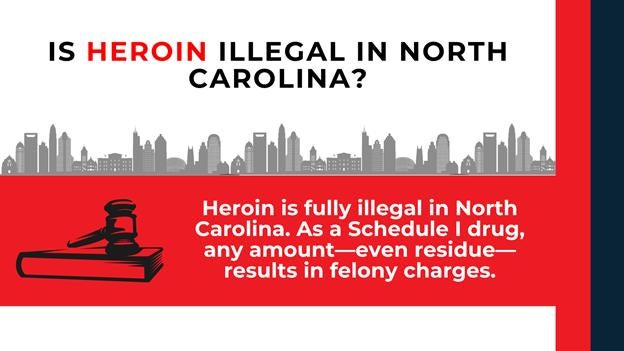
If you or someone you care about faces heroin charges in North Carolina, understanding the state's laws becomes crucial. North Carolina treats heroin offenses as serious felonies, with consequences that can change your life forever. This guide explains what the laws are for heroin in North Carolina, the charges you might face, and why securing legal representation matters for your future. Is Heroin Illegal in North Carolina? Yes, heroin is completely illegal throughout North Carolina. Under N.C. Gen. Stat. § 90-89, the state classifies heroin as a Schedule I controlled substance—the most restrictive category under state law. This classification means North Carolina recognizes heroin as having: A high potential for abuse No currently accepted medical use in the United States A lack of accepted safety for use, even under medical supervision The law specifically lists heroin among opium derivatives, making any possession, sale, or manufacture illegal. Unlike some prescription medications containing controlled substances, there's no legal way to possess heroin in North Carolina. Even possessing the smallest amount—residue in a bag or syringe—violates state law and results in felony charges. What Types of Heroin Charges Can You Face in North Carolina? North Carolina law establishes several different heroin-related offenses under N.C. Gen. Stat. § 90-95. The specific charge depends on your alleged conduct and the amount of heroin involved. Simple Possession of Heroin Under N.C. Gen. Stat. § 90-95(a)(3), possessing any amount of heroin constitutes a felony. Simple possession typically means having heroin for personal use without evidence suggesting you planned to sell or distribute it. Police might discover heroin during a traffic stop, while serving a warrant, or during an arrest for another offense. Possession with Intent to Sell or Deliver When prosecutors believe you possessed heroin planning to distribute it, they charge you under N.C. Gen. Stat. § 90-95(a)(1). This more serious charge doesn't require proof of actual sales. Instead, prosecutors use circumstantial evidence such as possessing multiple packages, having scales or baggies, carrying large amounts of cash, or having more heroin than someone would typically use personally. The challenge lies in distinguishing between personal use and distribution intent—something your attorney can help establish. Sale or Delivery of Heroin Actually transferring heroin to another person violates N.C. Gen. Stat. § 90-95(a)(1). This applies whether you sold heroin for money, traded it, or gave it away for free. Many of these cases involve undercover operations where law enforcement records transactions. Manufacturing Heroin Though less common, manufacturing heroin also violates N.C. Gen. Stat. § 90-95(a)(1). This might involve processing raw materials or converting other substances into heroin. Trafficking in Heroin Under N.C. Gen. Stat. § 90-95(h)(4), possessing certain amounts of heroin automatically constitutes trafficking—one of North Carolina's most serious drug charges. You don't need to sell anything; simply possessing the statutory amount triggers trafficking charges with mandatory minimum sentences. How Does North Carolina Classify Heroin Offenses? North Carolina uses a felony classification system that determines potential sentencing ranges. According to N.C. Gen. Stat. § 90-95: Class I Felony: Simple possession falls under N.C. Gen. Stat. § 90-95(d)(1). While this is the lowest felony level, it still means potential prison time and a permanent criminal record affecting employment, housing, and other opportunities. Class H Felony: Possession with intent to manufacture, sell, or deliver constitutes a Class H felony under N.C. Gen. Stat. § 90-95(b)(1). Class G Felony: The actual sale or delivery of heroin is a Class G felony according to N.C. Gen. Stat. § 90-95(b)(1). Trafficking Classifications: Heroin trafficking under N.C. Gen. Stat. § 90-95(h)(4) involves various felony classes based on the amount, with higher quantities resulting in more serious classifications and mandatory minimum sentences. What Must the State Prove in a Heroin Case? For any conviction, prosecutors must prove specific elements beyond a reasonable doubt. Understanding these requirements helps identify potential defenses. For possession charges, the state must prove three things: Laboratory testing must confirm the substance was actually heroin. You must have knowingly possessed it —meaning you knew both that you had the item and that it contained heroin. If someone placed heroin in your car without your knowledge, or you reasonably believed the substance was something else, this element might be missing. You must have had control over the heroin, either actual (in your pocket) or constructive (in your home or car). For possession with intent charges, prosecutors need all the possession elements plus evidence you planned to distribute the heroin. Without direct evidence like witnessed sales, they rely on circumstantial evidence. However, your attorney can present alternative explanations—large quantities might reflect personal stockpiling, cash could come from legitimate work, or multiple packages might be personal use portions. Trafficking charges require accurate weight measurements following proper procedures. Errors in weighing or testing can mean the difference between trafficking and lesser charges. What Should You Do If You're Charged with a Heroin Offense? Your actions immediately after arrest significantly impact your case. Exercise your right to remain silent. Politely tell officers you're invoking this right and want an attorney, then stop talking. Many people hurt their cases trying to explain or cooperate without legal counsel. Contact an attorney immediately. Early representation can preserve helpful evidence, prevent additional charges, begin negotiations with prosecutors, and ensure your rights are protected. The sooner your attorney gets involved, the more options remain available. Avoid discussing your case with anyone except your attorney. This includes staying off social media, not talking to other inmates if you're in custody, and avoiding contact with witnesses. Remember that jail phone calls are recorded and prosecutors review them for incriminating statements. If you have information that might help your defense—like receipts, text messages, or witness names—save it for your attorney. Don't try to investigate your own case or contact witnesses directly. How Can Prior Convictions Affect Heroin Charges? Under N.C. Gen. Stat. § 90-95(e), previous drug convictions enhance penalties for current charges. This applies whether prior convictions occurred in North Carolina, another state, or federal court. Prior convictions can increase your felony classification, limit eligibility for diversion programs, affect plea negotiations, and influence sentencing decisions. Your attorney should carefully review your criminal history to develop strategies minimizing these impacts. Why You Need an Attorney for Heroin Charges in North Carolina A heroin conviction in North Carolina impacts not only your freedom but also your employment, professional licenses, housing, and even immigration status. The stakes are high. Our experienced attorneys scrutinize every aspect of your case—from search and seizure to drug testing procedures—fighting for the best possible outcome.* At Patrick Roberts Law, we defend clients throughout North Carolina against serious heroin charges. Contact us now for a confidential consultation. We’ll review your situation, explain your legal options, and act quickly to build your defense—because in drug cases, time is critical. Attorney illustration with city skyline; warns that a heroin conviction can affect freedom, job, and housing, and promotes legal defense by Patrick Roberts. *Each case is different and must be evaluated separately. Prior results achieved do not guarantee similar results can be achieved in future cases.
 Title over close-up of scattered $100 bills and three syringes, symbolizing the financial and legal stakes of fentanyl trafficking charges in North Carolina.

What Are Trafficking Fentanyl Charges in North Carolina?

Facing trafficking fentanyl charges in North Carolina represents one of the most serious drug offenses in the state's criminal justice system. Under N.C. Gen. Stat. § 90-95(h)(4), trafficking in fentanyl occurs when someone sells, manufactures, delivers, transports, or possesses four grams or more of fentanyl or any mixture containing fentanyl. This offense carries severe penalties and requires immediate legal attention. The law treats fentanyl trafficking differently from simple possession due to the quantity involved and the presumption that larger amounts indicate distribution rather than personal use. Understanding the elements of this charge and potential defenses can make a critical difference in the outcome of your case. more What Does the State Need to Prove for Trafficking Fentanyl Charges? To secure a conviction under N.C. Gen. Stat. § 90-95(h)(4), prosecutors must establish several key elements beyond a reasonable doubt: Possession or Control: The state must prove you actually possessed or had control over the substance. This includes: Actual possession (on your person) Constructive possession (in an area under your control) Joint possession with others Weight Threshold: The substance must weigh four grams or more. The weight includes any mixture containing fentanyl, not just pure fentanyl. Laboratory analysis certified under N.C. Gen. Stat. § 90-95(g) typically establishes this element. Knowledge: While not explicitly stated in the statute, courts generally require proof that you knew about the presence and nature of the substance. If you genuinely had no knowledge that fentanyl was present—such as when borrowing someone else's vehicle—this element may be challenged. Prohibited Conduct: The statute covers multiple actions: Selling Manufacturing Delivering Transporting Possessing Any one of these actions with the requisite amount triggers trafficking charges. How Are Different Amounts of Fentanyl Charged? N.C. Gen. Stat. § 90-95(h)(4) establishes three tiers based on weight: Tier 1: Four grams or more but less than 14 grams Tier 2: Fourteen grams or more but less than 28 grams Tier 3: Twenty-eight grams or more Each tier carries increasingly severe penalties, including mandatory minimum sentences and substantial fines. The weight determination includes the entire mixture, meaning even heavily diluted fentanyl counts toward the total weight if fentanyl is present in any amount. What if Multiple People Were Present When Fentanyl Was Found? Constructive possession cases often arise when fentanyl is discovered in shared spaces like vehicles or homes. Under North Carolina law, mere proximity to drugs does not establish possession. The state must prove you had: Knowledge of the substance's presence The power and intent to control it If fentanyl was found in a car with multiple occupants, factors courts consider include: Who owned or drove the vehicle Where the drugs were located Whether anyone made incriminating statements Physical evidence linking individuals to the drugs Without additional evidence connecting you to the fentanyl, mere presence in the same location typically cannot support a trafficking conviction. Can Evidence Be Thrown Out in Trafficking Fentanyl Cases? Constitutional violations during the investigation can lead to evidence suppression under N.C. Gen. Stat. § 15A-974. Common grounds for challenging evidence include: Unlawful Search and Seizure: The Fourth Amendment protects against unreasonable searches. If police lacked: Valid consent A proper warrant Probable cause Applicable exceptions to the warrant requirement The evidence may be excluded, often resulting in dismissal. Miranda Violations: Statements made during custodial interrogation without proper warnings may be suppressed. Chain of Custody Issues: Under N.C. Gen. Stat. § 90-95(g1), the state must establish proper handling of evidence. Breaks in the chain of custody can undermine the reliability of lab results. Your attorney can file pretrial motions challenging the admissibility of evidence obtained through constitutional violations. What About Conspiracy to Traffic Fentanyl? N.C. Gen. Stat. § 90-95(i) makes conspiracy to traffic fentanyl a separate offense carrying the same penalties as actual trafficking. Conspiracy requires: An agreement between two or more people To commit trafficking An overt act in furtherance of the conspiracy Importantly, you can be convicted of conspiracy even if the planned trafficking never occurs. The agreement itself, combined with any step toward completion, suffices for conviction. Can Trafficking Charges Be Reduced? Several avenues exist for potentially reducing or dismissing trafficking charges: Insufficient Evidence: Under N.C. Gen. Stat. § 15A-1227, defense counsel can move to dismiss if the state's evidence cannot sustain a conviction. This motion can be made at various stages of trial. Substantial Assistance: N.C. Gen. Stat. § 90-95(h)(5) allows judges to reduce sentences if you provide substantial assistance in identifying, arresting, or convicting accomplices. This requires: Truthful cooperation Information leading to concrete results A finding by the court that assistance was substantial Constitutional Defenses: Violations of your rights under the Fourth, Fifth, or Sixth Amendments may result in evidence exclusion or case dismissal under N.C. Gen. Stat. § 15A-954. Lab Testing Challenges: Questioning the accuracy of drug weight measurements or substance identification through independent testing or cross-examination of state analysts. What if the Fentanyl Was for Personal Use? While the trafficking statute does not explicitly distinguish between personal use and distribution, the weight thresholds create a legal presumption of trafficking. However, evidence of personal use can be relevant for: Negotiating plea agreements Sentencing considerations Challenging intent to distribute in related charges Four grams of fentanyl far exceeds typical personal use amounts, making this defense challenging but not impossible in certain circumstances. How Does Entrapment Apply to Fentanyl Trafficking Cases? Entrapment occurs when law enforcement induces someone to commit a crime they were not predisposed to commit. In trafficking cases, this might involve: Repeated pressure from informants or undercover officers Appealing to sympathy or friendship Offering extraordinary financial incentives The defense must show both improper government inducement and lack of predisposition to traffic fentanyl. Given the serious nature of fentanyl trafficking, courts carefully scrutinize entrapment claims. What Happens with Trafficking Charges During Traffic Stops? Many trafficking cases begin with routine traffic stops. Key considerations include: Scope of the Stop: Officers must have reasonable suspicion for the initial stop and probable cause to extend it beyond its original purpose. Consent Searches: You have the right to refuse consent to search your vehicle. Any consent must be voluntary and not coerced. K-9 Units: Police cannot unreasonably prolong a traffic stop to wait for drug dogs without reasonable suspicion of criminal activity. Plain View Doctrine: Items visible from outside the vehicle may provide probable cause for further investigation. Understanding your rights during traffic stops can prevent evidence collection that leads to trafficking charges. Moving Forward with Your Defense Trafficking fentanyl charges under N.C. Gen. Stat. § 90-95(h)(4) carry severe consequences including mandatory prison time and substantial fines. The complexity of these cases demands thorough investigation of all potential defenses, from constitutional challenges to evidentiary issues. Attorney Patrick Roberts brings extensive experience handling serious drug charges throughout North Carolina.* Early intervention in your case allows for comprehensive evidence review, witness interviews, and strategic planning before critical decisions must be made. Contact Patrick Roberts Law immediately to discuss your situation and protect your rights. Time-sensitive defenses and evidence preservation make prompt action essential in trafficking cases. *Disclaimer: Each case is different and must be evaluated separately. Prior results achieved do not guarantee similar results can be achieved in future cases.
Hands handling a duct-taped drug package with title “What Is a Drug Trafficking Charge in North Carolina?”

What Is a Drug Trafficking Charge in North Carolina?

A drug trafficking charge in North Carolina represents one of the most serious criminal accusations you can face. Under N.C. Gen. Stat. § 90-95(h), trafficking occurs when someone sells, manufactures, delivers, transports, or possesses specific quantities of controlled substances. Unlike simple possession charges, trafficking charges are based primarily on the amount of drugs involved, regardless of whether you intended to sell them. The law presumes that possession of certain quantities indicates an intent to distribute, making these charges particularly challenging to defend against. North Carolina's trafficking statutes establish specific weight thresholds that transform what might otherwise be a possession charge into a trafficking offense. more How Does North Carolina Define Drug Trafficking? North Carolina law defines drug trafficking through quantity-based thresholds established in N.C. Gen. Stat. § 90-95(h). The statute creates a legal presumption that possession of certain amounts of controlled substances constitutes trafficking, even without evidence of actual sales or distribution. The trafficking statute applies to several categories of controlled substances: Marijuana: More than 10 pounds Cocaine: 28 grams or more Methamphetamine: 28 grams or more Amphetamine: 28 grams or more Opium, opiates, or opioids (including heroin, fentanyl, and carfentanil): 4 grams or more MDMA/MDA: 100 tablets or 28 grams or more LSD: 100 dosage units or more Synthetic cannabinoids: More than 50 dosage units (3 grams per unit) Substituted cathinones: 28 grams or more Each substance has multiple quantity tiers, with penalties increasing as the amounts increase. The prosecution need only prove you possessed, transported, manufactured, sold, or delivered the requisite amount to secure a conviction under N.C. Gen. Stat. § 90-95(h). What Activities Constitute Drug Trafficking Under North Carolina Law? According to N.C. Gen. Stat. § 90-95(h), trafficking charges can arise from several different activities: Manufacturing includes any process of creating, producing, or preparing controlled substances. This encompasses everything from operating a methamphetamine lab to packaging drugs for distribution. Selling or delivering involves transferring controlled substances to another person. The statute specifically notes that transferring less than 5 grams of marijuana without payment does not constitute delivery under N.C. Gen. Stat. § 90-95(b)(2). Transporting means moving drugs from one location to another, regardless of distance. You can face trafficking charges for driving across town with trafficking quantities in your vehicle. Possession alone suffices for trafficking charges if the quantity meets statutory thresholds. The state doesn't need to prove you intended to sell the drugs—possession of trafficking amounts creates a presumption of trafficking activity. Can You Be Charged With Trafficking for Someone Else's Drugs? North Carolina law allows trafficking charges even when the drugs belong to someone else. If you knowingly transport, possess, or participate in trafficking activities, you face the same penalties as the actual owner of the drugs. Under the conspiracy provisions in N.C. Gen. Stat. § 90-98, anyone who conspires to commit trafficking faces the same penalties as if they completed the offense. This means agreeing to help someone transport drugs or allowing them to store trafficking quantities in your home could result in trafficking charges. The law doesn't require you to personally own the drugs. Knowledge of their presence and participation in the trafficking activity suffices. However, if you genuinely didn't know about the drugs—such as when someone hides them in your vehicle without your knowledge—this lack of knowledge provides a potential defense. What Are the Penalties for Drug Trafficking in North Carolina? Drug trafficking charges in North Carolina carry serious felony penalties that vary based on the type and quantity of drugs involved. Under N.C. Gen. Stat. § 90-95(h), these offenses are classified as felonies ranging from Class D to Class H, with mandatory minimum sentences and substantial fines. The severity of punishment increases with larger quantities. Each controlled substance has multiple weight tiers, and crossing into a higher tier results in more severe penalties. Trafficking convictions also carry mandatory minimum sentences that judges cannot suspend or reduce except under specific circumstances outlined in N.C. Gen. Stat. § 90-95(h)(5) and (5a). Beyond incarceration and fines, a trafficking conviction creates a permanent felony record affecting employment, housing, voting rights, and professional licenses. The consecutive sentencing provision in N.C. Gen. Stat. § 90-95(h)(6) means trafficking sentences must run consecutively to any other sentence you're currently serving. How Can Substantial Assistance Reduce Trafficking Sentences? North Carolina law provides limited opportunities to reduce trafficking sentences through "substantial assistance" to law enforcement. Under N.C. Gen. Stat. § 90-95(h)(5), a judge may reduce the fine or impose a prison term below the mandatory minimum if you provide substantial assistance in identifying, arresting, or convicting accomplices, accessories, co-conspirators, or principals. The assistance must be genuine and helpful to law enforcement. Simply providing names or minimal information typically doesn't qualify. The sentencing judge must enter specific findings that you rendered substantial assistance, and this determination remains within the judge's discretion. For certain trafficking offenses involving possession only, N.C. Gen. Stat. § 90-95(h)(5a) provides additional sentencing relief if specific conditions are met, including accepting responsibility, completing substance abuse treatment, and having no prior felony drug convictions. What Defenses Apply to Drug Trafficking Charges? Challenging the legality of the search often provides the strongest defense to trafficking charges. Under N.C. Gen. Stat. § 15A-974, evidence obtained through unlawful searches must be suppressed. If police violated your Fourth Amendment rights during the stop, search, or seizure, the court must exclude the drugs from evidence, potentially forcing dismissal of the charges. Lack of knowledge presents another critical defense. The state must prove you knowingly possessed or participated in trafficking the controlled substances. If someone placed drugs in your vehicle or property without your knowledge, you cannot be convicted of trafficking. Chain of custody issues can undermine the prosecution's case. Under N.C. Gen. Stat. § 90-95(g) and (g1), the state must establish proper handling and testing of the alleged drugs. Gaps in the chain of custody or problems with laboratory analysis may create reasonable doubt. Challenging the substance identification or weight measurements can defeat trafficking charges. The state must prove both the identity of the substance and that it meets the statutory weight threshold. Improper testing procedures or calibration errors could result in acquittal. How Long Does the State Have to File Drug Trafficking Charges? Unlike misdemeanors, which have a two-year statute of limitations under N.C. Gen. Stat. § 15-1, felony drug trafficking charges have no statute of limitations in North Carolina. The state can file trafficking charges years after the alleged offense occurred. This unlimited timeframe means old cases can resurface when new evidence emerges or when co-defendants decide to cooperate with authorities. The lack of a limitation period makes it crucial to preserve any evidence that might support your defense, as memories fade and witnesses become unavailable over time. However, constitutional speedy trial rights still apply. Under N.C. Gen. Stat. § 15A-954(a)(3), you can move to dismiss charges if the delay in prosecution violates your right to a speedy trial, though proving such violations requires showing actual prejudice to your defense. What Happens If You're Charged With Conspiracy to Traffic Drugs? Conspiracy to commit drug trafficking carries the same penalties as completed trafficking under N.C. Gen. Stat. § 90-98 and § 90-95(i). The state doesn't need to prove you actually possessed or transported drugs—only that you agreed with another person to commit trafficking and took some action toward that goal. Conspiracy charges often arise from: Text messages or recorded conversations discussing drug deals Surveillance showing meetings with known traffickers Financial transactions suggesting drug activity Testimony from co-conspirators The agreement itself constitutes the crime, even if the planned trafficking never occurs. Withdrawal from the conspiracy requires taking affirmative steps to communicate your withdrawal to co-conspirators and cease all participation. Can Drug Trafficking Charges Be Reduced or Dismissed? Several legal mechanisms exist for challenging drug trafficking charges. Under N.C. Gen. Stat. § 15A-954, you can file motions to dismiss based on constitutional violations, statute of limitations (for related misdemeanors), speedy trial violations, or insufficient evidence. Pretrial motions to suppress evidence under N.C. Gen. Stat. § 15A-974 can exclude unlawfully obtained evidence. If the drugs resulted from an illegal search or seizure, their suppression often forces dismissal of trafficking charges. Plea negotiations may result in reduced charges, particularly when evidence issues exist or when quantities fall near threshold amounts. Prosecutors might agree to possession charges instead of trafficking if mitigating factors exist. Under N.C. Gen. Stat. § 15A-1227, you can move to dismiss for insufficient evidence at various trial stages. If the state cannot prove each element beyond a reasonable doubt—including drug weight and your knowledge—the court must dismiss the charges. Contact Patrick Roberts Law About Your Drug Trafficking Charge Facing a drug trafficking charge in North Carolina requires immediate legal representation. The serious nature of these charges, with their mandatory sentences and lasting consequences, demands thorough preparation and strategic defense planning. Attorney Patrick Roberts has substantial experience handling criminal cases throughout North Carolina.* His understanding of trafficking laws, constitutional protections, and local court procedures provides the foundation for building strong defenses against these serious charges. Time is critical when facing trafficking charges. Evidence must be preserved, witnesses interviewed, and constitutional challenges raised promptly. Contact Patrick Roberts Law today to discuss your case and begin developing your defense strategy. Early intervention often makes the difference between a conviction and a favorable resolution. *Disclaimer: Each case is different and must be evaluated separately. Prior results achieved do not guarantee similar results can be achieved in future cases.
Crime scene board with string and photos; bold title overlays on a gritty background, hinting investigation.

Understanding Accessory to Murder Charges in NC

If you're facing accusations of being an accessory to murder in North Carolina, you need to understand how state law treats these serious charges. The consequences can be severe, and the legal distinctions between different types of accessory charges can dramatically affect your case outcome. more What Is an Accessory to Murder in North Carolina? An accessory to murder is someone who helps another person commit murder or assists them after the crime occurs. North Carolina law divides accessories into two distinct categories with very different legal consequences. Under North Carolina law, you can be charged as an accessory if you: Help plan or facilitate a murder before it happens Provide assistance to someone after they've committed murder Help a murderer avoid arrest or prosecution Conceal evidence of a murder The key distinction lies in when you provided assistance—before or after the murder occurred. This timing determines whether you face the same charges as the actual killer or reduced charges as an accessory after the fact. What's the Difference Between Accessory Before and After the Fact? North Carolina treats accessories before the fact and accessories after the fact completely differently under the law. Accessory Before the Fact According to N.C. Gen. Stat. § 14-5.2, North Carolina has abolished all distinctions between accessories before the fact and principals. This means if you helped plan a murder, provided the weapon, or assisted in any way before the crime occurred, you face the same charges as the person who actually committed the murder. The statute specifically states: "Every person who heretofore would have been guilty as an accessory before the fact to any felony shall be guilty and punishable as a principal to that felony." This applies whether the murder is classified as first degree (N.C. Gen. Stat. § 14-17(a)) or second degree (N.C. Gen. Stat. § 14-17(b)). However, there's one important exception in N.C. Gen. Stat. § 14-5.2: if someone is convicted of capital murder based solely on uncorroborated testimony from co-conspirators or other accessories, the charge reduces to a Class B2 felony. Accessory After the Fact Being an accessory after the fact is treated as a separate, less serious offense under N.C. Gen. Stat. § 14-7. If you helped someone after they committed murder—such as helping them hide, destroying evidence, or lying to police—you face reduced charges compared to the actual murderer. The law allows prosecutors to charge you as an accessory after the fact even if: The principal murderer hasn't been convicted yet The principal murderer can't be brought to trial The principal murderer was acquitted How Does North Carolina Punish Accessories to Murder? The punishment for being an accessory to murder depends entirely on whether you acted before or after the murder occurred. Punishment for Accessories Before the Fact Since accessories before the fact are treated as principals under N.C. Gen. Stat. § 14-5.2, you face the same potential penalties as the actual murderer: For first-degree murder: Class A felony charges For second-degree murder: Class B1 or B2 felony charges These are among the most serious charges in North Carolina's criminal code, carrying the possibility of life imprisonment or other severe penalties. Punishment for Accessories After the Fact Under N.C. Gen. Stat. § 14-7, accessories after the fact face reduced charges based on a specific formula: Accessory after the fact to Class A felony (first-degree murder): Class C felony Accessory after the fact to Class B1 felony (most second-degree murder): Class C felony Accessory after the fact to Class B2 felony (certain second-degree murder): Class D felony While these charges still carry serious consequences including potential prison time, they represent a significant reduction from murder charges. What Must Prosecutors Prove for an Accessory to Murder Charge? For prosecutors to convict you as an accessory to murder, they must prove specific elements beyond a reasonable doubt. The required proof differs based on when you allegedly provided assistance. Elements for Accessory Before the Fact Since you're charged as a principal under N.C. Gen. Stat. § 14-5.2, prosecutors must prove: A murder occurred You knowingly assisted, encouraged, or facilitated the murder You acted with intent to help commit the crime If prosecutors cannot prove you knew about the planned murder or intended to help, the charges may not stand. Similarly, if your actions were too remote or insignificant to constitute actual assistance, this could serve as a defense. Elements for Accessory After the Fact For charges under N.C. Gen. Stat. § 14-7, prosecutors must establish: Someone committed murder You knew the person committed murder You provided assistance to help them avoid arrest or punishment You acted with intent to help the murderer escape justice The prosecution must show you had actual knowledge that murder occurred. If you helped someone without knowing they committed murder, or if you were coerced into helping, these circumstances could provide viable defenses. When Can You Be Charged as an Accessory to Murder? Understanding when accessory charges apply helps clarify the boundaries of criminal liability for murder in North Carolina. Common Scenarios for Accessory Before the Fact Charges You might face principal murder charges under N.C. Gen. Stat. § 14-5.2 if you: Planned or conspired to commit murder Provided weapons knowing they'd be used for murder Acted as a lookout during the crime Drove the getaway car Hired someone to commit murder Common Scenarios for Accessory After the Fact Charges Accessory after the fact charges under N.C. Gen. Stat. § 14-7 typically involve: Helping someone flee after a murder Hiding or destroying evidence Providing false alibis to police Harboring someone you know committed murder Lying to investigators about the crime The key distinction remains timing—any assistance provided before or during the murder makes you a principal, while help provided afterward makes you an accessory after the fact. What Happens If the Principal Isn't Convicted? One unique aspect of North Carolina's accessory laws is that your fate doesn't depend on what happens to the principal murderer. According to N.C. Gen. Stat. § 14-7, you can be prosecuted as an accessory after the fact regardless of whether the principal: Has been convicted Will ever be brought to trial Was found not guilty This means even if the actual murderer is acquitted or never caught, you can still face accessory charges if prosecutors prove you provided assistance. However, prosecutors still must prove that a murder actually occurred and that you knowingly helped the perpetrator. For accessories charged as principals under N.C. Gen. Stat. § 14-5.2, the same principle applies—your case proceeds independently of the actual killer's case. Can You Face Murder Charges Without Being Present? Yes, under North Carolina law, you don't need to be present at the scene to face murder charges. If you helped plan or facilitate a murder beforehand, N.C. Gen. Stat. § 14-5.2 treats you as equally guilty as the person who pulled the trigger. This principle reflects North Carolina's view that those who help plan murders bear equal moral and legal responsibility for the death. Courts recognize that organizing or enabling a murder from afar can be just as culpable as being present during the killing. However, the prosecution must still prove your involvement was substantial enough to warrant criminal liability. Mere knowledge of a planned crime, without any action to assist, typically isn't enough for conviction. Why You Need Immediate Legal Representation Accessory to murder charges in North Carolina carry life-altering consequences. Whether you're charged as a principal or as an accessory after the fact, you face the possibility of significant prison time and a permanent criminal record. The complexities of North Carolina's accessory laws—particularly the distinction between acting before versus after the murder—make experienced legal representation essential. The difference between being charged under N.C. Gen. Stat. § 14-5.2 versus N.C. Gen. Stat. § 14-7 can mean the difference between facing murder charges or significantly reduced charges. Attorney Patrick Roberts has extensive experience handling serious criminal cases throughout North Carolina.* His thorough understanding of state criminal law helps clients navigate these complex charges and work toward the best possible outcome. Don't wait to get help. Early intervention by an attorney can make a crucial difference in how your case develops. Contact Patrick Roberts Law today to discuss your situation and learn about your legal options. Time is critical when facing accessory to murder charges, and having skilled legal representation from the start protects your rights throughout the legal process. *Disclaimer: Each case is different and must be evaluated separately. Prior results achieved do not guarantee similar results can be achieved in future cases.
Woman faces a man in a dim room with text asking when a killing is considered murder in self-defense in NC

When Is a Killing Considered Murder in Self Defense in NC?

Taking another person's life is among the most serious acts under North Carolina law. However, not every killing constitutes murder. When someone acts in genuine self-defense, North Carolina law recognizes that the use of deadly force may be justified. Understanding when a killing crosses from justified self-defense into criminal murder requires examining North Carolina's specific statutes and the circumstances surrounding the incident. If you or a loved one faces questions about a self-defense incident in North Carolina, the stakes couldn't be higher. The difference between a justified act of self-defense and a murder charge can mean the difference between walking free and facing life in prison or even the death penalty. more What Makes a Killing Murder Under North Carolina Law? Under N.C. Gen. Stat. § 14-17, North Carolina law defines two degrees of murder. First-degree murder includes killings that are willful, deliberate, and premeditated, or those committed during certain felonies. Second-degree murder encompasses other unlawful killings committed with malice. The critical distinction for self-defense cases lies in whether the killing was "unlawful." When someone lawfully uses deadly force in self-defense, the killing is not murder at all—it's justified under the law. This justification removes the unlawful element required for any murder charge. When Can You Legally Use Deadly Force in Self Defense? North Carolina's self-defense laws, codified in N.C. Gen. Stat. § 14-51.3, establish clear parameters for using deadly force. A person is justified in using deadly force and has no duty to retreat when they: Reasonably believe such force is necessary to prevent imminent death or great bodily harm to themselves or another person Have the lawful right to be in the place where the force is used Are not the initial aggressor or have withdrawn from the conflict The law provides that a person who uses force as permitted by this statute "is justified in using such force and is immune from civil or criminal liability for the use of such force." This immunity applies unless the person against whom force was used was a law enforcement officer lawfully performing official duties. What Is North Carolina's Castle Doctrine and How Does It Apply? North Carolina's Castle Doctrine, found in N.C. Gen. Stat. § 14-51.2, creates a powerful presumption for those defending their homes, vehicles, or workplaces. Under this law, the lawful occupant of these spaces is presumed to have held a reasonable fear of imminent death or serious bodily harm when using defensive force if: The person against whom defensive force was used was unlawfully and forcefully entering (or had entered) the home, motor vehicle, or workplace The person using defensive force knew or had reason to believe an unlawful and forcible entry was occurring This presumption significantly strengthens a self-defense claim. Rather than requiring the defendant to prove they were reasonable in fearing for their life, the Castle Doctrine shifts the burden to the prosecution to rebut this presumption. When Does Self Defense Not Apply to a Killing? Not every claim of self-defense will shield someone from murder charges. N.C. Gen. Stat. § 14-51.4 specifically outlines when the justification for defensive force is not available: You Cannot Claim Self-Defense If You Were: Attempting to commit, committing, or escaping after committing a felony The initial aggressor who provoked the use of force However, even an initial aggressor may regain the right to self-defense in two specific situations: If the force used by the other person becomes so serious that the initial aggressor reasonably believes they face imminent death or serious bodily harm, has no reasonable means to retreat, and deadly force is the only way to escape If the initial aggressor withdraws in good faith and clearly indicates their desire to end the conflict, but the other person continues the attack What If Someone Claims Self Defense After Leaving Their Home? Recent North Carolina appellate decisions have addressed the boundaries of self-defense claims, particularly regarding the Castle Doctrine. The case law suggests that while the Castle Doctrine provides strong protections, these protections have limits. For instance, if an intruder has exited the home and discontinued all efforts to enter, the Castle Doctrine presumption no longer applies. Courts examine factors such as: Whether the alleged intruder was moving toward or away from the defendant The time and distance between the initial intrusion and the use of force Whether the alleged intruder had ceased being a threat These cases highlight that self-defense claims require careful analysis of the specific circumstances surrounding each incident. How Do Prosecutors Challenge Self Defense Claims? When someone claims self-defense in a homicide case, prosecutors may attempt to overcome this defense by proving: The defendant was the initial aggressor The defendant used excessive force beyond what was reasonably necessary The defendant had the opportunity to retreat but chose not to (in situations outside the Castle Doctrine) The threat was not actually imminent The defendant's belief in the need for deadly force was unreasonable The prosecution bears the burden of disproving self-defense beyond a reasonable doubt once the defendant presents evidence supporting the claim. What Should You Do If You're Involved in a Self Defense Incident? If you've been involved in an incident where deadly force was used, whether you're facing charges or concerned you might be, taking immediate action to protect your rights is crucial. Self-defense cases involve complex legal standards and factual determinations that can mean the difference between freedom and a murder conviction. Key steps include: Exercising your right to remain silent beyond providing basic identifying information Requesting an attorney before answering any questions about the incident Preserving any evidence that supports your self-defense claim Avoiding discussions about the incident on social media or with others Why Is Legal Representation Critical in Self Defense Cases? Murder charges carry the most severe penalties in North Carolina's criminal justice system, including potential life imprisonment without parole or even capital punishment for first-degree murder. Even when you believe your actions were justified, navigating the complexities of self-defense law requires skilled legal advocacy. An attorney can help by: Analyzing whether your case fits within North Carolina's self-defense statutes Identifying which defensive provisions apply to your situation Gathering and presenting evidence to support your justification defense Challenging the prosecution's attempts to disprove self-defense Negotiating with prosecutors when appropriate Presenting your defense effectively at trial if necessary Protecting Your Future After a Self Defense Incident Understanding the line between murder and justified self-defense in North Carolina requires careful analysis of both the law and the specific facts of each case. While North Carolina law provides robust protections for those who lawfully defend themselves, these protections have limits and requirements that must be met. If you're facing questions about a self-defense incident in North Carolina, don't wait to seek legal guidance. Attorney Patrick Roberts has extensive experience handling serious criminal cases throughout North Carolina and understands the complexities of self-defense law. Early intervention by skilled counsel can make a critical difference in protecting your rights and freedom. Contact Patrick Roberts Law today to discuss your situation and learn how we can help protect your future. When your freedom is on the line, having an experienced criminal defense attorney on your side can make all the difference. *Disclaimer: Each case is different and must be evaluated separately. Prior results achieved do not guarantee similar results can be achieved in future cases.
Silhouette in tunnel with bold text: “What misdemeanors disqualify you from owning a gun in NC” on bold blue overlay.

What Misdemeanors Disqualify

If you're facing misdemeanor charges in North Carolina, you need to know how these charges might affect your gun rights. While most people know felonies can take away your right to own guns, certain misdemeanors can also make it illegal for you to own or possess firearms under both federal and North Carolina laws. more What Federal Laws Block Gun Ownership After Misdemeanors? Federal law (18 U.S.C. § 922(g)) lists several types of people who cannot ship, transport, receive, or possess firearms or ammunition that have crossed state lines. While many of these rules target felons, some misdemeanors can also cost you your gun rights. Domestic Violence Misdemeanors The biggest federal gun ban for misdemeanors comes from 18 U.S.C. § 922(g)(9), which clearly states that anyone "convicted of a misdemeanor crime of domestic violence" cannot own guns. This rule, often called the "Lautenberg Amendment," was created to close a gap in gun laws. Under federal law, a domestic violence misdemeanor means an offense that: Involved using or trying to use physical force, or threatening to use a deadly weapon Was committed against a current or former spouse, parent, or guardian Was committed against someone you have a child with Was committed against someone you live with or used to live with as a couple Was committed against someone in a similar relationship This covers many common charges when they happen in a domestic setting, such as: Simple assault against a spouse or partner Domestic battery Domestic violence Threatening a family member with a weapon It's important to know that the charge doesn't have to include the words "domestic violence" in its name. What matters is your relationship to the victim, not what the offense is called. Is the Federal Ban Permanent? Unlike some state restrictions that expire after a certain time, the federal ban under 18 U.S.C. § 922(g)(9) lasts forever unless: Your conviction is expunged or set aside You receive a pardon Your civil rights are restored (if you lost them due to the conviction) What Other Federal Restrictions Might Apply? Other federal rules that might apply to misdemeanors include: People under certain domestic violence restraining orders (18 U.S.C. § 922(g)(8)) People who use illegal drugs or are addicted to them (18 U.S.C. § 922(g)(3)), which might include some drug misdemeanors How Do North Carolina Laws Restrict Gun Rights After Misdemeanors? North Carolina has its own rules about guns, especially for concealed carry permits. Under North Carolina General Statutes (N.C.G.S.) § 14-415.12, the sheriff must deny a concealed carry permit to people with certain misdemeanor convictions. Which Violent Misdemeanors Create a Three-Year Ban? Under N.C.G.S. § 14-415.12(b)(8), you can't get a concealed carry permit if, within the last three years, you were: Found guilty of, or Received a prayer for judgment continued or suspended sentence for one or more "violent crimes" that are misdemeanors, including: Assault charges (except simple assault under G.S. § 14-33(a)) Making threats (G.S. § 14-277.1) Stalking (former G.S. § 14-277.3) Taking weapons to schools (G.S. § 14-269.2) Carrying weapons at parades (G.S. § 14-277.2) Carrying hidden weapons (G.S. § 14-269.3) Taking weapons into places serving alcohol (G.S. § 14-269.3) Bringing weapons into government buildings or courts (G.S. § 14-269.4) Having guns at parades (G.S. § 14-269.6) Disorderly conduct (G.S. § 14-288.4(a)(1)) Riot-related charges (G.S. § 14-288.2, 14-288.6, 14-288.9) Breaking emergency rules (former G.S. § 14-288.12-14) Breaking concealed carry permit rules (G.S. § 14-415.21(b)) Carrying weapons in restricted areas with a permit (G.S. § 14-415.26(d)) What Misdemeanors Create a Permanent Ban in North Carolina? North Carolina law permanently blocks people from getting concealed carry permits if they have certain misdemeanor convictions, no matter when they happened. Domestic Violence and Related Charges Under N.C.G.S. § 14-415.12(b)(8a), you can never get a permit if you were convicted of or received a prayer for judgment continued for: Assault with a deadly weapon (G.S. § 14-32.5) Assault on a female (G.S. § 14-33(c)(2)) Assault on a child under 12 (G.S. § 14-33(c)(3)) Assault causing serious injury (G.S. § 14-33(c)(1)) Assault on a person with a disability (G.S. § 14-33(d)) Stalking (G.S. § 14-277.3A) Child abuse (G.S. § 14-318.2) Trespassing after domestic violence (G.S. § 14-134.3) Breaking a protective order while having a deadly weapon (G.S. § 50B-4.1) Federal Domestic Violence Ban North Carolina directly includes the federal ban in N.C.G.S. § 14-415.12(b)(8b), saying a permit will be denied to anyone who "cannot possess a firearm under 18 U.S.C. § 922(g) because of a domestic violence misdemeanor." How Do Assaults on Officials Impact Gun Rights? Under N.C.G.S. § 14-415.12(b)(8c), you can never get a permit if you were convicted of or received a prayer for judgment continued for crimes involving: Assault or threats against police officers Assault on probation or parole officers Assault on jail or prison staff Assault on firefighters Assault on EMTs Assault on medical responders Assault on emergency room staff What About DWI Convictions–How Do They Impact Gun Rights? North Carolina specifically addresses drunk driving in N.C.G.S. § 14-415.12(b)(11). If you were convicted of drunk driving under: G.S. § 20-138.1 (Regular DWI) G.S. § 20-138.2 (Commercial vehicle DWI) G.S. § 20-138.3 (Underage drinking and driving) within the last three years, you cannot get a concealed carry permit. What Other North Carolina Restrictions Should You Know About? North Carolina has more rules that might affect your gun rights: Prayer for Judgment Continued: Under N.C.G.S. § 14-415.12(b)(9), if you received a prayer for judgment continued for any offense that would block you from getting a permit, you can't get one. Pending Charges: Under N.C.G.S. § 14-415.12(b)(10), if you're out on bail or awaiting trial, appeal, or sentencing for a crime that would stop you from getting a permit, you can't get one. What's the Difference Between Buying vs. Owning Guns? When dealing with gun restrictions, it helps to understand two different concepts: Buying restrictions: Laws that stop you from purchasing new guns Possession bans: Laws that make it illegal to own, possess, or control any guns, even ones you bought before your conviction Federal bans under 18 U.S.C. § 922(g) generally restrict both buying and owning. They make it illegal to "ship or transport across state lines, or possess in or affecting commerce, any firearm or ammunition" or to "receive any firearm or ammunition that has been shipped or transported across state lines." North Carolina's rules about concealed carry permits (N.C.G.S. § 14-415.12) specifically affect your ability to get a permit to carry a hidden handgun, but other North Carolina laws may separately ban possession. How Can You Get Your Gun Rights Back After a Misdemeanor? If you've lost your gun rights because of a misdemeanor conviction, you might have options: For Federal Bans: Expungement: If your conviction is erased under state law, the federal ban might no longer apply Pardon: A pardon that specifically gives back gun rights might remove the federal ban Civil Rights Restoration: In some places, there's a process to restore your civil rights, which might lift the federal ban For North Carolina Bans: Waiting: For certain misdemeanors with three-year bans, simply waiting until that time is up might restore your eligibility Expungement: North Carolina has processes to expunge certain misdemeanors under various laws Rights Restoration: Under N.C.G.S. § 14-415.4, there are ways to get your gun rights back in certain cases Practical Advice for North Carolina Residents If you're facing misdemeanor charges in North Carolina and worry about your gun rights: Get a good lawyer right away: An experienced North Carolina criminal defense attorney can look at your specific situation and help protect your Second Amendment rights Think about all consequences before pleading: Many people accept plea deals without understanding how they'll affect their constitutional rights Look for alternative outcomes: In some cases, your lawyer might negotiate for solutions that don't affect your gun rights Keep paperwork if your rights are restored: If you get your rights back through any legal process, keep all documentation Conclusion North Carolina residents face a complex mix of federal and state restrictions that can affect gun rights after misdemeanor convictions. The most severe restrictions apply to domestic violence offenses under both federal law (18 U.S.C. § 922(g)(9)) and North Carolina law (N.C.G.S. § 14-415.12(b)(8a) and (8b)), which can permanently revoke your right to own firearms unless your conviction is expunged, set aside, or pardoned. At Patrick Roberts Law Firm, we understand how high the stakes are. Patrick and his team have deep experience helping clients navigate these overlapping laws—whether you're currently facing charges or dealing with the long-term consequences of a past conviction. Don’t wait to understand your rights or pursue relief. Contact Patrick Roberts Law Firm today to protect your future and preserve your Second Amendment rights.

Bronze Lady Justice statue beside bold text “What Is Misdemeanor Larceny in NC?” on a blue background.

What Is Misdemeanor Larceny in North Carolina?

Misdemeanor larceny is a type of theft crime in North Carolina that's less serious than felony larceny. Both involve taking someone else's property, but it's important to know the difference if you're facing theft charges in North Carolina. more What Is Misdemeanor Larceny in North Carolina? According to North Carolina law (General Statute § 14-72), misdemeanor larceny happens when: Someone takes and carries away Another person's property Without the owner's permission With the plan to keep it permanently And the property is worth $1,000 or less The law clearly states: "Except as provided in subsections (b) and (c) of this section, larceny of property, or the receiving or possession of stolen goods knowing or having reasonable grounds to believe them to be stolen, where the value of the property or goods is not more than one thousand dollars ($1,000), is a Class 1 misdemeanor." How Does the $1,000 Line Determine Misdemeanor vs. Felony? The main difference between misdemeanor larceny and felony larceny in North Carolina is how much the stolen property is worth. Under § 14-72(a), if the property value is $1,000 or less, it's a Class 1 misdemeanor. If it's worth more than $1,000, it becomes a Class H felony. Possible Defense: Questioning the value of the property is a common strategy. If you can show the property was actually worth less than $1,000, a felony charge might be reduced to a misdemeanor. When Can Stealing $1,000 or Less Still Be a Felony? Even if what you took is worth $1,000 or less, certain situations will automatically make it a felony in North Carolina. According to § 14-72(b), these include when the theft is: From someone's person (like pickpocketing) (§ 14-72(b)(1)) Done during a break-in (§ 14-72(b)(2), referencing §§ 14-51, 14-53, 14-54, 14-54.1, or 14-57) Of explosives or fire-starting devices (§ 14-72(b)(3)) Of guns (§ 14-72(b)(4)) Of documents from the NC State Archives (§ 14-72(b)(5)) Committed by someone who has been convicted of theft four or more times before (§ 14-72(b)(6)) Possible Defense: If you're charged with felony larceny because of past convictions, your lawyer might challenge whether those prior cases really count or if there's proper proof of them. How Is Shoplifting Treated (a Related Crime) Treated? North Carolina law also covers shoplifting under § 14-72.1 as "concealment of merchandise." This makes it a misdemeanor to hide store merchandise without paying for it. Just the act of hiding the item can be seen as proof you intended to steal it. Possible Defense: Showing you didn't mean to steal, like if you got distracted and forgot about the item, or proving you didn't have a chance to pay before security approached you. What Happens If You're Convicted of Misdemeanor Larceny? As a Class 1 misdemeanor in North Carolina, misdemeanor larceny can lead to: Jail time, as specified in § 15A-1340.23 Probation Fines (amount decided by the judge) Possibly having to pay back the victim For first-time offenders, courts often choose probation instead of jail time, especially if you pay back what was taken. Possible Defense: Even with strong evidence against you, a lawyer might be able to negotiate a deal where charges are dismissed after you complete community service and pay restitution. How Do Shoplifting Penalties Increase with Multiple Offenses? For shoplifting specifically, North Carolina has created a system of increasing punishments under § 14-72.1(e): First offense: Class 3 misdemeanor with potential for community service Second offense within a few years of the first: Class 2 misdemeanor with potential jail time or community service Third or later offense within a few years of the first: Class 1 misdemeanor with potential jail time Possible Defense: For repeat shoplifting charges, if you can prove you have mental or physical health problems that prevent you from doing community service, the court might allow a different punishment. What Are Common Ways to Defend Against Misdemeanor Larceny Charges? You Didn't Mean To Steal One of the most common defenses is showing you didn't intend to steal. If you thought the property was yours, believed you had permission to take it, or planned to return it, this could fight against the "intent to permanently deprive" part of larceny. Wrong Person Especially in shoplifting cases where security camera footage might be unclear, proving you were mistakenly identified can be an effective defense. You Had Permission If you can show the owner gave you permission to take the property (even if there was a misunderstanding about the details), this contradicts a key part of what makes something larceny. You Thought You Had a Right to the Property If you honestly believed you had a legal right to the property, even if that belief was wrong, this can serve as a defense to larceny charges. What Are the Long-Term Problems from a Misdemeanor Larceny Conviction? Beyond the immediate penalties, having a misdemeanor larceny conviction in North Carolina can affect your life in lasting ways: Creating a criminal record Making it harder to get jobs, especially ones where you handle money or merchandise Possible discrimination when trying to rent housing Impact on professional licenses or certifications Being considered if you face new charges in the future Why Should You Talk to a North Carolina Criminal Defense Lawyer? If you're facing misdemeanor larceny charges in North Carolina, it's important to speak with an experienced criminal defense lawyer. They can help you understand: The exact charges against you Possible defenses based on your specific situation Whether prosecutors might agree to reduce the charges Options for avoiding a permanent criminal record, such as special programs How to protect your rights throughout the court process A good lawyer can make a big difference in how your case turns out, potentially helping you avoid conviction altogether or reducing the consequences you face. Remember, each case is different, and the specific facts of your situation will determine the best approach to your defense. Don't delay in seeking legal help if you're facing theft charges in North Carolina. A misdemeanor larceny charge may seem minor, but a conviction can still leave a lasting mark on your record. If you or someone close to you has been accused, having a knowledgeable defense attorney can make all the difference. Patrick Roberts has helped clients avoid convictions* and move forward with confidence. Schedule a confidential consultation today to discuss your options. *While Attorney Roberts works hard to secure results for his clients, every case is unique and must be evaluated on its individual facts. Past results do not guarantee future success. Each client’s case requires a unique strategy based on the facts of that case.

City skyline with sunset and traffic trails behind bold text “Misdemeanor Death by Vehicle in NC” on a blue overlay

Misdemeanor Death by Vehicle in North Carolina

What Is Misdemeanor Death by Vehicle in North Carolina? In North Carolina, misdemeanor death by vehicle happens when: Someone accidentally causes another person's death They were breaking a traffic law (not including drunk driving) Breaking this traffic law directly caused the death According to North Carolina law (G.S. § 20-141.4(a2)), this might involve running a red light, speeding, or other traffic violations that lead to a fatal accident. This is different from felony death by vehicle, which involves driving while impaired under G.S. § 20-138.1 or G.S. § 20-138.2. more How Serious Is This Charge? Misdemeanor death by vehicle is a Class A1 misdemeanor in North Carolina - the most serious type of misdemeanor as defined in G.S. § 20-141.4(b)(5). Even though it's not a felony, the consequences can still dramatically change your life. Think of it this way: a misdemeanor is serious, but a felony would be much worse. The main difference is that the misdemeanor charge happens when the accident was caused by a regular traffic violation, while the felony version involves alcohol or drugs as specified in G.S. § 20-141.4(a1). What Penalties Could You Face? If you're convicted of misdemeanor death by vehicle in North Carolina, the punishment depends partly on your prior record according to G.S. § 15A-1340.23(c): No prior convictions: potential jail time 1-4 prior convictions: longer potential jail time 5 or more prior convictions: even longer potential jail time The judge can also order different types of punishment as outlined in G.S. § 15A-1340.11: "Community" punishment (like probation) "Intermediate" punishment (stricter supervision) "Active" punishment (actual jail time) There's no limit on how much the court can fine you for this offense under G.S. § 15A-1340.23(b). This means the judge can set any fine amount they think is appropriate for a Class A1 misdemeanor. How Does This Charge Differ From More Serious Charges? What Is the Difference Between Misdemeanor and Felony Charges? The main difference is what caused the accident: Misdemeanor death by vehicle: Caused by a regular traffic violation like speeding, running a stop sign, or improper lane change (G.S. § 20-141.4(a2)) Felony death by vehicle: Caused by driving while impaired by alcohol or drugs (G.S. § 20-141.4(a1)) This difference is very important because felony charges come with much harsher penalties. A felony death by vehicle in North Carolina is a Class D felony under G.S. § 20-141.4(b)(2), which can mean years in prison instead of months in jail. What Are More Serious Versions of Vehicular Death Charges? North Carolina law also includes more severe charges for certain situations: Aggravated felony death by vehicle: This applies when someone causes a death while driving impaired AND they had a previous impaired driving conviction within the last 7 years (G.S. § 20-141.4(a5)) Repeat felony death by vehicle: This happens when someone commits another felony death by vehicle after already being convicted of a similar offense (G.S. § 20-141.4(a6)) What Common Defenses Might Help Your Case? How Can You Challenge Whether You Actually Broke a Traffic Law? Since the charge requires proving you broke a traffic law under G.S. § 20-141.4(a2)(2), your lawyer might challenge: Whether you actually committed the violation you're accused of If police followed proper procedures (like properly calibrating radar guns for speeding tickets) Whether unusual road conditions, weather, or other factors beyond your control played a role How Can You Question Whether Your Actions Caused the Death? A key part of this charge is proving that your traffic violation directly caused the death as required by G.S. § 20-141.4(a2)(3). Possible defenses include: Something else caused the death that had nothing to do with your driving The other person's actions contributed significantly to what happened A vehicle malfunction or defect caused the accident, not your driving Let's look at an example: If you were going 10 mph over the speed limit but the other driver ran a red light and crashed into you, your lawyer could argue that their action, not your speeding, was the real cause of the accident. What About How Evidence Was Collected? Your attorney might also investigate: Whether the accident investigation was done correctly If witness statements match each other and seem reliable If police respected your rights during the investigation under G.S. § 15A-974 For instance, if the police report contains major contradictions or if evidence was improperly collected, this might help your defense. How Does the Law Protect Against Double Charges? North Carolina law includes specific protection against being charged twice for the same incident. This means: If you've been charged with death by vehicle, you can't also be charged with manslaughter for the same death If you've been charged with manslaughter, you can't also be charged with death by vehicle for the same incident This protection is outlined in G.S. § 20-141.4(c) and is an important legal safeguard that aligns with constitutional protections against double jeopardy. What Are the Hidden Consequences of a Conviction? Beyond potential jail time, a misdemeanor death by vehicle conviction can affect your life in many other ways: Driving record impact: Your license could be suspended under provisions in G.S. § 20-17 or you might face higher insurance rates Job problems: Many employers conduct background checks, and a conviction involving a death could make finding work difficult Personal reputation: In smaller communities especially, being involved in a fatal accident can affect how people see you Emotional burden: Carrying the knowledge that your actions contributed to someone's death can cause lasting psychological effects Financial strain: Between legal fees, fines, and potential civil lawsuits under G.S. § 1-539.21, the financial burden can be overwhelming Why Does Having a Good Lawyer Make a Difference? These cases are complex and emotionally charged. A skilled North Carolina defense attorney can: Carefully review all evidence against you as permitted under G.S. § 15A-903 Identify weaknesses in the prosecution's case Negotiate with prosecutors for reduced charges when possible under G.S. § 15A-1021 Prepare a strong defense strategy if your case goes to trial Help minimize the long-term impact on your life Many people make the mistake of thinking they can handle these charges on their own or with minimal legal help. This can lead to much worse outcomes than necessary. What Should You Expect During the Legal Process? If you're charged with misdemeanor death by vehicle, here's what typically happens: Arrest and charging: You'll be formally charged with the offense First appearance: An initial court appearance where the charges are explained (G.S. § 15A-601) Pre-trial motions: Your attorney may file motions to challenge evidence or procedures (G.S. § 15A-951) Plea negotiations: Many cases are resolved through agreements with prosecutors (G.S. § 15A-1021) Trial: If no agreement is reached, your case will go to trial (G.S. § 15A-1201) Sentencing: If convicted, the judge will determine your punishment (G.S. § 15A-1340.23) The entire process can take months or even longer, depending on the complexity of your case and how busy the courts are. How Can You Get Help During This Difficult Time? Being charged with misdemeanor death by vehicle means you're facing both legal trouble and the emotional weight of being involved in someone's death. Many people experience depression, anxiety, and post-traumatic stress in these situations. While focusing on your legal defense is important, don't neglect your mental health. Consider: Talking to a counselor or therapist Leaning on supportive friends and family Joining a support group for people involved in accidents Conclusion Misdemeanor death by vehicle cases in North Carolina involve tragic circumstances that affect everyone involved - both the victim's family and the person charged. While less severe than felony charges, these cases still carry significant legal and personal consequences that can change the course of your life. Understanding what you're facing, the potential penalties, and possible defense strategies is essential to protecting your future. If you're facing this charge in North Carolina, talking to an experienced criminal defense attorney as soon as possible can make a significant difference in how your case turns out. Remember that one traffic mistake doesn't define your entire life, even when the consequences are severe. With proper legal help, you can work toward the best possible outcome in a difficult situation. Being charged with misdemeanor death by vehicle is a devastating and complex situation. If you or a loved one is facing this charge, you need a defense attorney who understands both the legal system and the human side of what you're going through. Attorney Patrick Roberts brings experience, compassion, and determination to every case. Contact our firm today for a private consultation.

Man in hoodie shushing, next to bold text “Larceny vs. Theft vs. Burglary” on a dark blue panel.

Larceny vs. Theft vs. Burglary

Larceny vs. Theft: What's the Difference in North Carolina? If you've been charged with a property crime in North Carolina, you might be confused about the terms "larceny" and "theft." Here's what you need to know: Larceny is the official legal term North Carolina uses in its laws for taking someone else's property without permission. According to North Carolina law, larceny is typically a Class H felony unless stated otherwise (N.C.G.S. § 14-70). Theft is the everyday term most people use, but you won't find it specifically defined in North Carolina law books. Instead, the courts and legal documents use "larceny" for what most people call "theft." In simple terms: larceny is North Carolina's legal word for theft. more What Are the Key Elements of Larceny in North Carolina? For someone to be found guilty of larceny in North Carolina, prosecutors must prove: You took property belonging to someone else You moved the property (even just a little bit) You didn't have the owner's permission You planned to keep the property permanently You knew the property wasn't yours to take Ways people commonly defend against larceny charges: Showing they thought they had permission to take the item Proving they planned to return the property Demonstrating they truly believed the property belonged to them Arguing about the value of the property (especially important if facing felony charges) What Are the Types of Larceny in North Carolina? North Carolina law divides larceny into different categories: Felony Larceny: Taking property worth more than $1,000 (N.C.G.S. § 14-72(a)) Misdemeanor Larceny: Taking property worth $1,000 or less (N.C.G.S. § 14-72(a)) However, some types of larceny are always felonies no matter the value (N.C.G.S. § 14-72(b)): Stealing directly from a person (N.C.G.S. § 14-72(b)(1)) Stealing during a break-in (N.C.G.S. § 14-72(b)(2)) Stealing explosives or guns (N.C.G.S. § 14-72(b)(3)-(4)) Stealing records from the North Carolina State Archives (N.C.G.S. § 14-72(b)(5)) Getting caught stealing after four prior larceny convictions (N.C.G.S. § 14-72(b)(6)) How Do Larceny and Burglary Differ? Larceny and burglary are separate crimes that are often confused. Here's how they differ: What Is Burglary in North Carolina? In North Carolina, burglary means breaking and entering into someone's home or sleeping area with plans to commit a crime (often theft) inside (N.C.G.S. § 14-51). North Carolina has two types of burglary: First-degree burglary: Breaking into a home at night while people are inside (Class D felony) (N.C.G.S. § 14-52) Second-degree burglary: Breaking into a home at night when no one is there (Class G felony) (N.C.G.S. § 14-52) What Are the Main Differences Between Larceny and Burglary? Larceny focuses on taking property (N.C.G.S. § 14-72): The main action is taking and carrying away someone else's property Can happen anywhere The crime is complete once you take the property You must intend to keep the property permanently Burglary focuses on illegal entry (N.C.G.S. § 14-51): The main action is breaking into and entering a building Must involve entering a home or other building The crime is complete as soon as you enter, even if you don't steal anything You must have planned to commit a crime inside What Related Crimes Exist in North Carolina? North Carolina law also defines several similar crimes: Breaking or entering: Going into any building with plans to commit a crime (Class H felony) or wrongfully entering any building (Class 1 misdemeanor) (N.C.G.S. § 14-54) Receiving stolen goods: Knowingly accepting property you know was stolen (Class H felony) (N.C.G.S. § 14-71) Possessing stolen goods: Having stolen property in your possession while knowing it was stolen (Class H felony) (N.C.G.S. § 14-71.1) What Are Common Defenses for Larceny and Burglary Charges? Defenses People Use Against Larceny Charges "I thought it was mine": Honestly believing you had a right to the property "I was going to give it back": Not intending to keep the property forever "I had permission": Having the owner's consent to take the property "It wasn't me": Being wrongly identified as the person who committed the theft "It's not worth that much": Challenging how much the property is worth (which could reduce a felony to a misdemeanor under N.C.G.S. § 14-72(a)) Defenses People Use Against Burglary Charges "I didn't break in": Showing you entered through an already open door or window "I didn't plan to commit a crime": Proving you had no intention of committing a crime inside "I was allowed to be there": Having permission to enter the building "It wasn't me": Being wrongly identified as the person who broke in "I was somewhere else": Having proof you were in a different location when the crime happened What Are the Special Types of Larceny in North Carolina? North Carolina law also identifies specific types of larceny that carry their own penalties: How Is Shoplifting (Concealment of Merchandise) Treated Under North Carolina Law? Under N.C.G.S. § 14-72.1, concealing merchandise in a store before paying for it is a type of larceny. The law considers hiding merchandise on your person as evidence of intentional shoplifting. Penalties increase with repeat offenses (N.C.G.S. § 14-72.1(e)). What Are the Rules for Larceny of Motor Vehicle Parts? Stealing car parts becomes a Class I felony if the repair costs exceed $1,000 or if the stolen part is a catalytic converter (N.C.G.S. § 14-72.8). What Constitutes Larceny from a Merchant? Under N.C.G.S. § 14-72.11, stealing from a store becomes a Class H felony in several situations, including: Taking items worth over $200 and using emergency exits to leave (N.C.G.S. § 14-72.11(1)) Disabling anti-shoplifting devices (N.C.G.S. § 14-72.11(2)) Stealing infant formula worth over $100 (N.C.G.S. § 14-72.11(4)) What Other Specialized Larceny Statutes Exist? Larceny of chose in action: Stealing financial documents like checks or stock certificates (N.C.G.S. § 14-75) Larceny by servants or employees: Stealing from an employer (N.C.G.S. § 14-74) Larceny of ungathered crops: Stealing crops still in the field (N.C.G.S. § 14-78) Larceny of ginseng: Specifically for stealing this valuable plant (N.C.G.S. § 14-79) Larceny of pine straw: Taking pine needles from land with posted notices (N.C.G.S. § 14-79.1) Larceny of law enforcement equipment: Stealing items from law enforcement vehicles (N.C.G.S. § 14-72.9) Getting Legal Help for Larceny or Burglary Charges If you're facing larceny or burglary charges in North Carolina, it's important to talk with a criminal defense attorney who knows state law well. These charges can lead to serious consequences, including jail time and a permanent criminal record that affects job opportunities. A good attorney can: Look closely at the evidence against you Find weaknesses in the prosecutor's case Create defense strategies that fit your specific situation Work to get charges reduced when possible Represent you effectively in court Every case has its own unique facts and circumstances. The right defense approach depends on the specific details of your situation and the evidence involved. An experienced attorney can help you understand your options and work toward the best possible outcome for your case. Whether you're facing larceny or burglary charges in North Carolina, the consequences can be life-altering. You need an experienced advocate who knows how to challenge the evidence and protect your rights. Attorney Patrick Roberts has helped countless clients* navigate serious theft-related charges. Call today for a confidential consultation and take the first step toward your defense. *Disclaimer: Each case is different and must be evaluated on its individual facts. Attorney Roberts works hard to assess each case individually. Prior results do not guarantee any future outcome.

Contact Us

Fill out this form below and we'll contact you shortly
*Required Fields