
If you’re trying to understand whether sexual misconduct is the same as statutory rape in North Carolina, this guide will help explain these important legal concepts in clear terms.
What Is Sexual Misconduct in North Carolina?
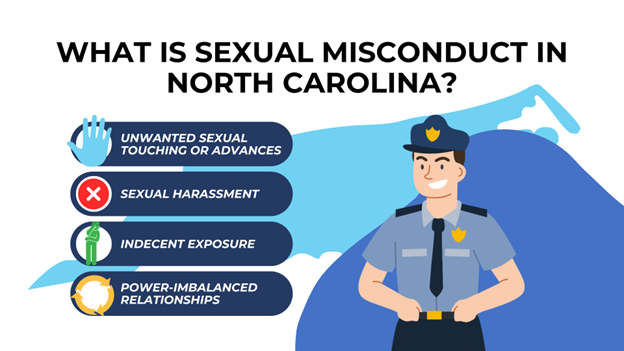
In North Carolina, “sexual misconduct” is not a specific crime named in state law. Instead, it’s a general term that covers many types of inappropriate sexual behaviors, including:
- Unwanted sexual touching or advances
- Sexual harassment
- Indecent exposure
- Inappropriate relationships where one person has power over another
Schools, workplaces, and organizations often use “sexual misconduct” in their policies, but North Carolina’s criminal laws don’t specifically use this term.
What Is Statutory Rape in North Carolina?
Unlike sexual misconduct, statutory rape has a specific legal definition in North Carolina law. Statutory rape means having sexual activity with someone who is too young to legally consent, even if the younger person seemed willing.
North Carolina law divides statutory rape into different categories based on age:
Statutory rape of a child by an adult (N.C. Gen. Stat. § 14-27.23):
- Happens when someone 18 or older has sexual intercourse with a child under 13
- One of the most serious crimes in North Carolina (Class B1 felony)
First-degree statutory rape (N.C. Gen. Stat. § 14-27.24):
- Involves sexual intercourse with a child under 13
- The person must be at least 12 years old and at least four years older than the child
- Also a Class B1 felony
Statutory rape of a person 15 years of age or younger (N.C. Gen. Stat. § 14-27.25):
- More serious charge (Class B1 felony): When someone is at least 12 years old and at least six years older than a person 15 or younger
- Less serious charge (Class C felony): When someone is at least 12 years old and more than four but less than six years older than a person 15 or younger
The law makes an exception when the people are legally married to each other.

When Does Sexual Misconduct Count as Statutory Rape?
Whether sexual misconduct is also statutory rape depends on three main factors:
- Age: The younger person must be under 16 (North Carolina’s age of consent)
- Age difference: The age gap must meet specific requirements in state law
- Type of activity: For statutory rape specifically, the activity must be sexual intercourse
It’s important to know that North Carolina law also makes other sexual acts with minors illegal under different laws.

Age of Consent in North Carolina
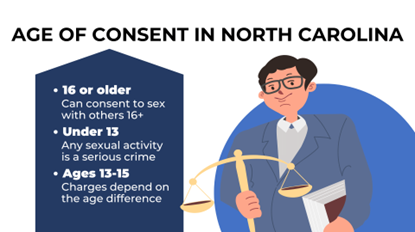
In North Carolina, the age of consent is 16. This means:
- People 16 or older can legally consent to sexual activity with other people 16 or older
- Sexual activity with children under 13 is always a serious crime
For young people aged 13-15, the seriousness of charges depends on the age difference between the people involved
Consent Is Not a Defense
In statutory rape cases, it doesn’t matter if the younger person agreed to the activity. Even if the minor:
- Started the sexual contact
- Said yes
- Seemed willing
- Lied about their age
The law assumes that people under 16 cannot legally consent to sexual activity with older individuals. Believing the activity was consensual does not protect someone from statutory rape charges.
Other Sexual Crimes Involving Minors
While statutory rape specifically means sexual intercourse, North Carolina law also prohibits other sexual acts with minors.
Statutory Sexual Offense Charges
North Carolina law creates separate crimes for sexual acts other than intercourse with minors, including:
- Oral sex
- Anal sex
- Using objects for sexual penetration
These crimes include:
Statutory sexual offense with a child by an adult (N.C. Gen. Stat. § 14-27.28):
- Applies when an adult (18 or older) performs a sexual act with a child under 13
- Class B1 felony
First-degree statutory sexual offense (N.C. Gen. Stat. § 14-27.29):
- Involves a sexual act with a child under 13
- The person must be at least 12 years old and at least four years older than the child
- Class B1 felony
Statutory sexual offense with a person 15 years or younger (N.C. Gen. Stat. § 14-27.30):
- Uses similar age brackets as statutory rape offenses
- Penalties depend on the age difference between the people involved
Other Sexual Offenses
North Carolina also makes these behaviors illegal:
Sexual battery (N.C. Gen. Stat. § 14-27.33):
- Involves sexual touching for sexual pleasure or abuse
- Occurs by force against someone’s will, or with someone who has a mental disability or is unable to resist
- Class A1 misdemeanor (less serious than a felony, but still a crime)
Sexual contact during medical treatment (N.C. Gen. Stat. § 14-27.33A):
- Makes sexual contact during supposed medical treatment illegal
- Class C felony
Penalties for Statutory Rape Convictions
A statutory rape conviction in North Carolina leads to severe consequences:
Criminal Penalties
For Class B1 Felonies (First-degree statutory rape and statutory rape of a child by an adult):
- Minimum 12 years in prison
- Possible life imprisonment without parole in serious cases
- No possibility of probation instead of prison
For Class C Felonies (Statutory rape of a person 15 or younger with 4-6 year age difference):
- About 4 -15 years imprisonment
- Sentence varies based on criminal record and other factors
- Limited probation possibilities in rare cases
Sex Offender Registration
Beyond prison time, a conviction requires:
- Registration as a sex offender for at least 30 years
- Restrictions on where you can live and work
- Limitations on access to schools and places where children gather
- Regular check-ins with law enforcement
- Public listing of your personal information and crime details
Loss of Parental Rights
Under North Carolina law, those convicted of statutory rape:
- Have no custody rights to children born from the offense
- Have no inheritance rights related to such children
- Have no other parental rights under state law
Legal Defenses Against Statutory Rape Charges
If accused of statutory rape, several defense strategies may be available:
Possible Defense Approaches
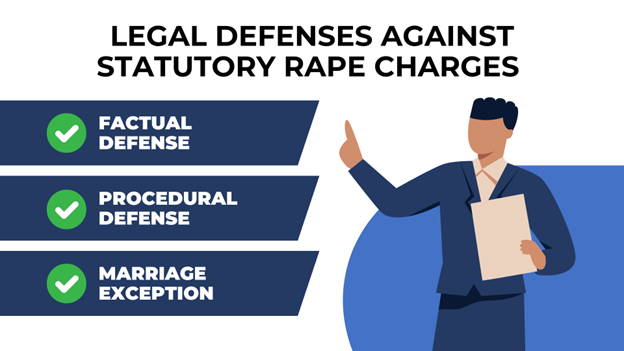
Factual defenses:
- Challenging whether the sexual activity actually happened
- Disputing the ages of those involved
- Responding to false accusations
Procedural defenses:
- Challenging how evidence was collected
- Questioning jurisdiction issues
- Addressing misconduct by prosecutors
- Asserting the right to a speedy trial
Marriage exception:
- North Carolina law provides an exception when the parties are legally married
- This exception only applies to valid marriages
Why You Need a Lawyer
Given how serious statutory rape charges are, experienced legal representation is essential. A knowledgeable North Carolina criminal defense attorney can:
- Investigate the allegations thoroughly
- Talk to witnesses
- Review evidence
- Challenge improper police actions
- Negotiate with prosecutors
- Develop effective defense strategies
- Protect your rights
- Present strong arguments in court
Special Situations Under North Carolina Law
North Carolina’s laws address several special situations related to sexual offenses:
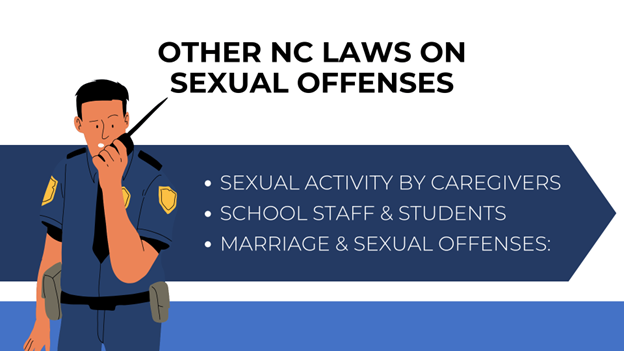
Sexual Activity by Substitute Parents or Caregivers
Under N.C. Gen. Stat. § 14-27.31:
- It’s a Class E felony for someone acting as a parent to engage in sexual activity with a minor in their home
- It’s illegal for anyone with custody of a person to engage in sexual activity with that person
Sexual Activity with Students
N.C. Gen. Stat. § 14-27.32 specifically prohibits:
- Sexual activity between school staff and students
- Applies to teachers, administrators, coaches, and other school employees
- Class G felony if the school employee is at least four years older than the student
- The student’s consent cannot be used as a defense
Marriage and Sexual Offenses
North Carolina law (N.C. Gen. Stat. § 14-27.34) states that:
- A person can be prosecuted for rape or sexual offense even if married to the victim
- This applies mainly to forcible sexual offenses
- A limited marriage exception exists for certain statutory rape charges
How School/Workplace Rules and Criminal Law Interact
Organizations define sexual misconduct differently than criminal law defines statutory rape:
- Schools may prohibit relationships that aren’t crimes under state law
- Professional organizations may ban relationships between professionals and clients
- Employers often restrict relationships between supervisors and employees
A person could face both:
- Organizational punishment under sexual misconduct policies
- Criminal charges for statutory rape. These processes are separate and have different rules and consequences.
Life-Changing Consequences Beyond Criminal Penalties
A statutory rape conviction affects almost every part of life:
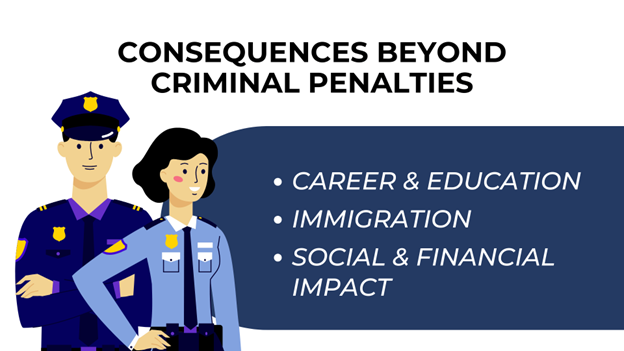
Career and Education Impact
- Loss of professional licenses in fields like law, medicine, and teaching
- Inability to get future licenses
- Removal from educational programs
- Denial of college admission
- Loss of eligibility for financial aid
Immigration Consequences
For non-citizens, conviction can lead to:
- Deportation
- Being barred from entering the United States
- Denial of citizenship
- Ineligibility for visas or immigration benefits
Social and Financial Effects
Long-term impacts include:
- Difficulty finding jobs
- Housing restrictions
- Loss of voting rights during imprisonment or probation
- Damaged family relationships
- Social stigma
- Child custody restrictions
Getting Legal Help
If you’re dealing with questions about whether sexual misconduct is statutory rape in North Carolina, getting legal help quickly is crucial.
Benefits of Early Legal Help
Getting an experienced attorney involved early can:
- Save important evidence
- Make sure witness statements are recorded while memories are fresh
- Start defense investigations before prosecution stories become fixed
- Explore opportunities for negotiations before charges are filed
- Protect your rights from the beginning
Finding the Right Attorney
When choosing an attorney for statutory rape allegations, look for:
- Experience with North Carolina sex offense cases
- Knowledge of local courts and prosecutors
- Success with similar cases
- Good communication
- Resources for thorough investigation
- Ability to handle both legal and emotional aspects of these difficult cases
Conclusion: Understanding Sexual Misconduct and Statutory Rape
The question “is sexual misconduct statutory rape?” doesn’t have a simple answer. In North Carolina, whether sexual misconduct counts as statutory rape depends specifically on:
- Ages of the people involved
- Type of sexual activity
- Relationship between the parties
North Carolina takes crimes against minors very seriously, with harsh penalties for statutory rape and related offenses. The state’s laws aim to protect young people from sexual exploitation, regardless of whether they appeared to consent.
If you’re facing allegations that sexual misconduct is statutory rape, or if you have questions about North Carolina law in this area, consulting with an experienced North Carolina criminal defense attorney is essential to protect your rights, freedom, and future.
If you or a loved one are facing charges for statutory rape or criminal sexual misconduct, you deserve a legal advocate with the experience and dedication to secure the best possible outcome. Attorney Patrick Roberts of Patrick Roberts Law has successfully defended numerous clients facing the most serious sex crimes. Contact our firm today for a confidential consultation.
Former assistant district attorney
Contact Patrick Roberts
Facing criminal charges in North Carolina demands seasoned representation. Trust in the experience and dual perspective of Patrick Roberts. Reach out today for a confidential consultation.
-
Call Our Team
Calls answered 24/7






For more information on the selection criteria, go to www.martindale.com
*Each case is different and must be evaluated separately. Prior results achieved do not guarantee similar results can be achieved in future cases.