
Sexual exploitation of a minor is among the most aggressively prosecuted offenses in North Carolina. For Cary residents facing these allegations, the consequences extend far beyond the courtroom—threatening careers at Research Triangle Park companies, security clearances, professional licenses, and standing in a community where reputation matters deeply. Understanding exactly what North Carolina law prohibits, how Cary Police Department and federal task forces investigate these cases, and what defense options exist is essential for anyone confronting these charges.
North Carolina divides sexual exploitation into three degrees, each targeting different conduct related to material depicting minors engaged in sexual activity. Whether the allegation involves production, distribution, or possession, the State treats these as serious felonies with lasting consequences. This article explains what each charge means, how Wake County prosecutors approach these cases, and why experienced defense representation matters.
What Is Sexual Exploitation of a Minor Under North Carolina Law?
How Does North Carolina Define “Sexual Exploitation”?
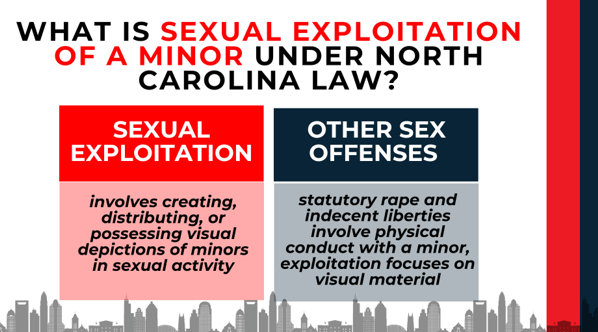
Sexual exploitation of a minor refers to offenses involving material that contains visual representations of minors engaged in sexual activity. Unlike hands-on offenses such as statutory rape or indecent liberties, exploitation charges focus on the creation, distribution, or possession of such material. North Carolina law addresses these offenses through three distinct statutes, each covering different levels of involvement.
The Cary Police Department’s Special Victims Unit actively investigates exploitation allegations, often working alongside state and federal task forces that target these offenses across jurisdictional lines. Wake County sees regular prosecution of exploitation cases, reflecting both proactive law enforcement efforts and the digital nature of modern investigations.
What Types of Conduct Fall Under These Charges?
North Carolina’s exploitation statutes cover a range of conduct related to material depicting minors. The prohibited activities include:
- Using, inducing, or coercing a minor to engage in sexual activity for the purpose of producing visual material
- Permitting a minor under one’s custody to be depicted in such material
- Recording, photographing, or filming a minor engaged in sexual activity
- Distributing, transporting, selling, purchasing, or exchanging material depicting minors
- Possessing material that contains visual representations of minors in sexual activity
Each category carries different charges and classifications depending on the defendant’s level of involvement and whether commercial gain was involved.
How Do Exploitation Charges Differ from Other Sex Offenses?
Exploitation charges are distinct from contact offenses. While statutory rape and indecent liberties involve physical conduct with a minor, exploitation focuses on visual material—its creation, movement, or possession. A person can face exploitation charges without ever having physical contact with any minor depicted in the material.
This distinction matters because exploitation cases typically center on digital evidence: files found on devices, cloud storage accounts, download histories, and metadata. The investigation and defense of these cases require technical sophistication that differs significantly from other sex offense prosecutions.
What Are the Three Degrees of Sexual Exploitation Charges?
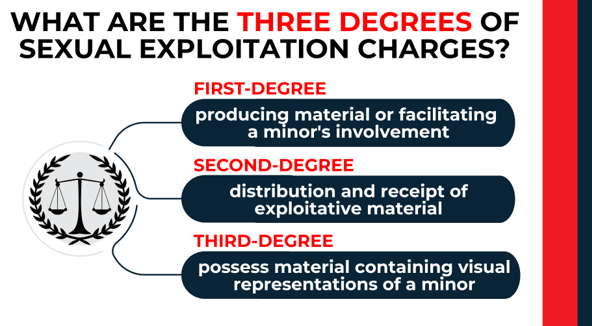
North Carolina separates exploitation offenses into three degrees based on the defendant’s role and the nature of the conduct. Having prosecuted sex crimes cases earlier in his career, Patrick Roberts understands how prosecutors categorize these charges and what evidence they prioritize at each level.
What Constitutes First-Degree Sexual Exploitation?
First-degree sexual exploitation under N.C. Gen. Stat. § 14-190.16 targets those involved in producing material or facilitating a minor’s involvement in its creation. This is the most serious exploitation charge.
A person commits first-degree exploitation if, knowing the character or content of the material, the person:
- Uses, employs, induces, coerces, or facilitates a minor to engage in sexual activity for producing visual material
- Permits a minor under their custody to engage in such activity for production purposes
- Transports a minor across North Carolina with intent that the minor engage in sexual activity for material production
- Records, photographs, films, or duplicates such material for sale or pecuniary gain
First-degree sexual exploitation is generally a Class C felony. When the offense involves creating material for sale or commercial gain, the classification may be a Class D felony for certain specific conduct.
What Actions Lead to Second-Degree Charges?
Second-degree sexual exploitation under N.C. Gen. Stat. § 14-190.17 addresses the distribution and receipt of exploitative material. A person commits this offense if, knowing the character or content of the material, the person:
- Records, photographs, films, or duplicates material depicting a minor in sexual activity (without the commercial element)
- Distributes, transports, exhibits, receives, sells, purchases, exchanges, or solicits such material
Second-degree exploitation is a Class E felony. This charge commonly applies to those who share material through online platforms or who actively seek and receive such material from others.
When Is Possession Charged as Third-Degree Exploitation?
Third-degree sexual exploitation under N.C. Gen. Stat. § 14-190.17A is the possession offense. A person commits this crime if, knowing the character or content of the material, they possess material containing visual representations of a minor engaged in sexual activity.
Third-degree exploitation is a Class H felony. While it carries the lowest classification among exploitation offenses, it remains a felony conviction with serious consequences. For professionals working in the Research Triangle—including those holding security clearances at companies like Lockheed Martin or building careers at SAS, Epic Games, or other major employers—even a third-degree charge threatens everything they have built.
Can Mistake of Age Be Raised as a Defense?
No. North Carolina law explicitly states that mistake of age is not a defense to any degree of sexual exploitation. This applies to all three levels of the offense. Even if a defendant genuinely believed the individuals depicted were adults, this belief provides no legal defense under the statute.
How Does Cary Police Department Investigate Exploitation Allegations?
What Role Does the Special Victims Unit and Cyber Intelligence Unit?
Cary Police Department’s Special Victims Unit handles follow-up investigations for exploitation allegations, working in close coordination with the department’s cyber intelligence team when digital evidence or online conduct is involved. SVU detectives specialize in sensitive cases involving children, bringing focused training and dedicated resources to these investigations while cyber intelligence personnel assist with forensic review of devices, online accounts, and network activity.
When an exploitation case originates in Cary—whether through a tip, proactive online operation, or report from an employer’s IT department—SVU typically takes the lead on the local investigation, with cyber intelligence supporting the technical aspects needed to identify offenders and secure digital evidence.
Patrick Roberts is the only North Carolina attorney listed on the National Child Abuse Defense and Resource Center’s website (falseallegation.org/north-carolina-members), reflecting specialized training in defending cases involving allegations against children. This training provides insight into how investigations unfold and where procedural or evidentiary weaknesses may exist.
How Do Multi-Agency Task Forces Operate in Wake County?
Exploitation investigations frequently involve multiple agencies working together. Cary Police Department participates in coordinated efforts including Operation Southern Impact and the Invictus Project—multi-agency operations targeting those who exploit children. The Internet Crimes Against Children (ICAC) task force also operates in this region, bringing federal resources and expertise to local investigations.
These task forces conduct proactive operations, including online investigations designed to identify individuals seeking exploitative material. When federal agencies become involved, defendants may face the possibility of federal charges in addition to or instead of state prosecution—significantly raising the stakes.
What Digital Evidence Do Investigators Typically Pursue?
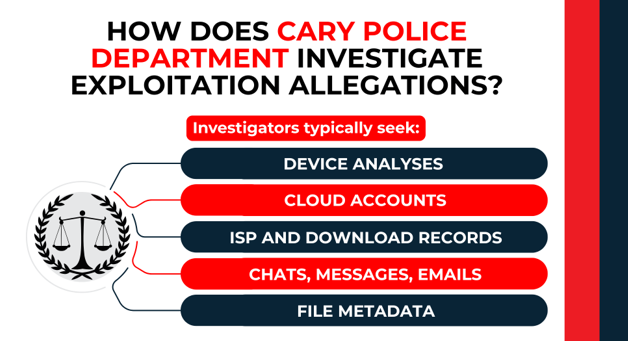
In Cary’s high-tech environment, digital forensics plays a central role in exploitation cases. Investigators typically seek:
- Device analyses including computers, phones, tablets, and external storage media.
- Cloud storage accounts and their contents.
- Internet service provider records and download histories.
- Chat logs, messaging app data, and email communications.
- File metadata showing creation dates, access patterns, and modification histories.
Given the technical sophistication of both the local workforce and law enforcement capabilities, these investigations often produce substantial digital evidence. Effective defense requires equally sophisticated analysis of how evidence was obtained, preserved, and interpreted.
If you’re facing sexual exploitation allegations in Cary or Wake County, contact Patrick Roberts Law to discuss how an experienced defense can protect your future.
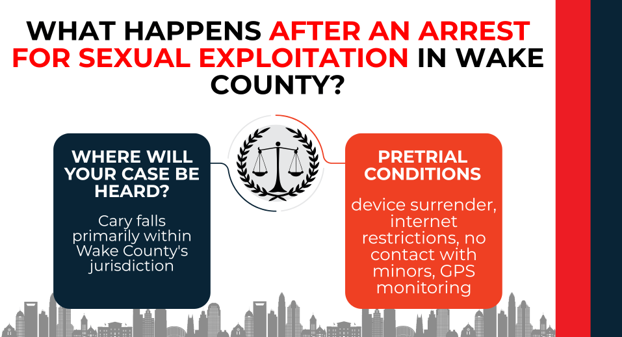
What Happens After an Arrest for Sexual Exploitation in Wake County?
Where Will Your Case Be Heard?
Cary falls primarily within Wake County’s jurisdiction, meaning exploitation cases proceed through the Wake County court system. Initial appearances occur in Wake County District Court, while felony matters ultimately move to Wake County Superior Court. The Wake County District Attorney’s Office, part of the 10th Prosecutorial District, handles prosecution.
Wake County prosecutors maintain specialized units that focus on sex offenses, bringing concentrated experience to these cases. The DA’s office coordinates closely with Cary PD and task force investigators throughout the prosecution.
What Pretrial Conditions Might the Court Impose?
Defendants in exploitation cases often face significant pretrial restrictions. Courts may impose conditions including surrender of electronic devices, restrictions on internet access, limitations on contact with minors, and GPS monitoring. Bond amounts in these cases tend to be substantial given the serious nature of the charges.
These restrictions can immediately impact employment—particularly for those in technology fields where internet access is essential to their work. Understanding what conditions to expect and how to address them requires familiarity with how Wake County judges typically handle these matters.
What Are the Consequences of a Conviction in the Research Triangle?
How Do Felony Classifications Affect Sentencing?
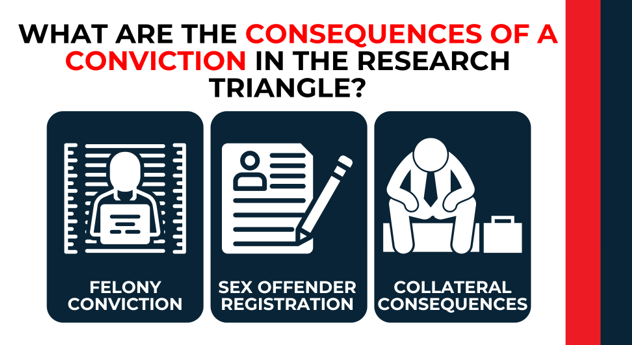
North Carolina classifies exploitation offenses as follows: first-degree is typically a Class C felony (or Class D for certain conduct), second-degree is a Class E felony, and third-degree is a Class H felony. These classifications determine sentencing ranges under North Carolina’s structured sentencing guidelines, with prior record level also affecting potential punishment.
Through ongoing sex-crimes defense training with the National Association of Criminal Defense Lawyers, Patrick Roberts understands the full scope of consequences these charges carry—both the direct penalties and the collateral effects that often prove more devastating to clients’ lives.
Will You Be Required to Register as a Sex Offender?
Conviction for any degree of sexual exploitation of a minor triggers sex offender registration requirements in North Carolina. Registration brings ongoing obligations including address verification, restrictions on where registrants may live and work, and public listing on the sex offender registry.
In a community where 68.4% of adults hold bachelor’s degrees and median household income exceeds $113,000, the social consequences of registration are profound. Neighbors, employers, and professional licensing boards can all access registry information.
How Could a Conviction Affect Your Career in the Research Triangle?
For Cary residents, collateral consequences often matter as much as direct penalties. A conviction can result in:
- Loss of security clearances required for defense contractor positions at companies like Lockheed Martin
- Termination from technology employers including SAS, Epic Games, and others with strict background check policies
- Revocation of professional licenses in fields including healthcare, education, law, and finance
- Immigration consequences for the 22% of Cary residents who are foreign-born, potentially including deportation
- Loss of custody or visitation rights with one’s own children
- Permanent barriers to future employment in any position involving children or vulnerable populations
These consequences follow a conviction indefinitely, making the stakes of an exploitation case extend far beyond any sentence imposed.
Don’t face exploitation charges without understanding your options. Schedule a confidential consultation to discuss your case.
What Defense Strategies Apply to Exploitation Charges?
How Can the “Knowledge” Element Be Challenged?
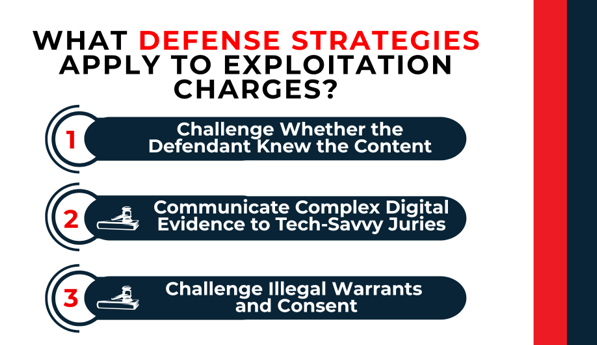
Each exploitation statute requires that the defendant acted “knowing the character or content of the material.” This knowledge element is essential to the State’s case. Defense strategies may focus on whether the defendant actually knew what the material contained—particularly relevant when material is found in shared accounts, on devices accessible to multiple users, or in locations where it could have been placed without the defendant’s awareness.
What Role Does Digital Forensics Play in the Defense?
As a National Criminal Defense College graduate currently participating in advanced cross-examination training, Patrick Roberts brings technical rigor to challenging digital evidence. Defense-side forensic analysis can examine:
- Whether files were actively downloaded or passively cached by web browsers.
- Whether timestamps and metadata are consistent with the State’s theory.
- Whether devices were accessed by unauthorized users or compromised by malware.
- Whether proper forensic protocols were followed during evidence collection.
- Whether chain of custody was maintained from seizure through analysis.
In a community as technologically sophisticated as Cary, juries often include professionals capable of understanding technical defense arguments. Presenting a credible challenge to digital evidence requires both forensic knowledge and the ability to communicate complex concepts clearly.
When Can Evidence Be Suppressed?
Constitutional protections apply to exploitation investigations just as they do to any criminal case. If law enforcement obtained evidence through an unlawful search—whether of a home, vehicle, or electronic device—that evidence may be subject to suppression. Challenges may also arise regarding the validity of warrants, the scope of consent given, or the methods used to identify and locate a defendant.
Suppression of key evidence can fundamentally change a case, potentially leading to reduced charges or dismissal.
Why Does Experience Matter When Facing These Charges in Cary?
What Should You Look for in a Defense Attorney?
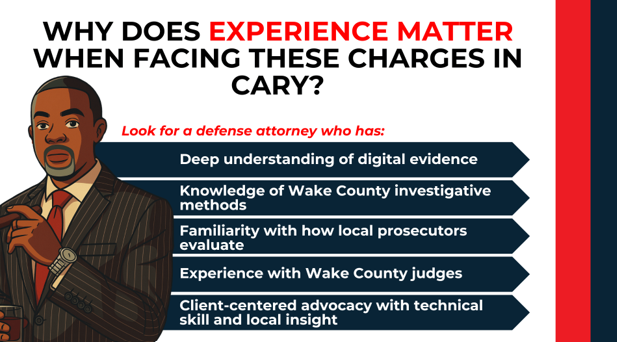
Exploitation cases require an attorney who understands both the technical aspects of digital evidence and the specific dynamics of Wake County prosecution. Familiarity with how local investigators build cases, how the DA’s office evaluates evidence, and how Wake County judges handle pretrial matters all contribute to effective defense.
Attorney Patrick Roberts’s training at the Gerry Spence Trial Lawyers College instilled a philosophy that every client deserves a defense that treats their case as the most important one. That client-centered approach, combined with technical preparation and local experience, defines effective representation in these serious matters.
How Does Prosecutorial Experience Benefit the Defense?
An attorney who has prosecuted sex crimes understands the case from the State’s perspective—what evidence prosecutors find most compelling, what weaknesses they try to minimize, and how they present these sensitive cases to juries. That insight allows defense counsel to anticipate prosecution strategy and prepare accordingly.
Patrick Roberts’ background on both sides of these cases provides a perspective few defense attorneys can offer. Combined with specialized training in sex-crimes defense and false-allegation cases, this experience positions him to identify the strongest available defense for each client’s circumstances.
Frequently Asked Questions
Can I be charged with exploitation if someone else used my device?
The State must prove you knowingly possessed or distributed the material. If someone else had access to your device and you were unaware of the material’s presence, this may form the basis of a defense. However, these cases require careful forensic analysis to establish who actually accessed or downloaded specific files.
What is the difference between state and federal exploitation charges?
North Carolina prosecutes exploitation under state statutes in state court, while federal charges proceed under different statutes in federal court with different sentencing structures. Federal involvement often occurs when material crossed state lines or when federal task forces initiated the investigation. Federal convictions typically carry more severe penalties.
Will I have to register as a sex offender in Wake County?
Yes. Conviction for any degree of sexual exploitation of a minor requires sex offender registration in North Carolina. Wake County maintains registration through the Sheriff’s Office, and registrants appear on the publicly accessible state registry.
How long do exploitation investigations typically take in Cary?
Investigation length varies significantly. Some cases proceed quickly from search warrant to arrest, while others—particularly those involving task force operations or complex digital forensics—may take months or longer. During this time, individuals may be unaware they are under investigation until law enforcement executes a search warrant.
Can exploitation charges be reduced or dismissed?
Outcomes depend on the specific facts and evidence in each case. Challenges to how evidence was obtained, questions about the knowledge element, or problems with the State’s forensic analysis may affect how a case resolves. While these are serious charges that prosecutors pursue aggressively, every case has its own circumstances that must be evaluated individually.
Should I talk to investigators if Cary police contact me?
You have the right to remain silent and the right to have an attorney present during questioning. Before answering questions from Cary PD, Wake County investigators, or federal agents, consult with a defense attorney who can advise you on how to protect your rights while the investigation proceeds.
Protect Your Future
Sexual exploitation charges in Cary demand a defense built on specialized training, prosecutorial insight, and technical sophistication. Patrick Roberts Law provides the experienced representation these serious cases require. Contact the firm to schedule a confidential consultation about your situation.
Disclaimer: The information on this website is for general information purposes only. Nothing on this site should be taken as legal advice for any individual case or situation. Case results depend upon a variety of factors unique to each case. Prior results do not guarantee a similar outcome.
Former assistant district attorney
Contact Patrick Roberts
Facing criminal charges in North Carolina demands seasoned representation. Trust in the experience and dual perspective of Patrick Roberts. Reach out today for a confidential consultation.
-
Call Our Team
Calls answered 24/7






For more information on the selection criteria, go to www.martindale.com
*Each case is different and must be evaluated separately. Prior results achieved do not guarantee similar results can be achieved in future cases.