
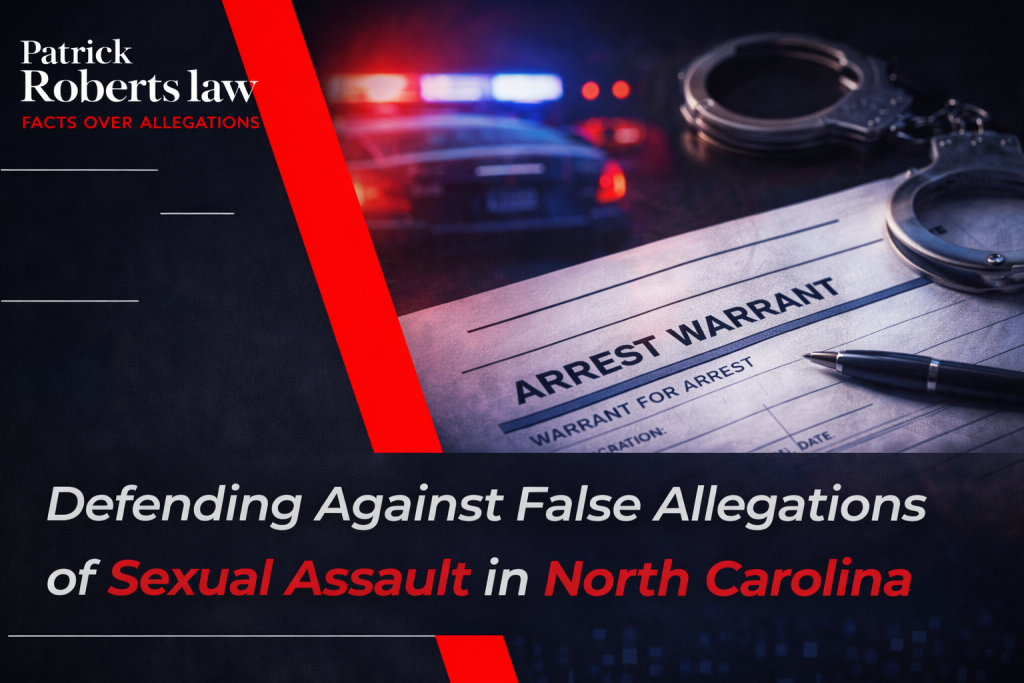
In North Carolina, allegations of sexual offenses carry significant legal consequences, including the potential for lengthy prison sentences and mandatory lifetime registration on the State Sex Offender Registry. Because of the gravity with which the North Carolina judicial system treats these cases, the initial response to an accusation is a critical component of a legal defense. Individuals facing such allegations should understand that their actions and statements—or the decision to remain silent—within the first 24 to 48 hours can have a lasting impact on the trajectory of their case.
Why Does the “Right to Remain Silent” Matter in North Carolina?
One of the most common mistakes individuals make when falsely accused is attempting to explain their side of the story to investigators. You have an absolute right to remain silent under the Fifth Amendment and the North Carolina Constitution. But because the right is not self-executing, if you are not in custody you must expressly state to officers that you are invoking your right to remain silent. If you do not say this clearly, any information you provide can still be used as evidence.
In North Carolina, statements made to law enforcement are categorized as either voluntary or custodial. If you voluntarily go to a police station or speak to a detective at your door, your statements may be admissible in court even if the officer has not read your Miranda rights. Police are trained in interrogation techniques designed to identify inconsistencies or lock you into a specific timeline. Even a truthful person, under the stress of a false accusation, may misspeak or provide a detail that is later misinterpreted as an admission of guilt.
Why Should You Avoid Contact with the Accuser?
When facing a false allegation, it is a natural human impulse to contact the accuser to demand an explanation or clear up a misunderstanding. However, in the context of a North Carolina criminal investigation, any contact—whether direct or through a third party—is dangerous.
Such communication can be used as evidence of “consciousness of guilt” or, more severely, lead to additional criminal charges for witness tampering or intimidation. In North Carolina, prosecutors may use your attempts to reach out as a basis for a “No Contact Order” or to argue for a higher bond during your pretrial release hearing. This prohibition extends to all forms of digital communication, including text messages, social media direct messages (DMs), and emails.
Proactive Defense: The Role of a North Carolina Attorney Pre-Arrest
A common misconception is that legal counsel is only necessary after an arrest has occurred. However, in cases involving sensitive allegations, pre-charge representation is often a strategic necessity. An experienced North Carolina defense attorney can intervene during the investigative stage to manage communications with law enforcement and protect your rights before the process escalates.
By retaining counsel early, an attorney can:
- Prevent a “Surprise” Arrest: Your lawyer can coordinate with detectives to arrange a voluntary self-surrender if a warrant is issued. This proactive approach often leads to more favorable bond conditions and avoids the trauma of a public arrest.
- Conduct an Independent Investigation: Defense counsel can immediately begin identifying alibi witnesses, preserving surveillance footage, and securing digital evidence before it is overwritten or lost.
- Present Exculpatory Evidence: In many instances, providing clear evidence of innocence—such as GPS records or communication logs—to a North Carolina District Attorney before an indictment can prevent charges from being filed entirely.
What Are the Common Motives for False Sexual Assault Accusations?
It is a reality within the criminal justice system that false allegations happen for many reasons, ranging from intentional malice to unintentional psychological factors. These reports are often complex and multifaceted, requiring a defense that looks beyond the surface of the accusation to understand the underlying stressors, social pressures, or personal conflicts that may have triggered a fabricated claim. Identifying these reasons is not about “attacking” a witness, but about providing the court with a complete picture of why the testimony may be unreliable.
According to various legal and psychological studies, common motives include:
- Alibi or Cover Story: An individual may fabricate an allegation to explain a personal situation they find embarrassing or problematic, such as being late for a curfew, explaining an unplanned pregnancy, or accounting for an unexplained absence to a spouse or parent.
- Regret or “Buyer’s Remorse”: In some instances, an individual may engage in a consensual encounter but later feel a sense of shame, guilt, or social pressure. To distance themselves from the event or mitigate social consequences, they may re-characterize the encounter as non-consensual.
- Material or Financial Gain: While less common, some accusations are motivated by the hope of a financial settlement through civil litigation or to gain leverage in a separate legal matter.
- Revenge or Retaliation: This involves a desire to damage the reputation, career, or personal life of the accused. This is often linked to a perceived slight, a difficult breakup, or a workplace conflict.
- Mental Health Issues or Attention Seeking: Some false reports are the result of underlying psychological conditions where the individual seeks the sympathy, support, or high level of attention typically afforded to victims of trauma.
- Peer Pressure or Social Influence: An individual may feel pressured by a social group to “fit in” with a certain narrative or may fear being ostracized if they do not label an experience in a way that aligns with their peers’ expectations.
- Child Custody or Divorce Leverage: In highly contentious family law cases, a false allegation may be used as a tactical tool to restrict the other parent’s access to children or to influence the outcome of a custody battle.
To build an effective defense, it is necessary to identify the potential motives behind a fabricated report. While North Carolina law focuses on the facts of the alleged incident, uncovering a motive to lie is essential for challenging the credibility of the accuser during cross-examination.
How Do Child Custody Disputes Influence False Allegations?
In the North Carolina family court system, a sexual assault allegation is a powerful and destructive tool. Accusations are sometimes leveled during high-conflict divorces or custody battles to gain an advantage in “best interests of the child” determinations. A pending criminal charge can lead to an immediate suspension of visitation rights or a domestic violence protective order (50B order). Investigating the timing of the accusation relative to family court filings is a standard part of a robust defense.
When Is Retaliation a Factor in False Reporting?
False reports may also stem from a desire for retaliation. This occurs in various contexts, including:
- Relationship Breakups: An individual may fabricate an assault to punish a former partner for ending a relationship.
- Workplace Disputes: Allegations may be used to leverage a better severance package or to retaliate against a supervisor for a negative performance review.
- Social Leverage: In some social circles, an individual may feel pressured to characterize a consensual encounter as non-consensual to avoid social stigma or to explain their actions to a spouse or parent.
What Role Does Misidentification Play in Sexual Assault Cases?
Not all false accusations are malicious; some are the result of genuine error. Misidentification can occur due to:
- Suggestive Police Procedures: If a photo lineup or show-up is conducted improperly, the victim may subconsciously pick the individual who most closely matches their memory, rather than the actual perpetrator.
- Environmental Factors: Poor lighting, the presence of a weapon (“weapon focus”), and the brief duration of an encounter significantly impair the accuracy of eyewitness identification.
- Cross-Racial Identification: Psychological studies recognized by North Carolina courts show that individuals often have greater difficulty accurately identifying members of a different race.
How Does North Carolina Law Interpret “Consent”?
North Carolina law defines “against the will of the other person” under N.C.G.S. § 14-27.20(1a) as an act occurring without consent or after consent has been revoked in a manner that would cause a reasonable person to believe it was revoked.
A central component of consent defense in North Carolina involves the victim’s capacity. Under the law, an individual cannot legally consent if they are:
- Mentally Incapacitated: Rendered incapable of appraising their conduct due to any act (such as the administration of drugs or alcohol).
- Physically Helpless: Defined as being unconscious or physically unable to resist or communicate unwillingness.
- Mentally Disabled: Suffering from a permanent or temporary mental disorder that prevents them from resisting the act or understanding its nature.
Why Are Inconsistent Statements Important to a Defense?
In cases where physical evidence is absent, the prosecution’s case often relies entirely on the testimony of the accuser. Identifying and highlighting inconsistencies in that testimony is one of the most effective ways to establish reasonable doubt.
How Are Police Reports Used to Identify Contradictions?
The defense begins by comparing the accuser’s statements across different points in time. This includes the initial 911 call, statements made to responding patrol officers, the formal interview with a detective, and any testimony provided at a preliminary hearing. If the accuser changes significant details—such as the sequence of events, the description of the alleged perpetrator, or the nature of the acts—these contradictions become central to the defense strategy.
How Does the ‘Witness Impeachment’ Process Work in a North Carolina Court?
Under North Carolina Rule of Evidence 613, a witness can be “impeached” with their prior inconsistent statements. This is a technical legal process where the defense attorney confronts the witness with their earlier, conflicting accounts to demonstrate to the jury that the witness’s current testimony is unreliable.
The primary purpose of impeachment is to reduce the weight the jury gives to the witness’s testimony. If the defense can show that the accuser has provided three different versions of the same event, it becomes significantly harder for the state to meet the “beyond a reasonable doubt” standard.
How Do Prior Inconsistent Statements Affect the Burden of Proof?
In North Carolina, the burden of proof always rests with the state. The defendant is not required to prove that the accuser is lying; rather, the defense must show that the state’s evidence is not credible enough to support a conviction. When a witness is impeached with material inconsistencies, it creates a “credibility gap.” If the jury cannot be certain which version of the story is true, they are legally obligated to return a verdict of not guilty.
What Happens When There Is a Lack of Physical Evidence?
A common misconception in North Carolina is that the prosecution must have DNA or other forensic evidence to secure a conviction for sexual assault. While physical evidence is a powerful tool, North Carolina law allows a case to proceed to trial—and potentially a conviction—based solely on the testimony of the accuser. However, the absence of physical evidence provides a significant opportunity for the defense to establish reasonable doubt.
Is a “Sexual Assault Nurse Examiner” (SANE) Kit Required for a Conviction?
In North Carolina, a Sexual Assault Nurse Examiner (SANE) kit—often referred to as a “rape kit”—is used to collect biological evidence, such as DNA, hair, or fluids, and to document physical injuries. While these kits are highly publicized, they are not a legal prerequisite for bringing charges.
If a kit was performed and the results are negative (meaning no DNA from the accused was found), the defense can use this to challenge the prosecution’s narrative, especially in cases where the accuser claims a forcible or violent encounter occurred. Conversely, if no kit was ever performed, the defense can highlight the lack of investigation by law enforcement, arguing that the state is asking the jury to convict based on an incomplete set of facts.
Do Investigators Have a Duty to Corroborate Claims?
Under standard law enforcement protocols, investigators must still corroborate claims made by an accuser, even in cases where physical evidence is limited. A thorough investigation should involve seeking independent verification of the accuser’s timeline, interviewing potential witnesses who were nearby at the time of the alleged incident, and reviewing digital footprints. When law enforcement relies solely on a verbal statement without seeking external corroboration, it creates a significant vulnerability in the state’s case that a defense attorney can highlight to a jury.
How Do Defense Experts Challenge “He-Said, She-Said” Testimony?
When a case lacks physical evidence, it becomes a “credibility contest.” In these scenarios, defense attorneys often utilize expert witnesses to educate the jury on the limitations of the state’s case.
- Medical Experts: These experts can testify that the absence of physical trauma (such as bruising or lacerations) is inconsistent with the level of force described by the accuser.
- Psychological Experts: While they cannot testify directly on whether a witness is lying, they can explain how memory works and how external influences or suggestions can lead to “false memories” or the exaggeration of events.
What Role Does Digital Evidence Play in an Alibi?
In the modern legal environment, “digital footprints” often serve as a substitute for traditional physical evidence. In North Carolina, digital evidence is frequently more reliable than eyewitness memory.
- GPS and Location Data: Data from smartphones, Google Maps, or fitness trackers can pinpoint an individual’s location at the time of the alleged assault. If the data places the accused miles away from the scene, it serves as a powerful alibi.
- Cell Tower Pings: Even if GPS is disabled, a phone’s connection to specific cell towers (Cell Site Location Information or CSLI) can establish a general geographic area.
- Electronic Communications: Time-stamped emails, social media posts, or login records from streaming services can verify a person’s whereabouts or state of mind during the window of the alleged incident.
How Does North Carolina Law Handle Delayed Reporting Issues?
It is not uncommon for sexual assault allegations in North Carolina to be reported weeks, months, or even years after the alleged event occurred. While North Carolina has specific rules regarding these delays, they create unique challenges for both the prosecution and the defense.
What Is the Statute of Limitations for Sexual Assault in NC?
The statute of limitations is the time window within which the state must formally file criminal charges.
- Felony Sexual Offenses: In North Carolina, there is no statute of limitations for felony crimes. This means an individual can be charged with first-degree rape or a serious sexual offense 10, 20, or 30 years after the alleged act.
- Misdemeanor Sexual Battery: For misdemeanor charges, the state generally has a two-year statute of limitations. However, for certain misdemeanors involving child victims committed on or after December 1, 2019, this window is extended to 10 years.
Why Do Delays in Reporting Impact the Preservation of Evidence?
From a defense perspective, a delay in reporting is often synonymous with the loss of exculpatory evidence. When an accusation is delayed:
- Forensic Evidence is Lost: DNA evidence on skin or clothing degrades or is washed away within hours or days.
- Surveillance Footage is Overwritten: Most commercial security systems overwrite footage every 30 to 60 days.
- Witness Memories Fade: The accuracy of a witness’ memory decreases significantly over time, making cross-examination more difficult but also highlighting the unreliability of the state’s case.
How Does the Defense Address “Delayed Disclosure” to a Jury?
North Carolina prosecutors often argue that “delayed disclosure” is a common reaction to trauma. However, the defense’s role is to scrutinize the reason for the delay. Was the delay caused by trauma, or was the accusation only made after a specific triggering event—such as a custody filing, a financial dispute, or a breakdown in a relationship? Highlighting a motive for late reporting is a standard and effective defense strategy in North Carolina courtrooms.
Can a False Accusation Record Be Cleared in North Carolina?
Even if the state dismisses the charges or a jury returns a “Not Guilty” verdict, the record of the arrest and the charge remains visible to the public, including employers and landlords. Clearing this record is a final, vital step in a false accusation defense.
Who is Eligible for an Expungement After a Case Dismissal or Acquittal?
Under North Carolina law, individuals may petition to expunge arrest and court records for charges that concluded without a conviction.
- Eligibility: If a sexual assault charge is dismissed or results in an acquittal (Not Guilty), you are generally eligible for an expungement under N.C.G.S. § 15A-146.
- Effect of Expungement: Once granted, the arrest, charge, and trial records are deleted from state and local law enforcement databases. Under NC law, you can truthfully state that the arrest never occurred on most job or housing applications.
- Automatic vs. Petition-Based: While some recent NC laws aimed for “automatic” expungements for dismissals, the process for serious felonies often still requires a formal petition to the court to ensure all records (including DNA samples) are properly removed.
What Are the Long-Term Consequences of a Charge on the NC Sex Offender Registry?
In North Carolina, a conviction for most sexual offenses carries a statutory requirement for sex offender registration. This mandate involves the public disclosure of a registrant’s residential address, place of employment, and photograph. When facing allegations, a primary objective of a legal defense is the avoidance of these registration requirements through dismissal, acquittal, or successful litigation. If a case results in a dismissal or is subsequently expunged, the legal obligation to register is extinguished. However, if temporary registration records were created during the proceedings, a formal legal process may be necessary to ensure their removal from public databases.
Can You File a Civil Lawsuit for Malicious Prosecution or Defamation?
Once the criminal case is resolved in your favor, you may seek civil damages against the individual who made the false report.
- Malicious Prosecution: This requires proving that the accuser initiated a criminal proceeding without probable cause, acted with malice, and that the case ended in your favor.
- Defamation (Libel and Slander): In North Carolina, accusing someone of a “serious crime” like rape is considered libel per se or slander per se. This means the law assumes the statement caused harm to your reputation, and you may be entitled to damages for emotional distress, lost wages, and legal fees.
How Does the Constitutional “Presumption of Innocence” Shape the Defense Strategy?
The presumption of innocence is a fundamental legal principle ensuring that every person accused of a crime is considered innocent until proven guilty in a court of law. It serves as a protective shield that prevents the government from punishing individuals based on mere suspicion or unverified accusations.
Under North Carolina law, a defendant is not required to prove they did not commit a crime. Instead, the burden of proof rests entirely on the state to prove every element of the charge “Beyond a Reasonable Doubt.”
In false accusation cases, the presumption of innocence serves as:
- A Shield Against Speculation: It ensures that the jury cannot convict based on a feeling or probability. If any reasonable doubt exists regarding the accuser’s truthfulness or the accuracy of the evidence, the law demands a “Not Guilty” verdict.
- A Standard for Jury Instructions: Professional defense ensures that the jury is clearly instructed on the high threshold the state must meet. It must be emphasized that an accusation, no matter how emotionally charged, is not evidence.
- A Driver for Aggressive Advocacy: By holding the state to its constitutional burden, the defense forces the prosecution to justify every piece of evidence, often exposing that their case is built on a foundation of inconsistent statements and a lack of physical proof.
Protecting Constitutional Rights in North Carolina
Allegations of sexual assault involve navigating a complex judicial system and facing the significant resources of the state. Addressing these cases requires a defense strategy grounded in a thorough understanding of North Carolina’s legal procedures and evidence laws.
Attorney Patrick Roberts represents individuals facing these charges by applying his specific professional background to ensure their constitutional rights are protected throughout the investigative and judicial process. This approach focuses on a detailed analysis of the facts and a commitment to upholding the legal protections afforded to every defendant.
How Does a Former Prosecutor’s Perspective Strengthen Your Defense?
Success in a criminal trial often depends on anticipating the opposing side’s actions. Attorney Patrick Roberts served as an Assistant District Attorney in three North Carolina jurisdictions: Wake, Johnston, and New Hanover counties. While working as a prosecutor, he handled sex offense and domestic violence cases, observing firsthand how the state constructs its cases.
This perspective allows him to:
- Identify investigative shortcomings, such as when law enforcement fails to follow procedures or overlooks critical evidence.
- Anticipate common prosecution approaches, including explanations for inconsistencies or the use of “trauma-informed” reasoning to account for limited physical evidence.
- Use knowledge of District Attorney office priorities to negotiate for dismissals or reduced charges before a trial ever begins.
Professional Credentials in False Allegation Defense
Defending against fabricated reports requires a foundational understanding of the legal mechanics and evidence-based strategies behind false accusations. Patrick Roberts maintains several advanced credentials that inform his approach to these cases:
National Registry and Defense Resources
As of early 2026, Patrick Roberts is the only attorney in North Carolina listed on the National Child Abuse Defense and Resource Center (NCADRC) registry. This organization provides a framework for defending individuals against allegations of abuse through peer-reviewed strategies and technical legal resources.
Trial Advocacy Training
His litigation experience is supported by intensive training from two globally recognized institutions:
- National Criminal Defense College (NCDC): A graduate of the NCDC Trial Practice Institute, Mr. Roberts completed a two-week intensive program covering the technical aspects of defending individuals accused of criminal offenses, with a focus on cross-examination and evidentiary mastery.
- Gerry Spence Trial Lawyers College: This program emphasizes the humanization of the defendant and effective communication within the courtroom, providing tools designed for complex litigation.
Professional Peer and Client Recognition
Mr. Roberts has maintained high-level professional standing for more than five consecutive years, as evidenced by his 2026 rankings from Martindale-Hubbell:
- AV Preeminent Peer Rated Attorney: A reflection of legal ability and ethical standards as reviewed by members of the bar and the judiciary.
- Client Champion Platinum: An honor based on verified client reviews regarding responsiveness, quality of service, and value.
Mr. Roberts is admitted to practice before the United States Supreme Court, the Fourth Circuit Court of Appeals, and all federal district courts throughout North Carolina.
Distinguished Academic Credentials
Attorney Patrick Roberts is a graduate of Duke University School of Law, an institution consistently ranked in the top tier of American legal education. For the 2025–2026 academic year, Duke Law is ranked #6 nationally by U.S. News & World Report, a position it currently shares with Harvard Law School.
The Duke Law curriculum is recognized for its specialized programs in criminal law, which holds a top 10 national ranking (#8) as of 2025. The institution is defined by a rigorous approach to legal ethics and the protection of constitutional rights—values championed by the Duke Law Innocence Project®. This volunteer student organization works to exonerate victims of wrongful convictions by investigating claims of actual innocence and engaging in policy reform advocacy.
Representative Case Experience
Attorney Patrick Roberts applies over 20 years of experience within the North Carolina legal system to manage high-stakes investigations. As a former prosecutor, he provides an informed perspective on the specific criteria state officials evaluate when determining whether to proceed with an indictment.
Recent Cases
The following examples illustrate legal representation Attorney Patrick Roberts provided during the investigative stage.
- 2025 | Sexual Assault Allegation: Representation of a stepfather following an allegation of sexual assault made by a child under 13.
Result: Investigation concluded; no charges filed.
- 2025 | Indecent Liberties Allegation: Legal defense involving a 15-year-old complainant alleging non-consensual sexual touching.
Result: Investigation concluded; no charges filed.
- 2026 | Rape Allegation: Representation of a client accused of rape following a social encounter with a woman met at a bar.
Result: Investigation concluded; no charges filed.
Click here for more case results.
Disclaimer: Each case is different and must be evaluated separately. Prior results achieved do not guarantee similar results can be achieved in future cases. These outcomes often depend on a detailed review of digital evidence and witness statements before a formal charging decision is made.
Professional Peer and Client Endorsements
“I have had the challenge of working with Atty Roberts when he served as Asst. District Atty in Wake Co. and have worked closely with him as fellow defense counsel… Attorney Roberts is not your ‘run of the mill’ lawyer. While he’s sharp and knows his stuff, he is also approachable and relates well with clients, colleagues, judges and courthouse personnel… I highly recommend Attorney Roberts and place full confidence in his abilities.” — Verified peer review, Avvo
“From our first meeting, Patrick impressed me with his thorough understanding of the law and his strategic approach to my case. He not only provided clear and practical legal advice but also employed smart strategies that were beyond my expectations. His attention to detail and dedication to my defense made all the difference.” — Client testimonial, Avvo
Disclaimer: The testimonials and peer reviews on this site are for informational purposes. They do not constitute a guarantee, warranty, or prediction regarding the outcome of your legal matter. Testimonials and peer endorsements found on this website are actual comments.
Protecting Legal Standing Against Allegations
An accusation of sexual assault in North Carolina carries significant implications for an individual’s legal standing, reputation, and professional life. Navigating the process toward a dismissal or an acquittal requires a precise application of state statutes, a disciplined approach to evidence preservation, and a strategic defense that ensures the prosecution meets the highest burden of proof.
Identifying the potential motives behind reports—such as high-conflict custody disputes or personal retaliation—and documenting inconsistencies in statements during the initial stages of a case are critical steps in a defense strategy. While the legal system is complex, the constitutional protections afforded to every North Carolinian serve as the foundational tools for a defense in the courtroom.
The Role of Early Legal Intervention
Engaging an attorney during the initial stages of an investigation is a practical step toward protecting your legal rights. In North Carolina, early intervention allows a defense team to review evidence before formal charges are filed. This proactive approach can sometimes prevent a situation from escalating or provide more options for resolving the case.
Contact Patrick Roberts Law today at 919-746-7206 to discuss your defense strategy.
To ensure every client receives our full attention, we limit the number of cases we accept at any given time.
Disclaimer: The information on this website is for general informational purposes only. Nothing herein should be taken as legal advice for any individual case or situation. Contacting us via this website, email, or contact form does not create an attorney-client relationship. Case results depend on a variety of factors unique to each case; prior results do not guarantee a similar outcome.
Former assistant district attorney
Contact Patrick Roberts
Facing criminal charges in North Carolina demands seasoned representation. Trust in the experience and dual perspective of Patrick Roberts. Reach out today for a confidential consultation.
-
Call Our Team
Calls answered 24/7






For more information on the selection criteria, go to www.martindale.com
*Each case is different and must be evaluated separately. Prior results achieved do not guarantee similar results can be achieved in future cases.