What Is Happening with North Carolina's Pretrial System?
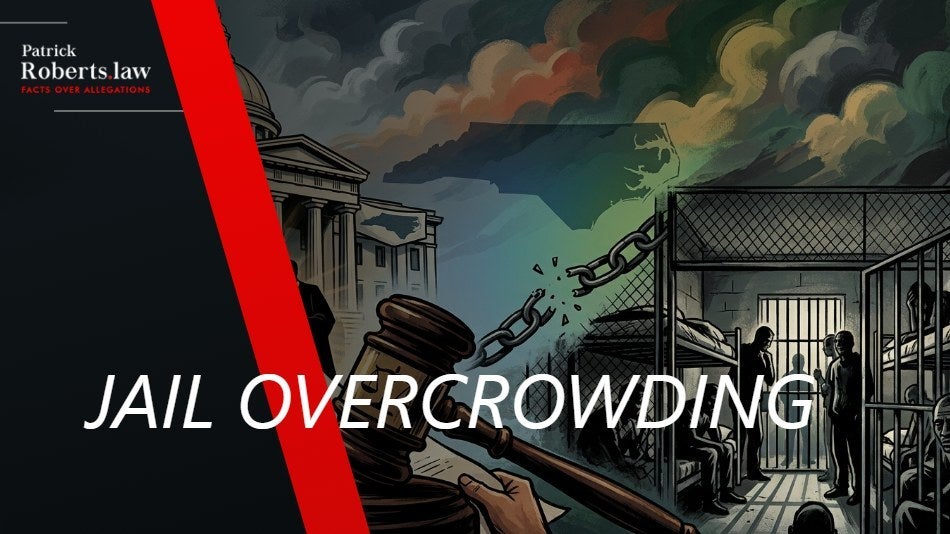
A sweeping pretrial release reform statute (House Bill 307 / Iryna’s Law) has caused severe overcrowding across North Carolina detention facilities, pushing the Wake County Detention Center system far past its physical capacity. By replacing traditional judicial discretion with mandatory secured bonds and rebuttable presumptions against release for broad charge categories, hundreds of legally innocent defendants remain detained pretrial. Legal scholars and defense attorneys argue that these overcrowded, unsanitary conditions raise serious Eighth Amendment challenges regarding cruel and unusual punishment and excessive bail.
Why Is the Wake County Detention System at a Breaking Point?
The Wake County Detention Center system is severely overcrowded because Iryna’s Law drastically restricts pretrial release options, holding hundreds of legally innocent defendants in custody before trial.
In August 2026, the Wake County Detention Center system reported housing over 1,800 detainees (peaking above 1,900) in facilities designed for a maximum operational capacity of 1,574 beds. Investigative reporting from WRAL News and official records from the Wake County Sheriff’s Office confirm that this surge forced detention staff to convert multipurpose rooms into housing and set up temporary sleeping arrangements in common floor areas to accommodate the overflow.
This operational strain stems directly from House Bill 307, officially known as Iryna’s Law, enacted as Session Law 2025-93, which took effect across North Carolina on December 1, 2025. By establishing mandatory restrictions and rebuttable presumptions against pretrial release for broad categories of criminal charges, the statute has led to a historic spike in the number of individuals held without bond or under unattainable secured bonds while awaiting trial.
For defendants, families, and criminal defense practitioners in Raleigh and across North Carolina, this systemic bottleneck raises a critical constitutional question: Does prolonged pretrial detention in severely overcrowded, understaffed facilities violate the Eighth Amendment?
What Is Iryna’s Law, and How Does It Change Pretrial Release?
Iryna’s Law (HB 307) is a North Carolina pretrial release statute that restricts judicial discretion by creating a legal presumption against release and requiring mandatory secured bonds or detention holds for broad charge categories.
What Was the Intent Behind the Legislation?
North Carolina lawmakers drafted Iryna’s Law following the high-profile August 2025 homicide of Iryna Zarutska on a Charlotte light rail train. The primary statutory goal was to enhance public safety by tightening bail eligibility for individuals accused of violent offenses or those identified as repeat violent offenders.
How Does HB 307 Mandate Detention under N.C.G.S. § 15A-534 and § 15A-531?
Under N.C. Gen. Stat. § 15A-534, as amended by House Bill 307 (Session Law 2025-93), written promises to appear were repealed statewide as a permissible release condition for any offense. In addition, under § 15A-534(b1) and the expanded "violent offense" definition in N.C.G.S. § 15A-531(9), judicial officials (magistrates and judges) face a statutory presumption that no condition of release will reasonably assure appearance or public safety, barring unsecured bonds and custody releases for:
• Any felony offense requiring registration on the North Carolina Sex Offender Registry.
• Offenses involving Possession of a Firearm by a Felon (N.C.G.S. § 14-415.1).
• Designated repeat violent felony offenses.
Under this strict framework, the burden shifts to the defense to produce competent evidence overcoming the statutory presumption of detention, and judges must issue written findings of fact under § 15A-534(d) explaining why any authorized release conditions adequately assure court appearance and public safety.
Pre-Iryna's Law (Prior Framework) | Post-Iryna's Law (HB 307 / S.L. 2025-93) |
Presumption of release on least restrictive conditions | Rebuttable presumption of detention (§ 15A-534(b1)) |
Written promise to appear & unsecured bonds allowed | Written promises repealed; secured bond or electronic monitoring mandatory for qualifying offenses |
Informal bond modification hearings | Evidentiary burden on defense |
How Severe Is Jail Overcrowding Across North Carolina?
Jail overcrowding under Iryna’s Law is a statewide crisis affecting urban centers, coastal counties, and rural communities throughout North Carolina.
While the Wake County Detention Center in Raleigh faces a severe urban bottleneck, operational crises are reported across the state:
• Wake County (Raleigh): Wake County Sheriff's Office census data indicates that the number of individuals held without bail surged from 140 in November 2025 to over 530 by late August 2026, driving total detention counts between 1,778 and 1,931 against a rated capacity of 1,574 beds.
• Mecklenburg County (Charlotte): Records analyzed by WCNC Charlotte show Mecklenburg County Detention Center held nearly 2,200 individuals in space rated for 1,907, generating multimillion-dollar budget overruns in food, overtime, and medical services.
• Non-Triangle Counties (Robeson, Carteret, Scotland): According to NCDHHS jail inspection data and NC Health News, more than one-third of North Carolina county detention facilities exceeded capacity in 2026, including Robeson County (over 500 inmates in a 410-bed jail) and Carteret County (146 inmates in a 117-bed facility).
Does Jail Overcrowding Violate the Eighth Amendment?
Overcrowded jail conditions may violate the Eighth and Fourteenth Amendments when severe space shortages, lack of sanitation, and inadequate medical care turn pretrial detention into unconstitutional punishment for individuals legally presumed innocent.
The Eighth Amendment to the United States Constitution provides that:
"Excessive bail shall not be required, nor excessive fines imposed, nor cruel and unusual punishments inflicted."
Legal scholars and constitutional defense attorneys evaluate the impact of Iryna's Law under two primary legal doctrines:
1. When Does Bail Become Unconstitutional Pretrial Punishment?
In United States v. Salerno, 481 U.S. 739 (1987), the U.S. Supreme Court held that pretrial detention is constitutional only when it serves a regulatory purpose (such as community safety or ensuring court appearance) rather than a punitive one. When statutory presumptions lead to the categorical detention of individuals charged with non-violent underlying facts—or who lack the financial means to pay high secured bonds—defense attorneys argue that the bail structure functions as unconstitutional pretrial punishment.
2. How Do Conditions of Confinement Apply Under Bell v. Wolfish?
Pretrial detainees are protected by the Due Process Clause of the Fourteenth Amendment and the Eighth Amendment's protections against cruel and unusual punishment. In Bell v. Wolfish (1979), the Supreme Court ruled that conditions of pretrial confinement must not amount to punishment. Within the U.S. Court of Appeals for the Fourth Circuit (which exercises jurisdiction over federal appeals from North Carolina), courts analyze whether severe overcrowding, lack of sanitation, restricted access to medical care, or sleeping on floors violates constitutional standards.
How Can an Experienced Criminal Defense Lawyer Help You Get Released?
An experienced criminal defense attorney can overcome the statutory presumption against release by presenting clear evidence of community ties, offering enforceable release plans, and filing constitutional bond modification motions.
Under HB 307, magistrate decisions are no longer routine administrative hurdles; overcoming a statutory presumption against release requires an immediate, strategic legal response.
1. How Do You Overcome the Rebuttable Presumption Against Release?
Because Iryna’s Law shifts the burden of proof onto the defense, an attorney works rapidly to assemble a persuasive evidentiary portfolio before the first formal bond motion. This includes gathering verified employment records, character affidavits, proof of local residency, and clean histories of past court compliance to demonstrate that the defendant poses neither a flight risk nor a danger to the community.
2. What Structured Alternatives to Detention Can a Defense Attorney Present?
Judges are often hesitant to grant release under Iryna’s Law without concrete safeguards. An attorney presents tailored, enforceable release plans—such as Continuous Alcohol Monitoring (CAM), GPS electronic monitoring, supervised third-party custody, or residential treatment placement—addressing specific judicial safety concerns while securing the individual’s release.
3. How Can Lawyers Challenge Unconstitutional Confinement Conditions?
Where severe overcrowding, unsanitary quarters, or lack of medical care are present in local facilities like the Wake County Detention Center, defense counsel can file formal motions for bond modification based on Eighth Amendment and Fourteenth Amendment Due Process grounds. Documenting these harmful conditions gives the court strong legal justification to reduce bond or order release on conditions.
4. How Does an Attorney Prevent Your Case from Getting Stuck in the System?
With overcrowded dockets and backlogged jails, unrepresented individuals risk languishing in detention for months waiting for a court date. A dedicated criminal defense lawyer files emergency motions for bond modification, requests expedited hearings, and ensures the case moves forward quickly through the 10th Judicial District court system.
What Are the Most Effective Defense Strategies Under Iryna's Law?
The most effective defense strategies involve early evidence gathering, offering actionable monitoring alternatives, and filing constitutional motions challenging detention conditions.
1. Overcoming the Statutory Presumption: Compile documentary evidence prior to the bond hearing, including verified employment records, proof of local residency, character affidavits, and clean compliance records for past court appearances.
2. Proposing Structured Release Conditions: Offer actionable alternatives—such as electronic monitoring (CAM/GPS), third-party custody arrangements, or specialized treatment programs—to address judicial safety concerns directly.
3. Filing Motions Based on Confinement Conditions: Where severe overcrowding or medical neglect is documented, file formal motions for bond modification citing Eighth Amendment and Due Process concerns regarding the conditions of pretrial holding.
Frequently Asked Questions About Iryna’s Law & Wake County Pretrial Release
What is Iryna’s Law (HB 307) in North Carolina?
Iryna’s Law (House Bill 307 / Session Law 2025-93) is a North Carolina pretrial release reform statute that took effect on December 1, 2025. It restricts the options judicial officials (magistrates and judges) have for granting bail. The law repealed written promises to appear across the board for all criminal offenses, barred unsecured bonds for qualifying violent and repeat offenses, and created a statutory rebuttable presumption against pretrial release requiring secured bonds or electronic house arrest if release is granted.
Why are Wake County jails so overcrowded right now?
Wake County Detention Centers are severely overcrowded because Iryna’s Law drastically limits pretrial release options. As a result, hundreds of individuals charged with offenses like firearm possession or registrable sex offenses are held without bond or with high secured bonds while awaiting trial, causing the local jail population to exceed physical capacity.
Does Iryna’s Law apply to non-violent charges or firearm offenses?
Yes. Although designed to target violent crime, Iryna’s Law broadly defines "violent offenses" to include charges such as Possession of a Firearm by a Felon (N.C.G.S. § 14-415.1) and any felony requiring registration on the NC Sex Offender Registry, forcing individuals facing these charges to meet strict legal burdens to obtain bond.
How does jail overcrowding violate the Eighth Amendment?
Under the Eighth Amendment and Fourteenth Amendment Due Process principles (Bell v. Wolfish), pretrial detainees who are legally presumed innocent cannot be subjected to conditions that amount to punishment. When severe overcrowding forces detainees to sleep on floors in unsanitary quarters with compromised medical access, defense attorneys can argue the confinement violates constitutional protections against excessive bail and cruel and unusual punishment.
Can you still get a bond if you are held under Iryna’s Law in Wake County?
Yes, but the burden of proof is on the defendant. Instead of an informal bail setting, a defense attorney must present formal evidence—such as verified employment, community ties, lack of flight risk, and structured release plans (e.g., GPS electronic monitoring)—to overcome the statutory presumption against release during a bond modification hearing in Wake County District Court.
Strategic Legal Advocacy for Overcoming Iryna’s Law Detention Mandates
As North Carolina’s courts grapple with the systemic pressures introduced by "Iryna’s Law," securing pretrial release has become a complex legal challenge requiring aggressive advocacy and strategic preparation. Attorney Patrick Roberts provides the depth of experience necessary to challenge restrictive detention mandates. With a career spanning over two decades, Mr. Roberts leverages his background as a former Assistant District Attorney and his extensive record handling hundreds of complex felony cases to dismantle the state’s justifications for continued incarceration. His practice emphasizes the development of robust, evidence-based release plans that effectively demonstrate community ties and mitigate the risks cited by the prosecution. Recognized by his peers with an AV Preeminent rating from Martindale-Hubbell and frequently consulted for his expertise in navigating North Carolina’s evolving criminal procedure and constitutional law, Mr. Roberts offers the focused representation required to advocate for clients impacted by the current jail overcrowding crisis.
• AV Preeminent Rating (2018–2026): Consistently awarded the highest peer-review rating for professional excellence and ethical standards by Martindale-Hubbell.
• National Association of Distinguished Counsel (NADC) Selection: Recognized among the "Nation's Top 1 Percent" of attorneys in 2015, 2016, 2017, 2018, 2025, and 2026.
• Attorney-At-Law Magazine "Attorney of the Month": Featured as the 2022 cover story subject for professional distinction and leadership in the field of criminal defense.
• Former Prosecutor Perspective (2003–2007): Brings critical insight into state sentencing and detention policies from four years of service as an Assistant District Attorney across three North Carolina prosecutorial districts.
• Legislative Planning Experience: Served as a committee member on the North Carolina Juvenile Justice Planning Committee under the Governor's Crime Commission, providing experience with the regulatory and planning bodies that shape state criminal justice frameworks.
Client Review
"I recently hired A. Patrick Roberts as my lawyer, and I couldn't be more pleased with the outcome of my case. He represented me in a domestic violence accusation, and thanks to his exceptional skills, my case was dismissed. From our first meeting, Patrick impressed me with his thorough understanding of the law and his strategic approach to my case. He not only provided clear and practical legal advice but also employed smart strategies that were beyond my expectations. His attention to detail and dedication to my defense made all the difference. If you're looking for a lawyer who truly cares about his clients and knows how to navigate complex legal situations, I highly recommend A. Patrick Roberts. He is an outstanding lawyer, and I am incredibly grateful for his support."
— Review by a verified client via Avvo
Peer Endorsement
"I endorse Andy. He is a highly skilled attorney that is well respected in the legal community."
— Peer endorsement by a fellow North Carolina trial attorney via Avvo
Disclaimer: The client reviews and peer endorsements displayed are authentic testimonials and comments provided by clients and fellow attorneys. Every case is unique and must be evaluated individually; past client experiences and case results do not guarantee, promise, or predict similar outcomes in any future matter.
Case Results
Understanding the specific outcomes a lawyer has delivered helps you feel confident in your decision. Below are examples of past cases resolved by Attorney Patrick Roberts:
• Out-of-State Probation Violation Allegations: The client faced probation violation charges while residing out-of-state. Mr. Roberts demonstrated to the court that the violations were due to miscommunication between the client and probation officers, leading the court to dismiss the violation and terminate the client's probation.
○ Outcome: Dismissed
• Felony Probation Violation Linked to Armed Robbery: The client was accused of a felony probation violation related to prior charges of Robbery with a Dangerous Weapon. Defense counsel persuaded the court to maintain probation rather than impose an active sentence, resulting in an extension of probation with mandatory drug treatment.
○ Outcome: Probation extended with drug treatment
• Common Law Robbery Charge: The client faced accusations of common law robbery involving a BB pistol and a potential prison sentence of 31 to 47 months. Defense counsel presented psychiatric records detailing severe mental health disorders, which persuaded the prosecution to dismiss the felony charge. The client subsequently pleaded to a reduced charge of larceny.
○ Outcome: Common Law Robbery charge dismissed; pleaded to reduced charge of larceny, received 24 months of probation and seven days in jail
Disclaimer: Case outcomes depend upon a variety of factors unique to each case. Prior results do not guarantee or predict a similar outcome in any future legal matter.
Protecting Your Rights Amidst North Carolina’s Pretrial Detention Crisis
The implementation of House Bill 307 has fundamentally altered the landscape of pretrial release in North Carolina, often resulting in prolonged detention for those accused of felonies. Successfully challenging these new, restrictive bond mandates requires a sophisticated legal strategy that proactively addresses the court’s presumption against release. At Patrick Roberts Law PLLC, we build comprehensive, evidence-based release plans designed to overcome these systemic obstacles. Whether you are facing charges within our primary practice areas of Wake County—including Raleigh, Cary, Apex, Holly Springs, Garner, and Fuquay-Varina—or require representation for high-stakes litigation in any county across North Carolina, our firm provides the focused defense necessary to advocate for your liberty.
If you or a loved one are affected by these shifting pretrial standards, contact us to discuss your options. Visit www.patrickroberts.law to learn more about our approach to complex criminal defense and to schedule a consultation.
Disclaimer: This article is provided for informational and educational purposes only and does not constitute formal legal advice, nor does it establish an attorney-client relationship. Pretrial release laws and detention conditions vary based on individual case facts. If you or a family member are facing criminal charges in North Carolina, consult a qualified criminal defense attorney licensed in the State of North Carolina.