Yes, some felony convictions can be expunged in North Carolina, but only if the offense counts as "nonviolent" under state law and enough time has passed. Whole categories of felonies are permanently ineligible. Even a qualifying felony has to clear a waiting period and a list of other conditions before you can file.
This article walks through what actually determines the answer for your case: which felonies qualify and which never will, how long you have to wait, what else can disqualify you, and whether being young at the time changes anything.
One clarification before we go further, because the word "felony" gets used loosely. There's a difference between a felony charge that was dismissed or ended in a not-guilty verdict and a felony conviction. A dismissed or acquitted felony charge follows a separate, easier path. Under N.C. Gen. Stat. § 15A-146, it's often cleared automatically, roughly 180 to 210 days after the case ends, with no filing on your part. One exception: a felony charge dismissed as part of a plea agreement still requires a petition. This article is about expunging a felony you were actually convicted of, which is harder and governed by different rules.
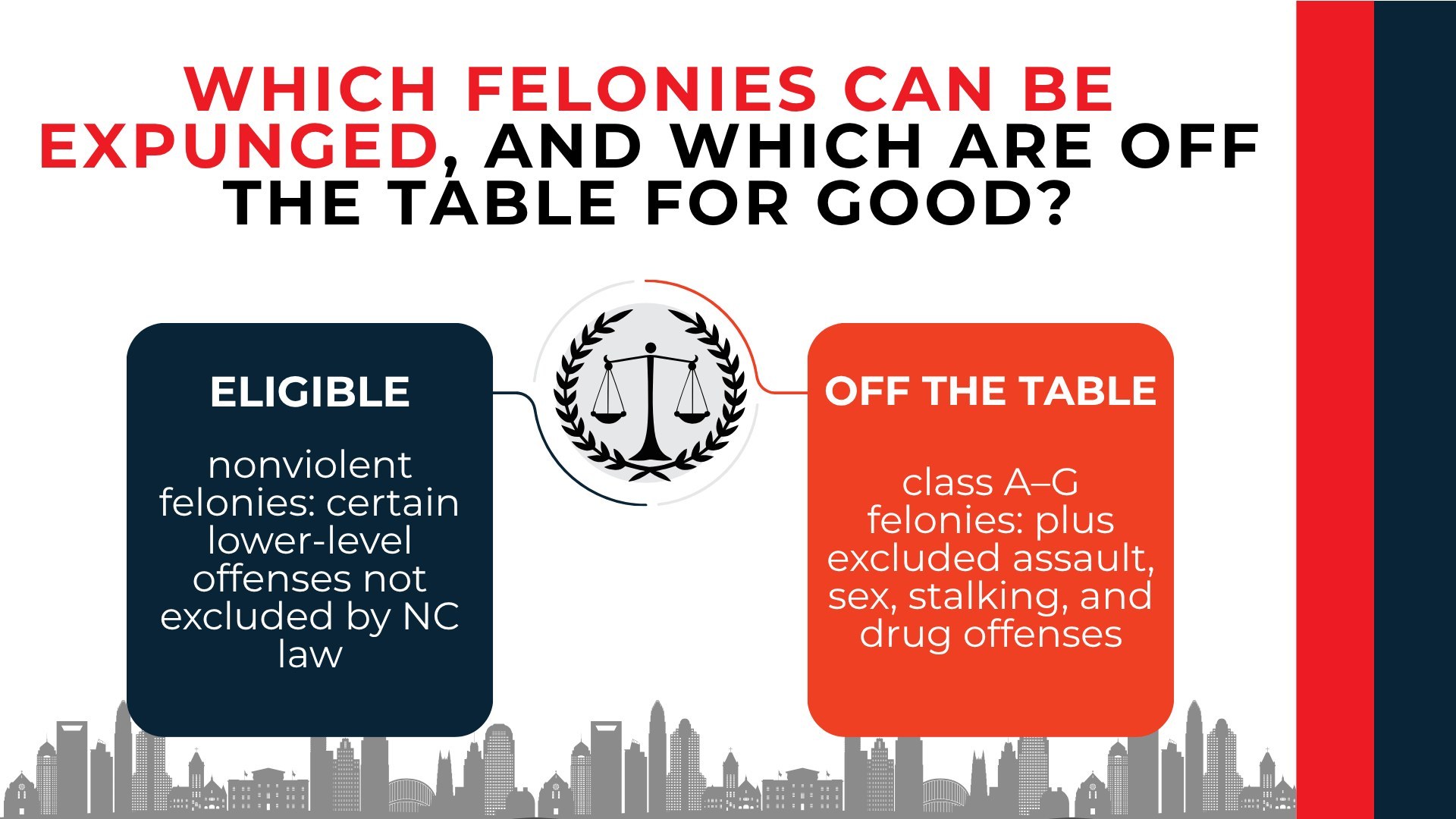
Which felonies can be expunged, and which are off the table for good?
Only a "nonviolent felony" can be expunged in North Carolina, and that term is defined narrowly by statute. Under N.C. Gen. Stat. § 15A-145.5(a), a nonviolent felony is essentially any felony except the ones the law leaves out, and the exceptions are broad.
Permanently ineligible offenses include:
• All Class A through G felonies. The statute excludes every felony in Classes A through G.
• Any offense with assault as an element, along with certain sex offenses and stalking offenses.
• Specific drug-trafficking felonies: trafficking in methamphetamine or heroin, and possession with intent to sell or deliver cocaine, among others.
• A handful of other categories, including food-contamination offenses, certain breaking-or-entering variants, and commercial-vehicle felonies.
Here's why this section matters more than any other: North Carolina has no general "sealing" law: no catch-all that hides an old record. Every bit of relief comes from a specific statute. If your conviction falls into one of the excluded classes, there is no petition to file. Before you spend energy on the waiting-period math below, you need to know which class your felony was. That single fact decides whether the rest of this applies to you at all.
How long do you have to wait before you can file?
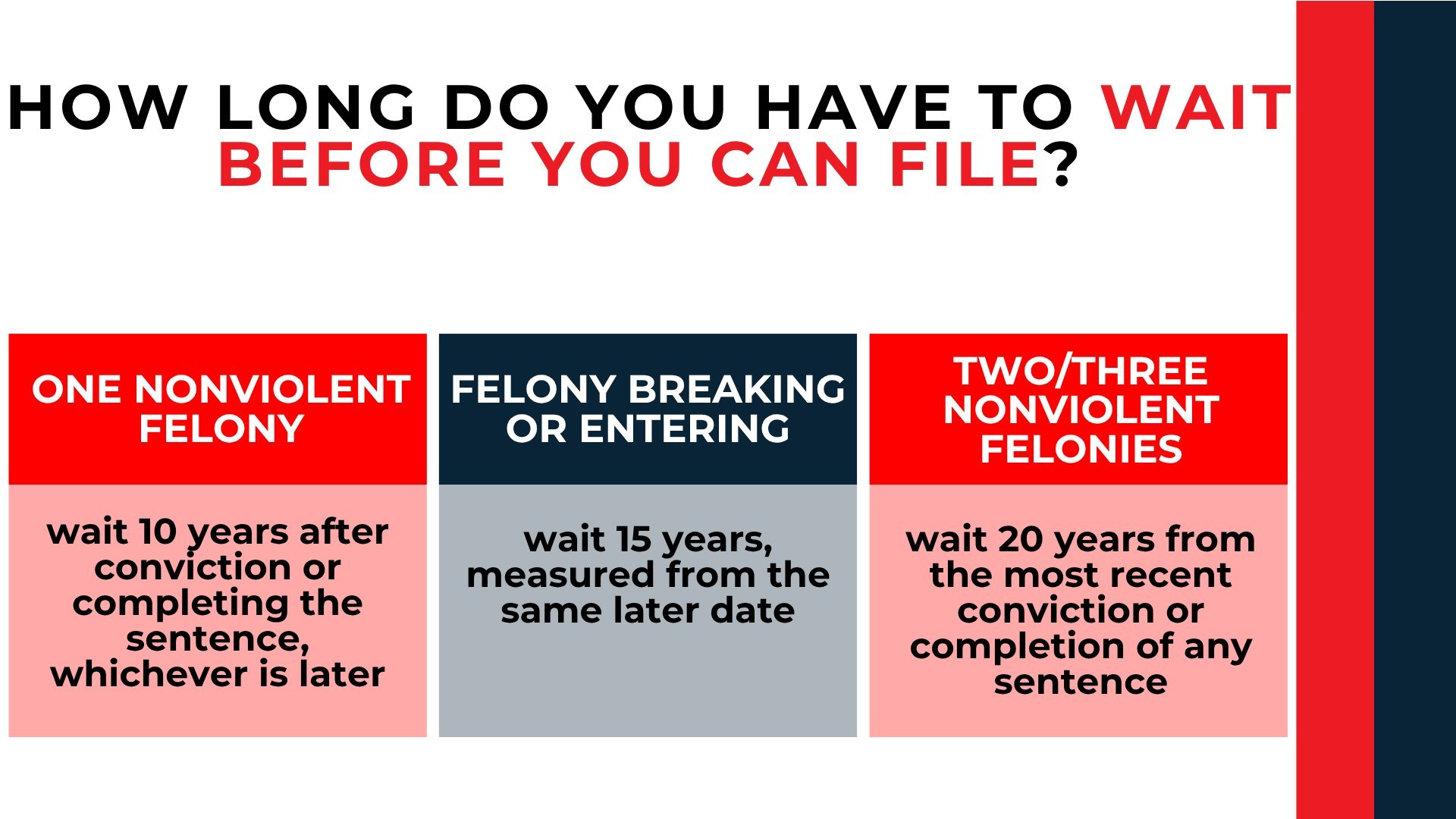
For a single nonviolent felony, the wait is 10 years. But the clock doesn't start where most people think it does.
Under § 15A-145.5, the waiting period runs from the later of two dates: the date of your conviction, or the date you finished serving everything the sentence required. That last date includes active time, probation, and post-release supervision. So if you were convicted in 2013 but didn't finish probation until 2016, your ten years runs from 2016, not 2013.
The waiting periods, by situation:
• One nonviolent felony: 10 years after conviction or completion of the sentence, whichever is later.
• One felony breaking-or-entering under G.S. 14-54(a): 15 years, measured the same way.
• Two or three nonviolent felonies: 20 years from the most recent conviction listed, or from completing the sentence on any of them, whichever is later.
This is the point people most often get wrong, so it's worth being precise: probation and post-release supervision are part of the sentence. Until they're done, the clock hasn't started.
What else could disqualify you, even if the felony itself qualifies?
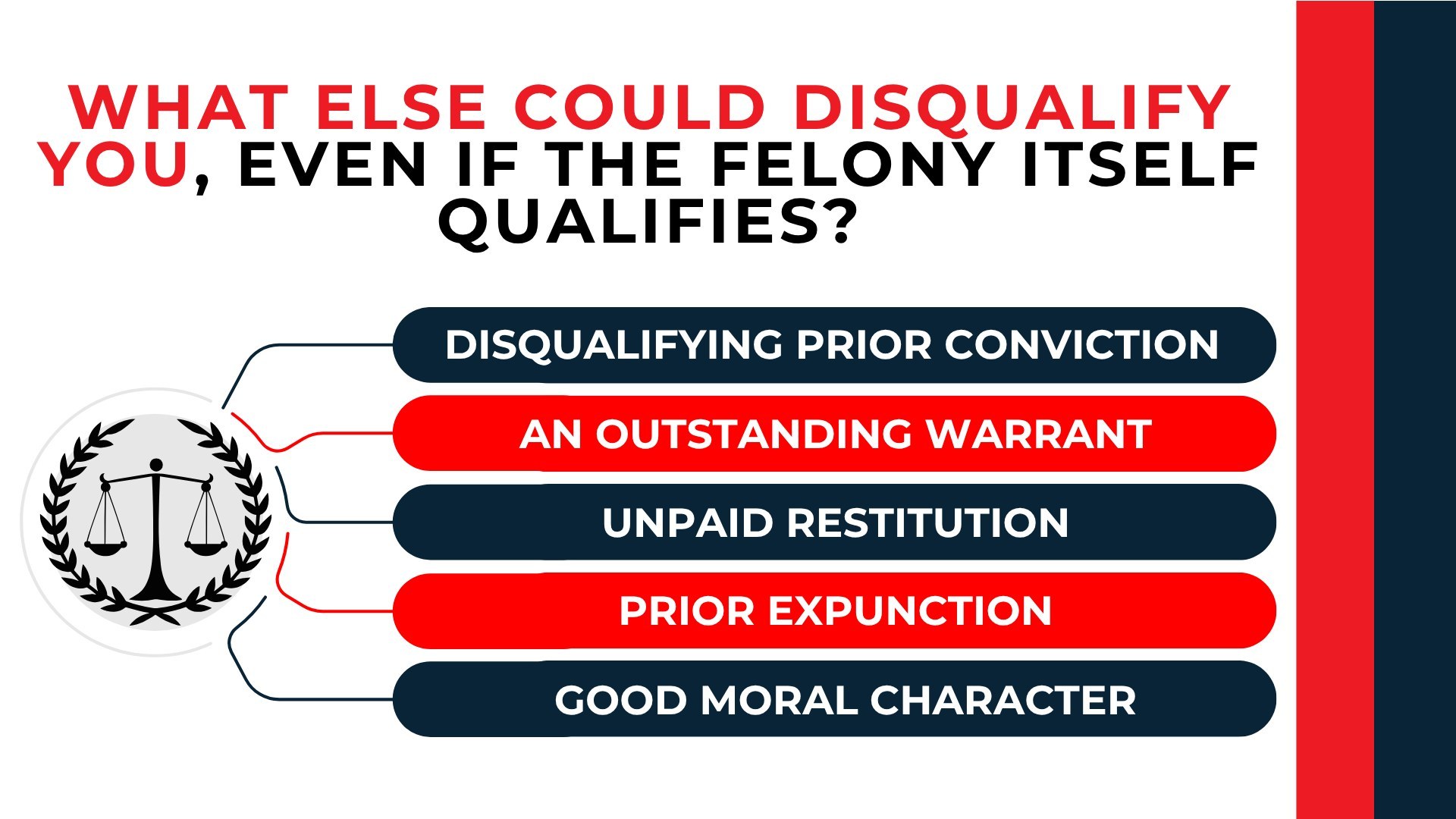
Clearing the offense class and the waiting period isn't the whole test. Several separate conditions can block an otherwise-eligible petition:
• A disqualifying prior conviction on your record.
• An outstanding warrant or a pending criminal charge: you can't have open matters when you petition.
• Unpaid restitution ordered in the case.
• A prior expunction you've already used under this same statute, with only narrow multi-county exceptions.
• Good moral character. The statute requires you to show you've maintained good moral character during the waiting period. That means the years since the conviction have to hold up to scrutiny, not just the conviction itself.
The practical takeaway: eligibility has more moving parts than the offense-and-timeline math suggests. Several of these, especially a prior expunction or an old restitution balance you'd forgotten, are exactly the kind of thing that surfaces in the mandatory record checks rather than in your own memory. This is where a confident self-assessment tends to break down.
What if you were young when the felony happened?
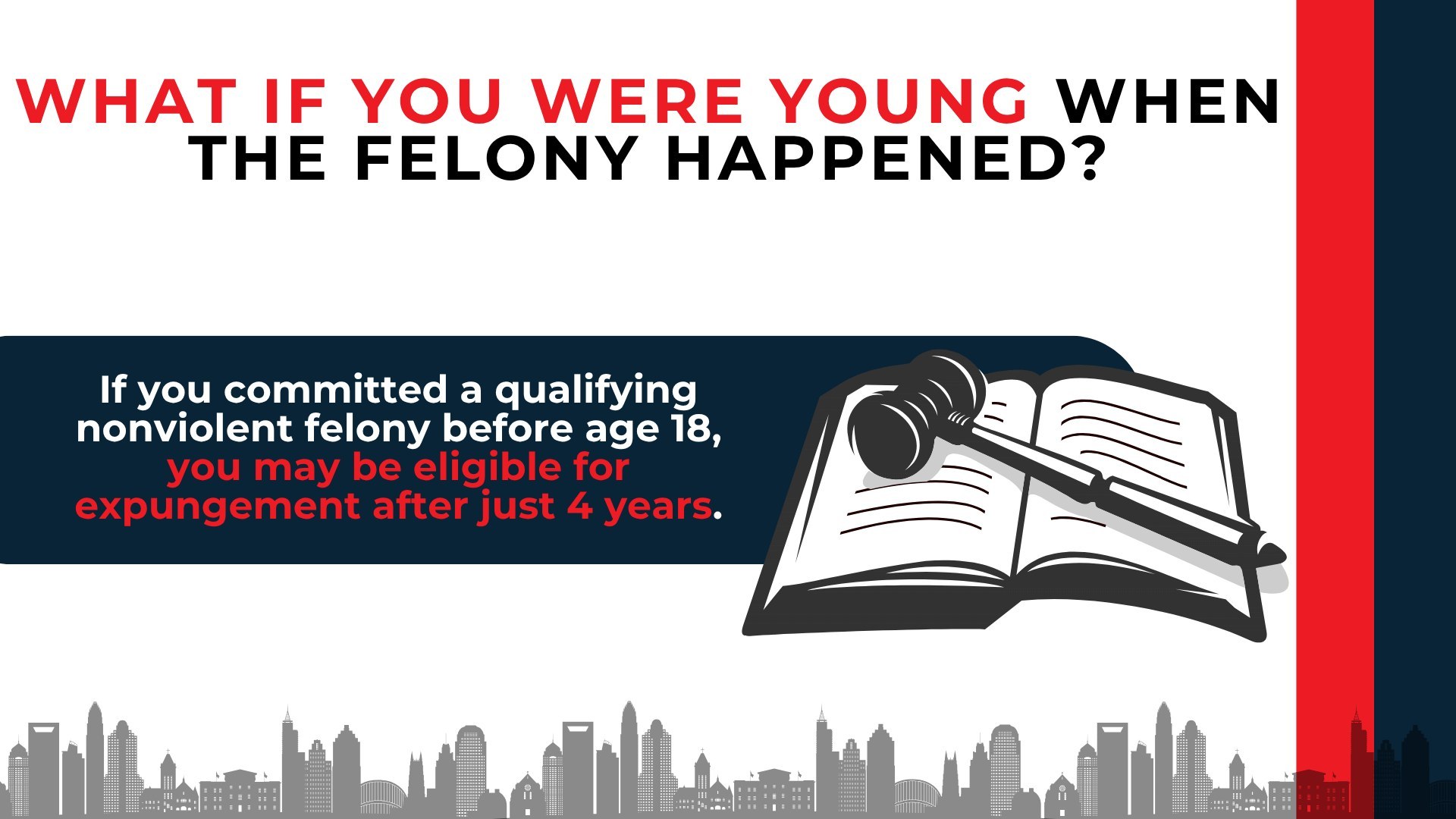
If you committed the felony before turning 18, a shorter path may be open to you. Under N.C. Gen. Stat. § 15A-145.4, an under-18 nonviolent felony (again excluding Class A through G) can be expunged after just a 4-year wait. That's a fraction of the ten-year adult track.
This pathway has its own conditions: you generally must have been a first offender, with no prior misdemeanor or felony conviction and no new conviction during the waiting period. But if a ten-year clock had you counting yourself out, and the offense happened when you were a minor, it's worth looking at this provision before you give up.
How do you find out whether your felony qualifies?
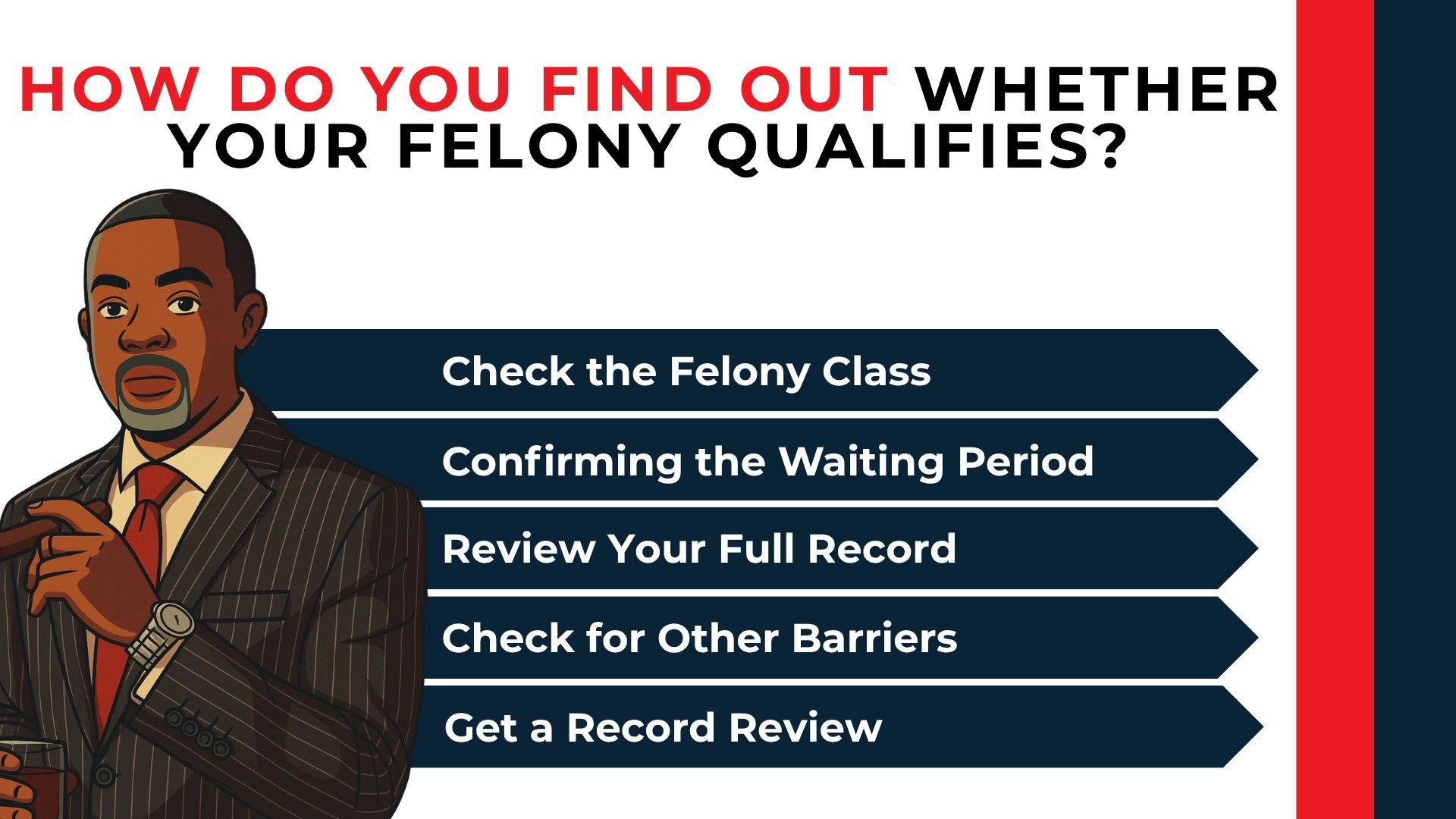
Your eligibility comes down to four things: the class of your felony, how many years have passed since you finished the entire sentence, whether anything else on your record disqualifies you, and whether you've kept a clean record since. There are too many variables, and too many that surface only in the official record checks, to resolve reliably from an article.
Worth knowing before you decide it's not worth the trouble: nationally, only a small number of people obtain it. Most often, that's because they never file. Among those who do clear their records, wages rose by more than 22% within a year. And you're not as alone in eligibility as the low filing numbers suggest. 18% of North Carolina felony convictions involve people with no prior record at all, the group most likely to qualify.
Three steps to take now:
• Pin down the class of your felony conviction. This is the single fact that decides whether relief is even possible.
• Count your years from the day you finished everything: active time, probation, and post-release supervision, not from the conviction date.
• Have your record reviewed before you file, so a prior charge, an old restitution balance, or a previously used expunction doesn't derail a petition after you've filed.
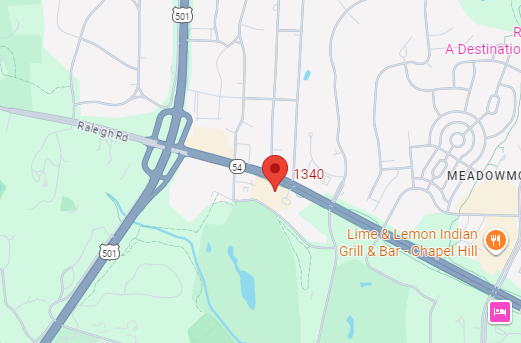
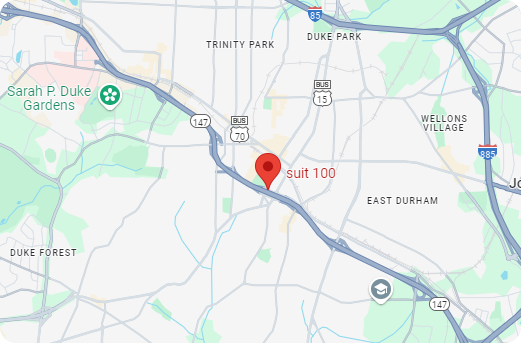
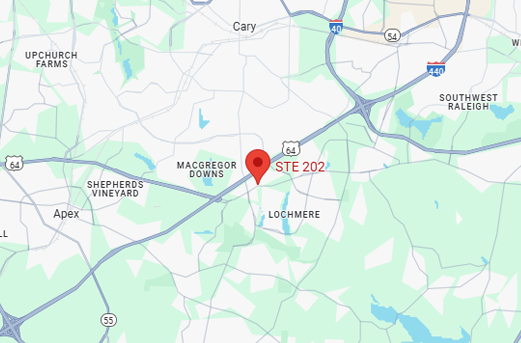
That review is where experience matters, and it's the work Patrick Roberts Law PLLC does. Patrick Roberts is a Raleigh criminal defense attorney and a former Assistant District Attorney in Wake, Johnston, and New Hanover counties: the dual perspective of someone who understands, from the inside, how the state builds and evaluates a case and how prosecutors read a record. With more than 24 years of practice and thousands of North Carolina cases handled, the firm can tell you quickly whether your felony fits inside § 15A-145.5's narrow eligibility window and whether anything on your record would stop a petition before it starts. With offices in Raleigh, Durham, Chapel Hill, and Cary, the firm can review your specific conviction and give you a real answer about your case.
Strategic Criminal Defense and Record Relief in North Carolina
Navigating the complexities of North Carolina’s expungement statutes requires a thorough understanding of state sentencing laws and trial procedure. Attorney Patrick Roberts provides the legal expertise necessary to evaluate eligibility for criminal record relief. With a legal career spanning over two decades, including service as a former Assistant District Attorney across three North Carolina prosecutorial districts, Mr. Roberts brings dual perspective to the defense and petitioning process. His firm’s practice is built upon a foundation of strategic advocacy, ensuring that individuals seeking to clear their records receive a precise assessment of their legal options under current North Carolina statutes.
• Academic Background: Graduate of Duke University School of Law (ranked Number 7 in Best Law Schools and Number 9 in Criminal Law for the 2026–2027 period) and Johns Hopkins University (ranked No. #7 in National Universities).
• Extensive Trial & Litigation Experience: Handled more than 250 felony sex crime cases and completed more than 75 jury trials in state and federal courts, with extensive litigation experience in high-level felonies, white-collar crimes, complex drug trafficking, and sex offense allegations.
• Former Prosecutor Perspective: Leveraging four years of experience as an Assistant District Attorney across three North Carolina counties—New Hanover County, Johnston County, and Wake County—providing critical insight into the state’s procedural requirements for petitioning court records and evaluating post-conviction relief.
• Martindale-Hubbell AV Preeminent Rating: Maintains this peer-nominated designation for professional legal ability and ethical standards consistently from 2018 through 2026.
• National Association of Distinguished Counsel (NADC): Selected to the organization's "Nation’s Top 1 Percent" list in 2015, 2016, 2017, 2018, 2025, and 2026.
• Statutory Relief Experience: Successfully petitioned state courts for the legal removal of individuals from the North Carolina Sex Offender Registry, demonstrating deep familiarity with the complex, statute-driven requirements for post-conviction relief.
• National Criminal Defense College (NCDC): Graduated from the intensive Trial Practice Institute, completing a curriculum focused on the procedural mastery and forensic analysis necessary for high-stakes criminal litigation.
Client Review
With Patrick Roberts’ help our son was given the best possible outcome* – a dismissal of all charges. His planning and communication skills ensured that our family and our out of state co-counsel were all clear on his vision and guidance. Bottom line is this: having Patrick Roberts on our side gave us great comfort during a long, tumultuous ordeal. We would never hesitate to call on him again if needed.
— Review by a verified client via Avvo
Peer Endorsement
Patrick Roberts is a fierce advocate on behalf of his clients... Patrick Roberts also has an excellent command of many of the technical issues... that are implicated in cases involving technology, forensic science and the like. I've watched him dissect hostile witnesses on the stand, and argue for excellent outcomes for his clients.
— Peer endorsement by a fellow North Carolina trial attorney via Avvo
Disclaimer: The client reviews and peer endorsements displayed are authentic testimonials and comments provided by clients and fellow attorneys. Every case is unique and must be evaluated individually; past client experiences and case results do not guarantee, promise, or predict similar outcomes in any future matter.
Case Results
• First-Degree Statutory Sex Offense: The client was accused of engaging in non-consensual sexual activity involving a minor. In developing the defense strategy, Attorney Patrick Roberts utilized multiple expert resources, including a polygraph expert, a child psychology and forensic expert, and a private investigator. By presenting comprehensive and well-founded evidentiary arguments, the defense successfully persuaded the Assistant District Attorney to dismiss all charges against the client.
○ Outcome: Dismissed
• Out-of-State Probation Violation Allegation: The client faced a probation violation charge while living in another state. Mr. Roberts demonstrated that the issues arose from administrative miscommunication between the client and supervision officers, leading the court to dismiss the violation entirely and conclude supervision.
○ Outcome: Dismissed
• Sex Offender Registry Removal: The client sought legal assistance to manage their status on the sex offender registry. Following the completion of the mandatory statutory registration period, Mr. Roberts successfully petitioned the court to have the client's name removed from the registry.
○ Outcome: Client's name removed from the sex offender registry after the period ended in 2026.
*Disclaimer: Case outcomes depend upon a variety of factors unique to each case. Prior results do not guarantee or predict a similar outcome in any future legal matter.
Navigating Your Expungement Eligibility
The path to expunging a felony conviction in North Carolina is defined by complex statutory requirements, strict waiting periods, and narrow eligibility criteria. Attempting to navigate the petition process without a precise understanding of your offense class and statutory standing often leads to procedural errors that can result in denial. If you are seeking to clear your record and restore your opportunities, it is essential to have an experienced legal advocate conduct a thorough assessment of your eligibility.
Patrick Roberts Law PLLC represents clients throughout North Carolina in complex criminal defense matters, maintaining a dedicated focus on serving individuals across Wake County—including Raleigh, Cary, Apex, Holly Springs, Garner, and Fuquay-Varina. To determine if your specific conviction qualifies for relief under state law, please contact our office for a professional consultation by visiting www.patrickroberts.law.
To maintain a high standard of service and thorough oversight for each client, we manage a restricted caseload.
Disclaimer: This article is general legal information, not legal advice. Reading it does not create an attorney-client relationship. North Carolina expunction law is almost entirely statutory and subject to legislative change, and how these rules apply depends on the specific facts of your case. For guidance on your situation, consult a licensed North Carolina attorney.