
Drug Trafficking Mandatory Minimum Sentences Defense in Raleigh, NC
Get Free Consultation

DRUG TRAFFICKING DEFENSE IN RALEIGH, CARY AND ALL OF WAKE COUNTY NC
Drug Trafficking Mandatory Minimum Sentences Defense in Raleigh, NC
Under North Carolina General Statutes (N.C.G.S.) § 90-95(h), a drug trafficking conviction triggers non-discretionary mandatory minimum active prison terms and mandatory statutory fines ranging up to $500,000. Unlike typical felony offenses governed by the North Carolina Structured Sentencing Act—which grant trial courts discretion to consider mitigating factors, prior record levels, or intermediate punishments such as probation—trafficking statutes mandate active state prison sentences determined strictly by the aggregate weight or mixture volume of the controlled substance.
Patrick Roberts Law helps people facing serious drug allegations understand what prosecutors must prove, how the sentencing rules apply, and which legal challenges may be available. An early assessment matters because the strongest defense may involve disputing the trafficking charge itself, not simply asking for a lower sentence after conviction.
Speak with Patrick Roberts Law about your case. Call 919-746-7206 to request a consultation.
What Is a Mandatory Minimum Sentence for Drug Trafficking?
When Does a Drug Charge Become Trafficking?
The legal label “trafficking” does not necessarily mean the government has evidence of sales or a distribution operation. North Carolina law can authorize trafficking charges based on possession, transportation, sale, manufacture, or delivery of certain quantities of controlled substances. A person accused of possessing drugs may therefore face a trafficking charge when the statutory threshold is met, even without proof of a completed sale. The relevant threshold differs by substance, and how the weight is determined can become a major issue in the case. The presence of multiple people, shared locations, disputed testing, or uncertainty about who controlled the substance may also affect what prosecutors can establish.
A mandatory minimum is a prison term the court generally must impose when a person is convicted of a qualifying offense. Under North Carolina General Statute § 90-95(h), trafficking penalties depend on the controlled substance and the quantity involved, while the specific conduct charged can impact eligibility for certain statutory relief exceptions. Statutory minimum and maximum terms are prescribed for each applicable tier. These requirements are different from the ordinary felony sentencing framework, which considers the offense class and the person’s prior record level. Trafficking statutes can require imprisonment regardless of an otherwise favorable criminal history.
How Much Prison Time Can North Carolina Drug Trafficking Carry?
The sentencing tier is tied to the particular drug and quantity specified in § 90-95(h). For offenses to which the following general classifications apply, the prescribed terms include: Class H trafficking: 25 to 39 months; Class G trafficking: 35 to 51 months; Class F trafficking: 70 to 93 months; Class E trafficking: 90 to 120 months; Class D trafficking: 175 to 222 months; and Class C trafficking: 225 to 282 months. These are statutory minimum–maximum sentence pairs, not a prediction of any individual sentence. Under N.C.G.S. § 90-95(h)(6), trafficking sentences are also statutorily required to run consecutively with, rather than concurrently to, any other sentence being served.
Can a Judge Sentence Someone Below a Mandatory Minimum?
There are limited statutory avenues for a sentence different from the standard trafficking term. Under § 90-95(h)(5), a judge may reduce the fine, impose a prison term below the mandatory minimum, or suspend the prison sentence entirely and impose probation upon finding that the defendant provided qualifying substantial assistance in the identification, arrest, or conviction of accomplices or co-conspirators. That relief rests strictly on statutory requirements and judicial findings; simply expressing willingness to cooperate is not enough. A separate provision, § 90-95(h)(5a), creates a narrow path for certain people convicted of trafficking by possession, or conspiracy to traffic by possession, when every listed condition is established, including limits involving prior felony drug convictions, violence, and quantity tiers.
Defending the Charge Before Sentencing Becomes the Central Issue
Although mandatory minimums are often the first concern, defense preparation begins with the government’s evidence. Questions that may need examination include: Possession and knowledge—did the accused knowingly possess or control the substance? Search and seizure—was the traffic stop, search, warrant, or detention lawful? Drug identification and weight—do reliable laboratory testing and documentation support the substance and quantity alleged? Chain of custody—can the state adequately account for the evidence from collection through testing? Statements and witnesses—were statements obtained lawfully, and are cooperating witnesses or informants credible? Each issue must be considered in context to identify the issues that actually matter in your case.
SENTENCING CLASSIFICATIONS
Trafficking Tiers & Relief

Class H
25 to 39 Months
Class G
35 to 51 Months
Class F
70 to 93 Months
Class E
90 to 120 Months
Class D
175 to 222 Months
Class C
225 to 282 Months
Substantial Assistance
Judicial Relief Path
WHAT TO EXPECT & JURISDICTIONAL DIFFERENCES
What to Do If You Face a Trafficking Charge
It is natural to want to explain yourself immediately, especially if you believe the allegations are mistaken. However, statements, consent to searches, and communications with other people involved in the investigation can affect the evidence. Consider these steps: Avoid discussing the facts of the case with investigators before obtaining legal advice. Do not destroy, edit, or conceal texts, records, devices, or other potentially relevant evidence. Keep track of court notices, release conditions, and scheduled appearances. Write down the details you remember about the stop, search, questioning, or arrest for your attorney. Contact criminal defense counsel promptly so evidence and deadlines can be evaluated.
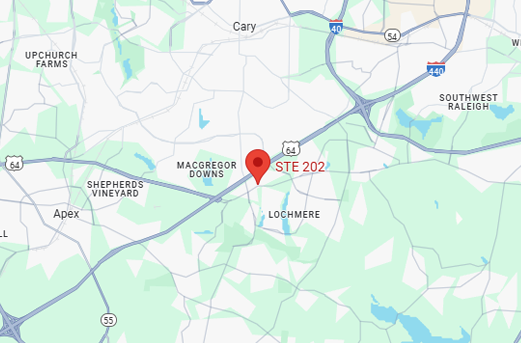
Our law firm represents clients across Wake County, including Raleigh, Cary, Apex, Holly Springs, Garner, and Fuquay-Varina. We maintain a selective intake process to ensure that each client receives the focused professional attention their case requires.
State Versus Federal Drug Trafficking
A Raleigh drug investigation may be prosecuted in North Carolina state court or, in some circumstances, federal court. These systems have different statutes and sentencing frameworks. Federal drug trafficking charges often arise under 21 U.S.C. § 841 and can involve federal mandatory minimum terms and distinct relief provisions. State-law exceptions do not automatically apply in federal court.
Knowing which court has the case and which statute appears in the charging documents is essential to an accurate explanation of potential penalties. North Carolina trial judges have no statutory authority to deviate from state mandatory minimums except under narrow legal provisions, specifically qualifying substantial assistance or judicial relief eligibility. Consequently, mounting an immediate pre-trial defense focused on constitutional Fourth Amendment suppression is critical.
WHY CHOOSE PATRICK ROBERTS?
Experienced Legal Advocacy
Attorney Patrick Roberts offers expertise in this high-stakes area, leveraging over two decades of courtroom experience, including 20 years as a dedicated criminal defense attorney.
Former Prosecutor Perspective
Served as an Assistant District Attorney across three North Carolina districts (2003–2007), providing critical insight into how the state constructs felony drug trafficking dockets.
Professional Recognition
AV Preeminent Rating maintained consecutively from 2018 through 2026. Selected to the National Association of Distinguished Counsel (NADC) as the Nation’s Top 1 Percent.
Proven Jury Trial Success
Mr. Roberts has tried more than 75 cases to jury verdict, including complex drug trafficking matters in both state and federal courts.
Trial-Tested Credentials
- AV Preeminent Rating: Martindale-Hubbell (2018–2026).
- Nation’s Top 1 Percent: National Association of Distinguished Counsel.
- Duke University School of Law Graduate.
- Trial Lawyers College Graduate & National Criminal Defense College (NCDC).
Client & Peer Feedback
"Patrick was professional, honest, and the best lawyer I could have asked for during a very tough situation. Throughout the process, he remained a constant calm and reassuring presence... His guidance and dedication made a difficult experience much more manageable."
"I endorse this lawyer's work. I have known A. Patrick Roberts for 5 years. He has always been very professional and very highly regarded in the criminal defense community. I have gotten to know Patrick over the years and come to highly respect him as a friend and an attorney."
Case Results
- Major Cocaine Trafficking Charges: Client faced mandatory minimum of over 14 years per count. Counsel persuaded court to bypass prison time. Outcome: Probation secured.
- Drug Trafficking and Firearm Possession: Challenged search warrant's validity based on unreliable informant data and insufficient evidence. Outcome: Case completely dismissed.
Disclaimer: Case outcomes depend upon a variety of factors unique to each case. Prior results do not guarantee or predict a similar outcome in any future legal matter.
Patrick Roberts Law provides dedicated representation for clients across North Carolina, serving Wake County communities including Raleigh, Cary, Apex, Holly Springs, Garner, and Fuquay-Varina.
Disclaimer: This article is general legal information, not legal advice. Reading it does not create an attorney-client relationship. North Carolina drug trafficking law is statutory and subject to legislative change, and how these rules apply depends on the specific facts of your case. For guidance on your situation, consult a licensed North Carolina attorney.
Decades of experience Decades of experience Decades of experience Decades of experience Decades of experience Decades of experience
Duke
Law
Graduate
24
Years of experience *
Ex-Prosecutor in
3
Counties
Former assistant district attorney
Contact Patrick Roberts
Facing criminal charges in North Carolina demands seasoned representation. Trust in the experience and dual perspective of Patrick Roberts. Reach out today for a confidential consultation.
-
Call Our Team
Calls answered 24/7






For more information on the selection criteria, go to www.martindale.com
*Each case is different and must be evaluated separately. Prior results achieved do not guarantee similar results can be achieved in future cases.