
North Carolina Drug Trafficking
Get Free Consultation

North Carolina Drug Trafficking
North Carolina Drug Trafficking
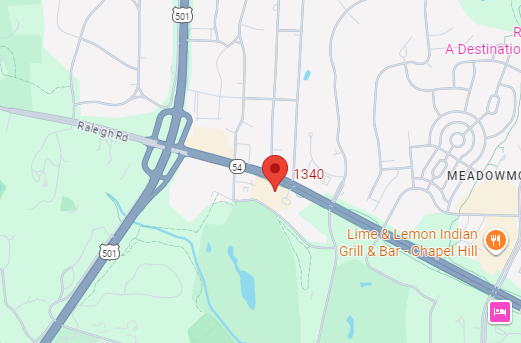
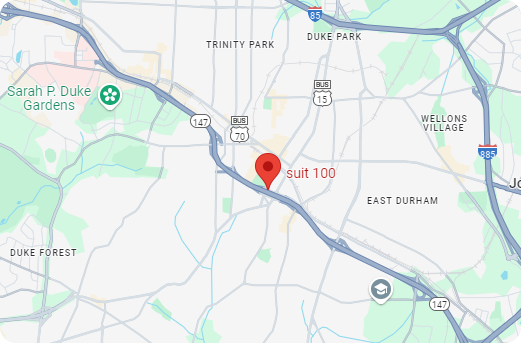
Patrick Roberts Law PLLC is a criminal defense firm in Raleigh, North Carolina, with additional offices in Durham, Chapel Hill, and Cary. The firm defends people charged with drug trafficking in North Carolina's state and federal courts.
Drug trafficking is one of the most serious charges the state and federal governments bring, and in North Carolina the mandatory prison terms it carries are fixed by the weight and class of the substance, regardless of a defendant's prior record. Patrick Roberts Law PLLC handles these cases at every stage, from investigation through trial and sentencing. Drug offenses are the largest single category of felony work in the state's courts — non-trafficking drug offenses alone made up 30% of all North Carolina felony convictions in FY2024— and Patrick Roberts brings more than two decades of experience defending them.
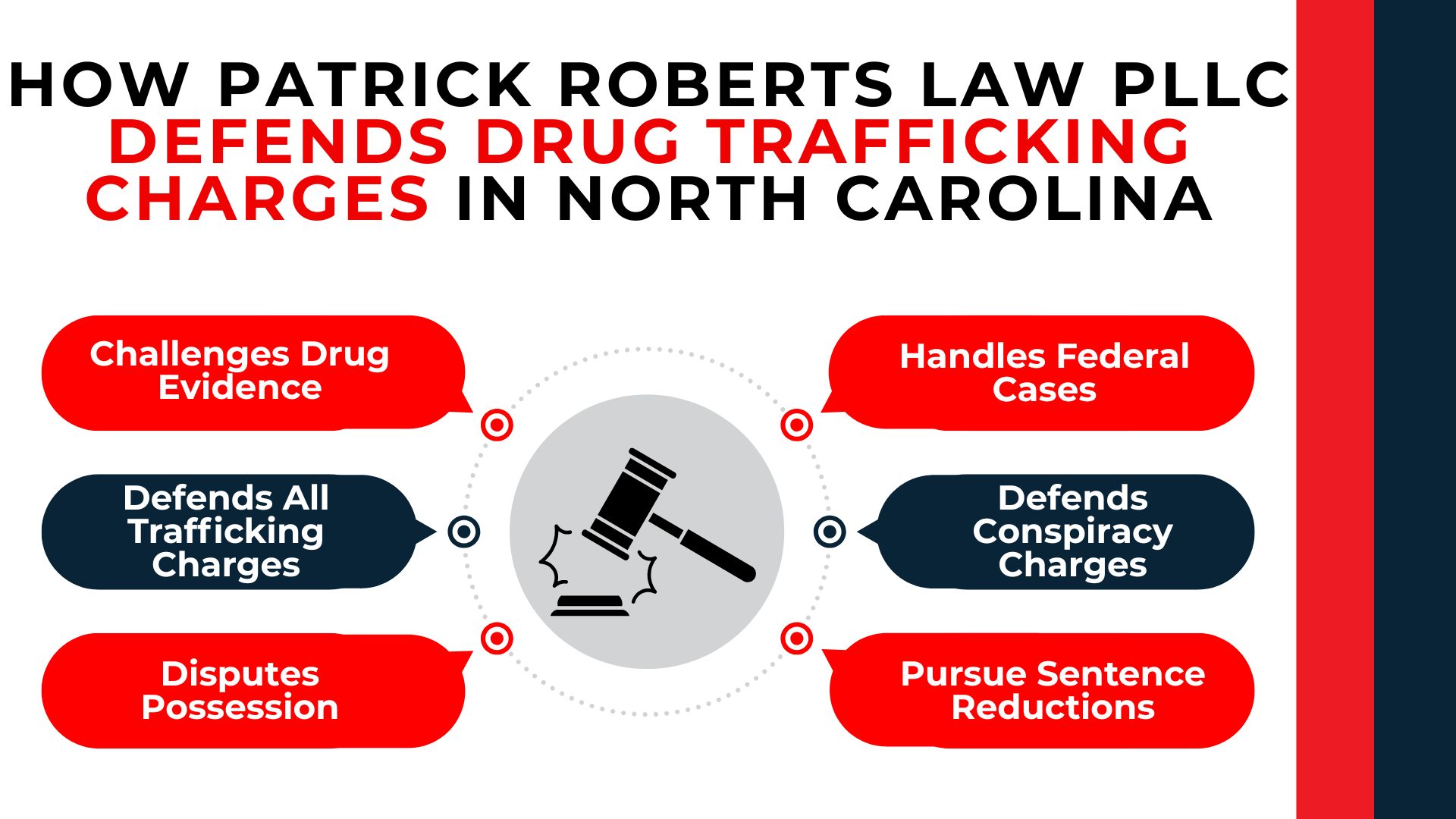
How Patrick Roberts Law Defends Drug Trafficking Charges in North Carolina
North Carolina groups trafficking offenses by substance and by weight, and each tier carries its own mandatory minimum sentence and fine. The sections below describe the charges Patrick Roberts Law PLLC defends and what each one carries under state law. Across every substance, the defining feature is the same: North Carolina's six trafficking tiers run from Class C (225–282 months) down to Class H (25–39 months), and each minimum is mandatory regardless of your prior record level. In an ordinary felony case, criminal history drives the sentence. In a trafficking case, the drug and its weight drive it, which is why the firm's defense often begins with the substance itself — how it was weighed, tested, and attributed to you.
Cocaine trafficking
Patrick Roberts Law PLLC represents clients charged with trafficking in cocaine, which under N.C. Gen. Stat. § 90-95(h)(3) carries mandatory penalties set by weight, starting at 28 grams. The lowest tier — 28 grams to under 200 grams — is a Class G felony carrying a mandatory minimum of 35 months, a maximum of 51 months, and a fine of at least $50,000, and the exposure climbs steeply as the alleged weight increases. Because these penalties are driven by the weight involved, Patrick Roberts scrutinizes how the state arrived at its number — whether packaging or filler was included in the weight, how the lab tested the sample, and whether the substance can lawfully be tied to you at all.
Heroin and opioid trafficking
Patrick Roberts Law PLLC represents clients charged with trafficking in opium, opiates, and opioids, including heroin, which under N.C. Gen. Stat. § 90-95(h)(4) begins at just four grams. The lowest tier — four grams to under 14 grams — is a Class F felony carrying a mandatory minimum of 70 months and a maximum of 93 months, with a $500,000 fine when the substance is heroin. That means the smallest heroin-trafficking charge carries a mandatory term of nearly six years plus a half-million-dollar fine. Opioid cases frequently involve prescription medication, disputed quantities, and questions about who actually possessed or controlled the substance — all issues Patrick Roberts examines closely.
Fentanyl and carfentanil trafficking
Patrick Roberts Law PLLC represents clients charged with trafficking in fentanyl and carfentanil, which North Carolina now punishes more harshly than almost any other drug. At 28 grams or more, the charge is a Class C felony carrying a mandatory minimum of 225 months, a maximum of 282 months, and a mandatory $1,000,000 fine under N.C. Gen. Stat. § 90-95(h)(4c) — an 18-plus-year floor and a seven-figure fine. Given how severe these penalties are, Patrick Roberts pays particular attention to how the substance was identified and weighed, since a fentanyl finding can transform the exposure in a case dramatically.
Marijuana trafficking
Patrick Roberts Law PLLC represents clients charged with trafficking in marijuana, which under N.C. Gen. Stat. § 90-95(h)(1) begins at more than 10 pounds. Marijuana trafficking starts as a Class H felony with a 25-month minimum and escalates to a Class D felony with a mandatory minimum of 175 months, a maximum of 222 months, and a fine of at least $200,000 at 10,000 pounds or more. Even as public attitudes shift — 88% of Americans now say marijuana should be legal for medical or recreational use — North Carolina's trafficking penalties remain in force, and Patrick Roberts defends these cases with the same rigor as any other trafficking charge.
Federal drug trafficking charges
Patrick Roberts Law PLLC represents clients charged with drug trafficking in federal court, where North Carolina cases carry their own distinct risks. Drug trafficking was the single largest category of federal sentencings for North Carolinians in FY2024 — 476 of 1,415 people (33.6%), ahead of firearms offenses. The outcomes are severe and the plea pressure is intense: 467 of those 476 cases (98.1%) were resolved by guilty plea, and only nine went to trial, while 463 of 476 (97.3%) resulted in a prison-only sentence, with a median federal sentence of 87 months and a mean of 110 months. Federal sentencing volume in the state is also concentrated in the Eastern District, which carries more than half of North Carolina's federal sentencing volume — 827 sentenced cases in FY2024, versus 305 in the Western and 283 in the Middle. Patrick Roberts is admitted to practice before all three federal districts in North Carolina, which allows the firm to represent clients wherever their case is brought.
Conspiracy and mandatory-minimum relief
Patrick Roberts Law PLLC represents clients charged with drug-trafficking conspiracy and works to secure relief from the mandatory minimums that otherwise define these cases. Under North Carolina law, the trafficking minimums normally cannot be suspended. The principal exception is the substantial-assistance provision in N.C. Gen. Stat. § 90-95(h)(5), which lets a judge go below the mandatory minimum when a defendant has provided substantial assistance to law enforcement. This same dynamic drives many federal cases: North Carolina's federal courts granted substantial-assistance departures in 35.1% of drug-trafficking cases in FY2024,well above the national rate of 20.3%, and nationally, 44% of federal trafficking offenders facing a mandatory minimum were relieved of it through the safety valve or substantial assistance. Patrick Roberts evaluates every available path to reducing or avoiding a mandatory sentence and advises clients on the real trade-offs each one involves.
Dedicated Representation for Wake County and Triangle Communities
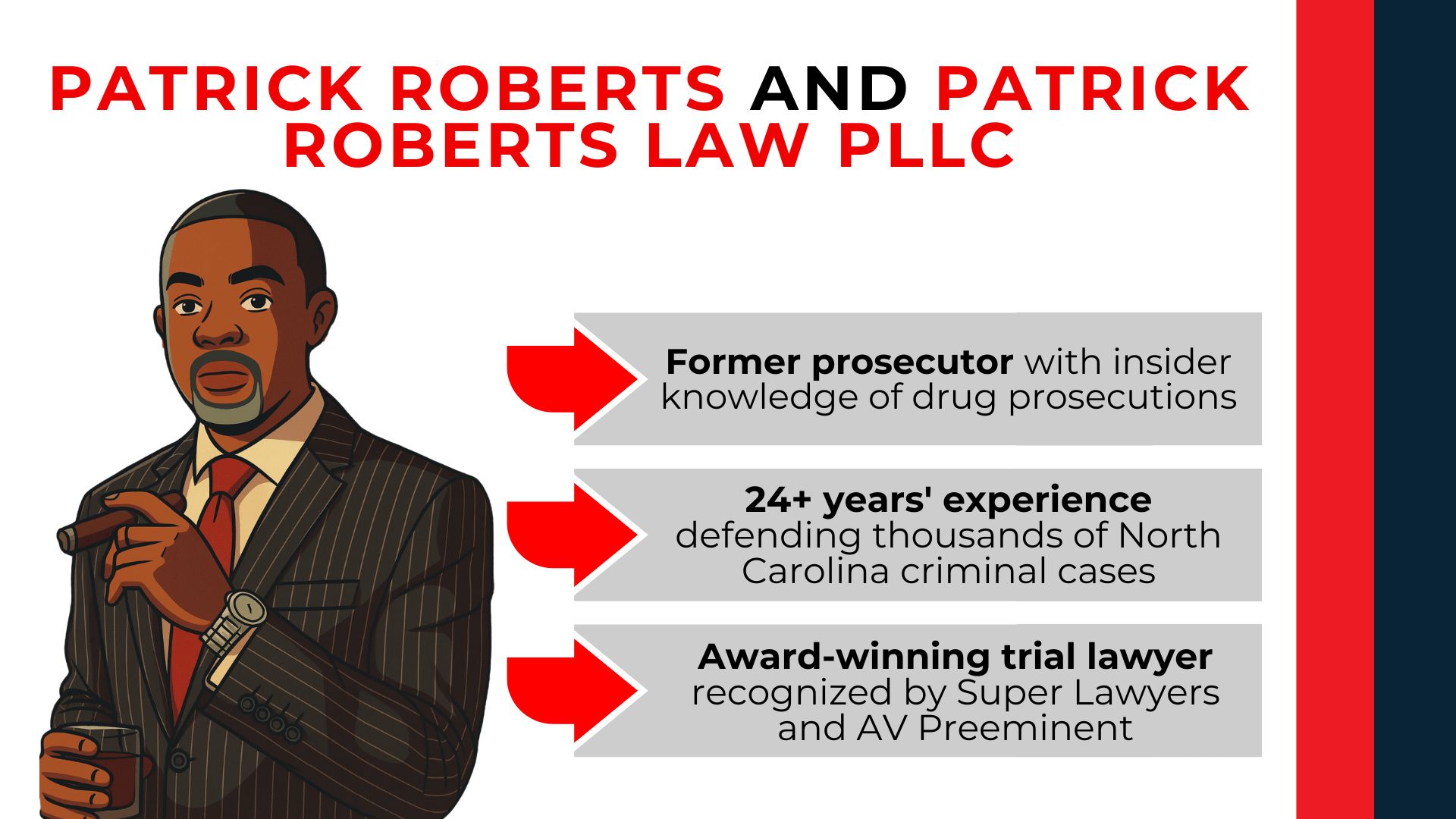
Patrick Roberts is the founder of Patrick Roberts Law PLLC and a former prosecutor, which gives him a firsthand view of how the state builds and evaluates a drug case from the inside. His approach is calm, direct, and strategic, built on meticulous preparation and aggressive trial advocacy. He has handled thousands of criminal cases across North Carolina, in a state where 98% of felony convictions are obtained by guilty plea — a system in which a lawyer prepared to try a case is often what changes the outcome.
Attorney Patrick Roberts provides expert legal defense for state and federal drug offenses throughout North Carolina. Having prosecuted drug trafficking cases and defended complex, multi-defendant federal drug conspiracies in trials lasting weeks, he possesses deep insight into the investigative strategies employed by government prosecutors. His extensive work alongside drug interdiction teams offers a valuable perspective when evaluating the validity of search warrants, confidential informant reliability, and wiretap evidence. Backed by more than 80 criminal jury trials taken to verdict and active admissions before the U.S. Court of Appeals for the Fourth Circuit and the United States Supreme Court, Attorney Roberts provides his clients with high-level advocacy and defense.
His credentials include:
-
B.A. from Johns Hopkins University (1997) (Top 7 in National Universities)
-
J.D. from Duke University School of Law (2000) (Top 7 in best law school and Top 9 in criminal law proram)
-
Graduate of Gerry Spence's Trial Lawyers College (2010), National Criminal Defense College Trial Practice Institute (2011), and White Collar Criminal Defense College (2013)
-
Licensed since 2002, 24+ years of experience
-
Admitted to practice before the North Carolina State Bar, U.S. District Courts for the Eastern, Middle, and Western Districts of North Carolina, the U.S. Court of Appeals for the Fourth Circuit, and the United States Supreme Court
-
Former Assistant District Attorney in Wake, Johnston, and New Hanover counties
-
Rated by Super Lawyers, AV Preeminent peer-rated by Martindale-Hubbell
-
Named among the Top 100 Trial Lawyers by The National Trial Lawyers (2017), Top 40 Under 40 (2013), and Nation's Top 1 Percent by the National Association of Distinguished Counsel (2017, 2018)
-
Has handled thousands of criminal cases across North Carolina
Patrick Roberts has also been appointed by Governor Pat McCrory to the North Carolina State Ethics Commission (2016) and the Juvenile Justice Planning Committee (2014), and has co-authored two legal books, one on defending internet sex crimes and another on search and seizure in DUI cases.
What to Expect When You Contact the Firm
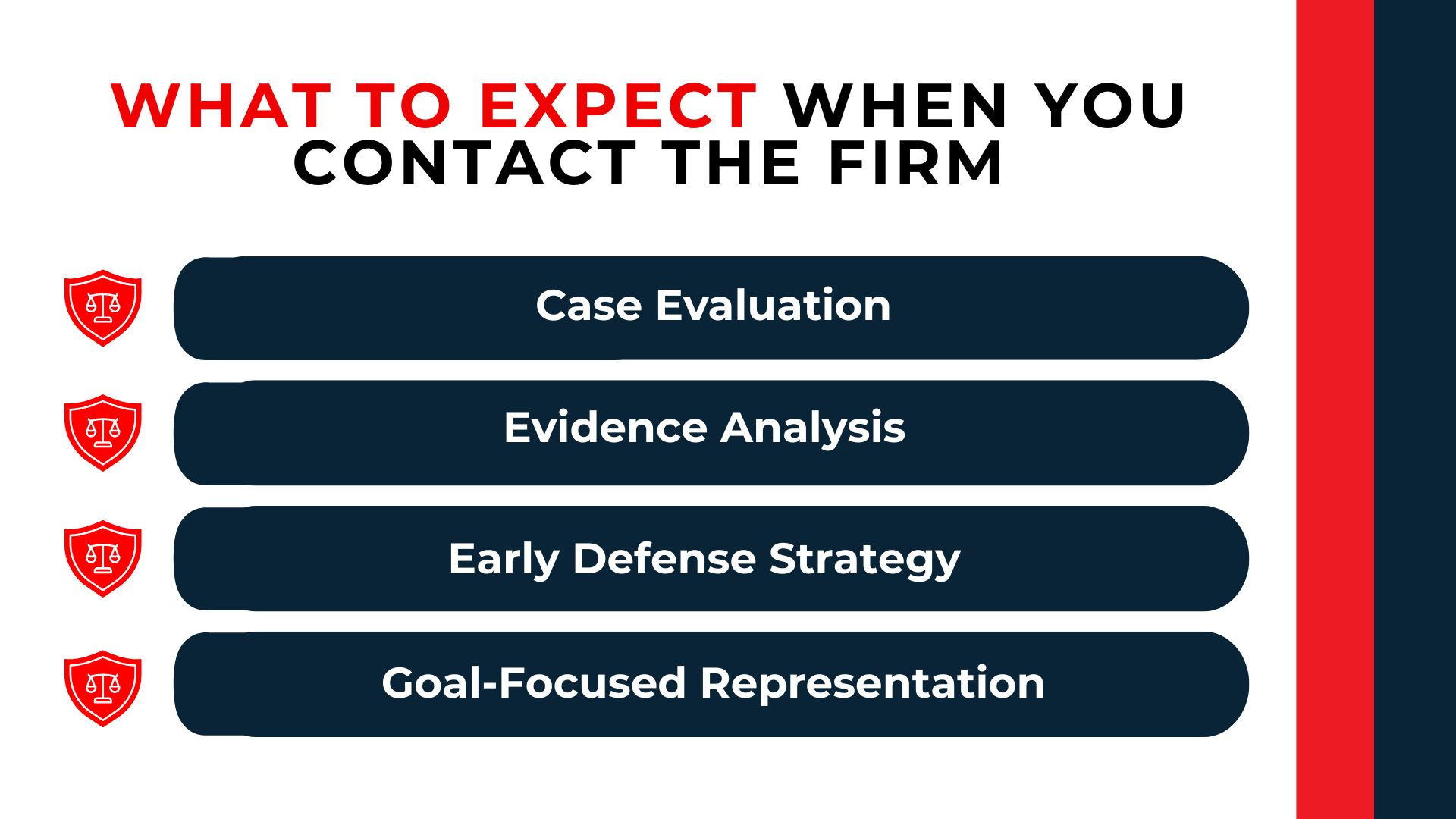
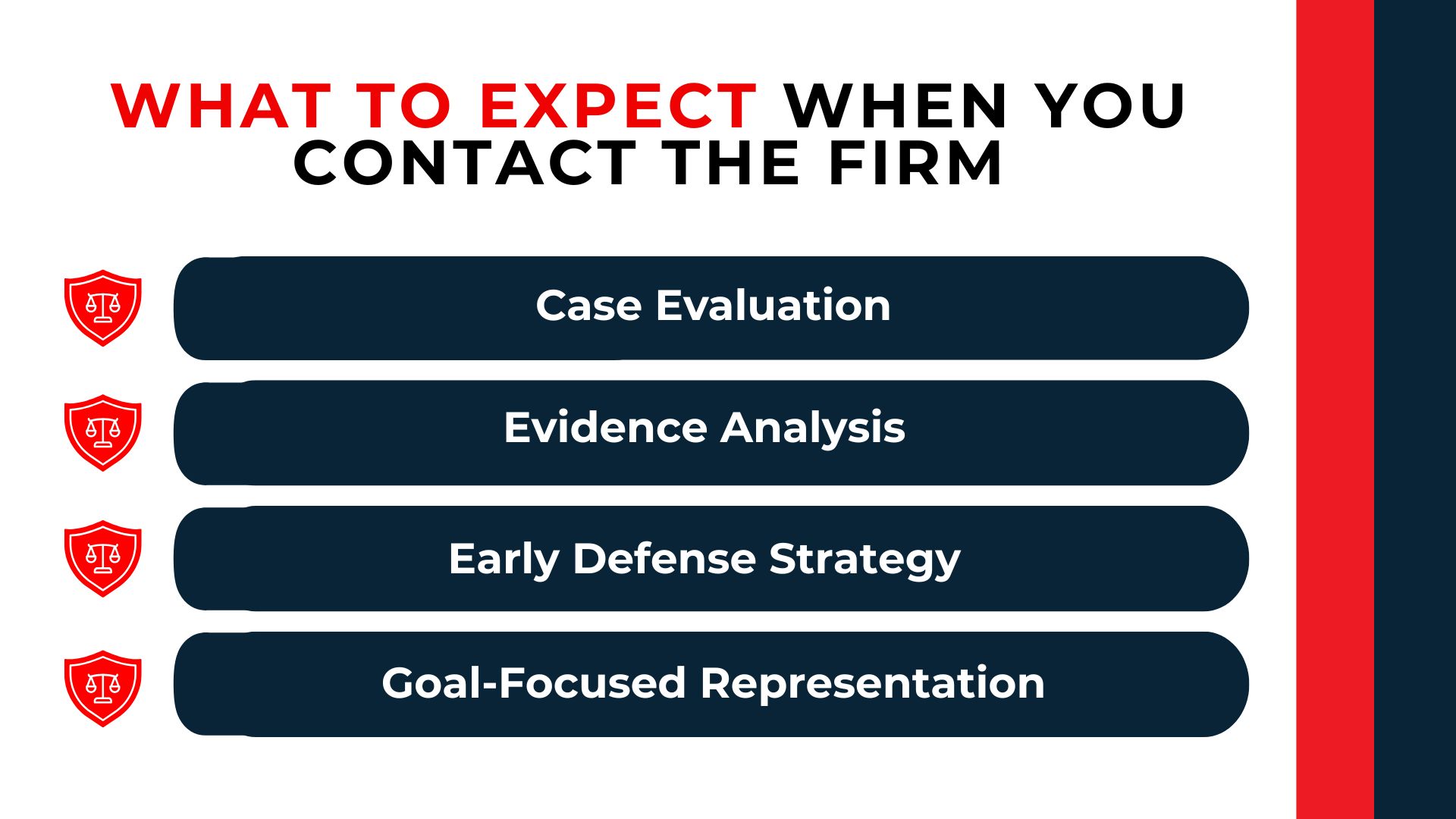
When you reach out to Patrick Roberts Law, the first step is a conversation about your situation: the charge or investigation you're facing, what the state or federal government appears to have, and where the case stands. From there, Patrick Roberts reviews the specifics — how the substance was seized, weighed, and tested, how any search was conducted, and how the alleged conduct maps onto the trafficking tiers described above.
Timing matters in these cases. In North Carolina's federal courts, drug cases take roughly nine to 15 months to resolve depending on the district, and decisions made early — before charges are filed or a plea is on the table — can shape everything that follows. The firm uses that time to investigate, to identify weaknesses in the government's proof, and to work toward the most favorable outcome available in your case, whether that is dismissal, a reduced charge, relief from a mandatory minimum, or trial.
Client Review
“When our son was arrested on sexual assault and rape charges, I was lost. I searched and found Patrick Roberts. I was impressed with his resume so we met with him and hired him. Now our son's case is over. It has taken a long time to get to the end of this experience, but I thank God for sending Patrick Roberts our way!” - Verified Client Review via Avvo.com
Peer Endorsement
"I endorse this lawyer without reservation. Patrick is plain outstanding. The highest remark I can give a lawyer is that I would ask him to represent me were I charged with a crime. I would ask Patrick and know that I would be in the very best of hands." - Verified Peer Endorsement via Avvo.com
Case Review
-
The Charges: Attorney Roberts’ client was charged with Felony Level I Trafficking in Heroin alongside simple possession of Schedule IV and Schedule VI controlled substances. A conviction for Level I Heroin Trafficking carries a mandatory active prison sentence of 70 to 93 months and a non-negotiable $50,000 fine under North Carolina law, with additional potential exposure of up to 140 days for the misdemeanor counts.
-
The Defense Approach: Defense counsel obtained and scrutinized the official law enforcement checkpoint plan governing the stop. The review identified critical constitutional flaws in the execution of the checkpoint. Based on these findings, the defense drafted a comprehensive motion to suppress the seized evidence under the Fourth Amendment.
-
The Result*: After reviewing the defense’s motion to suppress, the State dismissed the Felony Level I Heroin Trafficking charge before trial. The case was resolved through a plea to two misdemeanor possession charges, resulting in probation and zero active prison time.
*Disclaimer: Each case is different and must be evaluated separately. Prior results achieved do not guarantee similar results can be achieved in future cases.
Contact Patrick Roberts Law PLLC
If you are facing a drug trafficking charge or believe you may be under investigation in North Carolina, Patrick Roberts Law PLLC defends these cases in both state and federal court, from its offices in Raleigh, Durham, Chapel Hill, and Cary. To discuss your case with Patrick Roberts, contact the firm through patrickroberts.law.
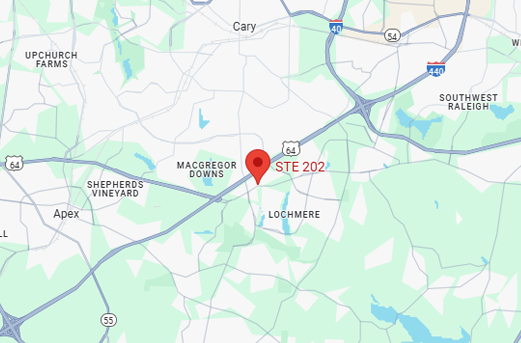
Mr. Roberts’ legal practice spans all North Carolina counties for high-stakes litigation, with a concentrated defense practice in Wake County—including Raleigh, Cary, Apex, Holly Springs, Garner, and Fuquay-Varina.
The firm maintains a selective caseload to protect the integrity of its defense strategies and the thoroughness of its trial preparation.
This article is general legal information about North Carolina law, not legal advice, and reading it does not create an attorney-client relationship. Every case turns on its own facts; for advice about your specific situation, consult a licensed North Carolina criminal defense attorney.
SEX OFFENSE LEGAL ADVISOR IN NORTH CAROLINA
WHY CHOOSE PATRICK ROBERTS?

Focused Expertise
Patrick Roberts is not just a sex crime lawyer. He is a skilled criminal case strategist, adept at working as a sexual misconduct defense lawyer and defending clients facing allegations of lewd conduct.
Extensive Courtroom Experience
As an experienced criminal defense lawyer for sex crimes, Attorney Patrick Roberts has handled thousands of criminal cases in his over two decades of experience, providing the depth of knowledge and courtroom skilled knowledge his clients deserve.
Well Respected by Fellow Attorneys
As a Sexual Offense Attorney, Attorney Roberts has received significant recognition from his peers, including opposing counsel, which further solidifies his reputation as a sound choice as your date rape defense lawyer when needed. Based on nominations from fellow lawyers and a rigorous vetting process, Attorney Roberts has been recognized as a Super Lawyer from 2013 – 2019. For more information on the selection criteria for Super Lawyers, go to www.superlawyers.com.
Tailored Client Approach
Focusing on his client's individual needs and circumstances, Mr. Roberts, as a defense lawyer and a criminal defense practitioner for sex offenses, offers a mix of professional and empathetic guidance tailored to each unique case. He understands the profound impact such charges can have on a client's life, providing thoughtful, compassionate, and competent representation.
Decades of experience Decades of experience Decades of experience Decades of experience Decades of experience Decades of experience
Duke
Law
Graduate
24
Years of experience *
Ex-Prosecutor in
3
Counties
Former assistant district attorney
Contact Patrick Roberts
Facing criminal charges in North Carolina demands seasoned representation. Trust in the experience and dual perspective of Patrick Roberts. Reach out today for a confidential consultation.
-
Call Our Team
Calls answered 24/7






For more information on the selection criteria, go to www.martindale.com
*Each case is different and must be evaluated separately. Prior results achieved do not guarantee similar results can be achieved in future cases.