
Expungements Durham County, NC
Get Free Consultation

EXPUNGEMENT LAWYER IN DURHAM AND ALL OF DURHAM COUNTY NC
DURHAM COUNTY EXPUNGEMENT ATTORNEY
Patrick Roberts Law is a criminal defense firm that represents people across Durham County, North Carolina who want to clear an old charge or conviction from their record. From its Durham office and its main office in Raleigh, the firm handles North Carolina expunctions. That is the legal process for removing a dismissed charge, a not-guilty finding, or certain convictions from your criminal record. If you are trying to find out whether something on your record can be erased, this is the right page.
An expunction (the term North Carolina law uses for expungement) is governed entirely by statute, specifically N.C. Gen. Stat. Chapter 15A, Article 5, §§ 15A-145 to 15A-160. North Carolina has no general "sealing" law. That means whether your record can be cleared depends on the exact wording of these statutes and on the version in effect when your petition is filed. Patrick Roberts Law works within those statutes. The firm determines what relief you qualify for and files a petition that meets every requirement.
How We Handle Durham County Expungements
As of the end of 2020, roughly 1,936,100 people were listed in North Carolina's state criminal-history file. The paths to clearing a record differ sharply depending on how your case ended and how old it is. Below are the specific situations we handle.
Can I Expunge a Dismissed Charge or Not-Guilty Verdict?
Yes. Under N.C. Gen. Stat. § 15A-146, criminal charges that were dismissed or ended in a not-guilty or not-responsible finding can be expunged. Under § 15A-146, relief is mandatory when a single charge is dismissed or an acquittal is entered on all related charges. Unlike expunctions of convictions, it is not blocked by a prior conviction or a prior § 15A-145.5 expunction, and there is no statutory waiting period. Between 2014 and 2023, 80.6% of criminal charges in North Carolina ended with no finding of guilt, making this the most common route to a clean record. However, where some charges in the same case ended in conviction on the same day, or the case has not reached final disposition, expunction becomes discretionary rather than mandatory. As of December 1, 2025, dismissals entered because a defendant was found incapable to proceed under G.S. § 15A-1008 are excluded from this relief. Patrick Roberts Law represents clients seeking expunctions of dismissed charges and acquittals throughout Durham County, ensuring every statutory prerequisite is satisfied.
Can I Clear an Older Nonviolent Conviction Under the Second Chance Act?
Yes, qualifying older nonviolent convictions can be cleared under N.C. Gen. Stat. § 15A-145.5, North Carolina's Second Chance Act. This law carries no age limit and serves as the state's primary adult record-clearing pathway. The waiting periods set by § 15A-145.5 run from the later of the conviction or the completion of your sentence, probation, or post-release supervision: three years for a single nonviolent misdemeanor (reduced from five years by S.L. 2025-71, effective July 9, 2025), seven years for multiple nonviolent misdemeanors, ten years for one nonviolent felony, fifteen years for a felony breaking or entering under G.S. 14-54(a), and twenty years for two or three nonviolent felonies. Under statutory definitions, "nonviolent" excludes Class A–G felonies, Class A1 misdemeanors, offenses with an assault element, certain sex-related and stalking offenses, and certain drug-trafficking felonies. Relief can also be barred by a disqualifying prior conviction, an outstanding warrant or pending charge, unpaid restitution, or a prior § 15A-145.5 expunction, and you must demonstrate good moral character during the waiting period. Because of these demanding standards, only 3,599 nonviolent-conviction expunctions issued under § 15A-145.5 statewide in fiscal year 2024–25. Patrick Roberts Law represents clients through every step of this process, evaluating whether your conviction qualifies as nonviolent and addressing any potential legal bars before filing.
Can I Expunge an Offense I Committed When I Was Young?
Yes. Individuals who committed an offense while young can access enhanced relief pathways under N.C. Gen. Stat. §§ 15A-145, 15A-145.2, 15A-145.3, 15A-145.4, and 15A-145.8A. These statutes generally require first-offender status and provide considerably shorter waiting periods than the general adult pathways: a two-year wait for an under-18 misdemeanor or underage-alcohol offense (§ 15A-145), a twelve-month wait for a drug first offender under 21 (§ 15A-145.2) or a toxic-vapor first offender (§ 15A-145.3) who completes a court-ordered program, a four-year wait for an under-18 nonviolent felony other than Class A–G (§ 15A-145.4), and parity relief for 16- and 17-year-olds convicted before December 1, 2019 (§ 15A-145.8A). Each requires no prior disqualifying convictions and clean behavior during the waiting window. The law firm represents young individuals seeking record clearance by analyzing their criminal history and applying the exact age-based statute that delivers relief.
What If I Was a Victim, or Innocent of the Charge?
If your criminal charge or conviction stems from being a victim or from factual innocence, North Carolina provides specialized, expedited expunction pathways under N.C. Gen. Stat. §§ 15A-145.6, 15A-145.9, 15A-147, and 15A-149. These provisions cover prostitution convictions (§ 15A-145.6, a three-year wait with no filing fee), convictions arising from human-trafficking victimization (§ 15A-145.9, no waiting period, though relief is discretionary and requires the court to find the offense was a direct result of victimization), charges resulting from identity theft or mistaken identity (§ 15A-147), and expunction following a Governor's pardon of innocence (§ 15A-149). Most of these pathways carry reduced or no waiting periods and waive standard filing fees. We represent individuals in these circumstances, preparing the necessary evidentiary showings and appearing at hearings to clear their names.
What to Expect When You Contact Us
The first step is a free consultation, where we review your record and tell you plainly whether an expunction is available to you. Because eligibility is set by statute, the firm starts by identifying which provision of Article 5 applies to your situation. It also checks whether any bar (a waiting period that has not run, an outstanding charge, unpaid restitution, or a prior expunction) stands in the way.
If you qualify, an expunction is initiated by a verified petition on the applicable Administrative Office of the Courts form. That petition is filed in the trial division of the county where the charge or conviction arose. For a Durham County case, that means the Durham County courts, and it is generally resolved after a hearing. Most petitions require AOC and State Bureau of Investigation background checks. The filing fee is $175 under §§ 15A-145(e) and 15A-145.5(g). It is waived if you cannot afford it, and not charged at all for prostitution, human-trafficking, identity-theft, mistaken-identity, DNA, and pardon-of-innocence expunctions. We prepare the petition, order the required checks, and appear with you.
About Durham County and Its Courts
Durham County covers 297.86 square miles and is bordered by Person, Granville, Wake, Chatham, and Orange counties. Its county seat is the city of Durham, the only incorporated municipality that predominantly exists within the county, known as the "Bull City" and the "City of Medicine." The county's population was 324,833 at the 2020 Census and about 347,200 in 2025, and the city's population was 283,506 at the 2020 Census. Duke University and Duke University Health System are the largest employers in the city, and the county is home to Research Triangle Park, North Carolina Central University School of Law, and Duke University School of Law.
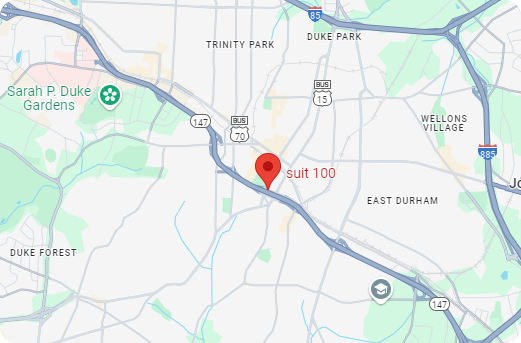
The Durham County courts that handle these petitions sit in the Durham County Courthouse (also called the Durham County Justice Center) at 510 S. Dillard Street, Durham, NC 27701. The courthouse opened in February 2013 with 20 courtrooms and houses the District Attorney's Office and the Sheriff's Office. The Clerk of Superior Court handles the administrative, clerical, and record-keeping functions of the District and Superior Courts. Durham County is Superior Court District 16 (formerly 14A) and District Court District 16 (formerly 14), renumbered by North Carolina House Bill 259 in 2024.
Navigating Durham County Expungement and Criminal Record Relief
Attorney Patrick Roberts, managing partner of Patrick Roberts Law PLLC, offers clients extensive expertise in navigating North Carolina’s complex statutes governing criminal record relief. With a legal career spanning over two decades, Mr. Roberts possesses a dual-perspective background, having served as both a former Assistant District Attorney across three North Carolina jurisdictions and as a dedicated defense attorney for the last 20 years. This experience allows him to provide sophisticated analysis of eligibility criteria under the Second Chance Act and other expunction provisions, ensuring that petitions for dismissed charges, not-guilty verdicts, and qualifying convictions are handled with procedural precision. Recognized by Martindale-Hubbell with the AV Preeminent rating and Client Champion Platinum designation for his commitment to client service and legal excellence, Mr. Roberts leverages his deep familiarity with the North Carolina court systems to help individuals secure the professional and personal clarity that comes with a cleared record.
Client Review & Peer Endorsement
"Attorney Roberts traveled out of state to assist with our case. From the beginning Attorney Roberts explained the gravity of the case and the possible outcomes. His work was thorough, extremely professional and of the highest caliber. We placed our complete trust in his representation. With the final sentencing, even with a mandatory minimum, Attorney Roberts was able to secure a substantially reduced sentence. We are immensely pleased with Attorney Roberts and his work." — Review by a verified client via Avvo
"I endorse this lawyer's work. I have known A. Patrick Roberts for 5 years. He has always been very professional and very highly regarded in the criminal defense community. I have gotten to know Patrick over the years and come to highly respect him as a friend and an attorney." — Peer endorsement by a fellow North Carolina trial attorney via Avvo
Disclaimer: The client reviews and peer endorsements displayed are authentic testimonials and comments provided by clients and fellow attorneys. Every case is unique and must be evaluated individually; past client experiences and case results do not guarantee, promise, or predict similar outcomes in any future matter.
Case Results
- Second Degree Sexual Offense Defense: Outcome: Dismissal
- Armed Robbery and Conspiracy Defense: Outcome: Dismissal
- Identity Theft Allegation: Outcome: Dismissed
- Sex Offender Registry Removal: Outcome: Client's name expunged from the sex offender registry.
*Disclaimer: Case outcomes depend upon a variety of factors unique to each case. Prior results do not guarantee or predict a similar outcome in any future legal matter.
WHY CHOOSE PATRICK ROBERTS FOR RECORD CLEARANCE
types of record relief we handle

RECORD RELIEF
Dismissed Charges
RECORD RELIEF
Not-Guilty Verdicts
RECORD RELIEF
Nonviolent Misdemeanors
RECORD RELIEF
Nonviolent Felonies
RECORD RELIEF
Juvenile Offenses
RECORD RELIEF
Victimization Relief
RECORD RELIEF
Identity Theft Relief
RECORD RELIEF
Pardon of Innocence
EXPUNGEMENT LEGAL ADVISOR IN NORTH CAROLINA
WHY CHOOSE PATRICK ROBERTS?
Focused Expertise
Patrick Roberts possesses extensive expertise in navigating North Carolina’s complex statutes governing criminal record relief, including the Second Chance Act and various expunction provisions.
Extensive Courtroom Experience
As an experienced defense attorney for 20 years and a former Assistant District Attorney across three North Carolina jurisdictions, Attorney Patrick Roberts provides sophisticated analysis and procedural precision.
Well Respected by Fellow Attorneys
Recognized by Martindale-Hubbell with the AV Preeminent rating for eight consecutive years (2018–2026), reflecting the highest level of professional excellence and ethical standing in the legal community.
Tailored Client Approach
Recognized with Martindale-Hubbell's Client Champion Platinum distinction, our firm is committed to responsiveness, quality advocacy, and exceptional client satisfaction through every step of the record-clearing process.
Clear Your Record with Experienced Legal Guidance Clear Your Record with Experienced Legal Guidance Clear Your Record with Experienced Legal Guidance
Clear Your Record with Experienced Legal Guidance
Whether your objective is to clear your criminal record in Durham County or you require high-stakes defense representation anywhere in North Carolina, securing qualified legal counsel is essential. At Patrick Roberts Law, we provide comprehensive assistance for expungements under the Second Chance Act and other relevant statutes, alongside a robust criminal defense practice that serves clients across the entire state. We offer dedicated representation for those in Wake County—including Raleigh, Cary, Apex, Holly Springs, Garner, and Fuquay-Varina—as well as comprehensive legal support for complex cases throughout North Carolina.
To evaluate your eligibility for expungement or to discuss your specific legal defense needs, we invite you to contact our office for a professional consultation. Please visit our website at www.patrickroberts.law to learn more about our practice areas and how Patrick Roberts Law can assist you in navigating the complexities of the North Carolina legal system.
Disclaimer: This article is general legal information, not legal advice. Reading it does not create an attorney-client relationship. North Carolina expunction law is almost entirely statutory and subject to legislative change, and how these rules apply depends on the specific facts of your case. For guidance on your situation, consult a licensed North Carolina attorney.
Former assistant district attorney
Contact Patrick Roberts
Facing criminal charges in North Carolina demands seasoned representation. Trust in the experience and dual perspective of Patrick Roberts. Reach out today for a confidential consultation.
-
Call Our Team
Calls answered 24/7






For more information on the selection criteria, go to www.martindale.com
*Each case is different and must be evaluated separately. Prior results achieved do not guarantee similar results can be achieved in future cases.