Blog / Sexual exploitantion of minors

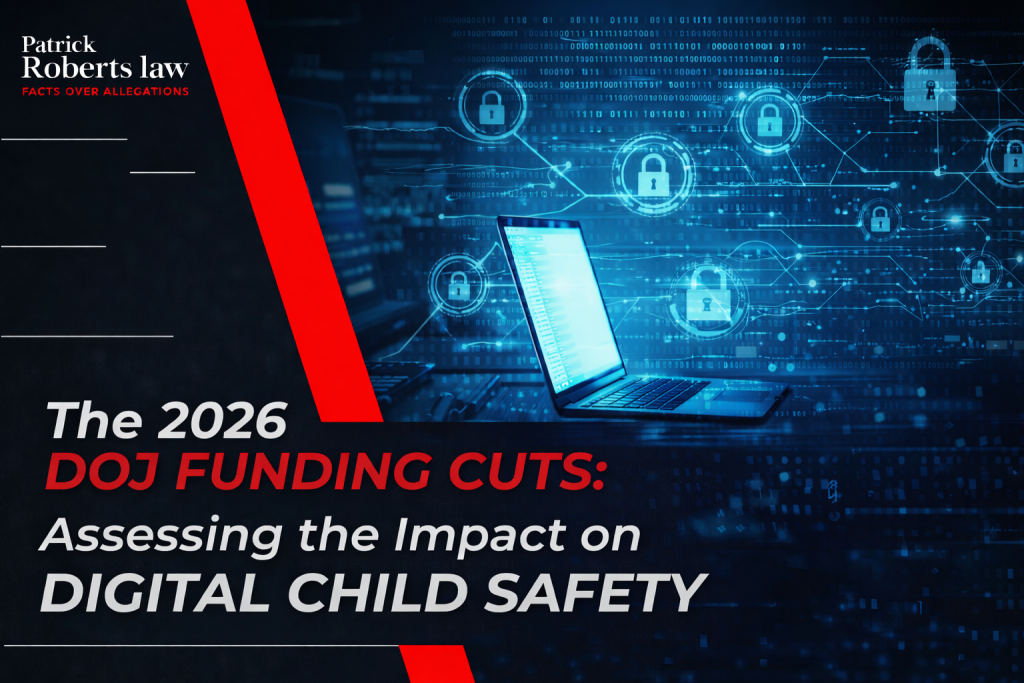
The 2026 DOJ Funding Cuts: Assessing the Impact on Digital Child Safety

The DOJ Austerity Mandate

At the start of 2026, federal funding for the U.S. justice system was adjusted under a Department of Justice budget initiative. The reallocation involves a $850 million reduction in funding for various safety and justice programs, resulting in a 15% decrease in total grant-making resources for the affected agencies.

Over the last three decades, federal funding for task forces was directed toward organizational expansion. The 2026 budget reduction, however, decreased funding for online apprehension technology. Consequently, the Internet Crimes Against Children (ICAC) Task Force Program is experiencing a significant shift in its operational capacity.

The $850 Million Deficit and "Reactive Triage"

This $850 million funding deficit has compelled federal and state agencies to adopt a strategy of 'Reactive Triage.' For decades, ICAC units were empowered to act as proactive investigators, conducting the long-term undercover operations necessary to dismantle predator networks before a child was harmed. In 2026, that preventative capacity has effectively vanished. Agencies are now forced to prioritize reactive processing, allocating dwindling resources strictly to crimes that have already been committed and documented via CyberTips. This shift represents a critical regression in public safety; the deterrent effect of proactive policing is being superseded by a backlogged system struggling to manage the sheer volume of incoming data. Without these essential funds, law enforcement is being transitioned from an active deterrent force into a diagnostic body that largely catalogs crimes after the fact.

What is the ICAC Task Force?

To understand why these cuts are so damaging, one must first recognize the sheer scale of the ICAC mission. Established in 1998 under the Protection of Children from Sexual Predators Act, the ICAC Task Force Program is a national network of 61 coordinated task forces. It represents a massive collaborative effort involving more than 5,400 federal, state, and local law enforcement and prosecutorial agencies.

The Two-Fold Mission:

  1. Response and Investigation: Developing effective strategies to investigate and prosecute internet crimes, ranging from the distribution of Child Sexual Abuse Material (CSAM) to the active solicitation of minors in chat rooms and gaming forums.
  2. Forensic Excellence: Providing the technical expertise and forensic tools necessary to extract evidence from an ever-evolving array of digital devices.

Historically, the ICAC network has demonstrated remarkable operational efficiency. In fiscal year 2024 alone, the program conducted over 203,000 investigations, resulting in more than 12,600 arrests. These figures were made possible by a robust and stable funding environment. However, as 2026 progresses, the fundamental mechanics of these investigations are beginning to erode. While the protective 'shield' provided by these task forces has not been removed entirely, it has been thinned to a degree that compromises its core functionality and threatens public safety.

The Erosion of Training and National Coordination

The 2026 funding deficit has directly impacted the appropriations for the National Center for Missing and Exploited Children (NCMEC), an organization that serves as the vital infrastructure for the entire ICAC network. NCMEC provides the centralized data, specialized tools, and coordination efforts that allow local task forces to function as a unified national front. Without full funding, this "lifeblood" of the system is restricted, leading to a visible collapse in professional development and inter-agency synergy.

The 2025 Training Deficit

A significant turning point in this situation was the cancellation of the 2025 National Law Enforcement Training on Child Exploitation. For years, this summit served as a primary venue for prosecutors and investigators to coordinate strategies against evolving threats, such as AI-generated illegal content and decentralized hosting on the dark web. Without this centralized exchange of information, investigators must now adapt to rapid technological advancements using existing strategies that may not account for the most recent developments.

The Risk of Systemic Fragmentation

The deficit has also crippled the real-time support network that NCMEC facilitates. When an officer in a rural department encounters a novel encrypted messaging application, they no longer have the immediate access to national protocols or expert technical assistance previously provided by the NCMEC-ICAC partnership. This creates a fragmented landscape where the efficacy of an investigation—and the safety of a child—is dictated by the limited resources of a specific county rather than the collective strength of a national network.

Impact of Budget Reductions on Digital Forensic Standards and Automation

The 2026 budget proposal includes a 71% reduction in federal grants for state and local forensic backlogs, representing a $24 million cut to these programs. This reduction in funding has significant implications for the field of digital forensics, which is characterized by high costs and rapid technological change. As agencies navigate these "austerity mandates," the primary shift has been toward a more automated approach to processing evidence.

This trend, often called "push-button forensics," involves the use of automated scripts to scan devices for specific data or contraband. While these tools allow overworked technicians to process large volumes of data quickly, they operate with different standards than a manual review. Automated tools are highly efficient at flagging known files, but they may not account for the technical context of those files—such as the presence of malware, unauthorized remote access, or system-generated artifacts that occurred without user intervention.

Without the budget to fund manual reviews by certified forensic examiners, the reliance on automation introduces a higher potential for "false positives." From a legal standpoint, this creates a significant margin of error within the evidentiary chain. Consequently, in 2026, the accuracy of digital evidence is becoming a more central point of debate in the courtroom. Legal teams must now apply more rigorous scrutiny to ensure that automated findings are verified and that the technical limitations of the software are fully understood before the results are used in a prosecution.

The "50-Mile" Rule

Beyond the hardware and software cuts, the 2026 austerity measures have introduced a grueling layer of administrative "red tape." Federal and state agents are now operating under strict mandates to justify every penny spent, which has had a chilling effect on the speed of investigations.

The Burden of Justification

  • The 50-Mile Rule: In many jurisdictions, any travel beyond a 50-mile radius from an agent's home station now requires specific high-level approval. In states with large rural areas, like North Carolina, this creates a logistical nightmare. An agent may need to travel 100 miles to coordinate with a local affiliate on a time-sensitive search warrant, only to be delayed by 48 hours waiting for "travel justification" approval.
  • Administrative Bloat: Agents report spending more time behind a desk writing expense reports and travel justifications than they do in the field. In a field where hours matter, these delays can be the difference between an intervention and a victimization.

The ICAC Hub-and-Spoke Infrastructure

To fully grasp the implications of the 2026 funding reductions, it is essential to recognize that the ICAC Task Force is not a monolithic federal agency centralized in Washington, D.C. Rather, it functions as the central nervous system of modern child protection—a sophisticated, multi-jurisdictional network. The program’s efficacy is built upon a 'hub-and-spoke' operational model, an architectural design that empowers localized enforcement through the support of regional expertise and national resources.

1. Regional Lead Agencies: The Operational "Hubs"

The "Hubs" of this network consist of 61 regional lead agencies across the United States. These are typically state-level organizations, such as the North Carolina State Bureau of Investigation (SBI).

  • The Funding and Tech Backbone: These lead agencies serve as the primary conduits for federal DOJ grants. They manage high-cost, enterprise-level forensic software licenses—such as those from Cellebrite and Magnet Forensics—which can cost upwards of $20,000 per user.
  • How the Vetting and Triage System Works: When a "CyberTip" is generated at the national level (often via NCMEC), it is routed to the regional lead agency. Expert analysts perform initial triage, vetting the data and verifying the severity of the lead before passing it to the appropriate local jurisdiction for field work.

2. Affiliate Agencies: The "Spokes"

The "Spokes" are the more than 5,400 local and state affiliate agencies—police departments and sheriff's offices—that plug into this regional infrastructure.

  • Leveling the Playing Field for Local Police: This is the most brilliant aspect of the model. A small-town department in a rural county rarely has the tax base to afford a $100,000 digital forensic lab or specialized servers. Under this collaborative framework, they can leverage the regional hub’s tools and expertise to process evidence.
  • The Boots on the Ground: These affiliate officers are the ones who perform the physically demanding work of the mission: executing search warrants, conducting victim interviews, and making arrests within their communities.

What Happens When the System Breaks Down

The 2026 austerity measures target the very foundation of this model. When federal grants for technical assistance are slashed, the lead "hubs" lose their ability to provide specialized resources to their "spoke" affiliates.

If a regional hub can no longer afford to renew its high-end forensic licenses, every local police department connected to it effectively loses the ability to process mobile evidence. This technical decline means that in 2026, the quality of a child's protection may once again depend on the wealth of their specific zip code—reversing decades of progress in making sure every community has the same tools to fight crime.

Federal Resource Allocation and the Epstein Files Transparency Act

The 2026 fiscal year has presented a unique set of challenges for the Department of Justice, defined by a historic effort to balance public transparency with a tightening federal budget. Central to this landscape was the final implementation of the Epstein Files Transparency Act, which concluded on January 30, 2026. This mandate resulted in the disclosure of approximately 3.5 million documents, a task that required an unprecedented mobilization of over 500 Department of Justice and FBI personnel to conduct page-by-page privacy redactions.

This focus on historical records has created significant pressure on current law enforcement operations. The labor required for this project was roughly equivalent to five years of work for a standard task force dedicated to investigating internet crimes against children. Because so many personnel and funds were redirected to this document review, active child exploitation task forces have faced tighter budgets and more competition for federal grants. This situation highlights the difficult administrative challenge of meeting legal requirements for transparency in closed cases while still providing enough resources to fight modern criminal threats.

Operational Risks in Gaming and Social Media

While the public’s attention is captured by the names found in historical flight logs, law enforcement professionals warn that the real, active threat has migrated to platforms that the general public often views as "safe" for children.

Platforms such as Roblox and Discord are significant areas of focus for online safety experts. Roblox, a social ecosystem with over 66 million daily active users—40% of whom are under age 13—presents unique moderation challenges.

  • Interaction Patterns: Risks often involve the use of social features like chat, gifting, and avatar customization to establish rapport. The distribution of in-game currency, such as "Robux," is a recognized method used to build familiarity with minors.
  • Platform Migration: Communication often shifts from monitored platforms to external applications like Discord or Snapchat. On Discord, private servers can facilitate unmonitored interactions, making it more difficult for platform moderators or guardians to oversee exchanges.

Factors Impacting Law Enforcement

As digital environments become more complex, federal investigative agencies are managing significant resource shifts. Recent budget adjustments within the Department of Justice have affected the ICAC Task Force Program.

Monitoring 3D virtual environments requires specialized software and personnel trained in specific digital subcultures. Due to reductions in training budgets—including the cancellation of the previous year’s National Training—there is a focus on how investigative agencies will maintain the technical capabilities required to address these evolving digital risks.

The Three Pillars of ICAC

The Internet Crimes Against Children (ICAC) Task Force Program is built upon a multidisciplinary strategy designed to address every stage of digital exploitation. These three pillars are designed to function in harmony, but in the 2026 fiscal environment, the degradation of one inevitably leads to the collapse of the others.

1. Investigations and Prosecutions

This pillar is the core of law enforcement’s mission—the identification and apprehension of offenders. In previous years, ICAC units engaged in aggressive proactive investigations, such as undercover sting operations in peer-to-peer networks and encrypted forums.

However, with the 2026 budget redirected toward historical transparency projects, the investigation pillar has become primarily reactive. Federal and state agents are now buried under an avalanche of "CyberTips" from the National Center for Missing and Exploited Children (NCMEC). According to 2024–2025 data, enticement reports alone saw a 192% increase, and reports involving Generative AI skyrocketed by over 1,300%. Task forces are no longer hunting; they are triaging a massive backlog of digital data, often leading to "fast-track" prosecutions where subtle details—like the source of an AI-generated image—are overlooked.

2. Forensic Response

The forensic pillar is responsible for the technical recovery of evidence. This is where the 2026 budget cuts are most visible. With a 71% reduction in forensic grant funding, labs are struggling to maintain the hardware and software licenses necessary to break encryption on modern smartphones and gaming consoles.

This has led to a reliance on "Push-Button Forensics," where automated software scans a device and flags "hits" based on file signatures. For a defendant, this creates a dangerous scenario: automated tools cannot determine intent or knowledge. They cannot tell if a file was downloaded by a malware-infected script or viewed by a third party on a shared Wi-Fi network. Without the funding for manual, expert verification, the "science" behind these prosecutions is increasingly vulnerable to error.

3. Prevention and Education

The final pillar focuses on community outreach, training parents, and educating children about "sextortion" and grooming tactics. Historically, this pillar was the first line of defense.

In the 2026 austerity budget, prevention is the first thing to be cut. Outreach programs are labeled "non-essential" compared to active investigations. This creates a vicious cycle: as education programs are defunded, more children fall victim to the soaring trends of online enticement, which in turn generates more CyberTips for an already overwhelmed investigation pillar to process.

Why North Carolina is at Risk

North Carolina serves as a critical case study for how federal austerity impacts state-level justice. The state’s unique geography and infrastructure make it a primary theater for ICAC operations, yet it is currently facing a "perfect storm" of rising crime and falling resources.

1. Highway Crime and Victim Risk

North Carolina’s position as a transit hub—dominated by the I-95 and I-40 corridors—facilitates the rapid movement of illicit digital data and physical trafficking. Furthermore, the state’s large military presence (such as Fort Liberty) and agricultural sectors create transient populations that are often targeted. In 2024 alone, North Carolina received nearly 35,000 CyberTip referrals, ranking it among the highest-volume states in the nation.

2. The SBI and the Forensic Backlog

As the regional "Hub," the North Carolina State Bureau of Investigation (SBI) is tasked with managing these 35,000 tips. However, current budget highlights for 2026 show that while funding is being allocated for school safety and fentanyl units, the specialized grants for ICAC digital forensics have been curtailed.

This could result in a forensic backlog that can delay cases for 18 to 24 months. For an accused individual, this delay is devastating. It means their life, reputation, and freedom are suspended in a state of digital limbo while a state lab waits for the resources to even turn on a seized computer.

The 2026 Justice Gap

The 2026 budget situation is creating significant challenges for the U.S. legal system. While the release of millions of documents in the Epstein case has been a major public focus, the agencies responsible for protecting children and managing fair trials are facing difficult working conditions.

In North Carolina, the systems used to coordinate investigations are under heavy pressure. The State Bureau of Investigation (SBI) and local police may be dealing with outdated technology, and teams investigating online crimes against children are struggling to manage a nearly 200% increase in digital leads. This volume makes it increasingly difficult to sort through cases accurately and thoroughly.

As a result, ensuring a fair result now requires a greater emphasis on detailed evidence reviews and protecting legal rights. There is a growing concern that the push to handle cases quickly could come at the expense of a careful, lawful process.

Strategic Defense for an Unpredictable Era

As government staffing shortages and fiscal shifts in 2026 increase the risk of procedural overreach, a robust defense is essential. Attorney Patrick Roberts—the only North Carolina lawyer featured by the National Child Abuse Defense & Resource Center as of late 2025—provides a powerful defense* focused on scrutinizing the forensic and administrative gaps inherent in the current legal landscape.

Attorney Patrick Roberts excels in identifying procedural and evidentiary weaknesses in the prosecution’s case, particularly those arising from modern resource constraints. Representing clients in complex federal digital forensics and state sex crime allegations, Mr. Roberts utilizes over 20 years of experience, thousands of cases, and hundreds of trials across North Carolina’s state and federal courts.

*DISCLAIMER: Each case is different and must be evaluated separately. Prior results achieved do not guarantee similar results can be achieved in future cases.

What Peers and Colleagues are Saying*

"Patrick is an extremely talented lawyer who has the highest ethical standards. He works extremely hard for his clients and is a very skilled adversary in court." — Peer Review via Martindale-Hubbell on October 29, 2018.

"Patrick is an experienced and knowledgeable criminal attorney. I highly recommend him if you're seeking competent and professional representation in a state or federal criminal matter.." — Peer Review via Martindale-Hubbell on March 2, 2011

Disclaimer: The testimonials and peer reviews on this site are for informational purposes. They do not constitute a guarantee, warranty, or prediction regarding the outcome of your legal matter. Every case is different and must be evaluated on its own merits.

*Testimonials and peer endorsements found on this website are actual comments.

Posted in:

Related Posts

Courtroom scene with judge and attorneys; title highlights third-degree sexual exploitation charges in NC

Third-Degree Sexual Exploitation of a Minor in North Carolina

A third-degree sexual exploitation of a minor charge in North Carolina carries serious criminal penalties and life-altering consequences. For Cary residents—many of whom hold professional positions in Research Triangle Park's technology sector or maintain security clearances for defense contractors—an arrest on these charges threatens far more than freedom. Careers built over decades, professional licenses, and family stability all hang in the balance. Understanding exactly what the State must prove, how the Cary Police Department investigates these allegations, and what defense options exist is essential for anyone facing this charge. This article explains North Carolina's third-degree sexual exploitation statute, the investigation and prosecution process in Wake County, and the defense strategies that may apply to your situation. What Is Third-Degree Sexual Exploitation of a Minor Under North Carolina Law? Third-degree sexual exploitation of a minor is defined under N.C. Gen. Stat. § 14-190.17A. Unlike first- and second-degree charges—which involve producing, distributing, or profiting from child sexual abuse material—third-degree charges focus specifically on possession. This distinction is critical because it affects both the severity of potential penalties and the defense strategies that apply. What Does "Possession" Mean in These Cases? Under North Carolina law, possession can be actual or constructive. Actual possession means the material is physically present on a device you control. Constructive possession means you have the ability to access and control material even if it's stored elsewhere—such as in cloud storage or on a shared network. Cary Police Department's Cyber Intelligence Unit—the only dedicated cyber investigation unit among the Triangle's four major police departments—focuses significant resources on identifying individuals who possess this material. Unlike Raleigh, Durham, or Chapel Hill, Cary maintains specialized investigators trained specifically in digital forensics and online offender identification. This means cases originating in Cary often involve sophisticated technical analysis from the outset. What Types of Material Does This Statute Cover? The statute covers two categories of prohibited material: Visual representations depicting a minor engaged in sexual activity Material that has been created, adapted, or modified to appear that an identifiable minor is engaging in sexual activity (including digitally altered images) Child sex dolls designed to represent minors Any digital files, physical photographs, or other media containing qualifying depictions Cached files, deleted files that remain recoverable, and cloud-stored material The law specifically provides that the trier of fact—judge or jury—may infer that a depicted person is a minor based on the material's title, text, visual representations, or other context. How Does Third-Degree Differ from First- and Second-Degree Charges? The degree of the charge depends primarily on the defendant's conduct beyond mere possession. First-degree sexual exploitation under N.C. Gen. Stat. § 14-190.16 involves producing material, using minors in live performances, or creating material for sale or financial gain—these are Class C or D felonies depending on specific circumstances. Second-degree under N.C. Gen. Stat. § 14-190.17 covers distribution, receiving, selling, or exchanging material—a Class E felony. Third-degree charges apply when the State alleges only knowing possession without evidence of production, distribution, or financial motive. This makes it a Class H felony—the least severe of the three classifications, but still carrying significant criminal penalties and mandatory sex offender registration. What Must Prosecutors Prove to Secure a Conviction? Wake County prosecutors handling third-degree sexual exploitation cases must prove specific elements beyond a reasonable doubt. The District Attorney's office coordinates closely with Cary Police investigators to build these cases, and understanding what they must establish is the foundation of any defense strategy. What Does "Knowing the Character or Content" Require? The prosecution must prove the defendant knew the character or content of the material. This means more than simply possessing a device where material exists—the State must establish that the defendant was aware of what the material depicted. Patrick Roberts prosecuted exploitation cases earlier in his career. That experience provides direct insight into how the State builds its case around the knowledge element—and where weaknesses in that proof may exist. The required elements include: Possession of qualifying material (visual depictions of minors in sexual activity) or a child sex doll Knowledge of the character or content of what was possessed The material depicts—or appears to depict—a minor engaged in sexual activity Can Mistake About the Person's Age Be a Defense? No. The statute explicitly states that mistake of age is not a defense to prosecution. This means a defendant cannot avoid conviction by claiming they believed the depicted individuals were adults. This strict liability provision applies to all three degrees of sexual exploitation charges in North Carolina. How Do Prosecutors Establish That Depicted Individuals Are Minors? North Carolina law allows prosecutors to establish age through circumstantial evidence. The statute provides that jurors may infer a depicted person is a minor based on the material's title, text, visual representations, or other identifying information. Prosecutors do not necessarily need to identify the specific victim or prove an exact age—the inference provision allows conviction based on how the material presents the depicted individual. How Do Cary Police Investigate Sexual Exploitation Allegations? Sexual exploitation investigations in Cary involve specialized units and multi-agency coordination that distinguish them from typical criminal investigations. Understanding this process helps defendants recognize where defense opportunities may exist. What Role Does Cary's Cyber Intelligence Unit Play? Cary Police Department operates the only dedicated cyber intelligence unit among the Triangle's four major police departments. This team focuses specifically on identifying and investigating online offenders, with particular expertise in child sexual abuse material cases. While Raleigh, Durham, and Chapel Hill handle similar investigations through general detective units, Cary's specialized approach means these cases receive focused technical attention from investigators trained specifically in digital forensics. The Cyber Intelligence Unit conducts proactive identification of potential offenders—not just reactive investigation of reported crimes. This may involve monitoring file-sharing networks, following up on tips from the National Center for Missing & Exploited Children, or coordinating with federal databases that track known illegal content. Which Agencies Coordinate on These Investigations? Third-degree exploitation cases in Cary frequently involve multiple agencies working together: Cary Police Department's Special Victims Unit and Cyber Intelligence Unit North Carolina State Bureau of Investigation (SBI) Cyber Crimes Unit Federal agencies including the FBI and Department of Homeland Security Internet Crimes Against Children (ICAC) task force National Center for Missing & Exploited Children (NCMEC) This multi-agency approach means significant resources are directed at these investigations. Task force operations like Operation Southern Impact and the Invictus Project bring federal investigative capabilities to local cases. How Do These Investigations Typically Begin? In Cary's high-tech environment, these investigations often begin through digital trails rather than traditional tips or complaints. Common starting points include automated detection by internet service providers, employer IT departments discovering suspicious files on work devices, file-sharing network monitoring by law enforcement, and tips submitted to the NCMEC CyberTipline. Many defendants first learn they're under investigation when law enforcement arrives with a search warrant to seize devices. By that point, the investigation may have been ongoing for months. If Cary Police or federal agents have contacted you about a sexual exploitation investigation—or seized your devices—speaking with a defense attorney immediately can make a significant difference in how your case proceeds. What Are the Consequences of a Conviction in Wake County? A third-degree sexual exploitation conviction extends far beyond the criminal sentence. For Cary residents—particularly those in professional careers—the collateral consequences often prove more devastating than the court-imposed penalties. What Does Sex Offender Registration Require? Conviction for third-degree sexual exploitation of a minor requires registration as a sex offender in North Carolina. This registration is public, meaning employers, neighbors, and anyone conducting a background check will discover the conviction. Registration requirements include providing current address, employment information, and vehicle details to law enforcement, with strict compliance obligations that continue for years. How Could a Conviction Affect Your Career in the Research Triangle? For professionals working in the Research Triangle, these charges threaten careers in ways few other offenses can match. In a community where 68.4% of adults hold bachelor's degrees and the median household income exceeds $129,000, the stakes are exceptionally high. Collateral consequences include: Immediate termination from most professional positions Revocation of security clearances required for defense contractors like Lockheed Martin Loss of professional licenses in healthcare, education, finance, and law Ineligibility for positions at major employers including SAS Institute, Epic Games, and MetLife Permanent barriers to employment in any field involving children or vulnerable populations Housing restrictions limiting where registrants may live For employees working under security clearances—common among Cary residents employed by defense contractors and government agencies—an arrest alone may trigger clearance suspension, effectively ending the career before trial. What Immigration Consequences Apply to Non-Citizens? For Cary's substantial immigrant population—approximately 22% of residents are foreign-born, many working in the technology sector on employment visas—a conviction triggers severe immigration consequences. Sexual exploitation of a minor is considered an aggravated felony under federal immigration law, making deportation virtually certain for non-citizens convicted of this offense. Even lawful permanent residents face removal proceedings. What Defense Strategies Apply to Third-Degree Charges? Third-degree sexual exploitation charges require defense strategies tailored to digital evidence and the specific elements of this offense. Through the National Association of Criminal Defense Lawyers' specialized sex-crimes defense training, Patrick Roberts has studied current approaches to challenging digital evidence and forensic analysis methods. How Can the "Knowledge" Element Be Challenged? The prosecution must prove the defendant knew the character or content of the material—mere presence on a device is not enough. Defense strategies challenging knowledge may include demonstrating that others had access to the device, that malware or remote access could have placed files without the owner's knowledge, or that automatic downloads or cached files accumulated without active user involvement. In Cary's technology-centered community, work computers and employer-provided devices frequently appear in these cases. Multiple users may have accessed a shared device, and IT administrators often have remote access capabilities that complicate proving who placed material on a system. As the only North Carolina attorney listed on the National Child Abuse Defense and Resource Center's website (falseallegation.org), Patrick Roberts brings advanced training in evaluating and challenging these allegations—including close analysis of digital forensics evidence. What Digital Forensics Issues Might Affect Your Case? Digital evidence requires careful forensic analysis, and forensic conclusions are not always as definitive as prosecutors may suggest. Potential issues include incomplete forensic examination, failure to exclude alternative explanations for how files arrived on a device, improper handling of digital evidence affecting chain of custody, and reliance on metadata that may have been altered or corrupted. Defense analysis may reveal that files were never actually accessed or viewed, that timestamps indicate activity inconsistent with the defendant's known whereabouts, or that the forensic examiner failed to investigate exculpatory possibilities. Are There Constitutional Challenges to How Evidence Was Obtained? The Fourth Amendment protects against unreasonable searches and seizures—including searches of digital devices. If law enforcement obtained a search warrant based on insufficient probable cause, exceeded the scope of a valid warrant, or seized devices without proper legal authority, the resulting evidence may be subject to suppression. Constitutional challenges require careful analysis of how the investigation unfolded, what information supported the warrant application, and whether officers followed proper procedures during the search and seizure process. Third-degree sexual exploitation charges involve complex digital evidence that requires careful analysis. Patrick Roberts can evaluate the specific circumstances of your case and identify potential defense strategies. Why Does Experienced Legal Representation Matter for These Charges? Sexual exploitation cases involve technical evidence, specialized investigation methods, and consequences that extend far beyond typical criminal matters. The right defense attorney brings both legal knowledge and practical experience with how these cases unfold in Wake County courts. What Should You Look for in a Defense Attorney for These Charges? Defending third-degree exploitation charges requires understanding digital forensics, familiarity with how Wake County prosecutors build these cases, and the trial skills to challenge evidence effectively. As a graduate of the National Criminal Defense College—with current participation in their cross-examination training program—Attorney Patrick Roberts brings intensive trial preparation skills to every case. An attorney's background matters in these cases. Understanding how prosecutors think, what evidence they prioritize, and how they present technical material to juries provides strategic advantages that general criminal defense experience cannot match. How Does Early Legal Involvement Affect Case Outcomes? Early involvement by defense counsel can influence how a case develops before charges are even filed. During the investigation stage, an experienced attorney may be able to present mitigating information to prosecutors, challenge the legal sufficiency of the State's evidence, or identify constitutional issues that affect what evidence can be used. Once charges are filed, early preparation allows time for independent forensic analysis, thorough investigation of the circumstances, and development of a comprehensive defense strategy rather than reactive responses to prosecution moves. Frequently Asked Questions Is third-degree sexual exploitation of a minor a felony in North Carolina? Yes. Third-degree sexual exploitation of a minor is classified as a Class H felony under N.C. Gen. Stat. § 14-190.17A. While this is the least severe of the three exploitation classifications, it remains a felony conviction with mandatory sex offender registration and significant collateral consequences for employment, housing, and professional licensing. Can I be charged if someone else used my computer or device? The prosecution must prove you knowingly possessed the material—not simply that it existed on a device you owned. If others had access to your computer, if the device was compromised by malware, or if files accumulated through automatic processes without your knowledge, these facts may form the basis of a defense. Forensic analysis can often determine when files were accessed and how they arrived on a device. Will I have to register as a sex offender if convicted in Wake County? Yes. A conviction for third-degree sexual exploitation of a minor requires sex offender registration in North Carolina. This registration is public information, includes residence and employment details, and carries strict compliance requirements. The registration follows you regardless of where you move within the United States. How long do these investigations take before charges are filed? Sexual exploitation investigations often proceed for months before the target becomes aware. Cary Police Department's Cyber Intelligence Unit may conduct digital surveillance, coordinate with federal agencies, and build substantial evidence before executing a search warrant. Many defendants first learn of an investigation when officers arrive to seize devices—by which point significant investigative work has already occurred. Can these charges be reduced or dismissed? Every case depends on its specific facts and evidence. Some cases present opportunities for dismissal based on constitutional violations, insufficient evidence of knowledge, or other legal deficiencies. Others may be resolved through negotiation with Wake County prosecutors. No ethical attorney can guarantee any particular outcome, but experienced defense counsel can identify the strongest arguments available in your situation. What happens to my devices after they're seized by Cary Police? Seized devices undergo forensic examination by law enforcement analysts, often including specialists from the SBI Cyber Crimes Unit or federal agencies. This process involves creating forensic copies of all data, searching for prohibited material, and analyzing metadata to determine when files were accessed. The examination can take weeks or months, and devices may be held as evidence throughout the prosecution. An independent forensic analysis by defense experts can challenge or verify law enforcement conclusions. Take Action to Protect Your Future Facing third-degree sexual exploitation charges in Wake County places your freedom, career, and reputation at risk. These cases require defense counsel who understands both the technical evidence involved and how Wake County prosecutors approach these matters. Attorney Patrick Roberts trained directly with legendary trial attorney Gerry Spence at the Trial Lawyers College, where he learned that effective defense requires understanding the human being behind every case—not just the legal elements of the charge. Combined with his prosecutorial background and ongoing specialized training, this approach ensures every client receives a thorough, prepared, and committed defense. If you're facing third-degree sexual exploitation charges in Wake County, Patrick Roberts offers confidential consultations to discuss your situation and explain your options. Early involvement by experienced defense counsel can significantly affect how your case proceeds. Disclaimer: The information on this website is for general information purposes only. Nothing on this site should be taken as legal advice for any individual case or situation. Case results depend upon a variety of factors unique to each case. Prior results do not guarantee a similar outcome.

image

Age of Consent in North Carolina: What the Law Actually Says

The age of consent in North Carolina is 16 years old. But that single number doesn't tell you what you actually need to know — because North Carolina does not treat all situations the same. The charges you could face, and how severe those charges are, depend on the specific ages of both people involved and the age gap between them. This page breaks down the specific statutes and the age brackets that trigger different felony classes under North Carolina law. If any part of this applies to your situation or someone you care about, the specifics matter more than most people realize. Attorney Patrick Roberts in Raleigh, North Carolina has defended clients against sex crime charges across the state for over two decades. more What Charges Could You Face Based on the Ages Involved? North Carolina categorizes sexual activity with minors under a tiered system of statutes. These are strict liability offenses, meaning the prosecution does not have to prove force or a lack of consent. Instead, the state only needs to prove that the act occurred and that the ages of both parties fall within the specific statutory brackets. The severity of the charge increases based on two primary factors: the age of the minor and the age gap between the minor and the defendant. What Happens When the Minor is Under 13? North Carolina applies its most severe penalties when a child is under the age of 13. Statutory Rape of a Child by an Adult: Under N.C.G.S. § 14-27.23, if the defendant is 18 or older and the child is under 13, the charge is a Class B1 felony. This carries a mandatory minimum sentence of 300 months (25 years). First-Degree Statutory Rape: Under N.C.G.S. § 14-27.24, if the defendant is at least 12 years old and at least 4 years older than a victim under 13, the charge is also a Class B1 felony. What are the Brackets When the Minor is 15 or Younger? For victims aged 15 or younger, N.C.G.S. § 14-27.25 creates two distinct tiers based on the age differential: Large Age Gap (6+ Years): If the defendant is at least 12 years old and 6 or more years older than the victim, it is a Class B1 felony. Small Age Gap (4–6 Years): If the victim is 15 and the defendant is more than 4 but less than 6 years older, it is a Class C felony. How Does the Law Define Indecent Liberties With Children? When a minor is under 16 and the conduct involves sexual touching or indecent behavior, N.C.G.S. § 14-202.1 applies. This charge is a Class F felony and requires the defendant to be 16 or older and at least 5 years older than the child. North Carolina courts interpret "indecent liberties" broadly. In State v. Every, 157 N.C. App. 200 (2003), the Court of Appeals held that physical contact is not strictly required. Exposing a child to sexual activity or engaging in sexually explicit conversations can constitute a violation if the purpose was sexual arousal or gratification. Why is Precision in Age Calculation Critical? In these cases, exact dates of birth are the determining factor for which statute applies and the subsequent felony classification. Because the difference between a Class B1 felony (25-year minimum) and a lower-class felony often rests on a single year of age difference, charging errors based on miscalculations are a significant concern. Statutory Age Brackets Summary Victim Age Defendant Age/Gap Statute Felony Class Under 13 18+ years old § 14-27.23 Class B1 Under 13 12+ (4+ yrs older) § 14-27.24 Class B1 Under 16 12+ (6+ yrs older) § 14-27.25 Class B1 15 Years Old 4 to 6 yrs older § 14-27.25 Class C Under 16 16+ (5+ yrs older) § 14-202.1 Class F What Should You Do If You're Facing an Accusation? If you are trying to understand how North Carolina's age-of-consent laws apply to a specific situation, the statutes above should make one thing clear. The difference between "not chargeable" and "Class B1 felony" can come down to a matter of months in the age gap between two people. These statutes are strict liability — the state does not have to prove intent, and the lines are drawn by the ages alone. That precision is exactly why early involvement of an experienced defense attorney matters. The median time from charging to sentencing for a Class B1 felony in North Carolina is 30 months. Defendants in this category spend an average of 27 months in pretrial detention. Under N.C.G.S. § 15A-533(b), sex offense charges require a district or superior court judge — not a magistrate — to authorize pretrial release. The window to shape how a case is investigated and charged is narrow, and it begins closing immediately. Decades of Experience in North Carolina Sex Crimes Defense Attorney Patrick Roberts has defended clients against sex crime charges across North Carolina for over 24 years. He is a graduate of Duke University School of Law ( Top 9 best criminal law program) and Johns Hopkins University ( Top 7 rank in National Universities) who completed Gerry Spence's Trial Lawyers College, the National Criminal Defense College Trial Practice Institute, and the 2025 NCDC Cross-Examination Intensive. He is a former Assistant District Attorney in Wake, Johnston, and New Hanover counties — experience that gives him direct insight into how prosecutors build and evaluate these cases. He is the co-author of a legal book on defending internet sex crimes and is the only North Carolina lawyer listed on the National Child Abuse Defense & Resource Center as of 2026. Mr. Roberts holds an AV Preeminent peer rating from Martindale-Hubbell, a 10/10 "Superb" rating on Avvo, and has been recognized as a Client Champion Platinum by Martindale-Hubbell for over five consecutive years. He is admitted to practice before the U.S. Supreme Court, the Fourth Circuit Court of Appeals, and all federal district courts in North Carolina, and is a lifetime member of the National Association of Criminal Defense Lawyers. Case Review Charge: Statutory Rape Description In this North Carolina case, Attorney Patrick Roberts represented a client accused of having sexual relations with a minor. The state's evidence was primarily based on the accuser identifying the client during a police interview. Strategy Mr. Roberts’ defense strategy involved a critical analysis of the accuser's statements and the identification of specific trial issues that could undermine the prosecution’s case. By highlighting these credibility concerns and procedural weaknesses to the Assistant District Attorney, the defense demonstrated the risks of pursuing the original charges in court. Outcome As a result of these negotiations, the prosecution dismissed the statutory rape charge. The client entered a plea to a misdemeanor and received a sentence of probation, which successfully prevented the requirement for sex offender registration. Disclaimer: Each case is different and must be evaluated separately. Prior results achieved do not guarantee similar results can be achieved in future cases. Client Review "We hired Patrick to defend our son against very serious felony charges that we knew to be false. It was the scariest thing to put our trust in someone to help us, especially living out of state, but we were so fortunate that we found Patrick. He showed a tremendous attention to detail, hired experts to examine and refute the evidence, and used brilliant strategies to poke holes in the case. After four long years, and many highs and lows, Patrick did what he promised: he took care of our son. Felony charges were reduced to a misdemeanor with no jail time. We will always be grateful to Patrick and his firm for giving our son his life back." — Verified client review on Avvo.com Peer Endorsement "Patrick is an extremely talented lawyer who has the highest ethical standards. He works extremely hard for his clients and is a very skilled adversary in court." — Martindale-Hubbell verified Peer Endorsement Disclaimer: The testimonials are actual comments. Every case is different and depends on its own unique facts and legal circumstances. These results are illustrative of the matters the firm handles but do not guarantee, warrant, or predict a similar outcome in your legal matter. If you or someone you care about is facing accusations involving North Carolina's age-of-consent laws, contact Patrick Roberts Law in Raleigh for a confidential consultation. The earlier an experienced defense attorney is involved, the more options remain available. By accepting only a select number of cases, the firm ensures the caliber of defense that complex criminal litigation demands. Disclaimer: The information on this website is for general informational purposes only and does not constitute legal advice for any individual case or situation. Contacting us via this website, email, or contact form does not create an attorney-client relationship. Each case is different and must be evaluated separately; prior results do not guarantee a similar outcome.