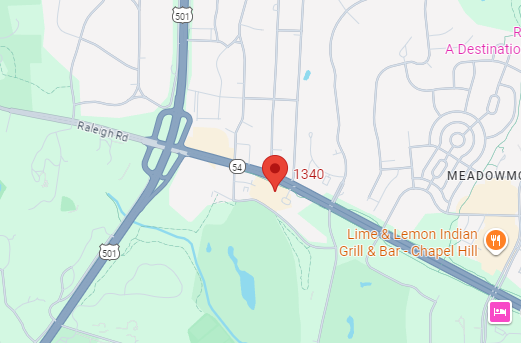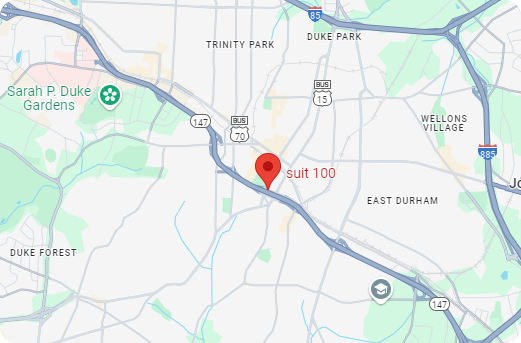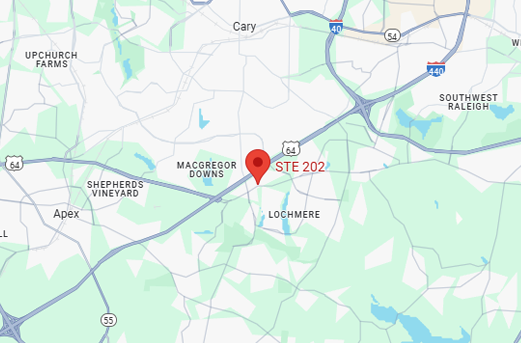
Patrick Roberts Law is a criminal defense firm based in Raleigh, North Carolina, with additional offices in Durham, Chapel Hill, and Cary. The firm defends people accused of statutory rape and related sex offenses across North Carolina, in the state courts of Wake, Durham, and surrounding counties, and in federal court. If you are trying to understand a statutory rape charge, an investigation, or what an accusation like this could mean, you are on the page for it. Attorney Patrick Roberts handles these cases personally.
Under North Carolina law, whether the other person agreed, and whether you believed they were older than they were, are not defenses. That single fact changes where a real defense has to be built, and it is why the choice of attorney matters so much. What follows explains the specific charges we defend, what each one carries, and how we approach them.
Types of North Carolina Statutory Rape Charges We Defend
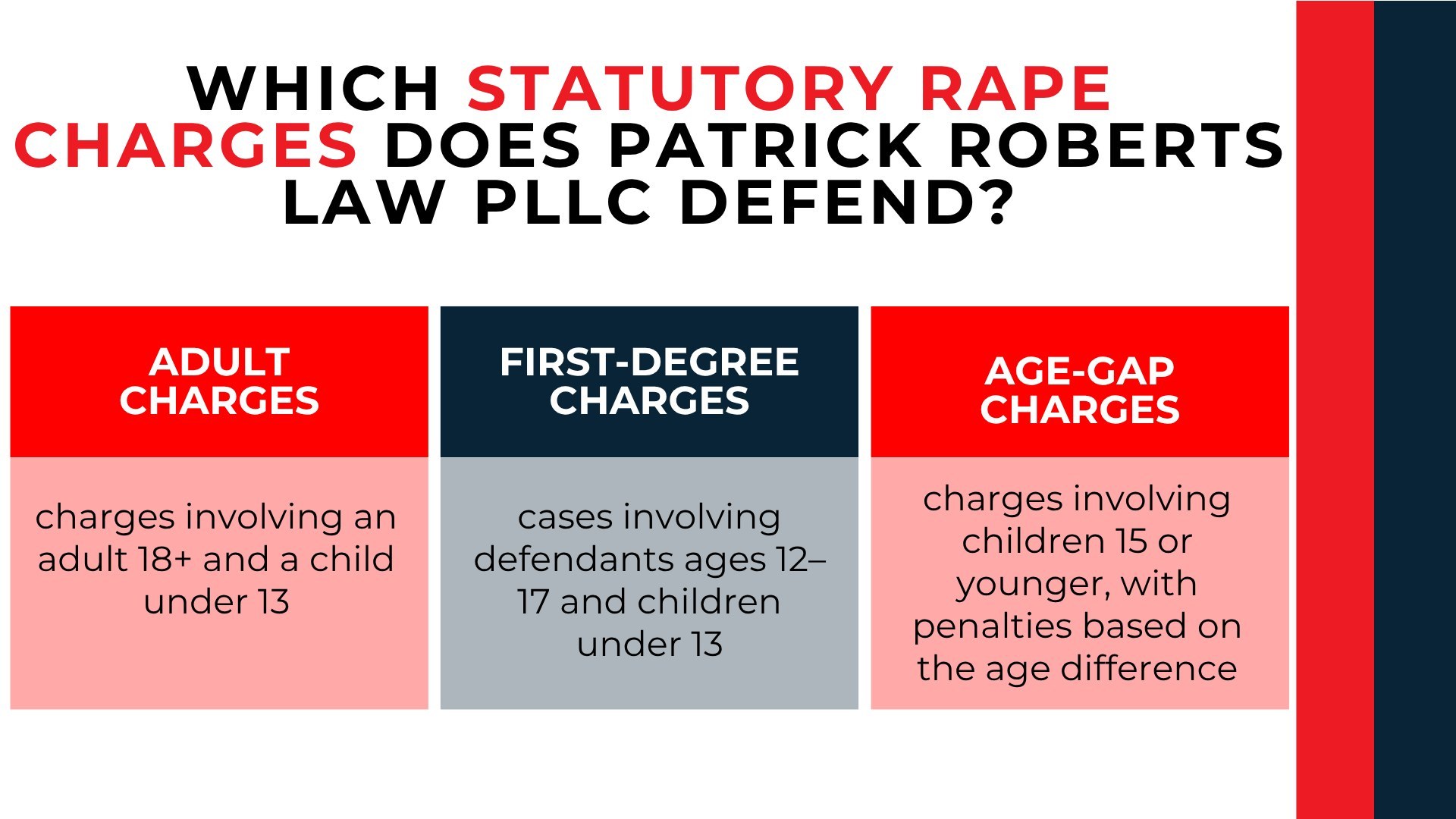
North Carolina does not have one statutory rape law. It has a set of them, sorted by the age of the child, the age of the person accused, and the gap between the two. The differences are not technicalities. They decide whether a case carries a 25-year mandatory prison term or runs through the ordinary sentencing grid. They are often the ground on which a case is won or narrowed. We defend the full range.
Statutory rape of a child by an adult
We represent adults charged under G.S. 14-27.23 (statutory rape of a child by an adult) and its companion, G.S. 14-27.28 (statutory sexual offense with a child by an adult). These apply when the person accused is 18 or older and the child is under 13. Both are Class B1 felonies, the class North Carolina uses for its most serious statutory sexual offenses. Both carry a mandatory minimum of 300 months, or 25 years, of active imprisonment. On written findings that the offense was of unusual brutality or scope, they also carry a possible sentence of life without parole. Neither the child's consent nor a mistaken belief about the child's age is a defense. As to age, the crime is strict liability, a rule the North Carolina Supreme Court confirmed in State v. Anthony. Because the law removes the arguments a person would expect to make, we concentrate the defense on what the State must still prove beyond a reasonable doubt: identity, whether the act occurred at all, the actual ages of the people involved, and the reliability of a child's account. And where the accused is not in fact 18, or the child is not in fact under 13, we work to keep the case off the 300-month track entirely. These are rare and serious cases. Across all offense types, only 431 Class B1 felony convictions were entered statewide in fiscal year 2024, about 1.6% of every felony conviction in North Carolina.
First-degree statutory rape
For a younger person accused, we represent clients charged under G.S. 14-27.24 (first-degree statutory rape) and G.S. 14-27.29 (first-degree statutory sexual offense). These apply when the child is under 13 and the person accused is at least 12 years old and at least four years older than the child, but is not yet 18. They are also Class B1 felonies, but unlike the adult offenses above they do not carry the 300-month floor. Instead, they are sentenced through North Carolina's ordinary structured-sentencing grid, where a Class B1 offense carries a presumptive minimum in the range of 192 to 240 months at the lowest prior-record level and rises from there. Consent and mistake of age are still not defenses. Here the arithmetic of ages is frequently the whole case. The four-year gap is a required element, so a three-year gap does not fit the statute. And establishing that the person accused was under 18 moves the exposure off the adult mandatory minimum. We treat birth dates, the exact date of any alleged act, and the age difference as facts to be proven, not assumed, because they can decide the class of felony or defeat the charge.
Statutory rape of a person 15 years of age or younger
We defend charges under G.S. 14-27.25 and G.S. 14-27.30, which cover a child who is 15 or younger in cases that do not fall under the "under 13" statutes. Which felony applies depends entirely on the age gap. A person at least six years older than the child faces a Class B1 felony. A person more than four but fewer than six years older faces a Class C felony. North Carolina also recognizes a specific exception where the two people are lawfully married. As with the other tiers, this is a strict-liability offense as to age, confirmed in State v. Browning. Consent and a good-faith belief about age are off the table. That makes the precise age difference and any marriage between the parties the highest-leverage facts in the case. Narrowing the gap below six years drops a Class B1 down to a Class C. A gap under four years defeats the charge. We build the defense around exactly those facts.
Why Trial Preparation Matters in Sex Offense Cases
Federal sex-offense cases go to trial far more often than the average federal case: about 10.8% of people sentenced for federal sexual abuse were convicted at trial, compared with 2.7% of all other federal defendants. So having an attorney who is prepared to try a case, not just resolve one, is not a small thing. Our approach is calm, direct, and strategic, with meticulous preparation and aggressive trial advocacy.

What to Expect When You Contact the Firm
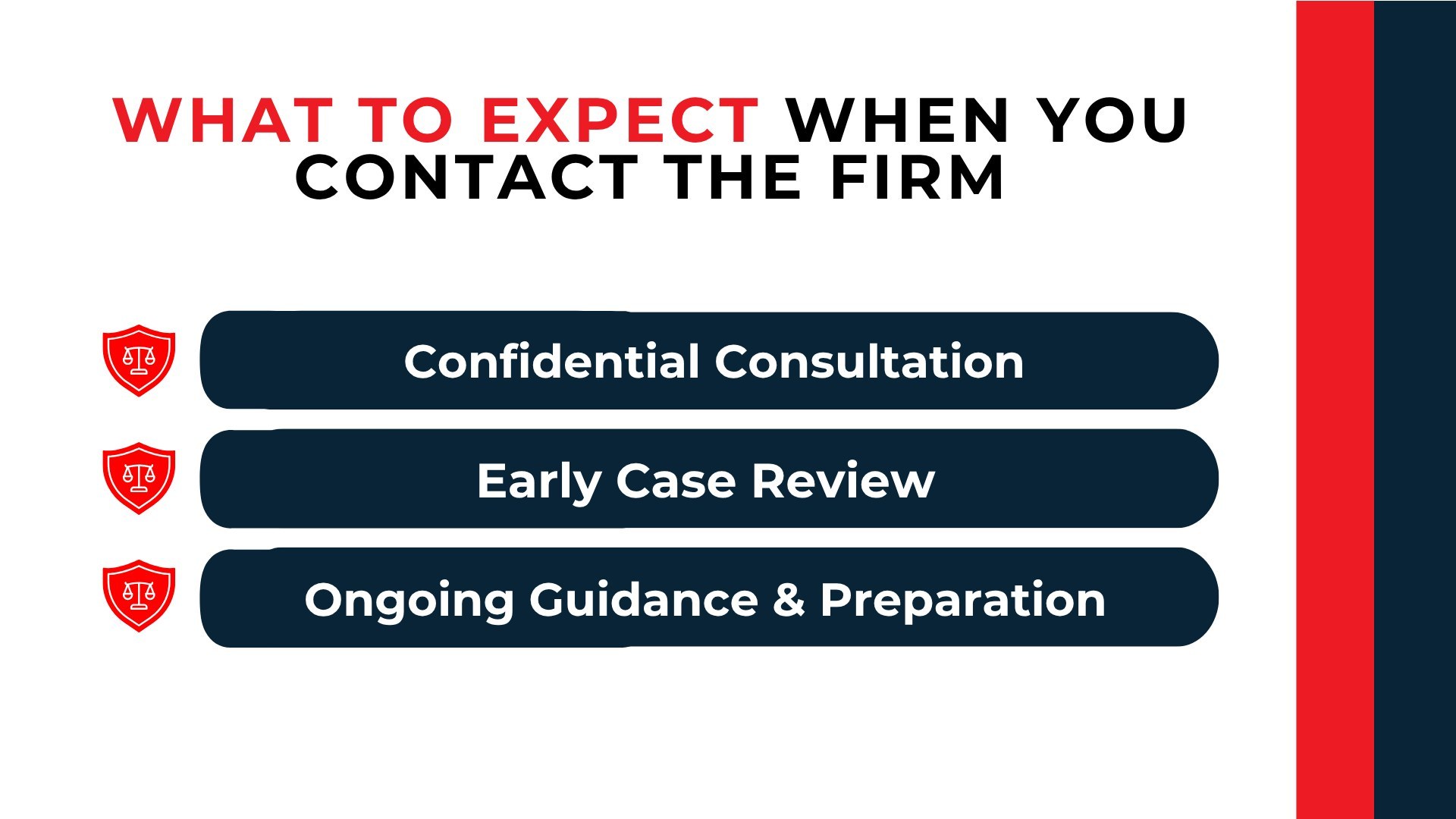
The first step is a confidential consultation with us. In it, the firm learns what has happened so far, whether there has been contact from a detective, an arrest, a charge, or only questions. It then explains, in plain terms, which statute is likely in play, what it carries, and what the realistic paths forward look like for your situation. One of the most important early points the firm can make is this: if law enforcement has reached out to you, you are not required to talk with investigators. What feels like an innocent explanation can become the core of the State's case. Getting advice before that conversation happens is often the single most valuable thing you can do.
From there, we work through the evidence early: the accuser's account, digital records, dates of birth, and the exact ages and timeline. In statutory rape cases, those details drive both the class of felony and whether a charge holds up at all. These cases also take time to move through the courts. In North Carolina's superior courts, the median felony case took about 366 days from filing to disposition. In the federal Eastern District of North Carolina, the median time from filing to disposition was about 12.4 months. The firm keeps you informed at each stage. It prepares every case as though it may be tried, so that any resolution is reached from a position of strength rather than pressure.
Experienced Representation for Serious Sex Offense Charges
When navigating the severe legal consequences of statutory rape charges in North Carolina, retaining legal counsel with specific expertise in sex crime litigation is critical. Attorney Patrick Roberts brings over two decades of comprehensive legal experience to the defense of these high-stakes matters. Having served as both a former Assistant District Attorney and a dedicated defense advocate, Mr. Roberts possesses a dual-perspective understanding of how the state builds its cases—knowledge he now leverages to deconstruct evidence, scrutinize complex age and timeline factors, and challenge the reliability of prosecution claims. With a career spanning more than 250 felony sex crime cases and more than 75 jury trials, Mr. Roberts provides a rigorous, data-driven approach to defense, ensuring that every client’s constitutional rights are protected against the complexities of North Carolina’s strict-liability sentencing statutes.
• Martindale-Hubbell AV Preeminent Rating: Maintains the highest peer-reviewed ranking for ethical standards and professional ability for eight consecutive years (2018–2026).
• Lifetime Membership in NACDL: Holds a lifetime status within the National Association of Criminal Defense Lawyers, reflecting long-term professional commitment to criminal justice.
• National Trial Advocacy Training: Completed the Trial Practice Institute at the National Criminal Defense College and the intensive three-week residential program at Gerry Spence's Trial Lawyers College.
• Former Prosecutor Perspective: Possesses four years of direct experience serving as an Assistant District Attorney handling juvenile sex crimes and felony dockets, providing critical insight into state-level evidentiary strategies.
• Digital Forensics Training: Holds recent certification from the 2026 Defending Digital Sex Crimes Bootcamp, focusing on the defense of cases involving complex electronic and digital evidence.
• Expertise in Sex Offense Litigation: Advanced training in "Zealous Advocacy in Sexual Assault and Child Victim Cases" through the National Association of Criminal Defense Lawyers and membership in the National Child Abuse Defense & Resource Center.
Client Review
Mr. Roberts was amazing! Had a very difficult case & the outcome didn’t look bright at all. I was looking at some serious time. But he was able to get me probation (which wasn’t on the table at all before he got involved) He was honest, to the point & laid out everything that could be a possibility. Never gave false hope, just the facts & logically what we could do to possibly get this in my favor. I would recommend Mr. Roberts to anyone seeking REAL guidance, honest & qualifications to back it up.
— Review by a verified client via Avvo
Peer Endorsement
I have known Patrick for years and have always been struck by his knowledge and dedication. I endorse him without hesitation or qualification.
— Peer endorsement by a fellow North Carolina trial attorney via Avvo
Disclaimer: The client reviews and peer endorsements displayed are authentic testimonials and comments provided by clients and fellow attorneys. Every case is unique and must be evaluated individually; past client experiences and case results do not guarantee, promise, or predict similar outcomes in any future matter.
Case Results
A prospective client should always know the kind of work and outcomes an attorney has achieved in similar situations. Here is a look at real case results handled by Attorney Patrick Roberts:
• Statutory Sex Offense Allegations: Defense counsel utilized expert analysis, including polygraph testing and forensic child psychology reports, to challenge allegations made against the client. These efforts successfully convinced the Assistant District Attorney to drop the charges.
○ Outcome: Dismissal
• First-Degree Statutory Sexual Offense Investigation: Defense counsel conducted an investigation that uncovered the accuser's history of mental instability and prior false allegations, along with contradictory medical evidence. Consequently, the government declined to prosecute the client.
○ Outcome: No Charges Filed
• Child Pornography and Statutory Sex Offense Allegations: Following allegations from a family member and subsequent investigation by social services, a thorough defense inquiry established that the accusations lacked any factual basis. As a result, the state chose not to initiate formal charges.
○ Outcome: No Charges Filed
• Multiple Statutory Sexual Offense and Indecent Liberties Charges: Although the client had made prior statements to counselors, Mr. Roberts was able to negotiate a plea agreement to avoid a potential life sentence. The four most serious felony charges were dismissed, and the client pleaded to a lesser charge of indecent liberties, receiving a prison sentence of 32 to 40 months followed by probation.
○ Outcome: Dismissal of all four life-qualifying Class B1 felonies; client pleaded to Indecent Liberties with a Child and received 32–40 months in prison followed by probation.
Disclaimer: Case outcomes depend upon a variety of factors unique to each case. Prior results do not guarantee or predict a similar outcome in any future legal matter.
Strategic Legal Defense for Statutory Rape Charges
Statutory rape charges in North Carolina carry severe, strict-liability consequences where traditional defenses often fail. Because these cases hinge on precise factual details regarding age and timelines, immediate and experienced legal intervention is critical. If you or a loved one are under investigation, do not speak with law enforcement; instead, secure counsel who understands the complexities of state sentencing guidelines and statutory requirements.
Patrick Roberts Law PLLC provides experienced defense for high-stakes matters throughout North Carolina, with a dedicated focus on serving clients across Wake County, including Raleigh, Cary, Apex, Holly Springs, Garner, and Fuquay-Varina. To discuss your specific situation and evaluate your defense options, please contact our firm at www.patrickroberts.law.
Access our Sex Offense Search Tool to look up North Carolina laws, felony levels, sentencing guidelines, and mandatory registration rules. Find out how NC defense lawyer Patrick Roberts can assist with your case.
The firm maintains a selective caseload to protect the integrity of its defense strategies and the thoroughness of its trial preparation.
Disclaimer: This article is general legal information, not legal advice. Reading it does not create an attorney-client relationship. North Carolina expunction law is almost entirely statutory and subject to legislative change, and how these rules apply depends on the specific facts of your case. For guidance on your situation, consult a licensed North Carolina attorney.