Blog / Felony Charges Lawyer

Felony Death by Vehicle in North Carolina

"Felony Death by Vehicle in North Carolina" text over a highway scene with trucks under and above an overpass on a clear day.

Car accidents that cause someone's death can lead to serious criminal charges in North Carolina. One of the most serious charges is called felony death by vehicle. This is a severe charge that can result in years in prison and change your life forever.

What is Felony Death by Vehicle in North Carolina?

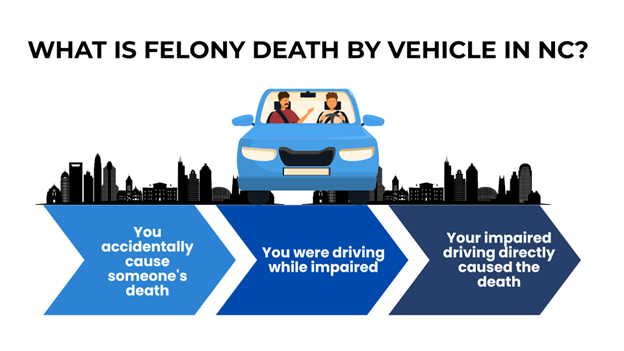
According to North Carolina General Statute § 20-141.4(a1), you can be charged with felony death by vehicle when:

  1. You accidentally cause someone's death in a car accident;
  2. You were driving while impaired by alcohol or drugs at the time (violating G.S. 20-138.1 or G.S. 20-138.2); and
  3. Your impaired driving directly caused the death.

In simple terms, if you drink and drive or use drugs and drive, and someone dies as a result, you can face this serious felony charge.

A blue car with two people inside, one driving, placed at the center—three arrows with texts that enumerates what qualifies as felony death by vehicle in NC.

What Are the Different Types of Vehicle Death Charges in North Carolina?

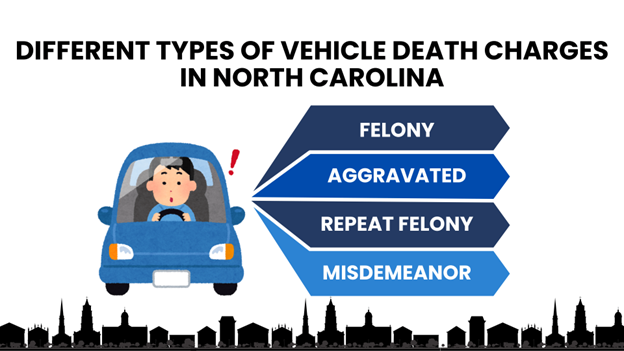
North Carolina has several different charges that can apply when someone dies in a car accident:

What Qualifies as Felony Death by Vehicle?

  • What it is: A Class D felony under G.S. 20-141.4(b)(2)
  • When it applies: When someone dies because you were driving while impaired
  • How you might defend against it: Your lawyer might question whether the alcohol tests were done correctly or whether your impairment actually caused the accident

How Is Aggravated Felony Death by Vehicle Different?

  • What it is: Still a Class D felony, but with harsher sentencing as stated in G.S. 20-141.4(a5)
  • When it applies: When you cause a death while driving impaired AND you have a previous DWI conviction within the last seven years
  • How you might defend against it: Your lawyer could challenge whether your prior conviction should count or was properly recorded

What Makes Something a Repeat Felony Death by Vehicle?

  • What it is: A Class B2 felony under G.S. 20-141.4(a6)
  • When it applies: When you've been convicted of felony death by vehicle before and commit another similar offense
  • How you might defend against it: Your lawyer might challenge how the previous conviction is being used against you

How Does Misdemeanor Death by Vehicle Compare?

  • What it is: A Class A1 misdemeanor under G.S. 20-141.4(a2)
  • When it applies: When you cause someone's death by breaking a traffic law that doesn't involve impairment
  • How you might defend against it: Your lawyer could show that your traffic violation didn't actually cause the death
A cartoon of a startled driver and labeled arrows to list the different legal categories of vehicle death charges in North Carolina—alongside a skyline silhouette

What Are the Penalties for Felony Death by Vehicle?

The punishments for these charges are very serious:

  • Regular Felony Death by Vehicle:
    • Potentially years in prison according to G.S. 20-141.4(b)(2)
    • If you have no prior criminal record, G.S. 15A-1340.17 allows for intermediate punishment
    • You'll have a permanent felony record that affects job opportunities, housing, and voting rights
  • Aggravated Felony Death by Vehicle:
    • Potentially years in prison
    • Little chance of getting a reduced sentence
    • Same long-term consequences as regular felony death by vehicle
  • Repeat Felony Death by Vehicle:
    • Potentially decades in prison as a Class B2 felony under G.S. 20-141.4(b)(1)
    • One of the most serious charges below murder
    • Almost certain to serve a very long prison sentence
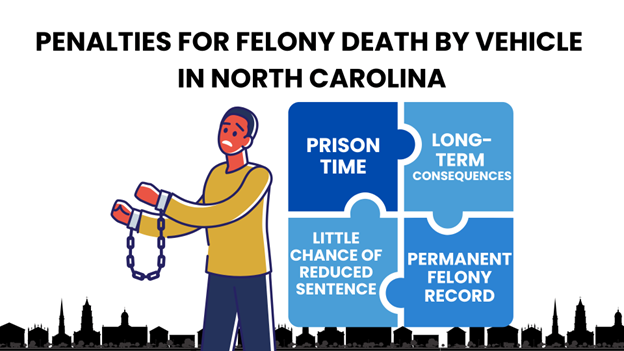
A worried man in handcuffs shows the emotional and legal weight of being charged with a serious felony. It uses puzzle pieces to show four key consequences for felony death by vehicle in NC.

How Can You Defend Against These Charges?

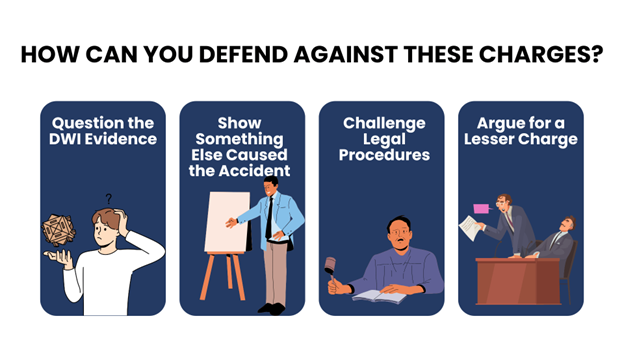
If you're facing a felony death by vehicle charge, there are several ways a good lawyer might defend you:

Question the DWI Evidence

  • Were the breathalyzer or blood tests done correctly?
  • Was the testing equipment properly maintained?
  • Was the person who did the testing properly trained?
  • Did the police have a legal reason to stop you in the first place?

Show Something Else Caused the Accident

  • Was there bad weather that contributed to the crash?
  • Did the other driver make mistakes that actually caused the accident?
  • Was there a mechanical failure in your vehicle?
  • Would the accident have happened even if you weren't impaired?

Challenge Legal Procedures

  • Did police follow proper procedures when arresting you?
  • Did they read you your rights?
  • Did they get search warrants when needed?
  • Were you illegally stopped without reasonable suspicion?

Argue for a Lesser Charge

  • Could this be charged as misdemeanor death by vehicle instead?
  • Is there enough evidence to support the felony charge?
  • Can your lawyer negotiate for a lesser charge through a plea deal?
Four common defense strategies for vehicle death charges in NC, each tip is paired with a relevant cartoon-style image.

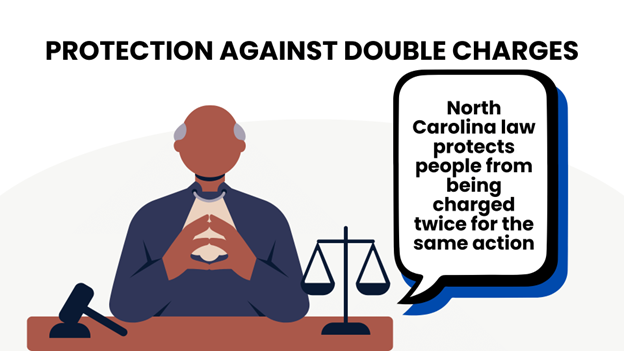
How Does North Carolina Law Protect Against Double Charges?

North Carolina law protects people from being charged twice for the same action. G.S. 20-141.4(c) specifically states:

  • If you're charged with death by vehicle, you can't also be charged with manslaughter for the same death
  • If you're charged with manslaughter, you can't also be charged with death by vehicle for the same death
A judge with hands together sits behind a desk with a gavel and justice scales, representing fairness and legal authority, with a speech bubble that explains the concept of not being charged twice for the same act.

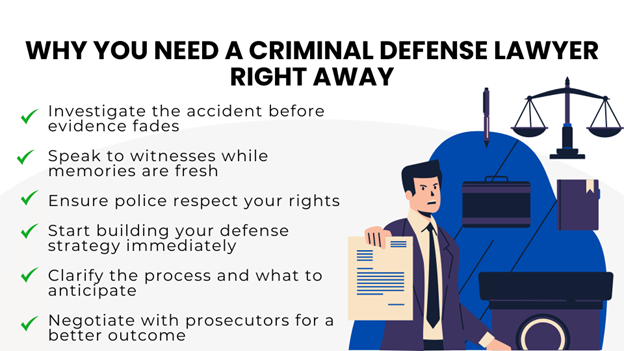
Why Do You Need a Criminal Defense Lawyer Right Away?

Being charged with felony death by vehicle is extremely serious. Having a good lawyer as soon as possible is crucial because they can:

  • Start investigating the accident before evidence disappears
  • Talk to witnesses while their memories are still fresh
  • Make sure the police don't violate your rights
  • Begin building your defense strategy right away
  • Help you understand what's happening and what to expect
  • Potentially negotiate with prosecutors for a better outcome
A lawyer holds papers near legal icons, with tips on why hiring a defense lawyer early helps your case.

What Is the Emotional Impact of Felony Death by Vehicle Cases?

These cases are difficult not just legally, but emotionally. When someone faces a felony death by vehicle charge:

  • They often struggle with guilt and grief over the death that occurred
  • They worry about possibly going to prison for many years
  • Their family members also suffer from stress and uncertainty
  • They may face harsh judgment from the community
  • The victim's family is dealing with their own grief and loss

A good defense attorney understands these emotional challenges and can help you cope while also handling the legal aspects of your case.

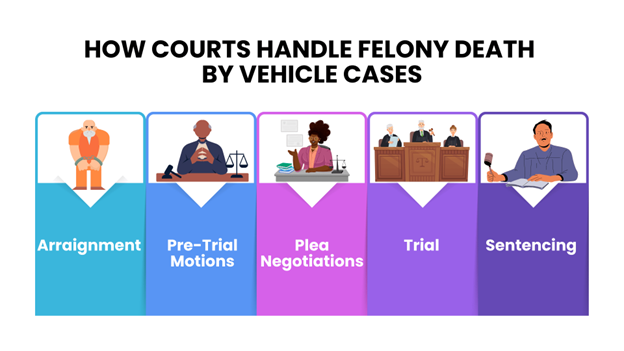
How Do Courts Handle Felony Death by Vehicle Cases?

The court process for these cases can be lengthy and complex:

  1. Arraignment: This is when you first appear in court and hear the formal charges against you
  2. Pre-trial motions: Your lawyer may file motions to have certain evidence thrown out or to get more information from prosecutors
  3. Plea negotiations: Many cases end with a plea deal rather than going to trial
  4. Trial: If your case goes to trial, it may last several days to weeks
  5. Sentencing: If convicted, the judge will determine your punishment within the ranges allowed by law
The five main steps courts follow in felony death by vehicle cases: include arraignment, motions, plea talks, trial, and sentencing, each step is illustrated with a clear, character-driven image and a simple label.

Contact a North Carolina Defense Attorney Today

If you're facing felony death by vehicle charges, time is critically important. Evidence needs to be preserved, witnesses need to be interviewed, and your rights need to be protected from the very beginning.

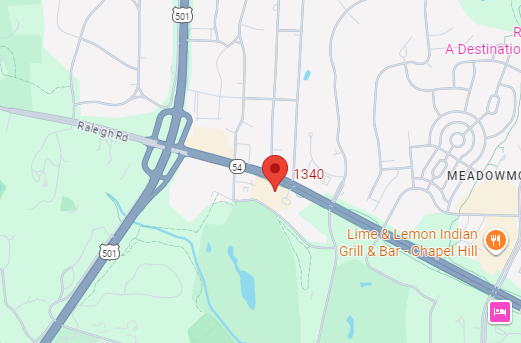
A felony death by vehicle charge is one of the most serious accusations someone can face. With prison time and a felony record on the line, the right legal representation is critical. Attorney Patrick Roberts has the experience and resolve to handle high-stakes cases* with the care they demand. Contact our office today for a confidential consultation and start building your defense.

*While Attorney Roberts works hard to secure results for his clients, every case is unique and must be evaluated on its individual facts. Past results do not guarantee future success. Each client’s case requires a unique strategy based on the facts of that case.

Posted in:

Related Posts

Title page with an image of a courthouse, introducing the topic of felony arraignment hearings and what to expect in the process.

What Happens at an Arraignment Hearing for a Felony?

An arraignment is a critical formal court appearance in the felony criminal process in North Carolina. Unlike in some states, in North Carolina's two-tiered court system (N.C.G.S. § 7A-270, § 7A-271), arraignment typically does not occur immediately after arrest. Instead, felony cases begin in District Court with an initial appearance (N.C.G.S. § 15A-601), and if indicted, move to Superior Court where the formal arraignment takes place after discovery (N.C.G.S. § 15A-623, N.C.G.S. § 15A-941). The arraignment is where you are officially notified of the charges against you and informed of your legal rights. more Key Components of a Felony Arraignment Reading of Charges During the arraignment, the judge reads the criminal complaint or indictment aloud. This formal reading: Clearly outlines the felony charges you face. Provides details such as the date, time, and nature of the alleged crime. Ensures you know the specific allegations and the potential penalties involved. This step is crucial because it sets the foundation for your case and ensures you are fully aware of what you are being accused of. Explanation of Your Rights The judge takes the time to explain your constitutional rights during the hearing. In a felony arraignment, you are informed of several important rights, including: The Right to Legal Representation: You have the right to hire a private attorney. If you cannot afford one, the court will appoint a public defender. The Right to Remain Silent: You are advised that you do not need to answer questions or provide statements that might be used against you later. Additional Rights: These may include the right to a speedy trial and, if applicable, the right to a jury trial. This explanation helps ensure that you make informed decisions about your case from the very beginning. Entering Your Plea One of the main functions of the arraignment is to have you enter a plea. The options typically include: Guilty Not Guilty No Contest For felony cases, most defendants enter a “not guilty” plea. This plea does not determine your guilt but initiates the pretrial process and sets the stage for future hearings. By pleading not guilty, you are exercising your right to contest the charges and work with your attorney on building a defense. Bail Determination and Release Conditions During the arraignment, the judge also considers bail. The judge evaluates several factors, such as: The severity of the felony charge. Your prior criminal history. Whether you are considered a flight risk. Based on this assessment, the judge will decide whether to: Release you on bail, Release you on your own recognizance (ROR), or Keep you in custody until your next court appearance. In North Carolina, local practices and the specifics of your case will influence these decisions. It is essential to understand that bail is meant to secure your future court appearances and is not a reflection of your guilt. Scheduling Future Proceedings After you enter your plea and the judge addresses bail, the arraignment hearing concludes with the scheduling of future court dates. These may include: Pretrial Motion Hearings: Hearings where both sides discuss legal arguments and evidence. Preliminary Hearings: Proceedings to determine if there is enough evidence to continue to trial. Trial Dates: The eventual date when your case will be heard in full if you maintain your not guilty plea. Keeping track of these scheduled dates is vital. Missing a court appearance can lead to additional charges and may result in a bench warrant for your arrest. Important Considerations for North Carolina Residents Although the basic steps of a felony arraignment are similar nationwide, North Carolina residents should be aware of a few local factors: Local Court Procedures: Procedures and practices may vary by county. Consulting with a local attorney can help ensure that you understand the nuances of the local court system. Legal Support: Private attorneys in North Carolina are well-versed in local procedures and can provide guidance tailored to your specific case. What to Do If You Miss Your Arraignment Failing to appear at your arraignment hearing can have serious consequences. If you miss your court date: The judge may issue a bench warrant for your arrest. Any bail posted could be forfeited. You may face additional charges, complicating your case further. It is crucial to attend your arraignment and all subsequent court appearances to avoid these risks. Conclusion Understanding what happens at an arraignment hearing for a felony can help you navigate the initial stages of the criminal justice process with confidence. This hearing is your first opportunity to learn about the charges, assert your rights, enter your plea, and set the timeline for your case. By being well-informed—especially if you are based in North Carolina—you can work more effectively with your legal counsel and ensure that you are prepared for the next steps in your defense. If you or a loved one are facing an arraignment hearing for criminal charges, you deserve a legal advocate with the experience and dedication to secure the best possible outcome. Attorney Patrick Roberts of Patrick Roberts Law has successfully defended numerous clients facing the most serious criminal charges. Contact our firm today for a confidential consultation.

Law books and scales beside headline introducing North Carolina’s new habitual domestic violence felony law.

Habitual Domestic Violence in North Carolina: Understanding the New Felony Offense

A domestic violence arrest in North Carolina has always carried serious consequences. But as of December 1, 2025, certain defendants now face something far more significant: a felony charge that can escalate with each subsequent conviction. North Carolina's new habitual domestic violence statute transforms what would otherwise be misdemeanor charges into felony prosecutions for individuals with qualifying prior convictions. This law creates a standalone enhancement mechanism that prosecutors can use to pursue felony charges against defendants whose records show a pattern of domestic violence offenses. Understanding how this new offense works—what the prosecution must prove, how prior convictions factor into the analysis, and what punishment exposure exists—is essential for anyone facing these charges or concerned about how past convictions might affect their future. What Is the New Habitual Domestic Violence Offense in North Carolina? How Does This Charge Differ from Misdemeanor Domestic Violence? Traditional domestic violence charges in North Carolina are typically prosecuted as misdemeanors. The habitual domestic violence offense changes that framework entirely. When prosecutors can establish that a defendant has the required pattern of prior domestic violence convictions, they can pursue felony charges for conduct that would otherwise remain at the misdemeanor level. This elevation from misdemeanor to felony status represents a fundamental shift in how repeat domestic violence offenders are prosecuted. Rather than facing the relatively limited consequences associated with misdemeanor convictions, defendants charged under this statute confront felony punishment classifications that carry substantially more severe consequences. What Statute Governs This New Felony? The habitual domestic violence offense is codified at N.C. Gen. Stat. § 14-32.6. This statute establishes the elements the prosecution must prove, defines which prior convictions qualify for enhancement purposes, and sets forth the punishment structure that applies to convictions under this section. When Did This Law Take Effect? The habitual domestic violence statute took effect on December 1, 2025. This effective date is critically important because the law applies only to offenses committed on or after that date. Conduct occurring before December 1, 2025, cannot form the basis of a habitual domestic violence charge, even if the defendant has the qualifying prior convictions. However, prior convictions from before the effective date can still count toward establishing habitual status for offenses committed after the law took effect. What Must the Prosecution Prove to Convict Someone of Habitual Domestic Violence? To secure a conviction under N.C. Gen. Stat. § 14-32.6, the prosecution must prove three distinct components: qualifying current conduct, the required prior conviction record, and compliance with the statutory lookback period. What Current Conduct Qualifies Under This Statute? The prosecution must first establish that the defendant committed either misdemeanor domestic violence under the existing statute or committed an assault against someone with whom they share a qualifying domestic relationship. This current offense forms the foundation of the habitual charge—without it, the enhancement cannot apply regardless of how many prior convictions exist. How Many Prior Convictions Are Required? Beyond the current conduct, the prosecution must prove that the defendant has at least two prior convictions that qualify under the statute. The law establishes two pathways to meet this requirement: Pathway 1: Two or more convictions under North Carolina's misdemeanor domestic violence statute (G.S. 14-32.5) or substantially similar offenses from other states. Pathway 2: One conviction under G.S. 14-32.5 (or a substantially similar out-of-state offense) plus at least one conviction for an assault involving a victim with whom the defendant shared a qualifying domestic relationship. The critical distinction is that at least one prior must be an actual domestic violence statute conviction—two generic assault convictions involving domestic relationships are not sufficient on their own, even if both victims were intimate partners or family members. What Is the 15-Year Lookback Period? Not every prior conviction counts toward habitual status. The statute imposes a 15-year lookback period that limits which convictions the prosecution can use. Specifically, the earlier of the two required prior convictions must have occurred within 15 years of the current offense. Convictions that fall outside this window—meaning they occurred more than 15 years before the earliest qualifying prior—cannot be counted toward establishing habitual status. This lookback calculation can become complex when a defendant has multiple prior convictions spanning many years. The timing of each conviction relative to both the current offense and the other priors matters significantly. Do Out-of-State Convictions Count Toward Habitual Status? Yes. The statute explicitly allows the prosecution to use "substantially similar convictions from other states" as qualifying priors. This means defendants who have domestic violence convictions from other jurisdictions remain exposed to felony enhancement in North Carolina, provided those out-of-state offenses are substantially similar to North Carolina's domestic violence statutes. Determining whether an out-of-state conviction is "substantially similar" often requires careful legal analysis of the elements of the foreign offense compared to North Carolina law. What Are the Potential Punishments for a Habitual Domestic Violence Conviction? The punishment structure for habitual domestic violence is designed to escalate with each subsequent conviction, reflecting the legislature's intent to impose increasingly severe consequences for repeat offenders. What Felony Class Applies to a First Habitual DV Conviction? A first conviction under the habitual domestic violence statute is classified as a Class H felony. This represents a significant elevation from the misdemeanor classification that would otherwise apply to domestic violence charges without the habitual enhancement. How Does Punishment Escalate with Subsequent Convictions? The statute creates an escalating punishment framework where each subsequent conviction under this section is punished one felony class higher than the defendant's most recent habitual domestic violence conviction. The escalation structure works as follows: First habitual DV conviction: Class H felony Second habitual DV conviction: Class G felony Third habitual DV conviction: Class F felony Continued escalation with each subsequent conviction This escalating structure means that defendants who continue to accumulate convictions under this statute face progressively more serious felony classifications. What Is the Maximum Felony Classification? The escalation caps at Class C felony status. Once a defendant reaches Class C classification, subsequent convictions remain at the Class C level rather than continuing to escalate. Class C felonies represent one of the more serious felony classifications in North Carolina's structured sentencing system, carrying substantial prison exposure depending on the defendant's prior record level. How Does This Offense Interact with Other Domestic Violence Laws? The habitual domestic violence statute functions as part of a broader package of changes affecting how domestic violence cases are handled in North Carolina. Can a Habitual DV Conviction Be Used to Enhance Other Charges? No. The statute specifically provides that a conviction under the habitual domestic violence section cannot be used as a prior conviction to enhance punishment under other habitual offense laws. This makes the habitual domestic violence enhancement a standalone mechanism—it elevates the current offense to felony status but does not feed into other habitual offender statutes. What Arrest Powers Do Police Have Under the New Law? Related legislative changes have expanded police authority in domestic violence cases. Officers can now arrest without a warrant for misdemeanor domestic violence offenses, extending their powers beyond traditional assault charges. This means law enforcement has greater flexibility to make immediate arrests in domestic violence situations without first obtaining judicial authorization. The following changes affect how domestic violence arrests and pretrial proceedings work: Police may now make warrantless arrests for misdemeanor domestic violence Defendants charged with misdemeanor domestic violence must have pretrial release conditions set by a judge rather than a magistrate Judges must review the defendant's criminal history before setting pretrial release conditions How Have Pretrial Release Procedures Changed for DV Cases? Defendants charged with misdemeanor domestic violence now face modified pretrial release procedures. Instead of having a magistrate set conditions of release, these defendants must appear before a judge who will review their criminal history before establishing appropriate conditions. This change ensures that judicial officers making pretrial release decisions have access to information about the defendant's prior record, which may be particularly relevant given the new habitual enhancement statute. What Defense Strategies Apply to Habitual Domestic Violence Charges? Defending against habitual domestic violence charges requires attention to both the current conduct allegations and the prior conviction record the prosecution intends to use for enhancement purposes. Can the Validity of Prior Convictions Be Challenged? The prosecution's ability to prove habitual status depends entirely on establishing that the defendant has qualifying prior convictions. Defense strategies may focus on whether prior convictions were constitutionally obtained, whether proper procedures were followed in earlier cases, and whether documentation adequately establishes the convictions the prosecution claims. If the validity of prior convictions can be successfully challenged, the enhancement may fail even if the current conduct is proven. What If Prior Convictions Fall Outside the Lookback Period? The 15-year lookback requirement creates a potential defense avenue when prior convictions are aged. If the earlier of the two required priors occurred more than 15 years before the current offense, it cannot count toward habitual status. Careful analysis of conviction dates relative to the current offense date can reveal whether the prosecution's theory of habitual status actually satisfies the statutory timing requirements. This calculation becomes particularly important when defendants have multiple prior convictions from different time periods. Identifying which convictions fall within and outside the lookback window may determine whether felony enhancement applies. How Does the Qualifying Relationship Requirement Affect the Case? Both the current conduct and the prior convictions must involve victims with whom the defendant shared a qualifying domestic relationship. If the prosecution cannot establish the required relationship element—either for the current offense or for the priors being used for enhancement—the habitual charge may not stand. Defense strategies may focus on whether the relationships at issue actually qualify under the statutory definitions. Why Does Legal Representation Matter When Facing This Felony Charge? What's at Stake with a Felony Domestic Violence Conviction? A habitual domestic violence conviction creates a felony record with all the collateral consequences that follow. Employment opportunities, housing options, professional licensing, and firearm rights can all be affected by felony convictions. The escalating punishment structure means that defendants who face multiple prosecutions under this statute confront increasingly serious felony classifications, potentially reaching Class C status with its substantial prison exposure. The complexity of the habitual enhancement analysis—including prior conviction validity, lookback period calculations, and relationship requirement issues—demands careful legal attention to every element the prosecution must prove. How Can an Attorney with Prosecutorial Experience Help? Facing charges under a new statute requires understanding how prosecutors will interpret and apply the law in its early implementation. The habitual domestic violence offense creates multiple points of potential challenge, from the validity of prior convictions to the timing requirements of the lookback period. Attorney Patrick Roberts brings the perspective of a former prosecutor who handled domestic violence cases, meaning he understands how the State approaches these matters from investigation through trial. His training at the National Criminal Defense College, including ongoing participation in advanced cross-examination programs, provides the technical courtroom skills these cases demand. As a graduate of Gerry Spence's Trial Lawyers College—where he trained directly with one of the most accomplished trial lawyers in the country—he brings a methodology focused on connecting with juries and humanizing clients facing serious allegations. Contact Patrick Roberts Law to discuss your case and understand your options under this new law. Frequently Asked Questions When did habitual domestic violence become a crime in North Carolina? The habitual domestic violence statute took effect on December 1, 2025. Only offenses committed on or after that date can be charged under this law, though prior convictions from before the effective date can still count toward establishing habitual status. Can I be charged with habitual domestic violence if my prior convictions are from another state? Yes. The statute allows the prosecution to count "substantially similar convictions from other states" toward the required two prior convictions. Whether an out-of-state conviction qualifies requires analysis of whether that offense is substantially similar to North Carolina's domestic violence laws. What happens if I'm convicted of habitual domestic violence more than once? Each subsequent conviction is punished one felony class higher than your most recent habitual domestic violence conviction, starting at Class H and escalating up to a maximum of Class C. Does the new law apply to conduct that occurred before December 1, 2025? No. Conduct occurring before the effective date cannot form the basis of a habitual domestic violence charge. However, prior convictions from before December 1, 2025, can still count toward establishing habitual status for offenses committed after the law took effect. Who sets my bond conditions if I'm arrested for a domestic violence offense? Under related changes to domestic violence procedures, defendants charged with misdemeanor domestic violence must have pretrial release conditions set by a judge who reviews the defendant's criminal history, rather than a magistrate. Yoast SEO Disclaimer: The information on this website is for general information purposes only. Nothing on this site should be taken as legal advice for any individual case or situation. Case results depend upon a variety of factors unique to each case. Prior results do not guarantee a similar outcome.

Folder labeled “Murder Case 37325” with bullet casings on a desk. Title highlights focus on first-degree murder charges in North Carolina.

First Degree Murder Charges in North Carolina

What Constitutes a First Degree Murder Charge in North Carolina? First degree murder represents the most serious homicide charge under North Carolina law. According to N.C. Gen. Stat. § 14-17, prosecutors can pursue this Class A felony charge when an alleged killing involves specific circumstances that demonstrate the highest level of culpability. more The state must prove that the killing occurred through one of several specific methods or during the commission of certain felonies. Understanding these elements becomes critical for anyone facing or concerned about such charges. The prosecution must establish that the killing was perpetrated by: Nuclear, biological, or chemical weapons of mass destruction Poison Lying in wait Imprisonment Starving Torture Any other willful, deliberate, and premeditated killing Alternatively, first degree murder charges apply when the killing occurs during: Arson Rape or sex offenses Robbery Kidnapping Burglary Other felonies committed or attempted with a deadly weapon These statutory requirements mean prosecutors face a significant burden in proving their case. Each element requires specific evidence, and the absence of any required element could result in reduced charges or acquittal. How Does First Degree Murder Differ from Other Homicide Charges? North Carolina law recognizes multiple levels of homicide charges, each carrying different penalties and requiring different proof. First degree murder sits at the top of this hierarchy due to the presence of premeditation and deliberation or the commission of specific dangerous felonies. Key distinctions include: Premeditation and deliberation: Unlike second degree murder or manslaughter, first degree murder typically requires proof that the defendant thought about and planned the killing beforehand Specific circumstances: The law enumerates particular methods and situations that automatically elevate a killing to first degree murder Intent requirements: While all murder charges require malice, first degree murder demands the highest level of intent or occurs during inherently dangerous felonies Second degree murder, by contrast, involves killings with malice but without premeditation and deliberation. Voluntary and involuntary manslaughter charges apply to unlawful killings without malice, with distinctions based on the nature of the underlying act and the defendant's intent. What About Domestic Violence Cases and First Degree Murder Charges? North Carolina law contains special provisions for killings involving domestic partners. Under N.C. Gen. Stat. § 14-17(a1), when someone kills a current or former spouse, dating partner, or co-parent with whom they have a prior history of certain offenses, the law creates a rebuttable presumption that the killing constitutes first degree murder. This presumption applies when the defendant previously committed against the same victim: An act of domestic violence Violation of a domestic violence protective order Communicating threats Stalking Cyberstalking Domestic criminal trespass The phrase "rebuttable presumption" means the defendant can present evidence to challenge this classification. However, this provision significantly impacts how prosecutors approach domestic violence homicides and underscores the serious nature of repeated domestic violence patterns. What Does "Willful, Deliberate, and Premeditated" Mean Under North Carolina Law? These three terms form the cornerstone of many first degree murder prosecutions. Understanding their legal significance helps clarify what separates first degree murder from other homicide charges. Willful means the act was intentional rather than accidental. The defendant meant to perform the action that caused death. Deliberate indicates the defendant acted with a cool state of mind, not under the immediate influence of sudden passion or heat of blood. This doesn't mean the person was calm—it means they were capable of reasoning about their actions. Premeditated requires that the defendant thought about taking the victim's life beforehand, even if only briefly. North Carolina courts recognize that premeditation can form in an instant, though the thought must precede the fatal act. Prosecutors often rely on circumstantial evidence to prove these elements, such as: The nature and number of wounds inflicted Evidence of planning or preparation Statements made before or after the incident The defendant's conduct and demeanor The relationship between the parties Can Someone Be Charged with First Degree Murder Without Intending to Kill? Yes. North Carolina's felony murder rule allows first degree murder charges even when the defendant didn't specifically intend to kill anyone. If someone dies during the commission or attempted commission of certain felonies listed in N.C. Gen. Stat. § 14-17, the defendant faces first degree murder charges regardless of their intent regarding the death itself. This means that if someone participates in an armed robbery and a death occurs—whether of a victim, bystander, or even a co-defendant—all participants may face first degree murder charges. The law treats the inherent danger of these felonies as sufficient to establish the culpability required for first degree murder. Critical considerations for felony murder include: The death must occur during or in furtherance of the felony All participants in the underlying felony may face murder charges The defendant's role in the actual killing may affect sentencing but not guilt Defenses to the underlying felony can defeat the murder charge What Defenses Might Apply to First Degree Murder Charges? Several potential defenses exist, though their availability depends entirely on the specific facts of each case. Effective defense strategies often focus on challenging the prosecution's ability to prove required elements beyond a reasonable doubt. Common defense approaches examine whether: The alleged act was truly willful, deliberate, and premeditated. If evidence suggests the defendant acted in the heat of passion or sudden anger, this might negate the premeditation required for first degree murder. Such circumstances could potentially reduce the charge to second degree murder or voluntary manslaughter. Self-defense justifications apply. North Carolina recognizes the right to defend oneself against unlawful force. When someone reasonably believes they face imminent death or great bodily harm, the use of deadly force might be justified. However, imperfect self-defense—where the defendant was the aggressor or used excessive force—might reduce but not eliminate criminal liability. Mental capacity issues affected the defendant's ability to form the required intent. Severe mental illness or intellectual disability might prevent someone from deliberating or premeditating as the law requires. The prosecution cannot establish the underlying felony in felony murder cases. If the state cannot prove the defendant committed or attempted the enumerated felony, the first degree murder charge based on that felony cannot stand. How Are First Degree Murder Cases Investigated and Prosecuted? First degree murder investigations typically involve extensive resources and multiple law enforcement agencies. These cases demand thorough investigation given the serious nature of the charges and potential penalties. Investigation elements often include: Crime scene analysis and forensic evidence collection Witness interviews and statement analysis Digital evidence from phones, computers, and surveillance systems Medical examiner reports and autopsy findings Background investigations into relationships and potential motives Prosecutors must present this evidence to establish each element of the charge beyond a reasonable doubt. This high burden means they carefully evaluate evidence before proceeding with first degree murder charges. The complexity of these cases often results in lengthy pre-trial proceedings. Defense attorneys need time to review discovery materials, consult with experts, and develop comprehensive defense strategies. The stakes involved make thorough preparation essential for both sides. Why Does Legal Representation Matter in First Degree Murder Cases? The consequences of a first degree murder conviction in North Carolina are severe, potentially including the most serious penalties available under state law. The complexity of the law and the resources devoted to prosecution make experienced legal representation crucial. An experienced criminal defense attorney understands the nuances of homicide law and can identify weaknesses in the prosecution's case. They know which experts to consult, what evidence to challenge, and how to present alternative theories that create reasonable doubt. Early involvement of counsel proves particularly important. Evidence can disappear, witnesses' memories fade, and critical opportunities for investigation may be lost without prompt action. An attorney can also ensure that constitutional rights are protected during questioning and throughout the legal process. Contact Patrick Roberts Law for Experienced Criminal Defense If you or someone you know faces first degree murder charges or any serious criminal allegations in North Carolina, immediate legal consultation becomes essential. Attorney Patrick Roberts brings extensive experience handling complex criminal cases* and understands the life-changing nature of these charges. The prosecution has already begun building their case. You need an advocate who will fight to protect your rights and pursue the best possible outcome* given the circumstances of your case. Contact Patrick Roberts Law today to discuss your situation and understand your options. Time matters in criminal cases. Evidence needs to be preserved, witnesses interviewed, and defense strategies developed. Don't wait to get the legal help you need during this critical time. *Disclaimer: Each case is different and must be evaluated separately. Prior results achieved do not guarantee similar results can be achieved in future cases.